Where Are the Snakes in Thailand? — Region by Region
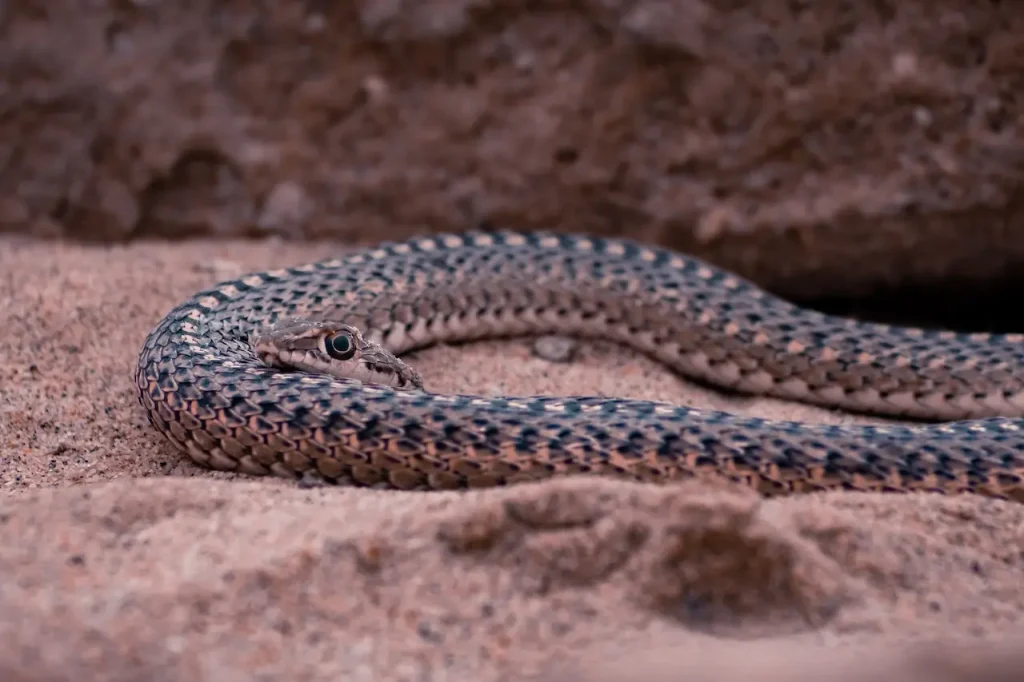
Thailand is bigger and more varied than people often appreciate. From the cool cloud-forest of Doi Inthanon to the peat swamps of Narathiwat, the country has roughly five major biogeographic regions and the snake fauna in each is meaningfully different. This is the practical region-by-region tour. If you live in or are visiting a particular Thai province and want to know what is locally common, this is your starting reference.

Northern Thailand — hill forest and cool nights #
The north covers Chiang Mai, Chiang Rai, Mae Hong Son, Lampang, Phayao, Nan, Phrae, Lamphun and the upper edge of Tak. The defining feature is hill forest, much of it above 800 m. Cool nights in the dry season slow snake activity heavily — November through February produces few wild snake encounters. Wet season May–October is the productive window.
Northern signature species: Pope’s Pit Viper in cool forest, the highland green pit vipers in bamboo zones, the Banded Krait across lowland edge, large rat snakes (Ptyas mucosa and others), and the King Cobra in the better-preserved hill forest of Doi Phu Kha and the Mae Hong Son hills.
Central plains — agriculture and big cobras #
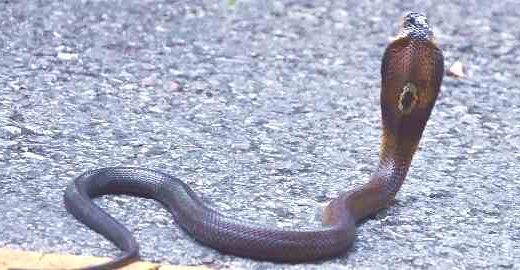
Bangkok, Nonthaburi, Pathum Thani, Ayutthaya, Suphan Buri, Chai Nat, Singburi, Ang Thong, Lop Buri, Saraburi, Nakhon Pathom and the rest of the central river-basin landscape. This is intensively cultivated rice-paddy and orchard country with patches of remnant forest in protected areas. Habitat is mostly open and human-altered.
Central plains signature species: the Monocled Cobra in numbers across rice-paddy edges, the Russell’s Viper (Daboia siamensis) which is largely a central-plains species, the Large-Eyed Pit Viper in suburban Bangkok, the Golden Tree Snake in every garden, and the Burmese Python in canals and floodplains.
Eastern Thailand — mixed forest and beach scrub #
Chonburi, Rayong, Chanthaburi, Trat. A region of remnant mature forest (Khao Soi Dao, Khao Khitchakut), beach scrub, and increasingly fragmented agricultural land. Cool nights are less of a constraint here than in the north.
Eastern signature species: the Large-Eyed Pit Viper in good numbers, the Indochinese Spitting Cobra, the White-Lipped Pit Viper, and the King Cobra in the better-preserved patches of Khao Soi Dao. The Banded Mangrove Snake is a coastal specialist along the eastern beaches.
Northeastern Thailand (Isan) — dry forest and floodplain #
Khon Kaen, Udon Thani, Nong Khai, Loei, Mukdahan, Ubon Ratchathani, Sisaket, Surin, Buri Ram, Nakhon Ratchasima, Roi Et and the rest of the Isan plateau. The defining feature is dry deciduous forest mixed with seasonal wet patches and the Mekong floodplain. The dry season is genuinely dry; many small water bodies disappear.
Isan signature species: the Indochinese Spitting Cobra in numbers around villages, the Banded Krait in floodplain edge, the Russell’s Viper in agricultural land, and the Reticulated Python in larger wet patches. The dry forest is unusually productive for the Indo-Chinese Rat Snake. The wet season produces a quick spike of activity from June through September; the dry season from December through March is a quiet time for snake-watching.
Southern Thailand — wet forest and the deep south #
Chumphon south through Surat Thani, Krabi, Phang Nga, Ranong, Phuket, Trang, Satun, Songkhla, Phatthalung, Yala, Pattani, Narathiwat. The defining feature is wet, mostly evergreen forest with a much longer wet season than the rest of the country. Two coastlines (Andaman and Gulf) add coastal and mangrove habitat. The deep south retains some of the best surviving lowland forest in Southeast Asia.
Southern signature species: the Hagen’s Pit Viper, the Wirot’s Palm Viper, the Black-Headed Cat Snake, the Blood Python, the Javan File Snake, the Yellow-Lipped Sea Krait on Andaman beaches, and the King Cobra in mature peat swamp and lowland forest.
What this means for visitors #
If you visit Thailand and want to see snakes, the south during the wet season (June through November) is the most productive single combination. Bangkok and the central plains will produce Monocled Cobras and Large-Eyed Pit Vipers reliably year-round in any large green space. The northern hills are best from May through October. The northeast is the toughest region for casual snake-watching — habitat is more fragmented and the dry season is genuinely dry.
For the wider statistical picture see our reference on how common snakes are in Thailand. The are Thailand snakes dangerous to visitors companion piece covers the venomous-snake risk picture by region.
External references: the Thai National Parks website covers the major protected areas where most snake-watching happens, and iNaturalist hosts the largest open citizen-science record of Thai reptiles.
Key takeaways #
- Context matters more than rules of thumb. Thailand’s snake fauna varies meaningfully by region, by season, and by habitat. Advice that holds in southern wet forest does not always hold in northern hill country or in the central agricultural plains.
- Prevention is high-leverage. Most serious snake-related incidents in Thailand are downstream of three preventable behaviours — reaching where you cannot see, walking forest paths at night without a torch, and attempting to handle or kill snakes rather than call professional removal.
- Hospital access is the real safety net. Thai provincial hospitals stock the standard polyvalent antivenoms. The single biggest predictor of bad outcome from a serious bite is delay in reaching one of those hospitals.
- Citizen-science records help. Even casual photographs with location data, posted to platforms like iNaturalist, contribute to the regional knowledge base. Most Thai snake species have surprisingly thin distribution data; one well-documented sighting can fill a real gap.
Common questions #
How likely am I to see a snake on a casual visit to Thailand?
Lower than you probably expect. A casual three-hour daytime forest hike in southern Thailand has roughly a 5–10% chance of producing any snake encounter at all, and roughly a 0.5–1% chance of producing a venomous-species sighting. Visitors who deliberately go looking — at night, in good habitat — see far more, but the casual exposure is genuinely low.
What time of year has the most snake activity?
The wet season (May through October) produces by far the most snake encounters across most of Thailand. Within that, two peaks: the start of the rains (April–June) when males are moving for breeding, and late wet season (September–November) when juvenile cohorts disperse from nest sites. The dry season (December–March) is genuinely quieter for snake-watching, particularly in the north and northeast.
Are Thai snakebite outcomes really that good?
For patients who reach a hospital within an hour or two of a venomous bite, yes — Thai outcomes are excellent by international standards. Mortality with appropriate antivenom and supportive care runs under 1% for most species. The deaths that do happen are concentrated in cases of significant pre-hospital delay, mis-identification of species, or in patients with serious co-morbidities. The Thai system is robust; the failure modes are mostly upstream of the hospital.
What is the single best preventive measure?
A torch at night. The single biggest reducer of Thai snakebite risk is consistent, eyes-down torch use on every walking path after dark. Most preventable bites in southern Thailand are foot-on-snake events on the ground at night, and a torch beam on the trail at metre-down angle prevents the great majority of them. Closed footwear is the second-biggest improvement; long trousers in dense vegetation is third.