Snakey, Snakey, Where Did You Go? — Notes on a Quiet Herping Night
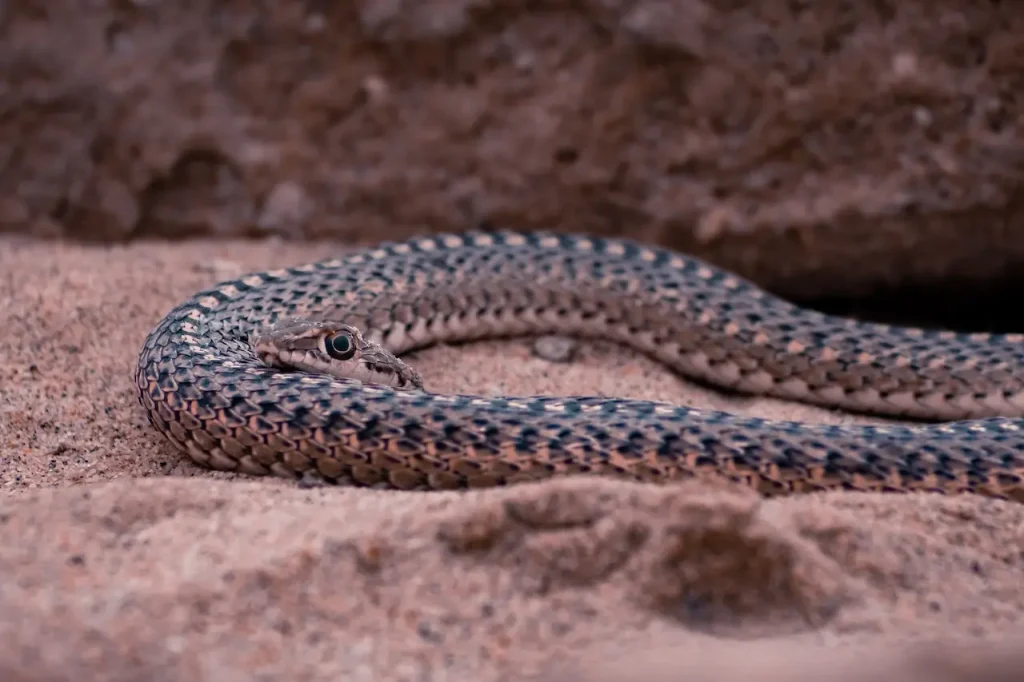
Some Thai herping nights are magical. You walk a kilometre of forest trail and find six species in three hours, including two you have never personally seen. Other nights, the forest just doesn’t deliver. We had one of those nights this week — every condition apparently right, every habitat productive on previous trips, every species expected — and ended four hours later with one elapid we did not bag, one small ground gecko, and a soaked notebook. This is the field-notes write-up of why nothing happened.

Conditions and route #
We started at 19:30 on a damp evening, two days after a heavy storm. Air temperature 26 °C, dew point near saturation, light wind from the south. The route was a 1.5 km loop through secondary forest, fruit orchard edge, and the periphery of a small reservoir. This is one of our default southern Thai herping circuits — historically reliable for green pit vipers, kraits in season, the occasional Indo-Chinese rat snake on a slow track, and small leaf-litter species like the slug snakes and Pareas.
The first hour produced one common house gecko, one tiny scorpion under UV, and a startled palm civet at the back of the orchard. No snakes. We carried on toward the reservoir, expected to be the most productive section.
Why nothing was moving #
Our best guess in retrospect is moon phase combined with prey distribution. The moon was bright and rising — almost full — and a bright lunar evening reduces snake activity meaningfully on most monitored sites. The reservoir level was also unusually high after the storm; the marginal habitat where water snakes hunt was submerged. Frog choruses were quiet, suggesting frog populations had moved into deeper cover. Without the prey base out, the hunters do not bother.
We did pick up one elapid sign — a clear narrow body track across a sandy bank, with the head lifted slightly, suggesting a krait. The track ended at thick grass and we did not pursue. Our reference on krait identification covers what to do (and not do) on a fresh krait track at night.
What “skunked” actually feels like #
Walking back through the orchard with no photos and no captures, you start to second-guess everything. Wrong torch beam? Too much footfall? Wrong night? Wrong route? The reality is that snake activity is genuinely patchy and even the best observers in the best habitat have nights like this. Our internal records show that roughly one in five nights at our default southern circuit produces zero or one species. The other four out of five produce three to ten. The averages even out; the variance is real.
The lesson, if there is one, is that the fastest way to learn Thai snake habitat is to walk it many times, including the empty nights. Each empty night teaches you a little about what doesn’t work, and the pattern accumulates faster than people expect.
Field-notes summary #
- Date: Two days after a heavy thunderstorm, southern Thailand.
- Time: 19:30 to 23:30.
- Conditions: 26 °C, humid, near-full bright moon, light south wind.
- Habitat covered: Secondary forest, orchard edge, reservoir margin.
- Snakes observed: Zero. One probable krait track.
- Other wildlife: Common house gecko (1), small scorpion (1), palm civet (1), various frogs and toads in numbers.
Plans for next visit #
Next visit will be on a darker moon, 7-10 days post-rain rather than 2 days. The reservoir margin will be productive again as the level drops. We will start earlier (18:30) to overlap the active dusk window for diurnal-into-crepuscular species — one of our best site records was a Striped Bronzeback in the last hour of daylight along this same route. For the broader southern herping context see our notes on where the snakes are in Thailand; for general field practice see avoiding snakebites in Thailand.
If you are running into similar empty nights at your own site, the conditions to track are: moon phase, recent rainfall pattern, water level, and prey availability (frog choruses are a good index). Across enough visits the pattern emerges and you start choosing nights with a 70+% hit rate.
External references: the iNaturalist citizen-science platform aggregates seasonal observation patterns, and the Thai National Parks website covers the protected areas where most serious herping happens.
 keelback-snake1.jpg" alt="Red-necked Keelback in defensive pose" class="wp-image-5" srcset="https://thailandsnakes.com/wp-content/uploads/2010/02/red-necked-keelback-snake1.jpg 500w, https://thailandsnakes.com/wp-content/uploads/2010/02/red-necked-keelback-snake1-300x88.jpg 300w, https://thailandsnakes.com/wp-content/uploads/2010/02/red-necked-keelback-snake1-150x44.jpg 150w" sizes="(max-width: 500px) 100vw, 500px" />
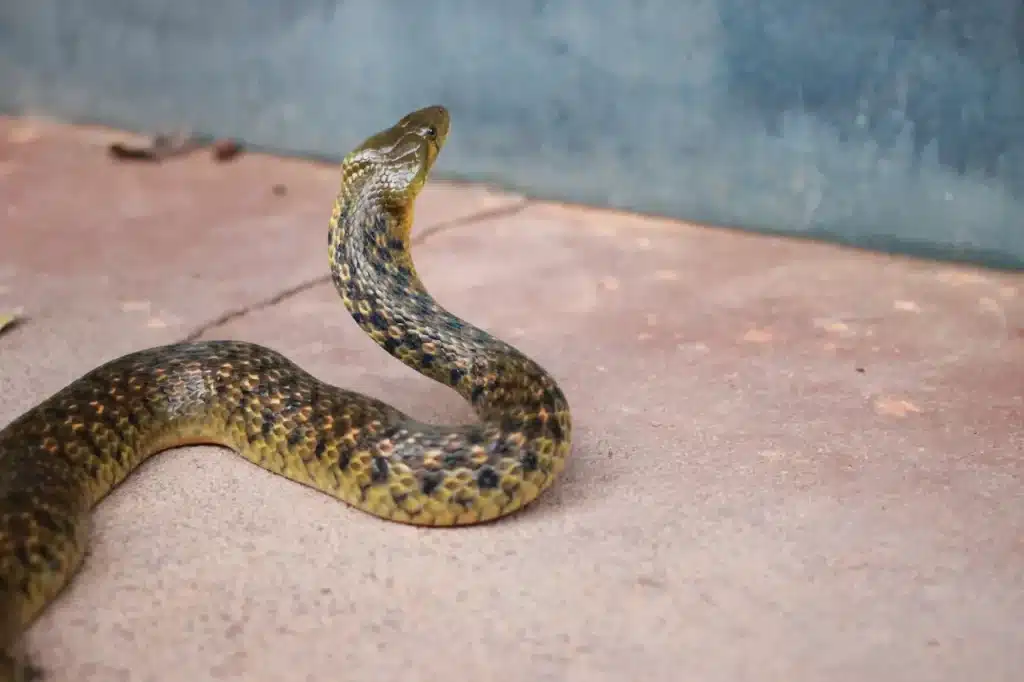 Banded Krait — black and yellow banded body" class="wp-image-69" />
Key takeaways #
- Context matters more than rules of thumb. Thailand’s snake fauna varies meaningfully by region, by season, and by habitat. Advice that holds in southern wet forest does not always hold in northern hill country or in the central agricultural plains.
- Prevention is high-leverage. Most serious snake-related incidents in Thailand are downstream of three preventable behaviours — reaching where you cannot see, walking forest paths at night without a torch, and attempting to handle or kill snakes rather than call professional removal.
- Hospital access is the real safety net. Thai provincial hospitals stock the standard polyvalent antivenoms. The single biggest predictor of bad outcome from a serious bite is delay in reaching one of those hospitals.
- Citizen-science records help. Even casual photographs with location data, posted to platforms like iNaturalist, contribute to the regional knowledge base. Most Thai snake species have surprisingly thin distribution data; one well-documented sighting can fill a real gap.
Common questions #
How likely am I to see a snake on a casual visit to Thailand?
Lower than you probably expect. A casual three-hour daytime forest hike in southern Thailand has roughly a 5–10% chance of producing any snake encounter at all, and roughly a 0.5–1% chance of producing a venomous-species sighting. Visitors who deliberately go looking — at night, in good habitat — see far more, but the casual exposure is genuinely low.
What time of year has the most snake activity?
The wet season (May through October) produces by far the most snake encounters across most of Thailand. Within that, two peaks: the start of the rains (April–June) when males are moving for breeding, and late wet season (September–November) when juvenile cohorts disperse from nest sites. The dry season (December–March) is genuinely quieter for snake-watching, particularly in the north and northeast.
Are Thai snakebite outcomes really that good?
For patients who reach a hospital within an hour or two of a venomous bite, yes — Thai outcomes are excellent by international standards. Mortality with appropriate antivenom and supportive care runs under 1% for most species. The deaths that do happen are concentrated in cases of significant pre-hospital delay, mis-identification of species, or in patients with serious co-morbidities. The Thai system is robust; the failure modes are mostly upstream of the hospital.
What is the single best preventive measure?
A torch at night. The single biggest reducer of Thai snakebite risk is consistent, eyes-down torch use on every walking path after dark. Most preventable bites in southern Thailand are foot-on-snake events on the ground at night, and a torch beam on the trail at metre-down angle prevents the great majority of them. Closed footwear is the second-biggest improvement; long trousers in dense vegetation is third.