Deadly Snakes All Over Thailand? — Why You Should Not Kill Them
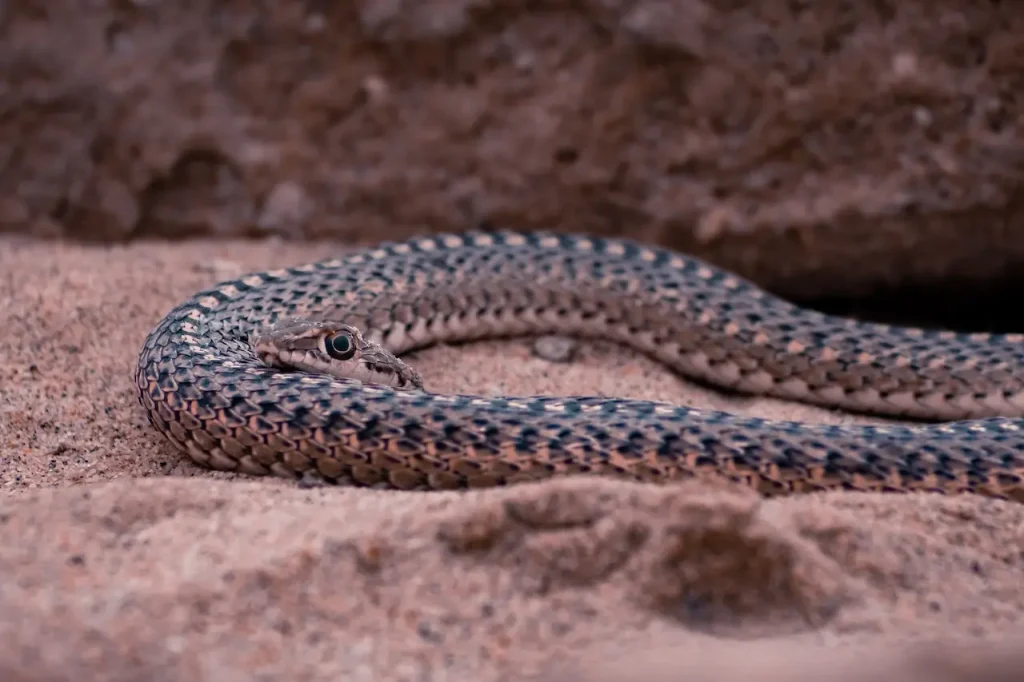
“Deadly snakes are everywhere — kill them on sight” is a sentence we hear often from frightened homeowners who have just found a snake in their garden. We understand the impulse. We disagree with the conclusion. The reality is that killing snakes you find in Thailand is almost always wrong — wrong ecologically, wrong from a personal-safety standpoint, often wrong legally, and wrong because it does not actually solve the problem you think it solves. This piece is the long version of why.

The personal-safety argument is wrong #
The single biggest reason not to kill a snake is that the great majority of Thai snakebite cases happen exactly when someone tries to kill or capture a snake. We have first-hand records of dozens of bite cases that match this pattern: villager sees snake, villager grabs stick or knife, villager gets bitten while attempting the kill. The species that produces the most bites in this category is the Malayan Pit Viper — a slow-moving snake that strikes accurately when cornered and held under a stick.
If you simply leave a snake alone, the probability of getting bitten approaches zero. If you attempt to kill it, the probability rises substantially. The math is one-sided: you are more likely to suffer the harm you are trying to prevent.
The ecological argument #
Snakes do useful work in any Thai landscape. The numbers are not subtle. A single adult Indo-Chinese Rat Snake eats 30–50 rats a year. A handful of these snakes around a village substantially reduce the rodent population, which in turn reduces crop damage and the spread of rat-borne disease (leptospirosis, rat-bite fever, hantavirus). Pythons and king cobras eat other snakes; remove the kings and the smaller venomous species expand. Pit vipers eat frogs and lizards in numbers that keep insect populations balanced.
Killing the snake fauna of a village creates a vacuum that gets filled by the wrong things — primarily rats. Several Thai studies of village-level rodent populations after snake-kill campaigns showed measurable rises in crop damage and rodent-borne disease within months.
The legal argument #
Many Thai snake species are protected under the Wild Animal Reservation and Protection Act. Killing protected species — the King Cobra, the Reticulated Python, the Burmese Python, several others — is technically a criminal offence. Enforcement is uneven, but the law exists. For most “common” species (cobras, kraits, pit vipers, common rat snakes), the legal status is more permissive but still favours non-lethal removal in residential and protected-area contexts. Local rules vary.
Even where the law is silent, the practical question is: do you have a permit to keep an exotic dead snake? The answer is usually no. Killing a snake creates a small legal hassle for nothing.
What actually works #
Three actions cover almost every situation:
- Leave it alone. Most snakes in a garden are passing through. They will be gone by morning. The species you really do not want to kill — pythons, king cobras, rat snakes — are exactly the species that are most likely to be moving through and least likely to settle.
- Call professional rescue. The volunteer fire brigade in most Thai provinces removes snakes for free. See our list of snake removal phone numbers across Thailand. Bangkok specifically has one of the best teams in the country.
- Reduce attractiveness. Keep grass cut, store outdoor cushions and tarps elevated, light walking paths after dark, manage rodent populations. Most “snakes in the garden” problems are downstream of one of these three things.
The “what about cobras and kraits” question #
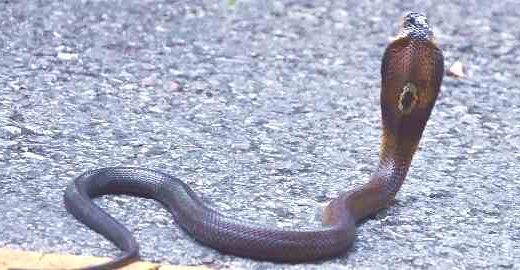
If a cobra or krait is genuinely in your house, the right answer is still not to kill it. Move yourself and your family out of the room. Close the door. Call rescue. The cobra will be gone within an hour with a team of three people, no danger to anyone. The alternative — attempting to kill a cobra in a confined space with a stick — is one of the highest-risk activities a Thai homeowner can attempt.
Bites from snakes that homeowners attempted to kill account for a meaningful fraction of all Thai snakebite admissions to provincial hospitals. The pattern is so consistent that hospital staff sometimes ask, almost rhetorically: “And were you trying to kill it?”. The answer is yes more often than not.
For more on the prevention side see avoiding snakebites in Thailand; on which species are actually around your area see where the snakes are in Thailand; for handling-without-killing see are Thailand snakes aggressive.
External references: the IUCN Red List for the conservation status of Thai snakes, and the Wikipedia overview of Thai wildlife law.
 keelback-snake1.jpg" alt="Red-necked Keelback in defensive pose" class="wp-image-5" srcset="https://thailandsnakes.com/wp-content/uploads/2010/02/red-necked-keelback-snake1.jpg 500w, https://thailandsnakes.com/wp-content/uploads/2010/02/red-necked-keelback-snake1-300x88.jpg 300w, https://thailandsnakes.com/wp-content/uploads/2010/02/red-necked-keelback-snake1-150x44.jpg 150w" sizes="(max-width: 500px) 100vw, 500px" />
Key takeaways #
- Context matters more than rules of thumb. Thailand’s snake fauna varies meaningfully by region, by season, and by habitat. Advice that holds in southern wet forest does not always hold in northern hill country or in the central agricultural plains.
- Prevention is high-leverage. Most serious snake-related incidents in Thailand are downstream of three preventable behaviours — reaching where you cannot see, walking forest paths at night without a torch, and attempting to handle or kill snakes rather than call professional removal.
- Hospital access is the real safety net. Thai provincial hospitals stock the standard polyvalent antivenoms. The single biggest predictor of bad outcome from a serious bite is delay in reaching one of those hospitals.
- Citizen-science records help. Even casual photographs with location data, posted to platforms like iNaturalist, contribute to the regional knowledge base. Most Thai snake species have surprisingly thin distribution data; one well-documented sighting can fill a real gap.
Common questions #
How likely am I to see a snake on a casual visit to Thailand?
Lower than you probably expect. A casual three-hour daytime forest hike in southern Thailand has roughly a 5–10% chance of producing any snake encounter at all, and roughly a 0.5–1% chance of producing a venomous-species sighting. Visitors who deliberately go looking — at night, in good habitat — see far more, but the casual exposure is genuinely low.
What time of year has the most snake activity?
The wet season (May through October) produces by far the most snake encounters across most of Thailand. Within that, two peaks: the start of the rains (April–June) when males are moving for breeding, and late wet season (September–November) when juvenile cohorts disperse from nest sites. The dry season (December–March) is genuinely quieter for snake-watching, particularly in the north and northeast.
Are Thai snakebite outcomes really that good?
For patients who reach a hospital within an hour or two of a venomous bite, yes — Thai outcomes are excellent by international standards. Mortality with appropriate antivenom and supportive care runs under 1% for most species. The deaths that do happen are concentrated in cases of significant pre-hospital delay, mis-identification of species, or in patients with serious co-morbidities. The Thai system is robust; the failure modes are mostly upstream of the hospital.
What is the single best preventive measure?
A torch at night. The single biggest reducer of Thai snakebite risk is consistent, eyes-down torch use on every walking path after dark. Most preventable bites in southern Thailand are foot-on-snake events on the ground at night, and a torch beam on the trail at metre-down angle prevents the great majority of them. Closed footwear is the second-biggest improvement; long trousers in dense vegetation is third.