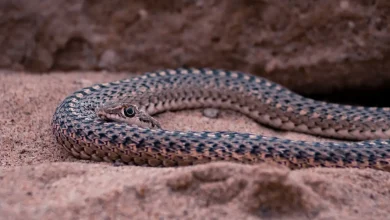
How to Identify Deadly Kraits in Thailand — Banded, Malayan, Red-Headed
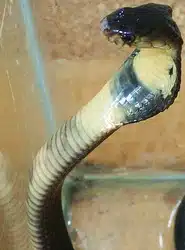
Thailand has three krait species, and all of them are dangerously venomous. Kraits are responsible for a quietly disproportionate share of Thai snakebite deaths — quietly, because the bites are often slow-onset and people may go to sleep “feeling fine” only to die overnight from respiratory paralysis. Recognising the three species is one of the higher-leverage learning tasks for anyone living rurally in Thailand. The three species: Banded Krait (Bungarus fasciatus), Malayan Krait (B. candidus), and Red-Headed Krait (B. flaviceps).
 keelback-snake1.jpg" alt="Krait body cross-section showing the triangular ridge along the spine that distinguishes kraits from many other banded Thai snakes" class="wp-image-5" srcset="https://thailandsnakes.com/wp-content/uploads/2010/02/red-necked-keelback-snake1.jpg 500w, https://thailandsnakes.com/wp-content/uploads/2010/02/red-necked-keelback-snake1-300x88.jpg 300w, https://thailandsnakes.com/wp-content/uploads/2010/02/red-necked-keelback-snake1-150x44.jpg 150w" sizes="(max-width: 500px) 100vw, 500px" />
The shared krait features #
All three Thai kraits share these features. Triangular body cross-section — the dorsal scale row along the spine is enlarged and the body has a clear ridge running the length when viewed end-on. Smooth, polished body scales. Head only slightly distinct from neck (unlike vipers). Round pupils. Tail short and tapering. Slow, deliberate movement — kraits do not race like rat snakes. Strongly nocturnal. Reluctant to bite during the day; alert and willing to bite at night.
Banded Krait (Bungarus fasciatus) #
The largest Thai krait, regularly 1.4–1.7 m. Bold alternating black and yellow bands of nearly equal width along the entire length, including the tail. Belly white or yellow with the bands continuing across. Tail tip blunt. Head slightly broader than neck. The species is widespread across Thailand from the south through the north, more numerous in lowland and disturbed habitat than the other two kraits. Active on warm wet nights.
Bites are typically slow-onset; respiratory paralysis develops over 4–24 hours. Mortality without antivenom is meaningful (10–30% in older series). With antivenom and ventilation, survival is good. See our Banded Krait species page for the full profile.
Malayan Krait (Bungarus candidus) #
Smaller than the Banded — adults usually 80–110 cm. The pattern is similar — black and white (not yellow) bands — but the bands are uneven. The dark bands are wider on the dorsum than on the flanks, and the white bands are usually narrower. The tail tip is pointed, not blunt. Belly mostly white, sometimes faintly banded. Range covers central and southern Thailand; less common in the deep north. The Malayan Krait is the krait responsible for most fatal Thai bites — bites are typically painless, slow-onset, and victims may not even realise they have been bitten until paralysis develops.
The famous “bites people in their sleep” reputation is real. Kraits enter rural houses at night looking for prey (often rats and other snakes), encounter sleeping people, and may bite. Mortality without antivenom is the highest of the three Thai kraits — over 50% in some series. See our Malayan Krait page for full details.
Red-Headed Krait (Bungarus flaviceps) #

The most striking and rarest of the three Thai kraits. Adults 1.0–1.5 m. The body is uniformly dark — usually a glossy blue-black — with a narrow pale or red dorsal line running the length, and the head and tail are bright orange-red. The combination is unmistakable. The species is restricted to mature forest in the deep south of Thailand and across into Malaysia and Indonesia. We have caught fewer than ten in twenty years of southern herping.
Bites are uncommon (because the species is uncommon) but the venom is extremely potent. The few documented cases describe rapid neurological onset within hours and require ventilatory support. See our Red-Headed Krait page for the species profile, and where to find one for the field-watching guide.
The crucial differences in one table #
- Banded Krait: Black + yellow bands of equal width, blunt tail, range = whole country, size 1.4–1.7 m, bite mortality without antivenom 10–30%.
- Malayan Krait: Black + white bands, uneven widths, pointed tail, range = central + south, size 0.8–1.1 m, bite mortality without antivenom 50%+.
- Red-Headed Krait: Glossy black body with red head + red tail, narrow pale dorsal line, range = deep south only, size 1.0–1.5 m, very rare, very dangerous.
What to do if you find one #
Do not handle. All three species are extremely dangerous and the slow-onset bite is the dangerous one — you might not feel an envenomating bite for an hour or two. If a krait is in your house, leave the room, close the door, and call professional snake removal (see our snake removal phone numbers). Sleep on a raised bed with a tucked mosquito net in any rural house in southern or central Thailand — kraits regularly enter houses at ground level, and the net is the single most effective preventive measure.
For the wider Thai dangerous-snake community see common venomous Thailand snakes. For first-aid see the snakebite first-aid guide.
External references: the Reptile Database genus page for Bungarus and the WHO snakebite envenoming hub for international treatment guidelines on krait bites.
Key takeaways #
- Context matters more than rules of thumb. Thailand’s snake fauna varies meaningfully by region, by season, and by habitat. Advice that holds in southern wet forest does not always hold in northern hill country or in the central agricultural plains.
- Prevention is high-leverage. Most serious snake-related incidents in Thailand are downstream of three preventable behaviours — reaching where you cannot see, walking forest paths at night without a torch, and attempting to handle or kill snakes rather than call professional removal.
- Hospital access is the real safety net. Thai provincial hospitals stock the standard polyvalent antivenoms. The single biggest predictor of bad outcome from a serious bite is delay in reaching one of those hospitals.
- Citizen-science records help. Even casual photographs with location data, posted to platforms like iNaturalist, contribute to the regional knowledge base. Most Thai snake species have surprisingly thin distribution data; one well-documented sighting can fill a real gap.
Common questions #
How likely am I to see a snake on a casual visit to Thailand?
Lower than you probably expect. A casual three-hour daytime forest hike in southern Thailand has roughly a 5–10% chance of producing any snake encounter at all, and roughly a 0.5–1% chance of producing a venomous-species sighting. Visitors who deliberately go looking — at night, in good habitat — see far more, but the casual exposure is genuinely low.
What time of year has the most snake activity?
The wet season (May through October) produces by far the most snake encounters across most of Thailand. Within that, two peaks: the start of the rains (April–June) when males are moving for breeding, and late wet season (September–November) when juvenile cohorts disperse from nest sites. The dry season (December–March) is genuinely quieter for snake-watching, particularly in the north and northeast.
Are Thai snakebite outcomes really that good?
For patients who reach a hospital within an hour or two of a venomous bite, yes — Thai outcomes are excellent by international standards. Mortality with appropriate antivenom and supportive care runs under 1% for most species. The deaths that do happen are concentrated in cases of significant pre-hospital delay, mis-identification of species, or in patients with serious co-morbidities. The Thai system is robust; the failure modes are mostly upstream of the hospital.
What is the single best preventive measure?
A torch at night. The single biggest reducer of Thai snakebite risk is consistent, eyes-down torch use on every walking path after dark. Most preventable bites in southern Thailand are foot-on-snake events on the ground at night, and a torch beam on the trail at metre-down angle prevents the great majority of them. Closed footwear is the second-biggest improvement; long trousers in dense vegetation is third.