Thailand Snake Trap That Actually Works — Funnel Traps for Property Owners
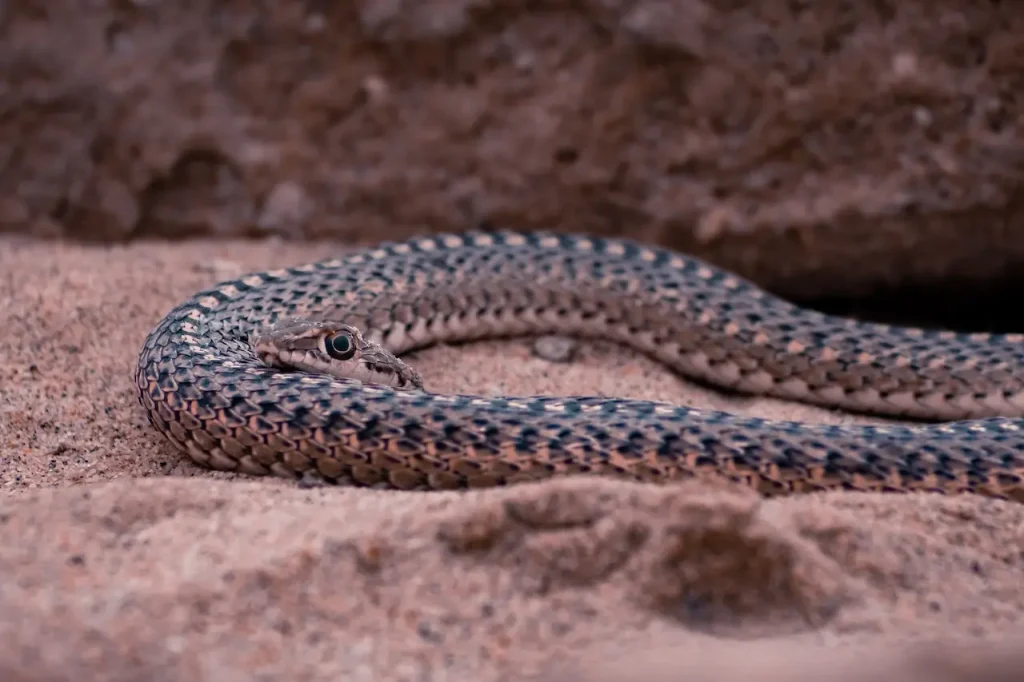
Property owners and rural homeowners frequently ask whether a “snake trap” is a viable option for managing a recurring snake problem. The honest answer is: yes, properly designed funnel traps work, and they are vastly safer and more effective than the various sticky-board traps and folk-remedy options sold in some markets. This is the practical write-up of the simple funnel trap design we have used and recommend.

Why funnel traps work #
Snakes follow edges. Walls, fence lines, drainage channels, the bases of hedges — all of these are travel corridors that snakes use repeatedly. A funnel trap placed along an edge intercepts the snake into a smooth-sided container with a one-way entry. The snake cannot easily climb back out and is held safely until you check the trap.
The key features of a working trap: the funnel mouth flush with the substrate so snakes do not have to climb over a lip; the funnel inverted so escape requires going up the same way the snake came down; the body of the trap with smooth interior so the snake cannot purchase grip on the walls; ventilation holes so the snake does not overheat; an opaque body so the snake stays calm and does not strike at light shifts.
Simple build #
A 5-litre rectangular plastic container, a section of 75 mm PVC pipe (length ~30 cm), a few cable ties, and ventilation holes. Cut a hole in the side of the container near the bottom — same diameter as the pipe. Insert the pipe so it angles slightly downward into the container with the outer end flush with the container wall (or slightly below substrate level when buried). Cable-tie the pipe in place. Drill ventilation holes near the top of the container. Bury the container so the funnel entry is at substrate level. Cover the top of the container with a lid that has more ventilation holes.
Place the trap along a known travel edge — between a known shelter (chicken coop, pile of bricks) and a known feeding area (vegetable garden, water source). Check daily.
What to do with captured snakes #
Three options:
- For non-venomous species: Release at a different point on the property (further from the buildings) or relocate to nearby semi-wild habitat at least 1 km away.
- For venomous species: Do not attempt to handle. Phone the local volunteer fire-brigade snake-rescue team. They will collect the snake from your trap. See our list of snake removal phone numbers across Thailand.
- For ID-uncertain snakes: Photograph through the trap mesh, post to iNaturalist for ID, or consult a herper for help. Do not release until you know what species it is.
What does NOT work #
- Sticky-board traps. Cruel, slow, and the snake is impossible to remove without injury. Avoid.
- Sulfur powder. Old folk remedy. Does not work.
- Mothballs. Toxic to pets, ineffective against snakes.
- “Snake repellent” commercial products. Most have no evidence of efficacy.
- Cats and chickens. The cats and chickens often lose to the snakes.
For the broader picture on managing snakes around a property see our notes on should you kill Thailand snakes and avoiding snakebites in Thailand.
Reducing the need for traps in the first place #
The single biggest reduction in unwanted snake encounters comes from removing rats. Snakes are following rats. If your property has rodent control, the snake numbers drop. After that: cut grass short around buildings, keep stored materials elevated rather than ground-pile, and light footpaths after dark. These three changes reduce snake encounters by maybe 70-80% in our experience.
External references: the Wikipedia article on snake traps covers various global designs, and Save The Snakes has guidance on humane snake management.
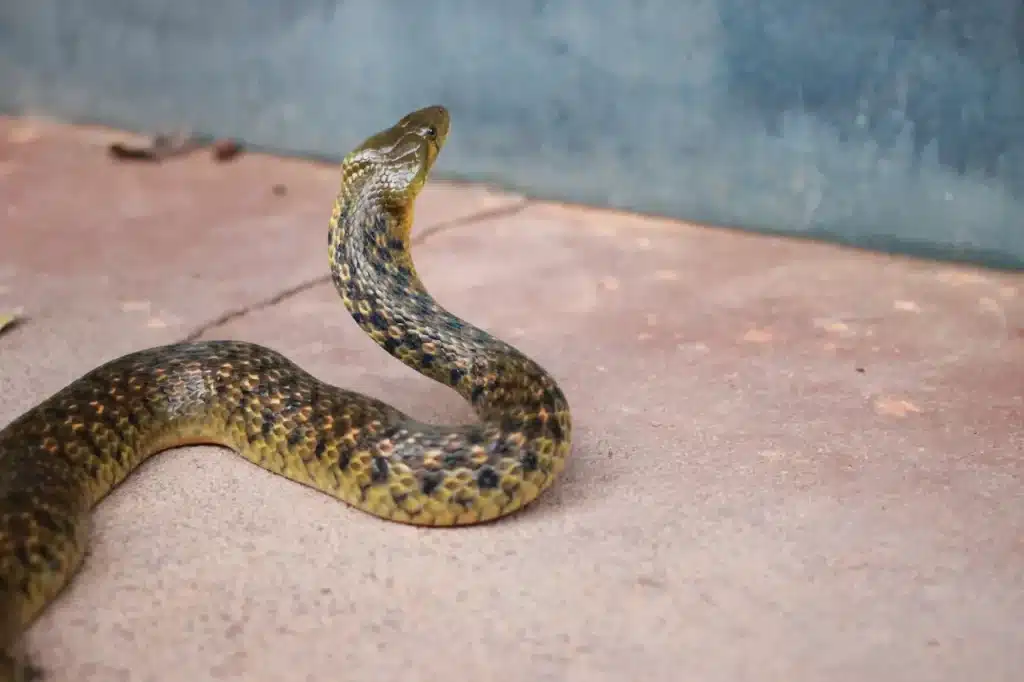 Banded Krait — black and yellow banded body" class="wp-image-69" />
Key takeaways #
- Context matters more than rules of thumb. Thailand’s snake fauna varies meaningfully by region, by season, and by habitat. Advice that holds in southern wet forest does not always hold in northern hill country or in the central agricultural plains.
- Prevention is high-leverage. Most serious snake-related incidents in Thailand are downstream of three preventable behaviours — reaching where you cannot see, walking forest paths at night without a torch, and attempting to handle or kill snakes rather than call professional removal.
- Hospital access is the real safety net. Thai provincial hospitals stock the standard polyvalent antivenoms. The single biggest predictor of bad outcome from a serious bite is delay in reaching one of those hospitals.
- Citizen-science records help. Even casual photographs with location data, posted to platforms like iNaturalist, contribute to the regional knowledge base. Most Thai snake species have surprisingly thin distribution data; one well-documented sighting can fill a real gap.
Common questions #
How likely am I to see a snake on a casual visit to Thailand?
Lower than you probably expect. A casual three-hour daytime forest hike in southern Thailand has roughly a 5–10% chance of producing any snake encounter at all, and roughly a 0.5–1% chance of producing a venomous-species sighting. Visitors who deliberately go looking — at night, in good habitat — see far more, but the casual exposure is genuinely low.
What time of year has the most snake activity?
The wet season (May through October) produces by far the most snake encounters across most of Thailand. Within that, two peaks: the start of the rains (April–June) when males are moving for breeding, and late wet season (September–November) when juvenile cohorts disperse from nest sites. The dry season (December–March) is genuinely quieter for snake-watching, particularly in the north and northeast.
Are Thai snakebite outcomes really that good?
For patients who reach a hospital within an hour or two of a venomous bite, yes — Thai outcomes are excellent by international standards. Mortality with appropriate antivenom and supportive care runs under 1% for most species. The deaths that do happen are concentrated in cases of significant pre-hospital delay, mis-identification of species, or in patients with serious co-morbidities. The Thai system is robust; the failure modes are mostly upstream of the hospital.
What is the single best preventive measure?
A torch at night. The single biggest reducer of Thai snakebite risk is consistent, eyes-down torch use on every walking path after dark. Most preventable bites in southern Thailand are foot-on-snake events on the ground at night, and a torch beam on the trail at metre-down angle prevents the great majority of them. Closed footwear is the second-biggest improvement; long trousers in dense vegetation is third.