- “A Photographic Guide to the Snakes and Other Reptiles of Thailand and South-East Asia” by Merel J. Cox, Peter Paul van Dijk, Jarujin Nabhitabhata, and Kumthorn Thirakhupt. The standard photographic field guide for the region. Good colour plates, decent species coverage, accessible writing.
- “Snakes of Thailand” by Lawan Chanhome and others (multiple editions over the years). The local reference, with useful Thai-language and English-language editions. Particularly strong on the medically important species.
- “The Field Guide to the Reptiles of Southeast Asia” by Indraneil Das. Broader regional coverage, useful for serious herpers working across multiple countries.
- “Snakes of Southeast Asia: Including Borneo, Sumatra, Java” by Mark O’Shea. Less comprehensive on Thailand specifically but excellent photographs and natural-history detail.
For deeper academic reading, the published Thai herpetology research from the Sirindhorn Wildlife Research and Education Centre and various Thai university programs is increasingly accessible online. The Thai journal Tropical Natural History publishes new species descriptions and faunistic notes regularly.
Where to buy them #
- Asia Books and Kinokuniya in Bangkok — both stock the major Thai herpetology titles in English.
- Local Thai language bookshops for the Lawan Chanhome editions and other Thai-language references.
- Online via Amazon, Book Depository, NHBS for international shipping. The NHBS specialist natural history bookstore is particularly useful for Asian field guides.
- Used-book channels. Some of the older editions of the Cox guide and Das guide are out of print and only available second-hand.
Snake-themed merchandise #
For shirts, prints, and other snake merchandise, the better sources are usually independent print-on-demand sites that license from herpetology photographers. Several Thai-resident photographers run small online stores with their own Thai snake photography. We do not run merchandise ourselves — the focus is on the reference content — but we are happy to recommend specific sources by email if readers ask.
What we’d avoid #
- Snake-skin products. The wildlife trade in skins (especially Reticulated Python and Blood Python) has been a major driver of population decline. Buying skin products supports the harvest.
- “Snake oil” or any traditional medicine products derived from snakes. None have proven medical efficacy and the trade contributes to species decline.
- Live snakes from non-permitted dealers. Captive-bred from licensed breeders is fine where legal; wild-caught from informal markets is illegal and harmful.
For the broader context on snake conservation see our notes on should you kill Thailand snakes and the snake research category. For our reading-related references see best of articles.
External references: NHBS (Natural History Books) for specialist field guides, and the Reptile Database for the canonical species references.
Key takeaways #
- Context matters more than rules of thumb. Thailand’s snake fauna varies meaningfully by region, by season, and by habitat. Advice that holds in southern wet forest does not always hold in northern hill country or in the central agricultural plains.
- Prevention is high-leverage. Most serious snake-related incidents in Thailand are downstream of three preventable behaviours — reaching where you cannot see, walking forest paths at night without a torch, and attempting to handle or kill snakes rather than call professional removal.
- Hospital access is the real safety net. Thai provincial hospitals stock the standard polyvalent antivenoms. The single biggest predictor of bad outcome from a serious bite is delay in reaching one of those hospitals.
- Citizen-science records help. Even casual photographs with location data, posted to platforms like iNaturalist, contribute to the regional knowledge base. Most Thai snake species have surprisingly thin distribution data; one well-documented sighting can fill a real gap.
Common questions #
How likely am I to see a snake on a casual visit to Thailand?
Lower than you probably expect. A casual three-hour daytime forest hike in southern Thailand has roughly a 5–10% chance of producing any snake encounter at all, and roughly a 0.5–1% chance of producing a venomous-species sighting. Visitors who deliberately go looking — at night, in good habitat — see far more, but the casual exposure is genuinely low.
What time of year has the most snake activity?
The wet season (May through October) produces by far the most snake encounters across most of Thailand. Within that, two peaks: the start of the rains (April–June) when males are moving for breeding, and late wet season (September–November) when juvenile cohorts disperse from nest sites. The dry season (December–March) is genuinely quieter for snake-watching, particularly in the north and northeast.
Are Thai snakebite outcomes really that good?
For patients who reach a hospital within an hour or two of a venomous bite, yes — Thai outcomes are excellent by international standards. Mortality with appropriate antivenom and supportive care runs under 1% for most species. The deaths that do happen are concentrated in cases of significant pre-hospital delay, mis-identification of species, or in patients with serious co-morbidities. The Thai system is robust; the failure modes are mostly upstream of the hospital.
What is the single best preventive measure?
A torch at night. The single biggest reducer of Thai snakebite risk is consistent, eyes-down torch use on every walking path after dark. Most preventable bites in southern Thailand are foot-on-snake events on the ground at night, and a torch beam on the trail at metre-down angle prevents the great majority of them. Closed footwear is the second-biggest improvement; long trousers in dense vegetation is third.
- Asia Books and Kinokuniya in Bangkok — both stock the major Thai herpetology titles in English.
- Local Thai language bookshops for the Lawan Chanhome editions and other Thai-language references.
- Online via Amazon, Book Depository, NHBS for international shipping. The NHBS specialist natural history bookstore is particularly useful for Asian field guides.
- Used-book channels. Some of the older editions of the Cox guide and Das guide are out of print and only available second-hand.
Snake-themed merchandise #
For shirts, prints, and other snake merchandise, the better sources are usually independent print-on-demand sites that license from herpetology photographers. Several Thai-resident photographers run small online stores with their own Thai snake photography. We do not run merchandise ourselves — the focus is on the reference content — but we are happy to recommend specific sources by email if readers ask.
What we’d avoid #
- Snake-skin products. The wildlife trade in skins (especially Reticulated Python and Blood Python) has been a major driver of population decline. Buying skin products supports the harvest.
- “Snake oil” or any traditional medicine products derived from snakes. None have proven medical efficacy and the trade contributes to species decline.
- Live snakes from non-permitted dealers. Captive-bred from licensed breeders is fine where legal; wild-caught from informal markets is illegal and harmful.
For the broader context on snake conservation see our notes on should you kill Thailand snakes and the snake research category. For our reading-related references see best of articles.
External references: NHBS (Natural History Books) for specialist field guides, and the Reptile Database for the canonical species references.
- “A Photographic Guide to the Snakes and Other Reptiles of Thailand and South-East Asia” by Merel J. Cox, Peter Paul van Dijk, Jarujin Nabhitabhata, and Kumthorn Thirakhupt. The standard photographic field guide for the region. Good colour plates, decent species coverage, accessible writing.
- “Snakes of Thailand” by Lawan Chanhome and others (multiple editions over the years). The local reference, with useful Thai-language and English-language editions. Particularly strong on the medically important species.
- “The Field Guide to the Reptiles of Southeast Asia” by Indraneil Das. Broader regional coverage, useful for serious herpers working across multiple countries.
- “Snakes of Southeast Asia: Including Borneo, Sumatra, Java” by Mark O’Shea. Less comprehensive on Thailand specifically but excellent photographs and natural-history detail.
For deeper academic reading, the published Thai herpetology research from the Sirindhorn Wildlife Research and Education Centre and various Thai university programs is increasingly accessible online. The Thai journal Tropical Natural History publishes new species descriptions and faunistic notes regularly.
Where to buy them #
- Asia Books and Kinokuniya in Bangkok — both stock the major Thai herpetology titles in English.
- Local Thai language bookshops for the Lawan Chanhome editions and other Thai-language references.
- Online via Amazon, Book Depository, NHBS for international shipping. The NHBS specialist natural history bookstore is particularly useful for Asian field guides.
- Used-book channels. Some of the older editions of the Cox guide and Das guide are out of print and only available second-hand.
Snake-themed merchandise #
For shirts, prints, and other snake merchandise, the better sources are usually independent print-on-demand sites that license from herpetology photographers. Several Thai-resident photographers run small online stores with their own Thai snake photography. We do not run merchandise ourselves — the focus is on the reference content — but we are happy to recommend specific sources by email if readers ask.
What we’d avoid #
- Snake-skin products. The wildlife trade in skins (especially Reticulated Python and Blood Python) has been a major driver of population decline. Buying skin products supports the harvest.
- “Snake oil” or any traditional medicine products derived from snakes. None have proven medical efficacy and the trade contributes to species decline.
- Live snakes from non-permitted dealers. Captive-bred from licensed breeders is fine where legal; wild-caught from informal markets is illegal and harmful.
For the broader context on snake conservation see our notes on should you kill Thailand snakes and the snake research category. For our reading-related references see best of articles.
External references: NHBS (Natural History Books) for specialist field guides, and the Reptile Database for the canonical species references.
Key takeaways #
- Context matters more than rules of thumb. Thailand’s snake fauna varies meaningfully by region, by season, and by habitat. Advice that holds in southern wet forest does not always hold in northern hill country or in the central agricultural plains.
- Prevention is high-leverage. Most serious snake-related incidents in Thailand are downstream of three preventable behaviours — reaching where you cannot see, walking forest paths at night without a torch, and attempting to handle or kill snakes rather than call professional removal.
- Hospital access is the real safety net. Thai provincial hospitals stock the standard polyvalent antivenoms. The single biggest predictor of bad outcome from a serious bite is delay in reaching one of those hospitals.
- Citizen-science records help. Even casual photographs with location data, posted to platforms like iNaturalist, contribute to the regional knowledge base. Most Thai snake species have surprisingly thin distribution data; one well-documented sighting can fill a real gap.
Common questions #
How likely am I to see a snake on a casual visit to Thailand?
Lower than you probably expect. A casual three-hour daytime forest hike in southern Thailand has roughly a 5–10% chance of producing any snake encounter at all, and roughly a 0.5–1% chance of producing a venomous-species sighting. Visitors who deliberately go looking — at night, in good habitat — see far more, but the casual exposure is genuinely low.
What time of year has the most snake activity?
The wet season (May through October) produces by far the most snake encounters across most of Thailand. Within that, two peaks: the start of the rains (April–June) when males are moving for breeding, and late wet season (September–November) when juvenile cohorts disperse from nest sites. The dry season (December–March) is genuinely quieter for snake-watching, particularly in the north and northeast.
Are Thai snakebite outcomes really that good?
For patients who reach a hospital within an hour or two of a venomous bite, yes — Thai outcomes are excellent by international standards. Mortality with appropriate antivenom and supportive care runs under 1% for most species. The deaths that do happen are concentrated in cases of significant pre-hospital delay, mis-identification of species, or in patients with serious co-morbidities. The Thai system is robust; the failure modes are mostly upstream of the hospital.
What is the single best preventive measure?
A torch at night. The single biggest reducer of Thai snakebite risk is consistent, eyes-down torch use on every walking path after dark. Most preventable bites in southern Thailand are foot-on-snake events on the ground at night, and a torch beam on the trail at metre-down angle prevents the great majority of them. Closed footwear is the second-biggest improvement; long trousers in dense vegetation is third.
- Asia Books and Kinokuniya in Bangkok — both stock the major Thai herpetology titles in English.
- Local Thai language bookshops for the Lawan Chanhome editions and other Thai-language references.
- Online via Amazon, Book Depository, NHBS for international shipping. The NHBS specialist natural history bookstore is particularly useful for Asian field guides.
- Used-book channels. Some of the older editions of the Cox guide and Das guide are out of print and only available second-hand.
Snake-themed merchandise #
For shirts, prints, and other snake merchandise, the better sources are usually independent print-on-demand sites that license from herpetology photographers. Several Thai-resident photographers run small online stores with their own Thai snake photography. We do not run merchandise ourselves — the focus is on the reference content — but we are happy to recommend specific sources by email if readers ask.
What we’d avoid #
- Snake-skin products. The wildlife trade in skins (especially Reticulated Python and Blood Python) has been a major driver of population decline. Buying skin products supports the harvest.
- “Snake oil” or any traditional medicine products derived from snakes. None have proven medical efficacy and the trade contributes to species decline.
- Live snakes from non-permitted dealers. Captive-bred from licensed breeders is fine where legal; wild-caught from informal markets is illegal and harmful.
For the broader context on snake conservation see our notes on should you kill Thailand snakes and the snake research category. For our reading-related references see best of articles.
External references: NHBS (Natural History Books) for specialist field guides, and the Reptile Database for the canonical species references.
- “A Photographic Guide to the Snakes and Other Reptiles of Thailand and South-East Asia” by Merel J. Cox, Peter Paul van Dijk, Jarujin Nabhitabhata, and Kumthorn Thirakhupt. The standard photographic field guide for the region. Good colour plates, decent species coverage, accessible writing.
- “Snakes of Thailand” by Lawan Chanhome and others (multiple editions over the years). The local reference, with useful Thai-language and English-language editions. Particularly strong on the medically important species.
- “The Field Guide to the Reptiles of Southeast Asia” by Indraneil Das. Broader regional coverage, useful for serious herpers working across multiple countries.
- “Snakes of Southeast Asia: Including Borneo, Sumatra, Java” by Mark O’Shea. Less comprehensive on Thailand specifically but excellent photographs and natural-history detail.
For deeper academic reading, the published Thai herpetology research from the Sirindhorn Wildlife Research and Education Centre and various Thai university programs is increasingly accessible online. The Thai journal Tropical Natural History publishes new species descriptions and faunistic notes regularly.
Where to buy them #
- Asia Books and Kinokuniya in Bangkok — both stock the major Thai herpetology titles in English.
- Local Thai language bookshops for the Lawan Chanhome editions and other Thai-language references.
- Online via Amazon, Book Depository, NHBS for international shipping. The NHBS specialist natural history bookstore is particularly useful for Asian field guides.
- Used-book channels. Some of the older editions of the Cox guide and Das guide are out of print and only available second-hand.
Snake-themed merchandise #
For shirts, prints, and other snake merchandise, the better sources are usually independent print-on-demand sites that license from herpetology photographers. Several Thai-resident photographers run small online stores with their own Thai snake photography. We do not run merchandise ourselves — the focus is on the reference content — but we are happy to recommend specific sources by email if readers ask.
What we’d avoid #
- Snake-skin products. The wildlife trade in skins (especially Reticulated Python and Blood Python) has been a major driver of population decline. Buying skin products supports the harvest.
- “Snake oil” or any traditional medicine products derived from snakes. None have proven medical efficacy and the trade contributes to species decline.
- Live snakes from non-permitted dealers. Captive-bred from licensed breeders is fine where legal; wild-caught from informal markets is illegal and harmful.
For the broader context on snake conservation see our notes on should you kill Thailand snakes and the snake research category. For our reading-related references see best of articles.
External references: NHBS (Natural History Books) for specialist field guides, and the Reptile Database for the canonical species references.
Key takeaways #
- Context matters more than rules of thumb. Thailand’s snake fauna varies meaningfully by region, by season, and by habitat. Advice that holds in southern wet forest does not always hold in northern hill country or in the central agricultural plains.
- Prevention is high-leverage. Most serious snake-related incidents in Thailand are downstream of three preventable behaviours — reaching where you cannot see, walking forest paths at night without a torch, and attempting to handle or kill snakes rather than call professional removal.
- Hospital access is the real safety net. Thai provincial hospitals stock the standard polyvalent antivenoms. The single biggest predictor of bad outcome from a serious bite is delay in reaching one of those hospitals.
- Citizen-science records help. Even casual photographs with location data, posted to platforms like iNaturalist, contribute to the regional knowledge base. Most Thai snake species have surprisingly thin distribution data; one well-documented sighting can fill a real gap.
Common questions #
How likely am I to see a snake on a casual visit to Thailand?
Lower than you probably expect. A casual three-hour daytime forest hike in southern Thailand has roughly a 5–10% chance of producing any snake encounter at all, and roughly a 0.5–1% chance of producing a venomous-species sighting. Visitors who deliberately go looking — at night, in good habitat — see far more, but the casual exposure is genuinely low.
What time of year has the most snake activity?
The wet season (May through October) produces by far the most snake encounters across most of Thailand. Within that, two peaks: the start of the rains (April–June) when males are moving for breeding, and late wet season (September–November) when juvenile cohorts disperse from nest sites. The dry season (December–March) is genuinely quieter for snake-watching, particularly in the north and northeast.
Are Thai snakebite outcomes really that good?
For patients who reach a hospital within an hour or two of a venomous bite, yes — Thai outcomes are excellent by international standards. Mortality with appropriate antivenom and supportive care runs under 1% for most species. The deaths that do happen are concentrated in cases of significant pre-hospital delay, mis-identification of species, or in patients with serious co-morbidities. The Thai system is robust; the failure modes are mostly upstream of the hospital.
What is the single best preventive measure?
A torch at night. The single biggest reducer of Thai snakebite risk is consistent, eyes-down torch use on every walking path after dark. Most preventable bites in southern Thailand are foot-on-snake events on the ground at night, and a torch beam on the trail at metre-down angle prevents the great majority of them. Closed footwear is the second-biggest improvement; long trousers in dense vegetation is third.
- “A Photographic Guide to the Snakes and Other Reptiles of Thailand and South-East Asia” by Merel J. Cox, Peter Paul van Dijk, Jarujin Nabhitabhata, and Kumthorn Thirakhupt. The standard photographic field guide for the region. Good colour plates, decent species coverage, accessible writing.
- “Snakes of Thailand” by Lawan Chanhome and others (multiple editions over the years). The local reference, with useful Thai-language and English-language editions. Particularly strong on the medically important species.
- “The Field Guide to the Reptiles of Southeast Asia” by Indraneil Das. Broader regional coverage, useful for serious herpers working across multiple countries.
- “Snakes of Southeast Asia: Including Borneo, Sumatra, Java” by Mark O’Shea. Less comprehensive on Thailand specifically but excellent photographs and natural-history detail.
For deeper academic reading, the published Thai herpetology research from the Sirindhorn Wildlife Research and Education Centre and various Thai university programs is increasingly accessible online. The Thai journal Tropical Natural History publishes new species descriptions and faunistic notes regularly.
Where to buy them #
- Asia Books and Kinokuniya in Bangkok — both stock the major Thai herpetology titles in English.
- Local Thai language bookshops for the Lawan Chanhome editions and other Thai-language references.
- Online via Amazon, Book Depository, NHBS for international shipping. The NHBS specialist natural history bookstore is particularly useful for Asian field guides.
- Used-book channels. Some of the older editions of the Cox guide and Das guide are out of print and only available second-hand.
Snake-themed merchandise #
For shirts, prints, and other snake merchandise, the better sources are usually independent print-on-demand sites that license from herpetology photographers. Several Thai-resident photographers run small online stores with their own Thai snake photography. We do not run merchandise ourselves — the focus is on the reference content — but we are happy to recommend specific sources by email if readers ask.
What we’d avoid #
- Snake-skin products. The wildlife trade in skins (especially Reticulated Python and Blood Python) has been a major driver of population decline. Buying skin products supports the harvest.
- “Snake oil” or any traditional medicine products derived from snakes. None have proven medical efficacy and the trade contributes to species decline.
- Live snakes from non-permitted dealers. Captive-bred from licensed breeders is fine where legal; wild-caught from informal markets is illegal and harmful.
For the broader context on snake conservation see our notes on should you kill Thailand snakes and the snake research category. For our reading-related references see best of articles.
External references: NHBS (Natural History Books) for specialist field guides, and the Reptile Database for the canonical species references.
Key takeaways #
- Context matters more than rules of thumb. Thailand’s snake fauna varies meaningfully by region, by season, and by habitat. Advice that holds in southern wet forest does not always hold in northern hill country or in the central agricultural plains.
- Prevention is high-leverage. Most serious snake-related incidents in Thailand are downstream of three preventable behaviours — reaching where you cannot see, walking forest paths at night without a torch, and attempting to handle or kill snakes rather than call professional removal.
- Hospital access is the real safety net. Thai provincial hospitals stock the standard polyvalent antivenoms. The single biggest predictor of bad outcome from a serious bite is delay in reaching one of those hospitals.
- Citizen-science records help. Even casual photographs with location data, posted to platforms like iNaturalist, contribute to the regional knowledge base. Most Thai snake species have surprisingly thin distribution data; one well-documented sighting can fill a real gap.
Common questions #
How likely am I to see a snake on a casual visit to Thailand?
Lower than you probably expect. A casual three-hour daytime forest hike in southern Thailand has roughly a 5–10% chance of producing any snake encounter at all, and roughly a 0.5–1% chance of producing a venomous-species sighting. Visitors who deliberately go looking — at night, in good habitat — see far more, but the casual exposure is genuinely low.
What time of year has the most snake activity?
The wet season (May through October) produces by far the most snake encounters across most of Thailand. Within that, two peaks: the start of the rains (April–June) when males are moving for breeding, and late wet season (September–November) when juvenile cohorts disperse from nest sites. The dry season (December–March) is genuinely quieter for snake-watching, particularly in the north and northeast.
Are Thai snakebite outcomes really that good?
For patients who reach a hospital within an hour or two of a venomous bite, yes — Thai outcomes are excellent by international standards. Mortality with appropriate antivenom and supportive care runs under 1% for most species. The deaths that do happen are concentrated in cases of significant pre-hospital delay, mis-identification of species, or in patients with serious co-morbidities. The Thai system is robust; the failure modes are mostly upstream of the hospital.
What is the single best preventive measure?
A torch at night. The single biggest reducer of Thai snakebite risk is consistent, eyes-down torch use on every walking path after dark. Most preventable bites in southern Thailand are foot-on-snake events on the ground at night, and a torch beam on the trail at metre-down angle prevents the great majority of them. Closed footwear is the second-biggest improvement; long trousers in dense vegetation is third.
- Asia Books and Kinokuniya in Bangkok — both stock the major Thai herpetology titles in English.
- Local Thai language bookshops for the Lawan Chanhome editions and other Thai-language references.
- Online via Amazon, Book Depository, NHBS for international shipping. The NHBS specialist natural history bookstore is particularly useful for Asian field guides.
- Used-book channels. Some of the older editions of the Cox guide and Das guide are out of print and only available second-hand.
Snake-themed merchandise #
For shirts, prints, and other snake merchandise, the better sources are usually independent print-on-demand sites that license from herpetology photographers. Several Thai-resident photographers run small online stores with their own Thai snake photography. We do not run merchandise ourselves — the focus is on the reference content — but we are happy to recommend specific sources by email if readers ask.
What we’d avoid #
- Snake-skin products. The wildlife trade in skins (especially Reticulated Python and Blood Python) has been a major driver of population decline. Buying skin products supports the harvest.
- “Snake oil” or any traditional medicine products derived from snakes. None have proven medical efficacy and the trade contributes to species decline.
- Live snakes from non-permitted dealers. Captive-bred from licensed breeders is fine where legal; wild-caught from informal markets is illegal and harmful.
For the broader context on snake conservation see our notes on should you kill Thailand snakes and the snake research category. For our reading-related references see best of articles.
External references: NHBS (Natural History Books) for specialist field guides, and the Reptile Database for the canonical species references.
- “A Photographic Guide to the Snakes and Other Reptiles of Thailand and South-East Asia” by Merel J. Cox, Peter Paul van Dijk, Jarujin Nabhitabhata, and Kumthorn Thirakhupt. The standard photographic field guide for the region. Good colour plates, decent species coverage, accessible writing.
- “Snakes of Thailand” by Lawan Chanhome and others (multiple editions over the years). The local reference, with useful Thai-language and English-language editions. Particularly strong on the medically important species.
- “The Field Guide to the Reptiles of Southeast Asia” by Indraneil Das. Broader regional coverage, useful for serious herpers working across multiple countries.
- “Snakes of Southeast Asia: Including Borneo, Sumatra, Java” by Mark O’Shea. Less comprehensive on Thailand specifically but excellent photographs and natural-history detail.
For deeper academic reading, the published Thai herpetology research from the Sirindhorn Wildlife Research and Education Centre and various Thai university programs is increasingly accessible online. The Thai journal Tropical Natural History publishes new species descriptions and faunistic notes regularly.
Where to buy them #
- Asia Books and Kinokuniya in Bangkok — both stock the major Thai herpetology titles in English.
- Local Thai language bookshops for the Lawan Chanhome editions and other Thai-language references.
- Online via Amazon, Book Depository, NHBS for international shipping. The NHBS specialist natural history bookstore is particularly useful for Asian field guides.
- Used-book channels. Some of the older editions of the Cox guide and Das guide are out of print and only available second-hand.
Snake-themed merchandise #
For shirts, prints, and other snake merchandise, the better sources are usually independent print-on-demand sites that license from herpetology photographers. Several Thai-resident photographers run small online stores with their own Thai snake photography. We do not run merchandise ourselves — the focus is on the reference content — but we are happy to recommend specific sources by email if readers ask.
What we’d avoid #
- Snake-skin products. The wildlife trade in skins (especially Reticulated Python and Blood Python) has been a major driver of population decline. Buying skin products supports the harvest.
- “Snake oil” or any traditional medicine products derived from snakes. None have proven medical efficacy and the trade contributes to species decline.
- Live snakes from non-permitted dealers. Captive-bred from licensed breeders is fine where legal; wild-caught from informal markets is illegal and harmful.
For the broader context on snake conservation see our notes on should you kill Thailand snakes and the snake research category. For our reading-related references see best of articles.
External references: NHBS (Natural History Books) for specialist field guides, and the Reptile Database for the canonical species references.
Key takeaways #
- Context matters more than rules of thumb. Thailand’s snake fauna varies meaningfully by region, by season, and by habitat. Advice that holds in southern wet forest does not always hold in northern hill country or in the central agricultural plains.
- Prevention is high-leverage. Most serious snake-related incidents in Thailand are downstream of three preventable behaviours — reaching where you cannot see, walking forest paths at night without a torch, and attempting to handle or kill snakes rather than call professional removal.
- Hospital access is the real safety net. Thai provincial hospitals stock the standard polyvalent antivenoms. The single biggest predictor of bad outcome from a serious bite is delay in reaching one of those hospitals.
- Citizen-science records help. Even casual photographs with location data, posted to platforms like iNaturalist, contribute to the regional knowledge base. Most Thai snake species have surprisingly thin distribution data; one well-documented sighting can fill a real gap.
Common questions #
How likely am I to see a snake on a casual visit to Thailand?
Lower than you probably expect. A casual three-hour daytime forest hike in southern Thailand has roughly a 5–10% chance of producing any snake encounter at all, and roughly a 0.5–1% chance of producing a venomous-species sighting. Visitors who deliberately go looking — at night, in good habitat — see far more, but the casual exposure is genuinely low.
What time of year has the most snake activity?
The wet season (May through October) produces by far the most snake encounters across most of Thailand. Within that, two peaks: the start of the rains (April–June) when males are moving for breeding, and late wet season (September–November) when juvenile cohorts disperse from nest sites. The dry season (December–March) is genuinely quieter for snake-watching, particularly in the north and northeast.
Are Thai snakebite outcomes really that good?
For patients who reach a hospital within an hour or two of a venomous bite, yes — Thai outcomes are excellent by international standards. Mortality with appropriate antivenom and supportive care runs under 1% for most species. The deaths that do happen are concentrated in cases of significant pre-hospital delay, mis-identification of species, or in patients with serious co-morbidities. The Thai system is robust; the failure modes are mostly upstream of the hospital.
What is the single best preventive measure?
A torch at night. The single biggest reducer of Thai snakebite risk is consistent, eyes-down torch use on every walking path after dark. Most preventable bites in southern Thailand are foot-on-snake events on the ground at night, and a torch beam on the trail at metre-down angle prevents the great majority of them. Closed footwear is the second-biggest improvement; long trousers in dense vegetation is third.
- Asia Books and Kinokuniya in Bangkok — both stock the major Thai herpetology titles in English.
- Local Thai language bookshops for the Lawan Chanhome editions and other Thai-language references.
- Online via Amazon, Book Depository, NHBS for international shipping. The NHBS specialist natural history bookstore is particularly useful for Asian field guides.
- Used-book channels. Some of the older editions of the Cox guide and Das guide are out of print and only available second-hand.
Snake-themed merchandise #
For shirts, prints, and other snake merchandise, the better sources are usually independent print-on-demand sites that license from herpetology photographers. Several Thai-resident photographers run small online stores with their own Thai snake photography. We do not run merchandise ourselves — the focus is on the reference content — but we are happy to recommend specific sources by email if readers ask.
What we’d avoid #
- Snake-skin products. The wildlife trade in skins (especially Reticulated Python and Blood Python) has been a major driver of population decline. Buying skin products supports the harvest.
- “Snake oil” or any traditional medicine products derived from snakes. None have proven medical efficacy and the trade contributes to species decline.
- Live snakes from non-permitted dealers. Captive-bred from licensed breeders is fine where legal; wild-caught from informal markets is illegal and harmful.
For the broader context on snake conservation see our notes on should you kill Thailand snakes and the snake research category. For our reading-related references see best of articles.
External references: NHBS (Natural History Books) for specialist field guides, and the Reptile Database for the canonical species references.
- “A Photographic Guide to the Snakes and Other Reptiles of Thailand and South-East Asia” by Merel J. Cox, Peter Paul van Dijk, Jarujin Nabhitabhata, and Kumthorn Thirakhupt. The standard photographic field guide for the region. Good colour plates, decent species coverage, accessible writing.
- “Snakes of Thailand” by Lawan Chanhome and others (multiple editions over the years). The local reference, with useful Thai-language and English-language editions. Particularly strong on the medically important species.
- “The Field Guide to the Reptiles of Southeast Asia” by Indraneil Das. Broader regional coverage, useful for serious herpers working across multiple countries.
- “Snakes of Southeast Asia: Including Borneo, Sumatra, Java” by Mark O’Shea. Less comprehensive on Thailand specifically but excellent photographs and natural-history detail.
For deeper academic reading, the published Thai herpetology research from the Sirindhorn Wildlife Research and Education Centre and various Thai university programs is increasingly accessible online. The Thai journal Tropical Natural History publishes new species descriptions and faunistic notes regularly.
Where to buy them #
- Asia Books and Kinokuniya in Bangkok — both stock the major Thai herpetology titles in English.
- Local Thai language bookshops for the Lawan Chanhome editions and other Thai-language references.
- Online via Amazon, Book Depository, NHBS for international shipping. The NHBS specialist natural history bookstore is particularly useful for Asian field guides.
- Used-book channels. Some of the older editions of the Cox guide and Das guide are out of print and only available second-hand.
Snake-themed merchandise #
For shirts, prints, and other snake merchandise, the better sources are usually independent print-on-demand sites that license from herpetology photographers. Several Thai-resident photographers run small online stores with their own Thai snake photography. We do not run merchandise ourselves — the focus is on the reference content — but we are happy to recommend specific sources by email if readers ask.
What we’d avoid #
- Snake-skin products. The wildlife trade in skins (especially Reticulated Python and Blood Python) has been a major driver of population decline. Buying skin products supports the harvest.
- “Snake oil” or any traditional medicine products derived from snakes. None have proven medical efficacy and the trade contributes to species decline.
- Live snakes from non-permitted dealers. Captive-bred from licensed breeders is fine where legal; wild-caught from informal markets is illegal and harmful.
For the broader context on snake conservation see our notes on should you kill Thailand snakes and the snake research category. For our reading-related references see best of articles.
External references: NHBS (Natural History Books) for specialist field guides, and the Reptile Database for the canonical species references.
Key takeaways #
- Context matters more than rules of thumb. Thailand’s snake fauna varies meaningfully by region, by season, and by habitat. Advice that holds in southern wet forest does not always hold in northern hill country or in the central agricultural plains.
- Prevention is high-leverage. Most serious snake-related incidents in Thailand are downstream of three preventable behaviours — reaching where you cannot see, walking forest paths at night without a torch, and attempting to handle or kill snakes rather than call professional removal.
- Hospital access is the real safety net. Thai provincial hospitals stock the standard polyvalent antivenoms. The single biggest predictor of bad outcome from a serious bite is delay in reaching one of those hospitals.
- Citizen-science records help. Even casual photographs with location data, posted to platforms like iNaturalist, contribute to the regional knowledge base. Most Thai snake species have surprisingly thin distribution data; one well-documented sighting can fill a real gap.
Common questions #
How likely am I to see a snake on a casual visit to Thailand?
Lower than you probably expect. A casual three-hour daytime forest hike in southern Thailand has roughly a 5–10% chance of producing any snake encounter at all, and roughly a 0.5–1% chance of producing a venomous-species sighting. Visitors who deliberately go looking — at night, in good habitat — see far more, but the casual exposure is genuinely low.
What time of year has the most snake activity?
The wet season (May through October) produces by far the most snake encounters across most of Thailand. Within that, two peaks: the start of the rains (April–June) when males are moving for breeding, and late wet season (September–November) when juvenile cohorts disperse from nest sites. The dry season (December–March) is genuinely quieter for snake-watching, particularly in the north and northeast.
Are Thai snakebite outcomes really that good?
For patients who reach a hospital within an hour or two of a venomous bite, yes — Thai outcomes are excellent by international standards. Mortality with appropriate antivenom and supportive care runs under 1% for most species. The deaths that do happen are concentrated in cases of significant pre-hospital delay, mis-identification of species, or in patients with serious co-morbidities. The Thai system is robust; the failure modes are mostly upstream of the hospital.
What is the single best preventive measure?
A torch at night. The single biggest reducer of Thai snakebite risk is consistent, eyes-down torch use on every walking path after dark. Most preventable bites in southern Thailand are foot-on-snake events on the ground at night, and a torch beam on the trail at metre-down angle prevents the great majority of them. Closed footwear is the second-biggest improvement; long trousers in dense vegetation is third.
- “A Photographic Guide to the Snakes and Other Reptiles of Thailand and South-East Asia” by Merel J. Cox, Peter Paul van Dijk, Jarujin Nabhitabhata, and Kumthorn Thirakhupt. The standard photographic field guide for the region. Good colour plates, decent species coverage, accessible writing.
- “Snakes of Thailand” by Lawan Chanhome and others (multiple editions over the years). The local reference, with useful Thai-language and English-language editions. Particularly strong on the medically important species.
- “The Field Guide to the Reptiles of Southeast Asia” by Indraneil Das. Broader regional coverage, useful for serious herpers working across multiple countries.
- “Snakes of Southeast Asia: Including Borneo, Sumatra, Java” by Mark O’Shea. Less comprehensive on Thailand specifically but excellent photographs and natural-history detail.
For deeper academic reading, the published Thai herpetology research from the Sirindhorn Wildlife Research and Education Centre and various Thai university programs is increasingly accessible online. The Thai journal Tropical Natural History publishes new species descriptions and faunistic notes regularly.
Where to buy them #
- Asia Books and Kinokuniya in Bangkok — both stock the major Thai herpetology titles in English.
- Local Thai language bookshops for the Lawan Chanhome editions and other Thai-language references.
- Online via Amazon, Book Depository, NHBS for international shipping. The NHBS specialist natural history bookstore is particularly useful for Asian field guides.
- Used-book channels. Some of the older editions of the Cox guide and Das guide are out of print and only available second-hand.
Snake-themed merchandise #
For shirts, prints, and other snake merchandise, the better sources are usually independent print-on-demand sites that license from herpetology photographers. Several Thai-resident photographers run small online stores with their own Thai snake photography. We do not run merchandise ourselves — the focus is on the reference content — but we are happy to recommend specific sources by email if readers ask.
What we’d avoid #
- Snake-skin products. The wildlife trade in skins (especially Reticulated Python and Blood Python) has been a major driver of population decline. Buying skin products supports the harvest.
- “Snake oil” or any traditional medicine products derived from snakes. None have proven medical efficacy and the trade contributes to species decline.
- Live snakes from non-permitted dealers. Captive-bred from licensed breeders is fine where legal; wild-caught from informal markets is illegal and harmful.
For the broader context on snake conservation see our notes on should you kill Thailand snakes and the snake research category. For our reading-related references see best of articles.
External references: NHBS (Natural History Books) for specialist field guides, and the Reptile Database for the canonical species references.
Key takeaways #
- Context matters more than rules of thumb. Thailand’s snake fauna varies meaningfully by region, by season, and by habitat. Advice that holds in southern wet forest does not always hold in northern hill country or in the central agricultural plains.
- Prevention is high-leverage. Most serious snake-related incidents in Thailand are downstream of three preventable behaviours — reaching where you cannot see, walking forest paths at night without a torch, and attempting to handle or kill snakes rather than call professional removal.
- Hospital access is the real safety net. Thai provincial hospitals stock the standard polyvalent antivenoms. The single biggest predictor of bad outcome from a serious bite is delay in reaching one of those hospitals.
- Citizen-science records help. Even casual photographs with location data, posted to platforms like iNaturalist, contribute to the regional knowledge base. Most Thai snake species have surprisingly thin distribution data; one well-documented sighting can fill a real gap.
Common questions #
How likely am I to see a snake on a casual visit to Thailand?
Lower than you probably expect. A casual three-hour daytime forest hike in southern Thailand has roughly a 5–10% chance of producing any snake encounter at all, and roughly a 0.5–1% chance of producing a venomous-species sighting. Visitors who deliberately go looking — at night, in good habitat — see far more, but the casual exposure is genuinely low.
What time of year has the most snake activity?
The wet season (May through October) produces by far the most snake encounters across most of Thailand. Within that, two peaks: the start of the rains (April–June) when males are moving for breeding, and late wet season (September–November) when juvenile cohorts disperse from nest sites. The dry season (December–March) is genuinely quieter for snake-watching, particularly in the north and northeast.
Are Thai snakebite outcomes really that good?
For patients who reach a hospital within an hour or two of a venomous bite, yes — Thai outcomes are excellent by international standards. Mortality with appropriate antivenom and supportive care runs under 1% for most species. The deaths that do happen are concentrated in cases of significant pre-hospital delay, mis-identification of species, or in patients with serious co-morbidities. The Thai system is robust; the failure modes are mostly upstream of the hospital.
What is the single best preventive measure?
A torch at night. The single biggest reducer of Thai snakebite risk is consistent, eyes-down torch use on every walking path after dark. Most preventable bites in southern Thailand are foot-on-snake events on the ground at night, and a torch beam on the trail at metre-down angle prevents the great majority of them. Closed footwear is the second-biggest improvement; long trousers in dense vegetation is third.
- Asia Books and Kinokuniya in Bangkok — both stock the major Thai herpetology titles in English.
- Local Thai language bookshops for the Lawan Chanhome editions and other Thai-language references.
- Online via Amazon, Book Depository, NHBS for international shipping. The NHBS specialist natural history bookstore is particularly useful for Asian field guides.
- Used-book channels. Some of the older editions of the Cox guide and Das guide are out of print and only available second-hand.
Snake-themed merchandise #
For shirts, prints, and other snake merchandise, the better sources are usually independent print-on-demand sites that license from herpetology photographers. Several Thai-resident photographers run small online stores with their own Thai snake photography. We do not run merchandise ourselves — the focus is on the reference content — but we are happy to recommend specific sources by email if readers ask.
What we’d avoid #
- Snake-skin products. The wildlife trade in skins (especially Reticulated Python and Blood Python) has been a major driver of population decline. Buying skin products supports the harvest.
- “Snake oil” or any traditional medicine products derived from snakes. None have proven medical efficacy and the trade contributes to species decline.
- Live snakes from non-permitted dealers. Captive-bred from licensed breeders is fine where legal; wild-caught from informal markets is illegal and harmful.
For the broader context on snake conservation see our notes on should you kill Thailand snakes and the snake research category. For our reading-related references see best of articles.
External references: NHBS (Natural History Books) for specialist field guides, and the Reptile Database for the canonical species references.
- “A Photographic Guide to the Snakes and Other Reptiles of Thailand and South-East Asia” by Merel J. Cox, Peter Paul van Dijk, Jarujin Nabhitabhata, and Kumthorn Thirakhupt. The standard photographic field guide for the region. Good colour plates, decent species coverage, accessible writing.
- “Snakes of Thailand” by Lawan Chanhome and others (multiple editions over the years). The local reference, with useful Thai-language and English-language editions. Particularly strong on the medically important species.
- “The Field Guide to the Reptiles of Southeast Asia” by Indraneil Das. Broader regional coverage, useful for serious herpers working across multiple countries.
- “Snakes of Southeast Asia: Including Borneo, Sumatra, Java” by Mark O’Shea. Less comprehensive on Thailand specifically but excellent photographs and natural-history detail.
For deeper academic reading, the published Thai herpetology research from the Sirindhorn Wildlife Research and Education Centre and various Thai university programs is increasingly accessible online. The Thai journal Tropical Natural History publishes new species descriptions and faunistic notes regularly.
Where to buy them #
- Asia Books and Kinokuniya in Bangkok — both stock the major Thai herpetology titles in English.
- Local Thai language bookshops for the Lawan Chanhome editions and other Thai-language references.
- Online via Amazon, Book Depository, NHBS for international shipping. The NHBS specialist natural history bookstore is particularly useful for Asian field guides.
- Used-book channels. Some of the older editions of the Cox guide and Das guide are out of print and only available second-hand.
Snake-themed merchandise #
For shirts, prints, and other snake merchandise, the better sources are usually independent print-on-demand sites that license from herpetology photographers. Several Thai-resident photographers run small online stores with their own Thai snake photography. We do not run merchandise ourselves — the focus is on the reference content — but we are happy to recommend specific sources by email if readers ask.
What we’d avoid #
- Snake-skin products. The wildlife trade in skins (especially Reticulated Python and Blood Python) has been a major driver of population decline. Buying skin products supports the harvest.
- “Snake oil” or any traditional medicine products derived from snakes. None have proven medical efficacy and the trade contributes to species decline.
- Live snakes from non-permitted dealers. Captive-bred from licensed breeders is fine where legal; wild-caught from informal markets is illegal and harmful.
For the broader context on snake conservation see our notes on should you kill Thailand snakes and the snake research category. For our reading-related references see best of articles.
External references: NHBS (Natural History Books) for specialist field guides, and the Reptile Database for the canonical species references.
Key takeaways #
- Context matters more than rules of thumb. Thailand’s snake fauna varies meaningfully by region, by season, and by habitat. Advice that holds in southern wet forest does not always hold in northern hill country or in the central agricultural plains.
- Prevention is high-leverage. Most serious snake-related incidents in Thailand are downstream of three preventable behaviours — reaching where you cannot see, walking forest paths at night without a torch, and attempting to handle or kill snakes rather than call professional removal.
- Hospital access is the real safety net. Thai provincial hospitals stock the standard polyvalent antivenoms. The single biggest predictor of bad outcome from a serious bite is delay in reaching one of those hospitals.
- Citizen-science records help. Even casual photographs with location data, posted to platforms like iNaturalist, contribute to the regional knowledge base. Most Thai snake species have surprisingly thin distribution data; one well-documented sighting can fill a real gap.
Common questions #
How likely am I to see a snake on a casual visit to Thailand?
Lower than you probably expect. A casual three-hour daytime forest hike in southern Thailand has roughly a 5–10% chance of producing any snake encounter at all, and roughly a 0.5–1% chance of producing a venomous-species sighting. Visitors who deliberately go looking — at night, in good habitat — see far more, but the casual exposure is genuinely low.
What time of year has the most snake activity?
The wet season (May through October) produces by far the most snake encounters across most of Thailand. Within that, two peaks: the start of the rains (April–June) when males are moving for breeding, and late wet season (September–November) when juvenile cohorts disperse from nest sites. The dry season (December–March) is genuinely quieter for snake-watching, particularly in the north and northeast.
Are Thai snakebite outcomes really that good?
For patients who reach a hospital within an hour or two of a venomous bite, yes — Thai outcomes are excellent by international standards. Mortality with appropriate antivenom and supportive care runs under 1% for most species. The deaths that do happen are concentrated in cases of significant pre-hospital delay, mis-identification of species, or in patients with serious co-morbidities. The Thai system is robust; the failure modes are mostly upstream of the hospital.
What is the single best preventive measure?
A torch at night. The single biggest reducer of Thai snakebite risk is consistent, eyes-down torch use on every walking path after dark. Most preventable bites in southern Thailand are foot-on-snake events on the ground at night, and a torch beam on the trail at metre-down angle prevents the great majority of them. Closed footwear is the second-biggest improvement; long trousers in dense vegetation is third.
- “A Photographic Guide to the Snakes and Other Reptiles of Thailand and South-East Asia” by Merel J. Cox, Peter Paul van Dijk, Jarujin Nabhitabhata, and Kumthorn Thirakhupt. The standard photographic field guide for the region. Good colour plates, decent species coverage, accessible writing.
- “Snakes of Thailand” by Lawan Chanhome and others (multiple editions over the years). The local reference, with useful Thai-language and English-language editions. Particularly strong on the medically important species.
- “The Field Guide to the Reptiles of Southeast Asia” by Indraneil Das. Broader regional coverage, useful for serious herpers working across multiple countries.
- “Snakes of Southeast Asia: Including Borneo, Sumatra, Java” by Mark O’Shea. Less comprehensive on Thailand specifically but excellent photographs and natural-history detail.
For deeper academic reading, the published Thai herpetology research from the Sirindhorn Wildlife Research and Education Centre and various Thai university programs is increasingly accessible online. The Thai journal Tropical Natural History publishes new species descriptions and faunistic notes regularly.
Where to buy them #
- Asia Books and Kinokuniya in Bangkok — both stock the major Thai herpetology titles in English.
- Local Thai language bookshops for the Lawan Chanhome editions and other Thai-language references.
- Online via Amazon, Book Depository, NHBS for international shipping. The NHBS specialist natural history bookstore is particularly useful for Asian field guides.
- Used-book channels. Some of the older editions of the Cox guide and Das guide are out of print and only available second-hand.
Snake-themed merchandise #
For shirts, prints, and other snake merchandise, the better sources are usually independent print-on-demand sites that license from herpetology photographers. Several Thai-resident photographers run small online stores with their own Thai snake photography. We do not run merchandise ourselves — the focus is on the reference content — but we are happy to recommend specific sources by email if readers ask.
What we’d avoid #
- Snake-skin products. The wildlife trade in skins (especially Reticulated Python and Blood Python) has been a major driver of population decline. Buying skin products supports the harvest.
- “Snake oil” or any traditional medicine products derived from snakes. None have proven medical efficacy and the trade contributes to species decline.
- Live snakes from non-permitted dealers. Captive-bred from licensed breeders is fine where legal; wild-caught from informal markets is illegal and harmful.
For the broader context on snake conservation see our notes on should you kill Thailand snakes and the snake research category. For our reading-related references see best of articles.
External references: NHBS (Natural History Books) for specialist field guides, and the Reptile Database for the canonical species references.
Key takeaways #
- Context matters more than rules of thumb. Thailand’s snake fauna varies meaningfully by region, by season, and by habitat. Advice that holds in southern wet forest does not always hold in northern hill country or in the central agricultural plains.
- Prevention is high-leverage. Most serious snake-related incidents in Thailand are downstream of three preventable behaviours — reaching where you cannot see, walking forest paths at night without a torch, and attempting to handle or kill snakes rather than call professional removal.
- Hospital access is the real safety net. Thai provincial hospitals stock the standard polyvalent antivenoms. The single biggest predictor of bad outcome from a serious bite is delay in reaching one of those hospitals.
- Citizen-science records help. Even casual photographs with location data, posted to platforms like iNaturalist, contribute to the regional knowledge base. Most Thai snake species have surprisingly thin distribution data; one well-documented sighting can fill a real gap.
Common questions #
How likely am I to see a snake on a casual visit to Thailand?
Lower than you probably expect. A casual three-hour daytime forest hike in southern Thailand has roughly a 5–10% chance of producing any snake encounter at all, and roughly a 0.5–1% chance of producing a venomous-species sighting. Visitors who deliberately go looking — at night, in good habitat — see far more, but the casual exposure is genuinely low.
What time of year has the most snake activity?
The wet season (May through October) produces by far the most snake encounters across most of Thailand. Within that, two peaks: the start of the rains (April–June) when males are moving for breeding, and late wet season (September–November) when juvenile cohorts disperse from nest sites. The dry season (December–March) is genuinely quieter for snake-watching, particularly in the north and northeast.
Are Thai snakebite outcomes really that good?
For patients who reach a hospital within an hour or two of a venomous bite, yes — Thai outcomes are excellent by international standards. Mortality with appropriate antivenom and supportive care runs under 1% for most species. The deaths that do happen are concentrated in cases of significant pre-hospital delay, mis-identification of species, or in patients with serious co-morbidities. The Thai system is robust; the failure modes are mostly upstream of the hospital.
What is the single best preventive measure?
A torch at night. The single biggest reducer of Thai snakebite risk is consistent, eyes-down torch use on every walking path after dark. Most preventable bites in southern Thailand are foot-on-snake events on the ground at night, and a torch beam on the trail at metre-down angle prevents the great majority of them. Closed footwear is the second-biggest improvement; long trousers in dense vegetation is third.
- Asia Books and Kinokuniya in Bangkok — both stock the major Thai herpetology titles in English.
- Local Thai language bookshops for the Lawan Chanhome editions and other Thai-language references.
- Online via Amazon, Book Depository, NHBS for international shipping. The NHBS specialist natural history bookstore is particularly useful for Asian field guides.
- Used-book channels. Some of the older editions of the Cox guide and Das guide are out of print and only available second-hand.
Snake-themed merchandise #
For shirts, prints, and other snake merchandise, the better sources are usually independent print-on-demand sites that license from herpetology photographers. Several Thai-resident photographers run small online stores with their own Thai snake photography. We do not run merchandise ourselves — the focus is on the reference content — but we are happy to recommend specific sources by email if readers ask.
What we’d avoid #
- Snake-skin products. The wildlife trade in skins (especially Reticulated Python and Blood Python) has been a major driver of population decline. Buying skin products supports the harvest.
- “Snake oil” or any traditional medicine products derived from snakes. None have proven medical efficacy and the trade contributes to species decline.
- Live snakes from non-permitted dealers. Captive-bred from licensed breeders is fine where legal; wild-caught from informal markets is illegal and harmful.
For the broader context on snake conservation see our notes on should you kill Thailand snakes and the snake research category. For our reading-related references see best of articles.
External references: NHBS (Natural History Books) for specialist field guides, and the Reptile Database for the canonical species references.
- “A Photographic Guide to the Snakes and Other Reptiles of Thailand and South-East Asia” by Merel J. Cox, Peter Paul van Dijk, Jarujin Nabhitabhata, and Kumthorn Thirakhupt. The standard photographic field guide for the region. Good colour plates, decent species coverage, accessible writing.
- “Snakes of Thailand” by Lawan Chanhome and others (multiple editions over the years). The local reference, with useful Thai-language and English-language editions. Particularly strong on the medically important species.
- “The Field Guide to the Reptiles of Southeast Asia” by Indraneil Das. Broader regional coverage, useful for serious herpers working across multiple countries.
- “Snakes of Southeast Asia: Including Borneo, Sumatra, Java” by Mark O’Shea. Less comprehensive on Thailand specifically but excellent photographs and natural-history detail.
For deeper academic reading, the published Thai herpetology research from the Sirindhorn Wildlife Research and Education Centre and various Thai university programs is increasingly accessible online. The Thai journal Tropical Natural History publishes new species descriptions and faunistic notes regularly.
Where to buy them #
- Asia Books and Kinokuniya in Bangkok — both stock the major Thai herpetology titles in English.
- Local Thai language bookshops for the Lawan Chanhome editions and other Thai-language references.
- Online via Amazon, Book Depository, NHBS for international shipping. The NHBS specialist natural history bookstore is particularly useful for Asian field guides.
- Used-book channels. Some of the older editions of the Cox guide and Das guide are out of print and only available second-hand.
Snake-themed merchandise #
For shirts, prints, and other snake merchandise, the better sources are usually independent print-on-demand sites that license from herpetology photographers. Several Thai-resident photographers run small online stores with their own Thai snake photography. We do not run merchandise ourselves — the focus is on the reference content — but we are happy to recommend specific sources by email if readers ask.
What we’d avoid #
- Snake-skin products. The wildlife trade in skins (especially Reticulated Python and Blood Python) has been a major driver of population decline. Buying skin products supports the harvest.
- “Snake oil” or any traditional medicine products derived from snakes. None have proven medical efficacy and the trade contributes to species decline.
- Live snakes from non-permitted dealers. Captive-bred from licensed breeders is fine where legal; wild-caught from informal markets is illegal and harmful.
For the broader context on snake conservation see our notes on should you kill Thailand snakes and the snake research category. For our reading-related references see best of articles.
External references: NHBS (Natural History Books) for specialist field guides, and the Reptile Database for the canonical species references.
Key takeaways #
- Context matters more than rules of thumb. Thailand’s snake fauna varies meaningfully by region, by season, and by habitat. Advice that holds in southern wet forest does not always hold in northern hill country or in the central agricultural plains.
- Prevention is high-leverage. Most serious snake-related incidents in Thailand are downstream of three preventable behaviours — reaching where you cannot see, walking forest paths at night without a torch, and attempting to handle or kill snakes rather than call professional removal.
- Hospital access is the real safety net. Thai provincial hospitals stock the standard polyvalent antivenoms. The single biggest predictor of bad outcome from a serious bite is delay in reaching one of those hospitals.
- Citizen-science records help. Even casual photographs with location data, posted to platforms like iNaturalist, contribute to the regional knowledge base. Most Thai snake species have surprisingly thin distribution data; one well-documented sighting can fill a real gap.
Common questions #
How likely am I to see a snake on a casual visit to Thailand?
Lower than you probably expect. A casual three-hour daytime forest hike in southern Thailand has roughly a 5–10% chance of producing any snake encounter at all, and roughly a 0.5–1% chance of producing a venomous-species sighting. Visitors who deliberately go looking — at night, in good habitat — see far more, but the casual exposure is genuinely low.
What time of year has the most snake activity?
The wet season (May through October) produces by far the most snake encounters across most of Thailand. Within that, two peaks: the start of the rains (April–June) when males are moving for breeding, and late wet season (September–November) when juvenile cohorts disperse from nest sites. The dry season (December–March) is genuinely quieter for snake-watching, particularly in the north and northeast.
Are Thai snakebite outcomes really that good?
For patients who reach a hospital within an hour or two of a venomous bite, yes — Thai outcomes are excellent by international standards. Mortality with appropriate antivenom and supportive care runs under 1% for most species. The deaths that do happen are concentrated in cases of significant pre-hospital delay, mis-identification of species, or in patients with serious co-morbidities. The Thai system is robust; the failure modes are mostly upstream of the hospital.
What is the single best preventive measure?
A torch at night. The single biggest reducer of Thai snakebite risk is consistent, eyes-down torch use on every walking path after dark. Most preventable bites in southern Thailand are foot-on-snake events on the ground at night, and a torch beam on the trail at metre-down angle prevents the great majority of them. Closed footwear is the second-biggest improvement; long trousers in dense vegetation is third.
- Asia Books and Kinokuniya in Bangkok — both stock the major Thai herpetology titles in English.
- Local Thai language bookshops for the Lawan Chanhome editions and other Thai-language references.
- Online via Amazon, Book Depository, NHBS for international shipping. The NHBS specialist natural history bookstore is particularly useful for Asian field guides.
- Used-book channels. Some of the older editions of the Cox guide and Das guide are out of print and only available second-hand.
Snake-themed merchandise #
For shirts, prints, and other snake merchandise, the better sources are usually independent print-on-demand sites that license from herpetology photographers. Several Thai-resident photographers run small online stores with their own Thai snake photography. We do not run merchandise ourselves — the focus is on the reference content — but we are happy to recommend specific sources by email if readers ask.
What we’d avoid #
- Snake-skin products. The wildlife trade in skins (especially Reticulated Python and Blood Python) has been a major driver of population decline. Buying skin products supports the harvest.
- “Snake oil” or any traditional medicine products derived from snakes. None have proven medical efficacy and the trade contributes to species decline.
- Live snakes from non-permitted dealers. Captive-bred from licensed breeders is fine where legal; wild-caught from informal markets is illegal and harmful.
For the broader context on snake conservation see our notes on should you kill Thailand snakes and the snake research category. For our reading-related references see best of articles.
External references: NHBS (Natural History Books) for specialist field guides, and the Reptile Database for the canonical species references.
- “A Photographic Guide to the Snakes and Other Reptiles of Thailand and South-East Asia” by Merel J. Cox, Peter Paul van Dijk, Jarujin Nabhitabhata, and Kumthorn Thirakhupt. The standard photographic field guide for the region. Good colour plates, decent species coverage, accessible writing.
- “Snakes of Thailand” by Lawan Chanhome and others (multiple editions over the years). The local reference, with useful Thai-language and English-language editions. Particularly strong on the medically important species.
- “The Field Guide to the Reptiles of Southeast Asia” by Indraneil Das. Broader regional coverage, useful for serious herpers working across multiple countries.
- “Snakes of Southeast Asia: Including Borneo, Sumatra, Java” by Mark O’Shea. Less comprehensive on Thailand specifically but excellent photographs and natural-history detail.
For deeper academic reading, the published Thai herpetology research from the Sirindhorn Wildlife Research and Education Centre and various Thai university programs is increasingly accessible online. The Thai journal Tropical Natural History publishes new species descriptions and faunistic notes regularly.
Where to buy them #
- Asia Books and Kinokuniya in Bangkok — both stock the major Thai herpetology titles in English.
- Local Thai language bookshops for the Lawan Chanhome editions and other Thai-language references.
- Online via Amazon, Book Depository, NHBS for international shipping. The NHBS specialist natural history bookstore is particularly useful for Asian field guides.
- Used-book channels. Some of the older editions of the Cox guide and Das guide are out of print and only available second-hand.
Snake-themed merchandise #
For shirts, prints, and other snake merchandise, the better sources are usually independent print-on-demand sites that license from herpetology photographers. Several Thai-resident photographers run small online stores with their own Thai snake photography. We do not run merchandise ourselves — the focus is on the reference content — but we are happy to recommend specific sources by email if readers ask.
What we’d avoid #
- Snake-skin products. The wildlife trade in skins (especially Reticulated Python and Blood Python) has been a major driver of population decline. Buying skin products supports the harvest.
- “Snake oil” or any traditional medicine products derived from snakes. None have proven medical efficacy and the trade contributes to species decline.
- Live snakes from non-permitted dealers. Captive-bred from licensed breeders is fine where legal; wild-caught from informal markets is illegal and harmful.
For the broader context on snake conservation see our notes on should you kill Thailand snakes and the snake research category. For our reading-related references see best of articles.
External references: NHBS (Natural History Books) for specialist field guides, and the Reptile Database for the canonical species references.
Key takeaways #
- Context matters more than rules of thumb. Thailand’s snake fauna varies meaningfully by region, by season, and by habitat. Advice that holds in southern wet forest does not always hold in northern hill country or in the central agricultural plains.
- Prevention is high-leverage. Most serious snake-related incidents in Thailand are downstream of three preventable behaviours — reaching where you cannot see, walking forest paths at night without a torch, and attempting to handle or kill snakes rather than call professional removal.
- Hospital access is the real safety net. Thai provincial hospitals stock the standard polyvalent antivenoms. The single biggest predictor of bad outcome from a serious bite is delay in reaching one of those hospitals.
- Citizen-science records help. Even casual photographs with location data, posted to platforms like iNaturalist, contribute to the regional knowledge base. Most Thai snake species have surprisingly thin distribution data; one well-documented sighting can fill a real gap.
Common questions #
How likely am I to see a snake on a casual visit to Thailand?
Lower than you probably expect. A casual three-hour daytime forest hike in southern Thailand has roughly a 5–10% chance of producing any snake encounter at all, and roughly a 0.5–1% chance of producing a venomous-species sighting. Visitors who deliberately go looking — at night, in good habitat — see far more, but the casual exposure is genuinely low.
What time of year has the most snake activity?
The wet season (May through October) produces by far the most snake encounters across most of Thailand. Within that, two peaks: the start of the rains (April–June) when males are moving for breeding, and late wet season (September–November) when juvenile cohorts disperse from nest sites. The dry season (December–March) is genuinely quieter for snake-watching, particularly in the north and northeast.
Are Thai snakebite outcomes really that good?
For patients who reach a hospital within an hour or two of a venomous bite, yes — Thai outcomes are excellent by international standards. Mortality with appropriate antivenom and supportive care runs under 1% for most species. The deaths that do happen are concentrated in cases of significant pre-hospital delay, mis-identification of species, or in patients with serious co-morbidities. The Thai system is robust; the failure modes are mostly upstream of the hospital.
What is the single best preventive measure?
A torch at night. The single biggest reducer of Thai snakebite risk is consistent, eyes-down torch use on every walking path after dark. Most preventable bites in southern Thailand are foot-on-snake events on the ground at night, and a torch beam on the trail at metre-down angle prevents the great majority of them. Closed footwear is the second-biggest improvement; long trousers in dense vegetation is third.
- “A Photographic Guide to the Snakes and Other Reptiles of Thailand and South-East Asia” by Merel J. Cox, Peter Paul van Dijk, Jarujin Nabhitabhata, and Kumthorn Thirakhupt. The standard photographic field guide for the region. Good colour plates, decent species coverage, accessible writing.
- “Snakes of Thailand” by Lawan Chanhome and others (multiple editions over the years). The local reference, with useful Thai-language and English-language editions. Particularly strong on the medically important species.
- “The Field Guide to the Reptiles of Southeast Asia” by Indraneil Das. Broader regional coverage, useful for serious herpers working across multiple countries.
- “Snakes of Southeast Asia: Including Borneo, Sumatra, Java” by Mark O’Shea. Less comprehensive on Thailand specifically but excellent photographs and natural-history detail.
For deeper academic reading, the published Thai herpetology research from the Sirindhorn Wildlife Research and Education Centre and various Thai university programs is increasingly accessible online. The Thai journal Tropical Natural History publishes new species descriptions and faunistic notes regularly.
Where to buy them #
- Asia Books and Kinokuniya in Bangkok — both stock the major Thai herpetology titles in English.
- Local Thai language bookshops for the Lawan Chanhome editions and other Thai-language references.
- Online via Amazon, Book Depository, NHBS for international shipping. The NHBS specialist natural history bookstore is particularly useful for Asian field guides.
- Used-book channels. Some of the older editions of the Cox guide and Das guide are out of print and only available second-hand.
Snake-themed merchandise #
For shirts, prints, and other snake merchandise, the better sources are usually independent print-on-demand sites that license from herpetology photographers. Several Thai-resident photographers run small online stores with their own Thai snake photography. We do not run merchandise ourselves — the focus is on the reference content — but we are happy to recommend specific sources by email if readers ask.
What we’d avoid #
- Snake-skin products. The wildlife trade in skins (especially Reticulated Python and Blood Python) has been a major driver of population decline. Buying skin products supports the harvest.
- “Snake oil” or any traditional medicine products derived from snakes. None have proven medical efficacy and the trade contributes to species decline.
- Live snakes from non-permitted dealers. Captive-bred from licensed breeders is fine where legal; wild-caught from informal markets is illegal and harmful.
For the broader context on snake conservation see our notes on should you kill Thailand snakes and the snake research category. For our reading-related references see best of articles.
External references: NHBS (Natural History Books) for specialist field guides, and the Reptile Database for the canonical species references.
Key takeaways #
- Context matters more than rules of thumb. Thailand’s snake fauna varies meaningfully by region, by season, and by habitat. Advice that holds in southern wet forest does not always hold in northern hill country or in the central agricultural plains.
- Prevention is high-leverage. Most serious snake-related incidents in Thailand are downstream of three preventable behaviours — reaching where you cannot see, walking forest paths at night without a torch, and attempting to handle or kill snakes rather than call professional removal.
- Hospital access is the real safety net. Thai provincial hospitals stock the standard polyvalent antivenoms. The single biggest predictor of bad outcome from a serious bite is delay in reaching one of those hospitals.
- Citizen-science records help. Even casual photographs with location data, posted to platforms like iNaturalist, contribute to the regional knowledge base. Most Thai snake species have surprisingly thin distribution data; one well-documented sighting can fill a real gap.
Common questions #
How likely am I to see a snake on a casual visit to Thailand?
Lower than you probably expect. A casual three-hour daytime forest hike in southern Thailand has roughly a 5–10% chance of producing any snake encounter at all, and roughly a 0.5–1% chance of producing a venomous-species sighting. Visitors who deliberately go looking — at night, in good habitat — see far more, but the casual exposure is genuinely low.
What time of year has the most snake activity?
The wet season (May through October) produces by far the most snake encounters across most of Thailand. Within that, two peaks: the start of the rains (April–June) when males are moving for breeding, and late wet season (September–November) when juvenile cohorts disperse from nest sites. The dry season (December–March) is genuinely quieter for snake-watching, particularly in the north and northeast.
Are Thai snakebite outcomes really that good?
For patients who reach a hospital within an hour or two of a venomous bite, yes — Thai outcomes are excellent by international standards. Mortality with appropriate antivenom and supportive care runs under 1% for most species. The deaths that do happen are concentrated in cases of significant pre-hospital delay, mis-identification of species, or in patients with serious co-morbidities. The Thai system is robust; the failure modes are mostly upstream of the hospital.
What is the single best preventive measure?
A torch at night. The single biggest reducer of Thai snakebite risk is consistent, eyes-down torch use on every walking path after dark. Most preventable bites in southern Thailand are foot-on-snake events on the ground at night, and a torch beam on the trail at metre-down angle prevents the great majority of them. Closed footwear is the second-biggest improvement; long trousers in dense vegetation is third.
- Asia Books and Kinokuniya in Bangkok — both stock the major Thai herpetology titles in English.
- Local Thai language bookshops for the Lawan Chanhome editions and other Thai-language references.
- Online via Amazon, Book Depository, NHBS for international shipping. The NHBS specialist natural history bookstore is particularly useful for Asian field guides.
- Used-book channels. Some of the older editions of the Cox guide and Das guide are out of print and only available second-hand.
Snake-themed merchandise #
For shirts, prints, and other snake merchandise, the better sources are usually independent print-on-demand sites that license from herpetology photographers. Several Thai-resident photographers run small online stores with their own Thai snake photography. We do not run merchandise ourselves — the focus is on the reference content — but we are happy to recommend specific sources by email if readers ask.
What we’d avoid #
- Snake-skin products. The wildlife trade in skins (especially Reticulated Python and Blood Python) has been a major driver of population decline. Buying skin products supports the harvest.
- “Snake oil” or any traditional medicine products derived from snakes. None have proven medical efficacy and the trade contributes to species decline.
- Live snakes from non-permitted dealers. Captive-bred from licensed breeders is fine where legal; wild-caught from informal markets is illegal and harmful.
For the broader context on snake conservation see our notes on should you kill Thailand snakes and the snake research category. For our reading-related references see best of articles.
External references: NHBS (Natural History Books) for specialist field guides, and the Reptile Database for the canonical species references.
- “A Photographic Guide to the Snakes and Other Reptiles of Thailand and South-East Asia” by Merel J. Cox, Peter Paul van Dijk, Jarujin Nabhitabhata, and Kumthorn Thirakhupt. The standard photographic field guide for the region. Good colour plates, decent species coverage, accessible writing.
- “Snakes of Thailand” by Lawan Chanhome and others (multiple editions over the years). The local reference, with useful Thai-language and English-language editions. Particularly strong on the medically important species.
- “The Field Guide to the Reptiles of Southeast Asia” by Indraneil Das. Broader regional coverage, useful for serious herpers working across multiple countries.
- “Snakes of Southeast Asia: Including Borneo, Sumatra, Java” by Mark O’Shea. Less comprehensive on Thailand specifically but excellent photographs and natural-history detail.
For deeper academic reading, the published Thai herpetology research from the Sirindhorn Wildlife Research and Education Centre and various Thai university programs is increasingly accessible online. The Thai journal Tropical Natural History publishes new species descriptions and faunistic notes regularly.
Where to buy them #
- Asia Books and Kinokuniya in Bangkok — both stock the major Thai herpetology titles in English.
- Local Thai language bookshops for the Lawan Chanhome editions and other Thai-language references.
- Online via Amazon, Book Depository, NHBS for international shipping. The NHBS specialist natural history bookstore is particularly useful for Asian field guides.
- Used-book channels. Some of the older editions of the Cox guide and Das guide are out of print and only available second-hand.
Snake-themed merchandise #
For shirts, prints, and other snake merchandise, the better sources are usually independent print-on-demand sites that license from herpetology photographers. Several Thai-resident photographers run small online stores with their own Thai snake photography. We do not run merchandise ourselves — the focus is on the reference content — but we are happy to recommend specific sources by email if readers ask.
What we’d avoid #
- Snake-skin products. The wildlife trade in skins (especially Reticulated Python and Blood Python) has been a major driver of population decline. Buying skin products supports the harvest.
- “Snake oil” or any traditional medicine products derived from snakes. None have proven medical efficacy and the trade contributes to species decline.
- Live snakes from non-permitted dealers. Captive-bred from licensed breeders is fine where legal; wild-caught from informal markets is illegal and harmful.
For the broader context on snake conservation see our notes on should you kill Thailand snakes and the snake research category. For our reading-related references see best of articles.
External references: NHBS (Natural History Books) for specialist field guides, and the Reptile Database for the canonical species references.
Key takeaways #
- Context matters more than rules of thumb. Thailand’s snake fauna varies meaningfully by region, by season, and by habitat. Advice that holds in southern wet forest does not always hold in northern hill country or in the central agricultural plains.
- Prevention is high-leverage. Most serious snake-related incidents in Thailand are downstream of three preventable behaviours — reaching where you cannot see, walking forest paths at night without a torch, and attempting to handle or kill snakes rather than call professional removal.
- Hospital access is the real safety net. Thai provincial hospitals stock the standard polyvalent antivenoms. The single biggest predictor of bad outcome from a serious bite is delay in reaching one of those hospitals.
- Citizen-science records help. Even casual photographs with location data, posted to platforms like iNaturalist, contribute to the regional knowledge base. Most Thai snake species have surprisingly thin distribution data; one well-documented sighting can fill a real gap.
Common questions #
How likely am I to see a snake on a casual visit to Thailand?
Lower than you probably expect. A casual three-hour daytime forest hike in southern Thailand has roughly a 5–10% chance of producing any snake encounter at all, and roughly a 0.5–1% chance of producing a venomous-species sighting. Visitors who deliberately go looking — at night, in good habitat — see far more, but the casual exposure is genuinely low.
What time of year has the most snake activity?
The wet season (May through October) produces by far the most snake encounters across most of Thailand. Within that, two peaks: the start of the rains (April–June) when males are moving for breeding, and late wet season (September–November) when juvenile cohorts disperse from nest sites. The dry season (December–March) is genuinely quieter for snake-watching, particularly in the north and northeast.
Are Thai snakebite outcomes really that good?
For patients who reach a hospital within an hour or two of a venomous bite, yes — Thai outcomes are excellent by international standards. Mortality with appropriate antivenom and supportive care runs under 1% for most species. The deaths that do happen are concentrated in cases of significant pre-hospital delay, mis-identification of species, or in patients with serious co-morbidities. The Thai system is robust; the failure modes are mostly upstream of the hospital.
What is the single best preventive measure?
A torch at night. The single biggest reducer of Thai snakebite risk is consistent, eyes-down torch use on every walking path after dark. Most preventable bites in southern Thailand are foot-on-snake events on the ground at night, and a torch beam on the trail at metre-down angle prevents the great majority of them. Closed footwear is the second-biggest improvement; long trousers in dense vegetation is third.
Readers regularly ask which Thailand snake books we recommend, and where to buy snake-themed shirts and merchandise. This is the consolidated answer. We are not a bookstore and we do not sell merchandise — we are a reference site — but we have read most of the available Thai snake books over the years, and we keep a short list of the merchandise sources that are reasonable.

Books we recommend #
- Snake-skin products. The wildlife trade in skins (especially Reticulated Python and Blood Python) has been a major driver of population decline. Buying skin products supports the harvest.
- “Snake oil” or any traditional medicine products derived from snakes. None have proven medical efficacy and the trade contributes to species decline.
- Live snakes from non-permitted dealers. Captive-bred from licensed breeders is fine where legal; wild-caught from informal markets is illegal and harmful.
For the broader context on snake conservation see our notes on should you kill Thailand snakes and the snake research category. For our reading-related references see best of articles.
External references: NHBS (Natural History Books) for specialist field guides, and the Reptile Database for the canonical species references.
- Asia Books and Kinokuniya in Bangkok — both stock the major Thai herpetology titles in English.
- Local Thai language bookshops for the Lawan Chanhome editions and other Thai-language references.
- Online via Amazon, Book Depository, NHBS for international shipping. The NHBS specialist natural history bookstore is particularly useful for Asian field guides.
- Used-book channels. Some of the older editions of the Cox guide and Das guide are out of print and only available second-hand.
Snake-themed merchandise #
For shirts, prints, and other snake merchandise, the better sources are usually independent print-on-demand sites that license from herpetology photographers. Several Thai-resident photographers run small online stores with their own Thai snake photography. We do not run merchandise ourselves — the focus is on the reference content — but we are happy to recommend specific sources by email if readers ask.
What we’d avoid #
- Snake-skin products. The wildlife trade in skins (especially Reticulated Python and Blood Python) has been a major driver of population decline. Buying skin products supports the harvest.
- “Snake oil” or any traditional medicine products derived from snakes. None have proven medical efficacy and the trade contributes to species decline.
- Live snakes from non-permitted dealers. Captive-bred from licensed breeders is fine where legal; wild-caught from informal markets is illegal and harmful.
For the broader context on snake conservation see our notes on should you kill Thailand snakes and the snake research category. For our reading-related references see best of articles.
External references: NHBS (Natural History Books) for specialist field guides, and the Reptile Database for the canonical species references.
Key takeaways #
- Context matters more than rules of thumb. Thailand’s snake fauna varies meaningfully by region, by season, and by habitat. Advice that holds in southern wet forest does not always hold in northern hill country or in the central agricultural plains.
- Prevention is high-leverage. Most serious snake-related incidents in Thailand are downstream of three preventable behaviours — reaching where you cannot see, walking forest paths at night without a torch, and attempting to handle or kill snakes rather than call professional removal.
- Hospital access is the real safety net. Thai provincial hospitals stock the standard polyvalent antivenoms. The single biggest predictor of bad outcome from a serious bite is delay in reaching one of those hospitals.
- Citizen-science records help. Even casual photographs with location data, posted to platforms like iNaturalist, contribute to the regional knowledge base. Most Thai snake species have surprisingly thin distribution data; one well-documented sighting can fill a real gap.
Common questions #
How likely am I to see a snake on a casual visit to Thailand?
Lower than you probably expect. A casual three-hour daytime forest hike in southern Thailand has roughly a 5–10% chance of producing any snake encounter at all, and roughly a 0.5–1% chance of producing a venomous-species sighting. Visitors who deliberately go looking — at night, in good habitat — see far more, but the casual exposure is genuinely low.
What time of year has the most snake activity?
The wet season (May through October) produces by far the most snake encounters across most of Thailand. Within that, two peaks: the start of the rains (April–June) when males are moving for breeding, and late wet season (September–November) when juvenile cohorts disperse from nest sites. The dry season (December–March) is genuinely quieter for snake-watching, particularly in the north and northeast.
Are Thai snakebite outcomes really that good?
For patients who reach a hospital within an hour or two of a venomous bite, yes — Thai outcomes are excellent by international standards. Mortality with appropriate antivenom and supportive care runs under 1% for most species. The deaths that do happen are concentrated in cases of significant pre-hospital delay, mis-identification of species, or in patients with serious co-morbidities. The Thai system is robust; the failure modes are mostly upstream of the hospital.
What is the single best preventive measure?
A torch at night. The single biggest reducer of Thai snakebite risk is consistent, eyes-down torch use on every walking path after dark. Most preventable bites in southern Thailand are foot-on-snake events on the ground at night, and a torch beam on the trail at metre-down angle prevents the great majority of them. Closed footwear is the second-biggest improvement; long trousers in dense vegetation is third.
- “A Photographic Guide to the Snakes and Other Reptiles of Thailand and South-East Asia” by Merel J. Cox, Peter Paul van Dijk, Jarujin Nabhitabhata, and Kumthorn Thirakhupt. The standard photographic field guide for the region. Good colour plates, decent species coverage, accessible writing.
- “Snakes of Thailand” by Lawan Chanhome and others (multiple editions over the years). The local reference, with useful Thai-language and English-language editions. Particularly strong on the medically important species.
- “The Field Guide to the Reptiles of Southeast Asia” by Indraneil Das. Broader regional coverage, useful for serious herpers working across multiple countries.
- “Snakes of Southeast Asia: Including Borneo, Sumatra, Java” by Mark O’Shea. Less comprehensive on Thailand specifically but excellent photographs and natural-history detail.
For deeper academic reading, the published Thai herpetology research from the Sirindhorn Wildlife Research and Education Centre and various Thai university programs is increasingly accessible online. The Thai journal Tropical Natural History publishes new species descriptions and faunistic notes regularly.
Where to buy them #
- Asia Books and Kinokuniya in Bangkok — both stock the major Thai herpetology titles in English.
- Local Thai language bookshops for the Lawan Chanhome editions and other Thai-language references.
- Online via Amazon, Book Depository, NHBS for international shipping. The NHBS specialist natural history bookstore is particularly useful for Asian field guides.
- Used-book channels. Some of the older editions of the Cox guide and Das guide are out of print and only available second-hand.
Snake-themed merchandise #
For shirts, prints, and other snake merchandise, the better sources are usually independent print-on-demand sites that license from herpetology photographers. Several Thai-resident photographers run small online stores with their own Thai snake photography. We do not run merchandise ourselves — the focus is on the reference content — but we are happy to recommend specific sources by email if readers ask.
What we’d avoid #
- Snake-skin products. The wildlife trade in skins (especially Reticulated Python and Blood Python) has been a major driver of population decline. Buying skin products supports the harvest.
- “Snake oil” or any traditional medicine products derived from snakes. None have proven medical efficacy and the trade contributes to species decline.
- Live snakes from non-permitted dealers. Captive-bred from licensed breeders is fine where legal; wild-caught from informal markets is illegal and harmful.
For the broader context on snake conservation see our notes on should you kill Thailand snakes and the snake research category. For our reading-related references see best of articles.
External references: NHBS (Natural History Books) for specialist field guides, and the Reptile Database for the canonical species references.
Key takeaways #
- Context matters more than rules of thumb. Thailand’s snake fauna varies meaningfully by region, by season, and by habitat. Advice that holds in southern wet forest does not always hold in northern hill country or in the central agricultural plains.
- Prevention is high-leverage. Most serious snake-related incidents in Thailand are downstream of three preventable behaviours — reaching where you cannot see, walking forest paths at night without a torch, and attempting to handle or kill snakes rather than call professional removal.
- Hospital access is the real safety net. Thai provincial hospitals stock the standard polyvalent antivenoms. The single biggest predictor of bad outcome from a serious bite is delay in reaching one of those hospitals.
- Citizen-science records help. Even casual photographs with location data, posted to platforms like iNaturalist, contribute to the regional knowledge base. Most Thai snake species have surprisingly thin distribution data; one well-documented sighting can fill a real gap.
Common questions #
How likely am I to see a snake on a casual visit to Thailand?
Lower than you probably expect. A casual three-hour daytime forest hike in southern Thailand has roughly a 5–10% chance of producing any snake encounter at all, and roughly a 0.5–1% chance of producing a venomous-species sighting. Visitors who deliberately go looking — at night, in good habitat — see far more, but the casual exposure is genuinely low.
What time of year has the most snake activity?
The wet season (May through October) produces by far the most snake encounters across most of Thailand. Within that, two peaks: the start of the rains (April–June) when males are moving for breeding, and late wet season (September–November) when juvenile cohorts disperse from nest sites. The dry season (December–March) is genuinely quieter for snake-watching, particularly in the north and northeast.
Are Thai snakebite outcomes really that good?
For patients who reach a hospital within an hour or two of a venomous bite, yes — Thai outcomes are excellent by international standards. Mortality with appropriate antivenom and supportive care runs under 1% for most species. The deaths that do happen are concentrated in cases of significant pre-hospital delay, mis-identification of species, or in patients with serious co-morbidities. The Thai system is robust; the failure modes are mostly upstream of the hospital.
What is the single best preventive measure?
A torch at night. The single biggest reducer of Thai snakebite risk is consistent, eyes-down torch use on every walking path after dark. Most preventable bites in southern Thailand are foot-on-snake events on the ground at night, and a torch beam on the trail at metre-down angle prevents the great majority of them. Closed footwear is the second-biggest improvement; long trousers in dense vegetation is third.
- Asia Books and Kinokuniya in Bangkok — both stock the major Thai herpetology titles in English.
- Local Thai language bookshops for the Lawan Chanhome editions and other Thai-language references.
- Online via Amazon, Book Depository, NHBS for international shipping. The NHBS specialist natural history bookstore is particularly useful for Asian field guides.
- Used-book channels. Some of the older editions of the Cox guide and Das guide are out of print and only available second-hand.
Snake-themed merchandise #
For shirts, prints, and other snake merchandise, the better sources are usually independent print-on-demand sites that license from herpetology photographers. Several Thai-resident photographers run small online stores with their own Thai snake photography. We do not run merchandise ourselves — the focus is on the reference content — but we are happy to recommend specific sources by email if readers ask.
What we’d avoid #
- Snake-skin products. The wildlife trade in skins (especially Reticulated Python and Blood Python) has been a major driver of population decline. Buying skin products supports the harvest.
- “Snake oil” or any traditional medicine products derived from snakes. None have proven medical efficacy and the trade contributes to species decline.
- Live snakes from non-permitted dealers. Captive-bred from licensed breeders is fine where legal; wild-caught from informal markets is illegal and harmful.
For the broader context on snake conservation see our notes on should you kill Thailand snakes and the snake research category. For our reading-related references see best of articles.
External references: NHBS (Natural History Books) for specialist field guides, and the Reptile Database for the canonical species references.
- “A Photographic Guide to the Snakes and Other Reptiles of Thailand and South-East Asia” by Merel J. Cox, Peter Paul van Dijk, Jarujin Nabhitabhata, and Kumthorn Thirakhupt. The standard photographic field guide for the region. Good colour plates, decent species coverage, accessible writing.
- “Snakes of Thailand” by Lawan Chanhome and others (multiple editions over the years). The local reference, with useful Thai-language and English-language editions. Particularly strong on the medically important species.
- “The Field Guide to the Reptiles of Southeast Asia” by Indraneil Das. Broader regional coverage, useful for serious herpers working across multiple countries.
- “Snakes of Southeast Asia: Including Borneo, Sumatra, Java” by Mark O’Shea. Less comprehensive on Thailand specifically but excellent photographs and natural-history detail.
For deeper academic reading, the published Thai herpetology research from the Sirindhorn Wildlife Research and Education Centre and various Thai university programs is increasingly accessible online. The Thai journal Tropical Natural History publishes new species descriptions and faunistic notes regularly.
Where to buy them #
- Asia Books and Kinokuniya in Bangkok — both stock the major Thai herpetology titles in English.
- Local Thai language bookshops for the Lawan Chanhome editions and other Thai-language references.
- Online via Amazon, Book Depository, NHBS for international shipping. The NHBS specialist natural history bookstore is particularly useful for Asian field guides.
- Used-book channels. Some of the older editions of the Cox guide and Das guide are out of print and only available second-hand.
Snake-themed merchandise #
For shirts, prints, and other snake merchandise, the better sources are usually independent print-on-demand sites that license from herpetology photographers. Several Thai-resident photographers run small online stores with their own Thai snake photography. We do not run merchandise ourselves — the focus is on the reference content — but we are happy to recommend specific sources by email if readers ask.
What we’d avoid #
- Snake-skin products. The wildlife trade in skins (especially Reticulated Python and Blood Python) has been a major driver of population decline. Buying skin products supports the harvest.
- “Snake oil” or any traditional medicine products derived from snakes. None have proven medical efficacy and the trade contributes to species decline.
- Live snakes from non-permitted dealers. Captive-bred from licensed breeders is fine where legal; wild-caught from informal markets is illegal and harmful.
For the broader context on snake conservation see our notes on should you kill Thailand snakes and the snake research category. For our reading-related references see best of articles.
External references: NHBS (Natural History Books) for specialist field guides, and the Reptile Database for the canonical species references.
 keelback-snake1.jpg" alt="Red-necked Keelback in defensive pose" class="wp-image-5" srcset="https://thailandsnakes.com/wp-content/uploads/2010/02/red-necked-keelback-snake1.jpg 500w, https://thailandsnakes.com/wp-content/uploads/2010/02/red-necked-keelback-snake1-300x88.jpg 300w, https://thailandsnakes.com/wp-content/uploads/2010/02/red-necked-keelback-snake1-150x44.jpg 150w" sizes="(max-width: 500px) 100vw, 500px" />
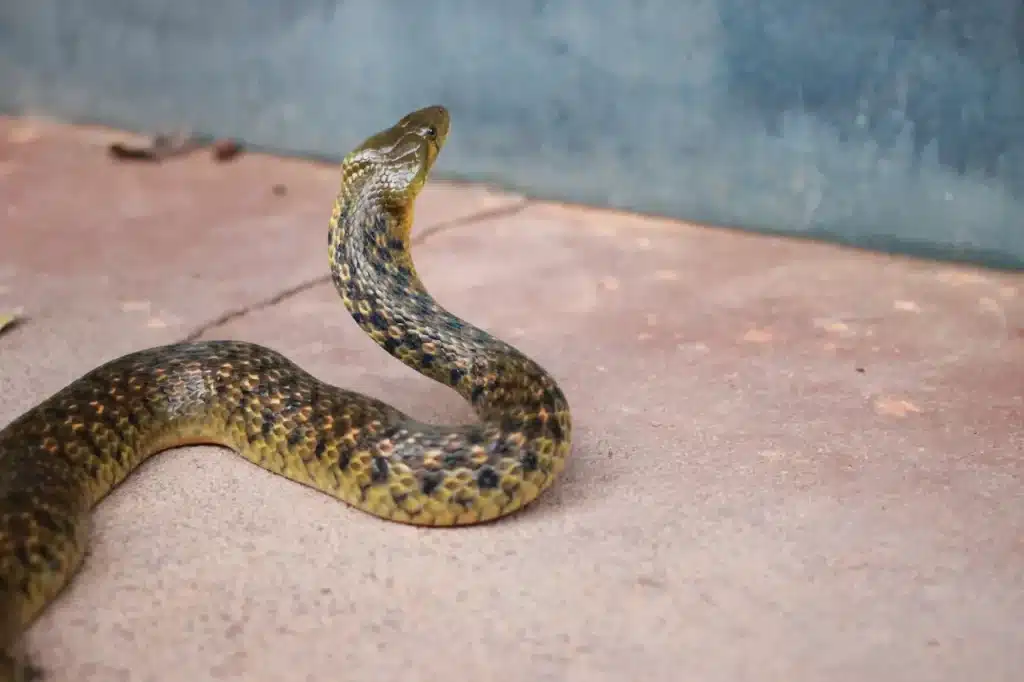 Banded Krait — black and yellow banded body" class="wp-image-69" />
Key takeaways #
- Context matters more than rules of thumb. Thailand’s snake fauna varies meaningfully by region, by season, and by habitat. Advice that holds in southern wet forest does not always hold in northern hill country or in the central agricultural plains.
- Prevention is high-leverage. Most serious snake-related incidents in Thailand are downstream of three preventable behaviours — reaching where you cannot see, walking forest paths at night without a torch, and attempting to handle or kill snakes rather than call professional removal.
- Hospital access is the real safety net. Thai provincial hospitals stock the standard polyvalent antivenoms. The single biggest predictor of bad outcome from a serious bite is delay in reaching one of those hospitals.
- Citizen-science records help. Even casual photographs with location data, posted to platforms like iNaturalist, contribute to the regional knowledge base. Most Thai snake species have surprisingly thin distribution data; one well-documented sighting can fill a real gap.
Common questions #
How likely am I to see a snake on a casual visit to Thailand?
Lower than you probably expect. A casual three-hour daytime forest hike in southern Thailand has roughly a 5–10% chance of producing any snake encounter at all, and roughly a 0.5–1% chance of producing a venomous-species sighting. Visitors who deliberately go looking — at night, in good habitat — see far more, but the casual exposure is genuinely low.
What time of year has the most snake activity?
The wet season (May through October) produces by far the most snake encounters across most of Thailand. Within that, two peaks: the start of the rains (April–June) when males are moving for breeding, and late wet season (September–November) when juvenile cohorts disperse from nest sites. The dry season (December–March) is genuinely quieter for snake-watching, particularly in the north and northeast.
Are Thai snakebite outcomes really that good?
For patients who reach a hospital within an hour or two of a venomous bite, yes — Thai outcomes are excellent by international standards. Mortality with appropriate antivenom and supportive care runs under 1% for most species. The deaths that do happen are concentrated in cases of significant pre-hospital delay, mis-identification of species, or in patients with serious co-morbidities. The Thai system is robust; the failure modes are mostly upstream of the hospital.
What is the single best preventive measure?
A torch at night. The single biggest reducer of Thai snakebite risk is consistent, eyes-down torch use on every walking path after dark. Most preventable bites in southern Thailand are foot-on-snake events on the ground at night, and a torch beam on the trail at metre-down angle prevents the great majority of them. Closed footwear is the second-biggest improvement; long trousers in dense vegetation is third.
- “A Photographic Guide to the Snakes and Other Reptiles of Thailand and South-East Asia” by Merel J. Cox, Peter Paul van Dijk, Jarujin Nabhitabhata, and Kumthorn Thirakhupt. The standard photographic field guide for the region. Good colour plates, decent species coverage, accessible writing.
- “Snakes of Thailand” by Lawan Chanhome and others (multiple editions over the years). The local reference, with useful Thai-language and English-language editions. Particularly strong on the medically important species.
- “The Field Guide to the Reptiles of Southeast Asia” by Indraneil Das. Broader regional coverage, useful for serious herpers working across multiple countries.
- “Snakes of Southeast Asia: Including Borneo, Sumatra, Java” by Mark O’Shea. Less comprehensive on Thailand specifically but excellent photographs and natural-history detail.
For deeper academic reading, the published Thai herpetology research from the Sirindhorn Wildlife Research and Education Centre and various Thai university programs is increasingly accessible online. The Thai journal Tropical Natural History publishes new species descriptions and faunistic notes regularly.
Where to buy them #
- Asia Books and Kinokuniya in Bangkok — both stock the major Thai herpetology titles in English.
- Local Thai language bookshops for the Lawan Chanhome editions and other Thai-language references.
- Online via Amazon, Book Depository, NHBS for international shipping. The NHBS specialist natural history bookstore is particularly useful for Asian field guides.
- Used-book channels. Some of the older editions of the Cox guide and Das guide are out of print and only available second-hand.
Snake-themed merchandise #
For shirts, prints, and other snake merchandise, the better sources are usually independent print-on-demand sites that license from herpetology photographers. Several Thai-resident photographers run small online stores with their own Thai snake photography. We do not run merchandise ourselves — the focus is on the reference content — but we are happy to recommend specific sources by email if readers ask.
What we’d avoid #
- Snake-skin products. The wildlife trade in skins (especially Reticulated Python and Blood Python) has been a major driver of population decline. Buying skin products supports the harvest.
- “Snake oil” or any traditional medicine products derived from snakes. None have proven medical efficacy and the trade contributes to species decline.
- Live snakes from non-permitted dealers. Captive-bred from licensed breeders is fine where legal; wild-caught from informal markets is illegal and harmful.
For the broader context on snake conservation see our notes on should you kill Thailand snakes and the snake research category. For our reading-related references see best of articles.
External references: NHBS (Natural History Books) for specialist field guides, and the Reptile Database for the canonical species references.
Key takeaways #
- Context matters more than rules of thumb. Thailand’s snake fauna varies meaningfully by region, by season, and by habitat. Advice that holds in southern wet forest does not always hold in northern hill country or in the central agricultural plains.
- Prevention is high-leverage. Most serious snake-related incidents in Thailand are downstream of three preventable behaviours — reaching where you cannot see, walking forest paths at night without a torch, and attempting to handle or kill snakes rather than call professional removal.
- Hospital access is the real safety net. Thai provincial hospitals stock the standard polyvalent antivenoms. The single biggest predictor of bad outcome from a serious bite is delay in reaching one of those hospitals.
- Citizen-science records help. Even casual photographs with location data, posted to platforms like iNaturalist, contribute to the regional knowledge base. Most Thai snake species have surprisingly thin distribution data; one well-documented sighting can fill a real gap.
Common questions #
How likely am I to see a snake on a casual visit to Thailand?
Lower than you probably expect. A casual three-hour daytime forest hike in southern Thailand has roughly a 5–10% chance of producing any snake encounter at all, and roughly a 0.5–1% chance of producing a venomous-species sighting. Visitors who deliberately go looking — at night, in good habitat — see far more, but the casual exposure is genuinely low.
What time of year has the most snake activity?
The wet season (May through October) produces by far the most snake encounters across most of Thailand. Within that, two peaks: the start of the rains (April–June) when males are moving for breeding, and late wet season (September–November) when juvenile cohorts disperse from nest sites. The dry season (December–March) is genuinely quieter for snake-watching, particularly in the north and northeast.
Are Thai snakebite outcomes really that good?
For patients who reach a hospital within an hour or two of a venomous bite, yes — Thai outcomes are excellent by international standards. Mortality with appropriate antivenom and supportive care runs under 1% for most species. The deaths that do happen are concentrated in cases of significant pre-hospital delay, mis-identification of species, or in patients with serious co-morbidities. The Thai system is robust; the failure modes are mostly upstream of the hospital.
What is the single best preventive measure?
A torch at night. The single biggest reducer of Thai snakebite risk is consistent, eyes-down torch use on every walking path after dark. Most preventable bites in southern Thailand are foot-on-snake events on the ground at night, and a torch beam on the trail at metre-down angle prevents the great majority of them. Closed footwear is the second-biggest improvement; long trousers in dense vegetation is third.
- Asia Books and Kinokuniya in Bangkok — both stock the major Thai herpetology titles in English.
- Local Thai language bookshops for the Lawan Chanhome editions and other Thai-language references.
- Online via Amazon, Book Depository, NHBS for international shipping. The NHBS specialist natural history bookstore is particularly useful for Asian field guides.
- Used-book channels. Some of the older editions of the Cox guide and Das guide are out of print and only available second-hand.
Snake-themed merchandise #
For shirts, prints, and other snake merchandise, the better sources are usually independent print-on-demand sites that license from herpetology photographers. Several Thai-resident photographers run small online stores with their own Thai snake photography. We do not run merchandise ourselves — the focus is on the reference content — but we are happy to recommend specific sources by email if readers ask.
What we’d avoid #
- Snake-skin products. The wildlife trade in skins (especially Reticulated Python and Blood Python) has been a major driver of population decline. Buying skin products supports the harvest.
- “Snake oil” or any traditional medicine products derived from snakes. None have proven medical efficacy and the trade contributes to species decline.
- Live snakes from non-permitted dealers. Captive-bred from licensed breeders is fine where legal; wild-caught from informal markets is illegal and harmful.
For the broader context on snake conservation see our notes on should you kill Thailand snakes and the snake research category. For our reading-related references see best of articles.
External references: NHBS (Natural History Books) for specialist field guides, and the Reptile Database for the canonical species references.
- “A Photographic Guide to the Snakes and Other Reptiles of Thailand and South-East Asia” by Merel J. Cox, Peter Paul van Dijk, Jarujin Nabhitabhata, and Kumthorn Thirakhupt. The standard photographic field guide for the region. Good colour plates, decent species coverage, accessible writing.
- “Snakes of Thailand” by Lawan Chanhome and others (multiple editions over the years). The local reference, with useful Thai-language and English-language editions. Particularly strong on the medically important species.
- “The Field Guide to the Reptiles of Southeast Asia” by Indraneil Das. Broader regional coverage, useful for serious herpers working across multiple countries.
- “Snakes of Southeast Asia: Including Borneo, Sumatra, Java” by Mark O’Shea. Less comprehensive on Thailand specifically but excellent photographs and natural-history detail.
For deeper academic reading, the published Thai herpetology research from the Sirindhorn Wildlife Research and Education Centre and various Thai university programs is increasingly accessible online. The Thai journal Tropical Natural History publishes new species descriptions and faunistic notes regularly.
Where to buy them #
- Asia Books and Kinokuniya in Bangkok — both stock the major Thai herpetology titles in English.
- Local Thai language bookshops for the Lawan Chanhome editions and other Thai-language references.
- Online via Amazon, Book Depository, NHBS for international shipping. The NHBS specialist natural history bookstore is particularly useful for Asian field guides.
- Used-book channels. Some of the older editions of the Cox guide and Das guide are out of print and only available second-hand.
Snake-themed merchandise #
For shirts, prints, and other snake merchandise, the better sources are usually independent print-on-demand sites that license from herpetology photographers. Several Thai-resident photographers run small online stores with their own Thai snake photography. We do not run merchandise ourselves — the focus is on the reference content — but we are happy to recommend specific sources by email if readers ask.
What we’d avoid #
- Snake-skin products. The wildlife trade in skins (especially Reticulated Python and Blood Python) has been a major driver of population decline. Buying skin products supports the harvest.
- “Snake oil” or any traditional medicine products derived from snakes. None have proven medical efficacy and the trade contributes to species decline.
- Live snakes from non-permitted dealers. Captive-bred from licensed breeders is fine where legal; wild-caught from informal markets is illegal and harmful.
For the broader context on snake conservation see our notes on should you kill Thailand snakes and the snake research category. For our reading-related references see best of articles.
External references: NHBS (Natural History Books) for specialist field guides, and the Reptile Database for the canonical species references.
Key takeaways #
- Context matters more than rules of thumb. Thailand’s snake fauna varies meaningfully by region, by season, and by habitat. Advice that holds in southern wet forest does not always hold in northern hill country or in the central agricultural plains.
- Prevention is high-leverage. Most serious snake-related incidents in Thailand are downstream of three preventable behaviours — reaching where you cannot see, walking forest paths at night without a torch, and attempting to handle or kill snakes rather than call professional removal.
- Hospital access is the real safety net. Thai provincial hospitals stock the standard polyvalent antivenoms. The single biggest predictor of bad outcome from a serious bite is delay in reaching one of those hospitals.
- Citizen-science records help. Even casual photographs with location data, posted to platforms like iNaturalist, contribute to the regional knowledge base. Most Thai snake species have surprisingly thin distribution data; one well-documented sighting can fill a real gap.
Common questions #
How likely am I to see a snake on a casual visit to Thailand?
Lower than you probably expect. A casual three-hour daytime forest hike in southern Thailand has roughly a 5–10% chance of producing any snake encounter at all, and roughly a 0.5–1% chance of producing a venomous-species sighting. Visitors who deliberately go looking — at night, in good habitat — see far more, but the casual exposure is genuinely low.
What time of year has the most snake activity?
The wet season (May through October) produces by far the most snake encounters across most of Thailand. Within that, two peaks: the start of the rains (April–June) when males are moving for breeding, and late wet season (September–November) when juvenile cohorts disperse from nest sites. The dry season (December–March) is genuinely quieter for snake-watching, particularly in the north and northeast.
Are Thai snakebite outcomes really that good?
For patients who reach a hospital within an hour or two of a venomous bite, yes — Thai outcomes are excellent by international standards. Mortality with appropriate antivenom and supportive care runs under 1% for most species. The deaths that do happen are concentrated in cases of significant pre-hospital delay, mis-identification of species, or in patients with serious co-morbidities. The Thai system is robust; the failure modes are mostly upstream of the hospital.
What is the single best preventive measure?
A torch at night. The single biggest reducer of Thai snakebite risk is consistent, eyes-down torch use on every walking path after dark. Most preventable bites in southern Thailand are foot-on-snake events on the ground at night, and a torch beam on the trail at metre-down angle prevents the great majority of them. Closed footwear is the second-biggest improvement; long trousers in dense vegetation is third.
- Asia Books and Kinokuniya in Bangkok — both stock the major Thai herpetology titles in English.
- Local Thai language bookshops for the Lawan Chanhome editions and other Thai-language references.
- Online via Amazon, Book Depository, NHBS for international shipping. The NHBS specialist natural history bookstore is particularly useful for Asian field guides.
- Used-book channels. Some of the older editions of the Cox guide and Das guide are out of print and only available second-hand.
Snake-themed merchandise #
For shirts, prints, and other snake merchandise, the better sources are usually independent print-on-demand sites that license from herpetology photographers. Several Thai-resident photographers run small online stores with their own Thai snake photography. We do not run merchandise ourselves — the focus is on the reference content — but we are happy to recommend specific sources by email if readers ask.
What we’d avoid #
- Snake-skin products. The wildlife trade in skins (especially Reticulated Python and Blood Python) has been a major driver of population decline. Buying skin products supports the harvest.
- “Snake oil” or any traditional medicine products derived from snakes. None have proven medical efficacy and the trade contributes to species decline.
- Live snakes from non-permitted dealers. Captive-bred from licensed breeders is fine where legal; wild-caught from informal markets is illegal and harmful.
For the broader context on snake conservation see our notes on should you kill Thailand snakes and the snake research category. For our reading-related references see best of articles.
External references: NHBS (Natural History Books) for specialist field guides, and the Reptile Database for the canonical species references.
- “A Photographic Guide to the Snakes and Other Reptiles of Thailand and South-East Asia” by Merel J. Cox, Peter Paul van Dijk, Jarujin Nabhitabhata, and Kumthorn Thirakhupt. The standard photographic field guide for the region. Good colour plates, decent species coverage, accessible writing.
- “Snakes of Thailand” by Lawan Chanhome and others (multiple editions over the years). The local reference, with useful Thai-language and English-language editions. Particularly strong on the medically important species.
- “The Field Guide to the Reptiles of Southeast Asia” by Indraneil Das. Broader regional coverage, useful for serious herpers working across multiple countries.
- “Snakes of Southeast Asia: Including Borneo, Sumatra, Java” by Mark O’Shea. Less comprehensive on Thailand specifically but excellent photographs and natural-history detail.
For deeper academic reading, the published Thai herpetology research from the Sirindhorn Wildlife Research and Education Centre and various Thai university programs is increasingly accessible online. The Thai journal Tropical Natural History publishes new species descriptions and faunistic notes regularly.
Where to buy them #
- Asia Books and Kinokuniya in Bangkok — both stock the major Thai herpetology titles in English.
- Local Thai language bookshops for the Lawan Chanhome editions and other Thai-language references.
- Online via Amazon, Book Depository, NHBS for international shipping. The NHBS specialist natural history bookstore is particularly useful for Asian field guides.
- Used-book channels. Some of the older editions of the Cox guide and Das guide are out of print and only available second-hand.
Snake-themed merchandise #
For shirts, prints, and other snake merchandise, the better sources are usually independent print-on-demand sites that license from herpetology photographers. Several Thai-resident photographers run small online stores with their own Thai snake photography. We do not run merchandise ourselves — the focus is on the reference content — but we are happy to recommend specific sources by email if readers ask.
What we’d avoid #
- Snake-skin products. The wildlife trade in skins (especially Reticulated Python and Blood Python) has been a major driver of population decline. Buying skin products supports the harvest.
- “Snake oil” or any traditional medicine products derived from snakes. None have proven medical efficacy and the trade contributes to species decline.
- Live snakes from non-permitted dealers. Captive-bred from licensed breeders is fine where legal; wild-caught from informal markets is illegal and harmful.
For the broader context on snake conservation see our notes on should you kill Thailand snakes and the snake research category. For our reading-related references see best of articles.
External references: NHBS (Natural History Books) for specialist field guides, and the Reptile Database for the canonical species references.
Key takeaways #
- Context matters more than rules of thumb. Thailand’s snake fauna varies meaningfully by region, by season, and by habitat. Advice that holds in southern wet forest does not always hold in northern hill country or in the central agricultural plains.
- Prevention is high-leverage. Most serious snake-related incidents in Thailand are downstream of three preventable behaviours — reaching where you cannot see, walking forest paths at night without a torch, and attempting to handle or kill snakes rather than call professional removal.
- Hospital access is the real safety net. Thai provincial hospitals stock the standard polyvalent antivenoms. The single biggest predictor of bad outcome from a serious bite is delay in reaching one of those hospitals.
- Citizen-science records help. Even casual photographs with location data, posted to platforms like iNaturalist, contribute to the regional knowledge base. Most Thai snake species have surprisingly thin distribution data; one well-documented sighting can fill a real gap.
Common questions #
How likely am I to see a snake on a casual visit to Thailand?
Lower than you probably expect. A casual three-hour daytime forest hike in southern Thailand has roughly a 5–10% chance of producing any snake encounter at all, and roughly a 0.5–1% chance of producing a venomous-species sighting. Visitors who deliberately go looking — at night, in good habitat — see far more, but the casual exposure is genuinely low.
What time of year has the most snake activity?
The wet season (May through October) produces by far the most snake encounters across most of Thailand. Within that, two peaks: the start of the rains (April–June) when males are moving for breeding, and late wet season (September–November) when juvenile cohorts disperse from nest sites. The dry season (December–March) is genuinely quieter for snake-watching, particularly in the north and northeast.
Are Thai snakebite outcomes really that good?
For patients who reach a hospital within an hour or two of a venomous bite, yes — Thai outcomes are excellent by international standards. Mortality with appropriate antivenom and supportive care runs under 1% for most species. The deaths that do happen are concentrated in cases of significant pre-hospital delay, mis-identification of species, or in patients with serious co-morbidities. The Thai system is robust; the failure modes are mostly upstream of the hospital.
What is the single best preventive measure?
A torch at night. The single biggest reducer of Thai snakebite risk is consistent, eyes-down torch use on every walking path after dark. Most preventable bites in southern Thailand are foot-on-snake events on the ground at night, and a torch beam on the trail at metre-down angle prevents the great majority of them. Closed footwear is the second-biggest improvement; long trousers in dense vegetation is third.
- “A Photographic Guide to the Snakes and Other Reptiles of Thailand and South-East Asia” by Merel J. Cox, Peter Paul van Dijk, Jarujin Nabhitabhata, and Kumthorn Thirakhupt. The standard photographic field guide for the region. Good colour plates, decent species coverage, accessible writing.
- “Snakes of Thailand” by Lawan Chanhome and others (multiple editions over the years). The local reference, with useful Thai-language and English-language editions. Particularly strong on the medically important species.
- “The Field Guide to the Reptiles of Southeast Asia” by Indraneil Das. Broader regional coverage, useful for serious herpers working across multiple countries.
- “Snakes of Southeast Asia: Including Borneo, Sumatra, Java” by Mark O’Shea. Less comprehensive on Thailand specifically but excellent photographs and natural-history detail.
For deeper academic reading, the published Thai herpetology research from the Sirindhorn Wildlife Research and Education Centre and various Thai university programs is increasingly accessible online. The Thai journal Tropical Natural History publishes new species descriptions and faunistic notes regularly.
Where to buy them #
- Asia Books and Kinokuniya in Bangkok — both stock the major Thai herpetology titles in English.
- Local Thai language bookshops for the Lawan Chanhome editions and other Thai-language references.
- Online via Amazon, Book Depository, NHBS for international shipping. The NHBS specialist natural history bookstore is particularly useful for Asian field guides.
- Used-book channels. Some of the older editions of the Cox guide and Das guide are out of print and only available second-hand.
Snake-themed merchandise #
For shirts, prints, and other snake merchandise, the better sources are usually independent print-on-demand sites that license from herpetology photographers. Several Thai-resident photographers run small online stores with their own Thai snake photography. We do not run merchandise ourselves — the focus is on the reference content — but we are happy to recommend specific sources by email if readers ask.
What we’d avoid #
- Snake-skin products. The wildlife trade in skins (especially Reticulated Python and Blood Python) has been a major driver of population decline. Buying skin products supports the harvest.
- “Snake oil” or any traditional medicine products derived from snakes. None have proven medical efficacy and the trade contributes to species decline.
- Live snakes from non-permitted dealers. Captive-bred from licensed breeders is fine where legal; wild-caught from informal markets is illegal and harmful.
For the broader context on snake conservation see our notes on should you kill Thailand snakes and the snake research category. For our reading-related references see best of articles.
External references: NHBS (Natural History Books) for specialist field guides, and the Reptile Database for the canonical species references.
Key takeaways #
- Context matters more than rules of thumb. Thailand’s snake fauna varies meaningfully by region, by season, and by habitat. Advice that holds in southern wet forest does not always hold in northern hill country or in the central agricultural plains.
- Prevention is high-leverage. Most serious snake-related incidents in Thailand are downstream of three preventable behaviours — reaching where you cannot see, walking forest paths at night without a torch, and attempting to handle or kill snakes rather than call professional removal.
- Hospital access is the real safety net. Thai provincial hospitals stock the standard polyvalent antivenoms. The single biggest predictor of bad outcome from a serious bite is delay in reaching one of those hospitals.
- Citizen-science records help. Even casual photographs with location data, posted to platforms like iNaturalist, contribute to the regional knowledge base. Most Thai snake species have surprisingly thin distribution data; one well-documented sighting can fill a real gap.
Common questions #
How likely am I to see a snake on a casual visit to Thailand?
Lower than you probably expect. A casual three-hour daytime forest hike in southern Thailand has roughly a 5–10% chance of producing any snake encounter at all, and roughly a 0.5–1% chance of producing a venomous-species sighting. Visitors who deliberately go looking — at night, in good habitat — see far more, but the casual exposure is genuinely low.
What time of year has the most snake activity?
The wet season (May through October) produces by far the most snake encounters across most of Thailand. Within that, two peaks: the start of the rains (April–June) when males are moving for breeding, and late wet season (September–November) when juvenile cohorts disperse from nest sites. The dry season (December–March) is genuinely quieter for snake-watching, particularly in the north and northeast.
Are Thai snakebite outcomes really that good?
For patients who reach a hospital within an hour or two of a venomous bite, yes — Thai outcomes are excellent by international standards. Mortality with appropriate antivenom and supportive care runs under 1% for most species. The deaths that do happen are concentrated in cases of significant pre-hospital delay, mis-identification of species, or in patients with serious co-morbidities. The Thai system is robust; the failure modes are mostly upstream of the hospital.
What is the single best preventive measure?
A torch at night. The single biggest reducer of Thai snakebite risk is consistent, eyes-down torch use on every walking path after dark. Most preventable bites in southern Thailand are foot-on-snake events on the ground at night, and a torch beam on the trail at metre-down angle prevents the great majority of them. Closed footwear is the second-biggest improvement; long trousers in dense vegetation is third.
- Asia Books and Kinokuniya in Bangkok — both stock the major Thai herpetology titles in English.
- Local Thai language bookshops for the Lawan Chanhome editions and other Thai-language references.
- Online via Amazon, Book Depository, NHBS for international shipping. The NHBS specialist natural history bookstore is particularly useful for Asian field guides.
- Used-book channels. Some of the older editions of the Cox guide and Das guide are out of print and only available second-hand.
Snake-themed merchandise #
For shirts, prints, and other snake merchandise, the better sources are usually independent print-on-demand sites that license from herpetology photographers. Several Thai-resident photographers run small online stores with their own Thai snake photography. We do not run merchandise ourselves — the focus is on the reference content — but we are happy to recommend specific sources by email if readers ask.
What we’d avoid #
- Snake-skin products. The wildlife trade in skins (especially Reticulated Python and Blood Python) has been a major driver of population decline. Buying skin products supports the harvest.
- “Snake oil” or any traditional medicine products derived from snakes. None have proven medical efficacy and the trade contributes to species decline.
- Live snakes from non-permitted dealers. Captive-bred from licensed breeders is fine where legal; wild-caught from informal markets is illegal and harmful.
For the broader context on snake conservation see our notes on should you kill Thailand snakes and the snake research category. For our reading-related references see best of articles.
External references: NHBS (Natural History Books) for specialist field guides, and the Reptile Database for the canonical species references.
- “A Photographic Guide to the Snakes and Other Reptiles of Thailand and South-East Asia” by Merel J. Cox, Peter Paul van Dijk, Jarujin Nabhitabhata, and Kumthorn Thirakhupt. The standard photographic field guide for the region. Good colour plates, decent species coverage, accessible writing.
- “Snakes of Thailand” by Lawan Chanhome and others (multiple editions over the years). The local reference, with useful Thai-language and English-language editions. Particularly strong on the medically important species.
- “The Field Guide to the Reptiles of Southeast Asia” by Indraneil Das. Broader regional coverage, useful for serious herpers working across multiple countries.
- “Snakes of Southeast Asia: Including Borneo, Sumatra, Java” by Mark O’Shea. Less comprehensive on Thailand specifically but excellent photographs and natural-history detail.
For deeper academic reading, the published Thai herpetology research from the Sirindhorn Wildlife Research and Education Centre and various Thai university programs is increasingly accessible online. The Thai journal Tropical Natural History publishes new species descriptions and faunistic notes regularly.
Where to buy them #
- Asia Books and Kinokuniya in Bangkok — both stock the major Thai herpetology titles in English.
- Local Thai language bookshops for the Lawan Chanhome editions and other Thai-language references.
- Online via Amazon, Book Depository, NHBS for international shipping. The NHBS specialist natural history bookstore is particularly useful for Asian field guides.
- Used-book channels. Some of the older editions of the Cox guide and Das guide are out of print and only available second-hand.
Snake-themed merchandise #
For shirts, prints, and other snake merchandise, the better sources are usually independent print-on-demand sites that license from herpetology photographers. Several Thai-resident photographers run small online stores with their own Thai snake photography. We do not run merchandise ourselves — the focus is on the reference content — but we are happy to recommend specific sources by email if readers ask.
What we’d avoid #
- Snake-skin products. The wildlife trade in skins (especially Reticulated Python and Blood Python) has been a major driver of population decline. Buying skin products supports the harvest.
- “Snake oil” or any traditional medicine products derived from snakes. None have proven medical efficacy and the trade contributes to species decline.
- Live snakes from non-permitted dealers. Captive-bred from licensed breeders is fine where legal; wild-caught from informal markets is illegal and harmful.
For the broader context on snake conservation see our notes on should you kill Thailand snakes and the snake research category. For our reading-related references see best of articles.
External references: NHBS (Natural History Books) for specialist field guides, and the Reptile Database for the canonical species references.
Key takeaways #
- Context matters more than rules of thumb. Thailand’s snake fauna varies meaningfully by region, by season, and by habitat. Advice that holds in southern wet forest does not always hold in northern hill country or in the central agricultural plains.
- Prevention is high-leverage. Most serious snake-related incidents in Thailand are downstream of three preventable behaviours — reaching where you cannot see, walking forest paths at night without a torch, and attempting to handle or kill snakes rather than call professional removal.
- Hospital access is the real safety net. Thai provincial hospitals stock the standard polyvalent antivenoms. The single biggest predictor of bad outcome from a serious bite is delay in reaching one of those hospitals.
- Citizen-science records help. Even casual photographs with location data, posted to platforms like iNaturalist, contribute to the regional knowledge base. Most Thai snake species have surprisingly thin distribution data; one well-documented sighting can fill a real gap.
Common questions #
How likely am I to see a snake on a casual visit to Thailand?
Lower than you probably expect. A casual three-hour daytime forest hike in southern Thailand has roughly a 5–10% chance of producing any snake encounter at all, and roughly a 0.5–1% chance of producing a venomous-species sighting. Visitors who deliberately go looking — at night, in good habitat — see far more, but the casual exposure is genuinely low.
What time of year has the most snake activity?
The wet season (May through October) produces by far the most snake encounters across most of Thailand. Within that, two peaks: the start of the rains (April–June) when males are moving for breeding, and late wet season (September–November) when juvenile cohorts disperse from nest sites. The dry season (December–March) is genuinely quieter for snake-watching, particularly in the north and northeast.
Are Thai snakebite outcomes really that good?
For patients who reach a hospital within an hour or two of a venomous bite, yes — Thai outcomes are excellent by international standards. Mortality with appropriate antivenom and supportive care runs under 1% for most species. The deaths that do happen are concentrated in cases of significant pre-hospital delay, mis-identification of species, or in patients with serious co-morbidities. The Thai system is robust; the failure modes are mostly upstream of the hospital.
What is the single best preventive measure?
A torch at night. The single biggest reducer of Thai snakebite risk is consistent, eyes-down torch use on every walking path after dark. Most preventable bites in southern Thailand are foot-on-snake events on the ground at night, and a torch beam on the trail at metre-down angle prevents the great majority of them. Closed footwear is the second-biggest improvement; long trousers in dense vegetation is third.
- “A Photographic Guide to the Snakes and Other Reptiles of Thailand and South-East Asia” by Merel J. Cox, Peter Paul van Dijk, Jarujin Nabhitabhata, and Kumthorn Thirakhupt. The standard photographic field guide for the region. Good colour plates, decent species coverage, accessible writing.
- “Snakes of Thailand” by Lawan Chanhome and others (multiple editions over the years). The local reference, with useful Thai-language and English-language editions. Particularly strong on the medically important species.
- “The Field Guide to the Reptiles of Southeast Asia” by Indraneil Das. Broader regional coverage, useful for serious herpers working across multiple countries.
- “Snakes of Southeast Asia: Including Borneo, Sumatra, Java” by Mark O’Shea. Less comprehensive on Thailand specifically but excellent photographs and natural-history detail.
For deeper academic reading, the published Thai herpetology research from the Sirindhorn Wildlife Research and Education Centre and various Thai university programs is increasingly accessible online. The Thai journal Tropical Natural History publishes new species descriptions and faunistic notes regularly.
Where to buy them #
- Asia Books and Kinokuniya in Bangkok — both stock the major Thai herpetology titles in English.
- Local Thai language bookshops for the Lawan Chanhome editions and other Thai-language references.
- Online via Amazon, Book Depository, NHBS for international shipping. The NHBS specialist natural history bookstore is particularly useful for Asian field guides.
- Used-book channels. Some of the older editions of the Cox guide and Das guide are out of print and only available second-hand.
Snake-themed merchandise #
For shirts, prints, and other snake merchandise, the better sources are usually independent print-on-demand sites that license from herpetology photographers. Several Thai-resident photographers run small online stores with their own Thai snake photography. We do not run merchandise ourselves — the focus is on the reference content — but we are happy to recommend specific sources by email if readers ask.
What we’d avoid #
- Snake-skin products. The wildlife trade in skins (especially Reticulated Python and Blood Python) has been a major driver of population decline. Buying skin products supports the harvest.
- “Snake oil” or any traditional medicine products derived from snakes. None have proven medical efficacy and the trade contributes to species decline.
- Live snakes from non-permitted dealers. Captive-bred from licensed breeders is fine where legal; wild-caught from informal markets is illegal and harmful.
For the broader context on snake conservation see our notes on should you kill Thailand snakes and the snake research category. For our reading-related references see best of articles.
External references: NHBS (Natural History Books) for specialist field guides, and the Reptile Database for the canonical species references.
Key takeaways #
- Context matters more than rules of thumb. Thailand’s snake fauna varies meaningfully by region, by season, and by habitat. Advice that holds in southern wet forest does not always hold in northern hill country or in the central agricultural plains.
- Prevention is high-leverage. Most serious snake-related incidents in Thailand are downstream of three preventable behaviours — reaching where you cannot see, walking forest paths at night without a torch, and attempting to handle or kill snakes rather than call professional removal.
- Hospital access is the real safety net. Thai provincial hospitals stock the standard polyvalent antivenoms. The single biggest predictor of bad outcome from a serious bite is delay in reaching one of those hospitals.
- Citizen-science records help. Even casual photographs with location data, posted to platforms like iNaturalist, contribute to the regional knowledge base. Most Thai snake species have surprisingly thin distribution data; one well-documented sighting can fill a real gap.
Common questions #
How likely am I to see a snake on a casual visit to Thailand?
Lower than you probably expect. A casual three-hour daytime forest hike in southern Thailand has roughly a 5–10% chance of producing any snake encounter at all, and roughly a 0.5–1% chance of producing a venomous-species sighting. Visitors who deliberately go looking — at night, in good habitat — see far more, but the casual exposure is genuinely low.
What time of year has the most snake activity?
The wet season (May through October) produces by far the most snake encounters across most of Thailand. Within that, two peaks: the start of the rains (April–June) when males are moving for breeding, and late wet season (September–November) when juvenile cohorts disperse from nest sites. The dry season (December–March) is genuinely quieter for snake-watching, particularly in the north and northeast.
Are Thai snakebite outcomes really that good?
For patients who reach a hospital within an hour or two of a venomous bite, yes — Thai outcomes are excellent by international standards. Mortality with appropriate antivenom and supportive care runs under 1% for most species. The deaths that do happen are concentrated in cases of significant pre-hospital delay, mis-identification of species, or in patients with serious co-morbidities. The Thai system is robust; the failure modes are mostly upstream of the hospital.
What is the single best preventive measure?
A torch at night. The single biggest reducer of Thai snakebite risk is consistent, eyes-down torch use on every walking path after dark. Most preventable bites in southern Thailand are foot-on-snake events on the ground at night, and a torch beam on the trail at metre-down angle prevents the great majority of them. Closed footwear is the second-biggest improvement; long trousers in dense vegetation is third.
- Asia Books and Kinokuniya in Bangkok — both stock the major Thai herpetology titles in English.
- Local Thai language bookshops for the Lawan Chanhome editions and other Thai-language references.
- Online via Amazon, Book Depository, NHBS for international shipping. The NHBS specialist natural history bookstore is particularly useful for Asian field guides.
- Used-book channels. Some of the older editions of the Cox guide and Das guide are out of print and only available second-hand.
Snake-themed merchandise #
For shirts, prints, and other snake merchandise, the better sources are usually independent print-on-demand sites that license from herpetology photographers. Several Thai-resident photographers run small online stores with their own Thai snake photography. We do not run merchandise ourselves — the focus is on the reference content — but we are happy to recommend specific sources by email if readers ask.
What we’d avoid #
- Snake-skin products. The wildlife trade in skins (especially Reticulated Python and Blood Python) has been a major driver of population decline. Buying skin products supports the harvest.
- “Snake oil” or any traditional medicine products derived from snakes. None have proven medical efficacy and the trade contributes to species decline.
- Live snakes from non-permitted dealers. Captive-bred from licensed breeders is fine where legal; wild-caught from informal markets is illegal and harmful.
For the broader context on snake conservation see our notes on should you kill Thailand snakes and the snake research category. For our reading-related references see best of articles.
External references: NHBS (Natural History Books) for specialist field guides, and the Reptile Database for the canonical species references.
- “A Photographic Guide to the Snakes and Other Reptiles of Thailand and South-East Asia” by Merel J. Cox, Peter Paul van Dijk, Jarujin Nabhitabhata, and Kumthorn Thirakhupt. The standard photographic field guide for the region. Good colour plates, decent species coverage, accessible writing.
- “Snakes of Thailand” by Lawan Chanhome and others (multiple editions over the years). The local reference, with useful Thai-language and English-language editions. Particularly strong on the medically important species.
- “The Field Guide to the Reptiles of Southeast Asia” by Indraneil Das. Broader regional coverage, useful for serious herpers working across multiple countries.
- “Snakes of Southeast Asia: Including Borneo, Sumatra, Java” by Mark O’Shea. Less comprehensive on Thailand specifically but excellent photographs and natural-history detail.
For deeper academic reading, the published Thai herpetology research from the Sirindhorn Wildlife Research and Education Centre and various Thai university programs is increasingly accessible online. The Thai journal Tropical Natural History publishes new species descriptions and faunistic notes regularly.
Where to buy them #
- Asia Books and Kinokuniya in Bangkok — both stock the major Thai herpetology titles in English.
- Local Thai language bookshops for the Lawan Chanhome editions and other Thai-language references.
- Online via Amazon, Book Depository, NHBS for international shipping. The NHBS specialist natural history bookstore is particularly useful for Asian field guides.
- Used-book channels. Some of the older editions of the Cox guide and Das guide are out of print and only available second-hand.
Snake-themed merchandise #
For shirts, prints, and other snake merchandise, the better sources are usually independent print-on-demand sites that license from herpetology photographers. Several Thai-resident photographers run small online stores with their own Thai snake photography. We do not run merchandise ourselves — the focus is on the reference content — but we are happy to recommend specific sources by email if readers ask.
What we’d avoid #
- Snake-skin products. The wildlife trade in skins (especially Reticulated Python and Blood Python) has been a major driver of population decline. Buying skin products supports the harvest.
- “Snake oil” or any traditional medicine products derived from snakes. None have proven medical efficacy and the trade contributes to species decline.
- Live snakes from non-permitted dealers. Captive-bred from licensed breeders is fine where legal; wild-caught from informal markets is illegal and harmful.
For the broader context on snake conservation see our notes on should you kill Thailand snakes and the snake research category. For our reading-related references see best of articles.
External references: NHBS (Natural History Books) for specialist field guides, and the Reptile Database for the canonical species references.
Key takeaways #
- Context matters more than rules of thumb. Thailand’s snake fauna varies meaningfully by region, by season, and by habitat. Advice that holds in southern wet forest does not always hold in northern hill country or in the central agricultural plains.
- Prevention is high-leverage. Most serious snake-related incidents in Thailand are downstream of three preventable behaviours — reaching where you cannot see, walking forest paths at night without a torch, and attempting to handle or kill snakes rather than call professional removal.
- Hospital access is the real safety net. Thai provincial hospitals stock the standard polyvalent antivenoms. The single biggest predictor of bad outcome from a serious bite is delay in reaching one of those hospitals.
- Citizen-science records help. Even casual photographs with location data, posted to platforms like iNaturalist, contribute to the regional knowledge base. Most Thai snake species have surprisingly thin distribution data; one well-documented sighting can fill a real gap.
Common questions #
How likely am I to see a snake on a casual visit to Thailand?
Lower than you probably expect. A casual three-hour daytime forest hike in southern Thailand has roughly a 5–10% chance of producing any snake encounter at all, and roughly a 0.5–1% chance of producing a venomous-species sighting. Visitors who deliberately go looking — at night, in good habitat — see far more, but the casual exposure is genuinely low.
What time of year has the most snake activity?
The wet season (May through October) produces by far the most snake encounters across most of Thailand. Within that, two peaks: the start of the rains (April–June) when males are moving for breeding, and late wet season (September–November) when juvenile cohorts disperse from nest sites. The dry season (December–March) is genuinely quieter for snake-watching, particularly in the north and northeast.
Are Thai snakebite outcomes really that good?
For patients who reach a hospital within an hour or two of a venomous bite, yes — Thai outcomes are excellent by international standards. Mortality with appropriate antivenom and supportive care runs under 1% for most species. The deaths that do happen are concentrated in cases of significant pre-hospital delay, mis-identification of species, or in patients with serious co-morbidities. The Thai system is robust; the failure modes are mostly upstream of the hospital.
What is the single best preventive measure?
A torch at night. The single biggest reducer of Thai snakebite risk is consistent, eyes-down torch use on every walking path after dark. Most preventable bites in southern Thailand are foot-on-snake events on the ground at night, and a torch beam on the trail at metre-down angle prevents the great majority of them. Closed footwear is the second-biggest improvement; long trousers in dense vegetation is third.
- Asia Books and Kinokuniya in Bangkok — both stock the major Thai herpetology titles in English.
- Local Thai language bookshops for the Lawan Chanhome editions and other Thai-language references.
- Online via Amazon, Book Depository, NHBS for international shipping. The NHBS specialist natural history bookstore is particularly useful for Asian field guides.
- Used-book channels. Some of the older editions of the Cox guide and Das guide are out of print and only available second-hand.
Snake-themed merchandise #
For shirts, prints, and other snake merchandise, the better sources are usually independent print-on-demand sites that license from herpetology photographers. Several Thai-resident photographers run small online stores with their own Thai snake photography. We do not run merchandise ourselves — the focus is on the reference content — but we are happy to recommend specific sources by email if readers ask.
What we’d avoid #
- Snake-skin products. The wildlife trade in skins (especially Reticulated Python and Blood Python) has been a major driver of population decline. Buying skin products supports the harvest.
- “Snake oil” or any traditional medicine products derived from snakes. None have proven medical efficacy and the trade contributes to species decline.
- Live snakes from non-permitted dealers. Captive-bred from licensed breeders is fine where legal; wild-caught from informal markets is illegal and harmful.
For the broader context on snake conservation see our notes on should you kill Thailand snakes and the snake research category. For our reading-related references see best of articles.
External references: NHBS (Natural History Books) for specialist field guides, and the Reptile Database for the canonical species references.
- “A Photographic Guide to the Snakes and Other Reptiles of Thailand and South-East Asia” by Merel J. Cox, Peter Paul van Dijk, Jarujin Nabhitabhata, and Kumthorn Thirakhupt. The standard photographic field guide for the region. Good colour plates, decent species coverage, accessible writing.
- “Snakes of Thailand” by Lawan Chanhome and others (multiple editions over the years). The local reference, with useful Thai-language and English-language editions. Particularly strong on the medically important species.
- “The Field Guide to the Reptiles of Southeast Asia” by Indraneil Das. Broader regional coverage, useful for serious herpers working across multiple countries.
- “Snakes of Southeast Asia: Including Borneo, Sumatra, Java” by Mark O’Shea. Less comprehensive on Thailand specifically but excellent photographs and natural-history detail.
For deeper academic reading, the published Thai herpetology research from the Sirindhorn Wildlife Research and Education Centre and various Thai university programs is increasingly accessible online. The Thai journal Tropical Natural History publishes new species descriptions and faunistic notes regularly.
Where to buy them #
- Asia Books and Kinokuniya in Bangkok — both stock the major Thai herpetology titles in English.
- Local Thai language bookshops for the Lawan Chanhome editions and other Thai-language references.
- Online via Amazon, Book Depository, NHBS for international shipping. The NHBS specialist natural history bookstore is particularly useful for Asian field guides.
- Used-book channels. Some of the older editions of the Cox guide and Das guide are out of print and only available second-hand.
Snake-themed merchandise #
For shirts, prints, and other snake merchandise, the better sources are usually independent print-on-demand sites that license from herpetology photographers. Several Thai-resident photographers run small online stores with their own Thai snake photography. We do not run merchandise ourselves — the focus is on the reference content — but we are happy to recommend specific sources by email if readers ask.
What we’d avoid #
- Snake-skin products. The wildlife trade in skins (especially Reticulated Python and Blood Python) has been a major driver of population decline. Buying skin products supports the harvest.
- “Snake oil” or any traditional medicine products derived from snakes. None have proven medical efficacy and the trade contributes to species decline.
- Live snakes from non-permitted dealers. Captive-bred from licensed breeders is fine where legal; wild-caught from informal markets is illegal and harmful.
For the broader context on snake conservation see our notes on should you kill Thailand snakes and the snake research category. For our reading-related references see best of articles.
External references: NHBS (Natural History Books) for specialist field guides, and the Reptile Database for the canonical species references.
Key takeaways #
- Context matters more than rules of thumb. Thailand’s snake fauna varies meaningfully by region, by season, and by habitat. Advice that holds in southern wet forest does not always hold in northern hill country or in the central agricultural plains.
- Prevention is high-leverage. Most serious snake-related incidents in Thailand are downstream of three preventable behaviours — reaching where you cannot see, walking forest paths at night without a torch, and attempting to handle or kill snakes rather than call professional removal.
- Hospital access is the real safety net. Thai provincial hospitals stock the standard polyvalent antivenoms. The single biggest predictor of bad outcome from a serious bite is delay in reaching one of those hospitals.
- Citizen-science records help. Even casual photographs with location data, posted to platforms like iNaturalist, contribute to the regional knowledge base. Most Thai snake species have surprisingly thin distribution data; one well-documented sighting can fill a real gap.
Common questions #
How likely am I to see a snake on a casual visit to Thailand?
Lower than you probably expect. A casual three-hour daytime forest hike in southern Thailand has roughly a 5–10% chance of producing any snake encounter at all, and roughly a 0.5–1% chance of producing a venomous-species sighting. Visitors who deliberately go looking — at night, in good habitat — see far more, but the casual exposure is genuinely low.
What time of year has the most snake activity?
The wet season (May through October) produces by far the most snake encounters across most of Thailand. Within that, two peaks: the start of the rains (April–June) when males are moving for breeding, and late wet season (September–November) when juvenile cohorts disperse from nest sites. The dry season (December–March) is genuinely quieter for snake-watching, particularly in the north and northeast.
Are Thai snakebite outcomes really that good?
For patients who reach a hospital within an hour or two of a venomous bite, yes — Thai outcomes are excellent by international standards. Mortality with appropriate antivenom and supportive care runs under 1% for most species. The deaths that do happen are concentrated in cases of significant pre-hospital delay, mis-identification of species, or in patients with serious co-morbidities. The Thai system is robust; the failure modes are mostly upstream of the hospital.
What is the single best preventive measure?
A torch at night. The single biggest reducer of Thai snakebite risk is consistent, eyes-down torch use on every walking path after dark. Most preventable bites in southern Thailand are foot-on-snake events on the ground at night, and a torch beam on the trail at metre-down angle prevents the great majority of them. Closed footwear is the second-biggest improvement; long trousers in dense vegetation is third.
- “A Photographic Guide to the Snakes and Other Reptiles of Thailand and South-East Asia” by Merel J. Cox, Peter Paul van Dijk, Jarujin Nabhitabhata, and Kumthorn Thirakhupt. The standard photographic field guide for the region. Good colour plates, decent species coverage, accessible writing.
- “Snakes of Thailand” by Lawan Chanhome and others (multiple editions over the years). The local reference, with useful Thai-language and English-language editions. Particularly strong on the medically important species.
- “The Field Guide to the Reptiles of Southeast Asia” by Indraneil Das. Broader regional coverage, useful for serious herpers working across multiple countries.
- “Snakes of Southeast Asia: Including Borneo, Sumatra, Java” by Mark O’Shea. Less comprehensive on Thailand specifically but excellent photographs and natural-history detail.
For deeper academic reading, the published Thai herpetology research from the Sirindhorn Wildlife Research and Education Centre and various Thai university programs is increasingly accessible online. The Thai journal Tropical Natural History publishes new species descriptions and faunistic notes regularly.
Where to buy them #
- Asia Books and Kinokuniya in Bangkok — both stock the major Thai herpetology titles in English.
- Local Thai language bookshops for the Lawan Chanhome editions and other Thai-language references.
- Online via Amazon, Book Depository, NHBS for international shipping. The NHBS specialist natural history bookstore is particularly useful for Asian field guides.
- Used-book channels. Some of the older editions of the Cox guide and Das guide are out of print and only available second-hand.
Snake-themed merchandise #
For shirts, prints, and other snake merchandise, the better sources are usually independent print-on-demand sites that license from herpetology photographers. Several Thai-resident photographers run small online stores with their own Thai snake photography. We do not run merchandise ourselves — the focus is on the reference content — but we are happy to recommend specific sources by email if readers ask.
What we’d avoid #
- Snake-skin products. The wildlife trade in skins (especially Reticulated Python and Blood Python) has been a major driver of population decline. Buying skin products supports the harvest.
- “Snake oil” or any traditional medicine products derived from snakes. None have proven medical efficacy and the trade contributes to species decline.
- Live snakes from non-permitted dealers. Captive-bred from licensed breeders is fine where legal; wild-caught from informal markets is illegal and harmful.
For the broader context on snake conservation see our notes on should you kill Thailand snakes and the snake research category. For our reading-related references see best of articles.
External references: NHBS (Natural History Books) for specialist field guides, and the Reptile Database for the canonical species references.
Key takeaways #
- Context matters more than rules of thumb. Thailand’s snake fauna varies meaningfully by region, by season, and by habitat. Advice that holds in southern wet forest does not always hold in northern hill country or in the central agricultural plains.
- Prevention is high-leverage. Most serious snake-related incidents in Thailand are downstream of three preventable behaviours — reaching where you cannot see, walking forest paths at night without a torch, and attempting to handle or kill snakes rather than call professional removal.
- Hospital access is the real safety net. Thai provincial hospitals stock the standard polyvalent antivenoms. The single biggest predictor of bad outcome from a serious bite is delay in reaching one of those hospitals.
- Citizen-science records help. Even casual photographs with location data, posted to platforms like iNaturalist, contribute to the regional knowledge base. Most Thai snake species have surprisingly thin distribution data; one well-documented sighting can fill a real gap.
Common questions #
How likely am I to see a snake on a casual visit to Thailand?
Lower than you probably expect. A casual three-hour daytime forest hike in southern Thailand has roughly a 5–10% chance of producing any snake encounter at all, and roughly a 0.5–1% chance of producing a venomous-species sighting. Visitors who deliberately go looking — at night, in good habitat — see far more, but the casual exposure is genuinely low.
What time of year has the most snake activity?
The wet season (May through October) produces by far the most snake encounters across most of Thailand. Within that, two peaks: the start of the rains (April–June) when males are moving for breeding, and late wet season (September–November) when juvenile cohorts disperse from nest sites. The dry season (December–March) is genuinely quieter for snake-watching, particularly in the north and northeast.
Are Thai snakebite outcomes really that good?
For patients who reach a hospital within an hour or two of a venomous bite, yes — Thai outcomes are excellent by international standards. Mortality with appropriate antivenom and supportive care runs under 1% for most species. The deaths that do happen are concentrated in cases of significant pre-hospital delay, mis-identification of species, or in patients with serious co-morbidities. The Thai system is robust; the failure modes are mostly upstream of the hospital.
What is the single best preventive measure?
A torch at night. The single biggest reducer of Thai snakebite risk is consistent, eyes-down torch use on every walking path after dark. Most preventable bites in southern Thailand are foot-on-snake events on the ground at night, and a torch beam on the trail at metre-down angle prevents the great majority of them. Closed footwear is the second-biggest improvement; long trousers in dense vegetation is third.
- Asia Books and Kinokuniya in Bangkok — both stock the major Thai herpetology titles in English.
- Local Thai language bookshops for the Lawan Chanhome editions and other Thai-language references.
- Online via Amazon, Book Depository, NHBS for international shipping. The NHBS specialist natural history bookstore is particularly useful for Asian field guides.
- Used-book channels. Some of the older editions of the Cox guide and Das guide are out of print and only available second-hand.
Snake-themed merchandise #
For shirts, prints, and other snake merchandise, the better sources are usually independent print-on-demand sites that license from herpetology photographers. Several Thai-resident photographers run small online stores with their own Thai snake photography. We do not run merchandise ourselves — the focus is on the reference content — but we are happy to recommend specific sources by email if readers ask.
What we’d avoid #
- Snake-skin products. The wildlife trade in skins (especially Reticulated Python and Blood Python) has been a major driver of population decline. Buying skin products supports the harvest.
- “Snake oil” or any traditional medicine products derived from snakes. None have proven medical efficacy and the trade contributes to species decline.
- Live snakes from non-permitted dealers. Captive-bred from licensed breeders is fine where legal; wild-caught from informal markets is illegal and harmful.
For the broader context on snake conservation see our notes on should you kill Thailand snakes and the snake research category. For our reading-related references see best of articles.
External references: NHBS (Natural History Books) for specialist field guides, and the Reptile Database for the canonical species references.
- “A Photographic Guide to the Snakes and Other Reptiles of Thailand and South-East Asia” by Merel J. Cox, Peter Paul van Dijk, Jarujin Nabhitabhata, and Kumthorn Thirakhupt. The standard photographic field guide for the region. Good colour plates, decent species coverage, accessible writing.
- “Snakes of Thailand” by Lawan Chanhome and others (multiple editions over the years). The local reference, with useful Thai-language and English-language editions. Particularly strong on the medically important species.
- “The Field Guide to the Reptiles of Southeast Asia” by Indraneil Das. Broader regional coverage, useful for serious herpers working across multiple countries.
- “Snakes of Southeast Asia: Including Borneo, Sumatra, Java” by Mark O’Shea. Less comprehensive on Thailand specifically but excellent photographs and natural-history detail.
For deeper academic reading, the published Thai herpetology research from the Sirindhorn Wildlife Research and Education Centre and various Thai university programs is increasingly accessible online. The Thai journal Tropical Natural History publishes new species descriptions and faunistic notes regularly.
Where to buy them #
- Asia Books and Kinokuniya in Bangkok — both stock the major Thai herpetology titles in English.
- Local Thai language bookshops for the Lawan Chanhome editions and other Thai-language references.
- Online via Amazon, Book Depository, NHBS for international shipping. The NHBS specialist natural history bookstore is particularly useful for Asian field guides.
- Used-book channels. Some of the older editions of the Cox guide and Das guide are out of print and only available second-hand.
Snake-themed merchandise #
For shirts, prints, and other snake merchandise, the better sources are usually independent print-on-demand sites that license from herpetology photographers. Several Thai-resident photographers run small online stores with their own Thai snake photography. We do not run merchandise ourselves — the focus is on the reference content — but we are happy to recommend specific sources by email if readers ask.
What we’d avoid #
- Snake-skin products. The wildlife trade in skins (especially Reticulated Python and Blood Python) has been a major driver of population decline. Buying skin products supports the harvest.
- “Snake oil” or any traditional medicine products derived from snakes. None have proven medical efficacy and the trade contributes to species decline.
- Live snakes from non-permitted dealers. Captive-bred from licensed breeders is fine where legal; wild-caught from informal markets is illegal and harmful.
For the broader context on snake conservation see our notes on should you kill Thailand snakes and the snake research category. For our reading-related references see best of articles.
External references: NHBS (Natural History Books) for specialist field guides, and the Reptile Database for the canonical species references.
Key takeaways #
- Context matters more than rules of thumb. Thailand’s snake fauna varies meaningfully by region, by season, and by habitat. Advice that holds in southern wet forest does not always hold in northern hill country or in the central agricultural plains.
- Prevention is high-leverage. Most serious snake-related incidents in Thailand are downstream of three preventable behaviours — reaching where you cannot see, walking forest paths at night without a torch, and attempting to handle or kill snakes rather than call professional removal.
- Hospital access is the real safety net. Thai provincial hospitals stock the standard polyvalent antivenoms. The single biggest predictor of bad outcome from a serious bite is delay in reaching one of those hospitals.
- Citizen-science records help. Even casual photographs with location data, posted to platforms like iNaturalist, contribute to the regional knowledge base. Most Thai snake species have surprisingly thin distribution data; one well-documented sighting can fill a real gap.
Common questions #
How likely am I to see a snake on a casual visit to Thailand?
Lower than you probably expect. A casual three-hour daytime forest hike in southern Thailand has roughly a 5–10% chance of producing any snake encounter at all, and roughly a 0.5–1% chance of producing a venomous-species sighting. Visitors who deliberately go looking — at night, in good habitat — see far more, but the casual exposure is genuinely low.
What time of year has the most snake activity?
The wet season (May through October) produces by far the most snake encounters across most of Thailand. Within that, two peaks: the start of the rains (April–June) when males are moving for breeding, and late wet season (September–November) when juvenile cohorts disperse from nest sites. The dry season (December–March) is genuinely quieter for snake-watching, particularly in the north and northeast.
Are Thai snakebite outcomes really that good?
For patients who reach a hospital within an hour or two of a venomous bite, yes — Thai outcomes are excellent by international standards. Mortality with appropriate antivenom and supportive care runs under 1% for most species. The deaths that do happen are concentrated in cases of significant pre-hospital delay, mis-identification of species, or in patients with serious co-morbidities. The Thai system is robust; the failure modes are mostly upstream of the hospital.
What is the single best preventive measure?
A torch at night. The single biggest reducer of Thai snakebite risk is consistent, eyes-down torch use on every walking path after dark. Most preventable bites in southern Thailand are foot-on-snake events on the ground at night, and a torch beam on the trail at metre-down angle prevents the great majority of them. Closed footwear is the second-biggest improvement; long trousers in dense vegetation is third.