Thailand Snake ID Quiz — How Many Can You Identify?
- Bright leaf-green snake on a low branch in a Bangkok garden, white upper lip, rusty tail, vertical pupil. Triangular head distinct from neck.
- Small olive snake, very slender, bright red neck patch with yellow shoulder. In a rice paddy.
- Large brown-and-black blotched python, very heavy body, found in Lumphini Park canal.
- Bright green slender snake with bold black crossbars and red flowery markings, draped along a hibiscus.
- Slender bronze-brown snake, electric blue interstitial skin showing when defensive, fast through the canopy.
- Very large patterned reptile, swimming in a Bangkok klong, body 1.8 m, distinct yellow spots on dark grey-brown.
- Black snake with bold yellow bands of nearly equal width, rounded body, found at night, slow movement.
- Stout grey snake with bold dark crossbands, paddle-shaped tail, half-submerged in a fish net at sea.
- Glossy black snake with two thin pale dorsal stripes, bright red belly, small head, in damp leaf litter.
- Snake with broad triangular head, mottled brown-grey body, found motionless on a forest floor in Krabi karst.
- Cobra with a single rounded pale spot on the back of the hood, found near a rice paddy.
- Tiny dark grey-blue water snake with cream belly, in a flooded ditch, no markings.
Answers #
- White-Lipped Pit Viper (Trimeresurus albolabris) — venomous, common, hospital-worthy bite.
- Red-Necked Keelback (Rhabdophis subminiatus) — looks harmless, can kill 24-48 hours later via coagulopathy.
- Burmese Python (Python bivittatus) — non-venomous but the bite is mechanical and severe.
- Golden Tree Snake (Chrysopelea ornata) — harmless and beneficial. Most common Bangkok garden snake.
- Wall’s (Blue) Bronzeback (Dendrelaphis cyanochloris) — harmless. The blue display is bluff.
- Not a snake — that is a Water Monitor (Varanus salvator). Trick question. See Water Monitor notes.
- Banded Krait (Bungarus fasciatus) — deadly. Slow but dangerous bite.
- Shaw’s Sea Snake (Hydrophis curtus) — venomous, common in trawl bycatch.
- Small-Spotted Coral Snake (Calliophis maculiceps) — small but potently neurotoxic.
- Kanburi Pit Viper (Trimeresurus kanburiensis) — venomous Kanchanaburi endemic.
- Monocled Cobra (Naja kaouthia) — deadly. Note: spitting cobra has different hood pattern.
- Plumbeous Water Snake (Hypsiscopus plumbea) — harmless to humans, abundant.
How did you do? #
- 11-12 right: You know your Thai snakes. Probably already a long-time resident or a serious herper.
- 8-10 right: Solid. The misses are usually the lookalikes (sea snake vs sea krait, similar pit vipers, krait subtleties).
- 5-7 right: Reasonable starting baseline. Read through the species pages linked above; the patterns become familiar with practice.
- 0-4 right: No problem — the quiz is set deliberately challenging. Start with the snake identification decision tree and the common venomous overview.
The point of the quiz is not to test trivia — it is to make sure you would recognise the half-dozen Thai snakes that genuinely matter for personal safety. The deadly species (Monocled Cobra, kraits, Russell’s Viper, Malayan Pit Viper, Red-Necked Keelback) are worth committing to long-term memory. The harmless ones we should learn to leave alone.
External references: the Reptile Database for taxonomy, and iNaturalist for citizen-science distribution and photo references.
Key takeaways #
- Context matters more than rules of thumb. Thailand’s snake fauna varies meaningfully by region, by season, and by habitat. Advice that holds in southern wet forest does not always hold in northern hill country or in the central agricultural plains.
- Prevention is high-leverage. Most serious snake-related incidents in Thailand are downstream of three preventable behaviours — reaching where you cannot see, walking forest paths at night without a torch, and attempting to handle or kill snakes rather than call professional removal.
- Hospital access is the real safety net. Thai provincial hospitals stock the standard polyvalent antivenoms. The single biggest predictor of bad outcome from a serious bite is delay in reaching one of those hospitals.
- Citizen-science records help. Even casual photographs with location data, posted to platforms like iNaturalist, contribute to the regional knowledge base. Most Thai snake species have surprisingly thin distribution data; one well-documented sighting can fill a real gap.
Common questions #
How likely am I to see a snake on a casual visit to Thailand?
Lower than you probably expect. A casual three-hour daytime forest hike in southern Thailand has roughly a 5–10% chance of producing any snake encounter at all, and roughly a 0.5–1% chance of producing a venomous-species sighting. Visitors who deliberately go looking — at night, in good habitat — see far more, but the casual exposure is genuinely low.
What time of year has the most snake activity?
The wet season (May through October) produces by far the most snake encounters across most of Thailand. Within that, two peaks: the start of the rains (April–June) when males are moving for breeding, and late wet season (September–November) when juvenile cohorts disperse from nest sites. The dry season (December–March) is genuinely quieter for snake-watching, particularly in the north and northeast.
Are Thai snakebite outcomes really that good?
For patients who reach a hospital within an hour or two of a venomous bite, yes — Thai outcomes are excellent by international standards. Mortality with appropriate antivenom and supportive care runs under 1% for most species. The deaths that do happen are concentrated in cases of significant pre-hospital delay, mis-identification of species, or in patients with serious co-morbidities. The Thai system is robust; the failure modes are mostly upstream of the hospital.
What is the single best preventive measure?
A torch at night. The single biggest reducer of Thai snakebite risk is consistent, eyes-down torch use on every walking path after dark. Most preventable bites in southern Thailand are foot-on-snake events on the ground at night, and a torch beam on the trail at metre-down angle prevents the great majority of them. Closed footwear is the second-biggest improvement; long trousers in dense vegetation is third.
- White-Lipped Pit Viper (Trimeresurus albolabris) — venomous, common, hospital-worthy bite.
- Red-Necked Keelback (Rhabdophis subminiatus) — looks harmless, can kill 24-48 hours later via coagulopathy.
- Burmese Python (Python bivittatus) — non-venomous but the bite is mechanical and severe.
- Golden Tree Snake (Chrysopelea ornata) — harmless and beneficial. Most common Bangkok garden snake.
- Wall’s (Blue) Bronzeback (Dendrelaphis cyanochloris) — harmless. The blue display is bluff.
- Not a snake — that is a Water Monitor (Varanus salvator). Trick question. See Water Monitor notes.
- Banded Krait (Bungarus fasciatus) — deadly. Slow but dangerous bite.
- Shaw’s Sea Snake (Hydrophis curtus) — venomous, common in trawl bycatch.
- Small-Spotted Coral Snake (Calliophis maculiceps) — small but potently neurotoxic.
- Kanburi Pit Viper (Trimeresurus kanburiensis) — venomous Kanchanaburi endemic.
- Monocled Cobra (Naja kaouthia) — deadly. Note: spitting cobra has different hood pattern.
- Plumbeous Water Snake (Hypsiscopus plumbea) — harmless to humans, abundant.
How did you do? #
- 11-12 right: You know your Thai snakes. Probably already a long-time resident or a serious herper.
- 8-10 right: Solid. The misses are usually the lookalikes (sea snake vs sea krait, similar pit vipers, krait subtleties).
- 5-7 right: Reasonable starting baseline. Read through the species pages linked above; the patterns become familiar with practice.
- 0-4 right: No problem — the quiz is set deliberately challenging. Start with the snake identification decision tree and the common venomous overview.
The point of the quiz is not to test trivia — it is to make sure you would recognise the half-dozen Thai snakes that genuinely matter for personal safety. The deadly species (Monocled Cobra, kraits, Russell’s Viper, Malayan Pit Viper, Red-Necked Keelback) are worth committing to long-term memory. The harmless ones we should learn to leave alone.
External references: the Reptile Database for taxonomy, and iNaturalist for citizen-science distribution and photo references.
- Bright leaf-green snake on a low branch in a Bangkok garden, white upper lip, rusty tail, vertical pupil. Triangular head distinct from neck.
- Small olive snake, very slender, bright red neck patch with yellow shoulder. In a rice paddy.
- Large brown-and-black blotched python, very heavy body, found in Lumphini Park canal.
- Bright green slender snake with bold black crossbars and red flowery markings, draped along a hibiscus.
- Slender bronze-brown snake, electric blue interstitial skin showing when defensive, fast through the canopy.
- Very large patterned reptile, swimming in a Bangkok klong, body 1.8 m, distinct yellow spots on dark grey-brown.
- Black snake with bold yellow bands of nearly equal width, rounded body, found at night, slow movement.
- Stout grey snake with bold dark crossbands, paddle-shaped tail, half-submerged in a fish net at sea.
- Glossy black snake with two thin pale dorsal stripes, bright red belly, small head, in damp leaf litter.
- Snake with broad triangular head, mottled brown-grey body, found motionless on a forest floor in Krabi karst.
- Cobra with a single rounded pale spot on the back of the hood, found near a rice paddy.
- Tiny dark grey-blue water snake with cream belly, in a flooded ditch, no markings.
Answers #
- White-Lipped Pit Viper (Trimeresurus albolabris) — venomous, common, hospital-worthy bite.
- Red-Necked Keelback (Rhabdophis subminiatus) — looks harmless, can kill 24-48 hours later via coagulopathy.
- Burmese Python (Python bivittatus) — non-venomous but the bite is mechanical and severe.
- Golden Tree Snake (Chrysopelea ornata) — harmless and beneficial. Most common Bangkok garden snake.
- Wall’s (Blue) Bronzeback (Dendrelaphis cyanochloris) — harmless. The blue display is bluff.
- Not a snake — that is a Water Monitor (Varanus salvator). Trick question. See Water Monitor notes.
- Banded Krait (Bungarus fasciatus) — deadly. Slow but dangerous bite.
- Shaw’s Sea Snake (Hydrophis curtus) — venomous, common in trawl bycatch.
- Small-Spotted Coral Snake (Calliophis maculiceps) — small but potently neurotoxic.
- Kanburi Pit Viper (Trimeresurus kanburiensis) — venomous Kanchanaburi endemic.
- Monocled Cobra (Naja kaouthia) — deadly. Note: spitting cobra has different hood pattern.
- Plumbeous Water Snake (Hypsiscopus plumbea) — harmless to humans, abundant.
How did you do? #
- 11-12 right: You know your Thai snakes. Probably already a long-time resident or a serious herper.
- 8-10 right: Solid. The misses are usually the lookalikes (sea snake vs sea krait, similar pit vipers, krait subtleties).
- 5-7 right: Reasonable starting baseline. Read through the species pages linked above; the patterns become familiar with practice.
- 0-4 right: No problem — the quiz is set deliberately challenging. Start with the snake identification decision tree and the common venomous overview.
The point of the quiz is not to test trivia — it is to make sure you would recognise the half-dozen Thai snakes that genuinely matter for personal safety. The deadly species (Monocled Cobra, kraits, Russell’s Viper, Malayan Pit Viper, Red-Necked Keelback) are worth committing to long-term memory. The harmless ones we should learn to leave alone.
External references: the Reptile Database for taxonomy, and iNaturalist for citizen-science distribution and photo references.
Key takeaways #
- Context matters more than rules of thumb. Thailand’s snake fauna varies meaningfully by region, by season, and by habitat. Advice that holds in southern wet forest does not always hold in northern hill country or in the central agricultural plains.
- Prevention is high-leverage. Most serious snake-related incidents in Thailand are downstream of three preventable behaviours — reaching where you cannot see, walking forest paths at night without a torch, and attempting to handle or kill snakes rather than call professional removal.
- Hospital access is the real safety net. Thai provincial hospitals stock the standard polyvalent antivenoms. The single biggest predictor of bad outcome from a serious bite is delay in reaching one of those hospitals.
- Citizen-science records help. Even casual photographs with location data, posted to platforms like iNaturalist, contribute to the regional knowledge base. Most Thai snake species have surprisingly thin distribution data; one well-documented sighting can fill a real gap.
Common questions #
How likely am I to see a snake on a casual visit to Thailand?
Lower than you probably expect. A casual three-hour daytime forest hike in southern Thailand has roughly a 5–10% chance of producing any snake encounter at all, and roughly a 0.5–1% chance of producing a venomous-species sighting. Visitors who deliberately go looking — at night, in good habitat — see far more, but the casual exposure is genuinely low.
What time of year has the most snake activity?
The wet season (May through October) produces by far the most snake encounters across most of Thailand. Within that, two peaks: the start of the rains (April–June) when males are moving for breeding, and late wet season (September–November) when juvenile cohorts disperse from nest sites. The dry season (December–March) is genuinely quieter for snake-watching, particularly in the north and northeast.
Are Thai snakebite outcomes really that good?
For patients who reach a hospital within an hour or two of a venomous bite, yes — Thai outcomes are excellent by international standards. Mortality with appropriate antivenom and supportive care runs under 1% for most species. The deaths that do happen are concentrated in cases of significant pre-hospital delay, mis-identification of species, or in patients with serious co-morbidities. The Thai system is robust; the failure modes are mostly upstream of the hospital.
What is the single best preventive measure?
A torch at night. The single biggest reducer of Thai snakebite risk is consistent, eyes-down torch use on every walking path after dark. Most preventable bites in southern Thailand are foot-on-snake events on the ground at night, and a torch beam on the trail at metre-down angle prevents the great majority of them. Closed footwear is the second-biggest improvement; long trousers in dense vegetation is third.
- White-Lipped Pit Viper (Trimeresurus albolabris) — venomous, common, hospital-worthy bite.
- Red-Necked Keelback (Rhabdophis subminiatus) — looks harmless, can kill 24-48 hours later via coagulopathy.
- Burmese Python (Python bivittatus) — non-venomous but the bite is mechanical and severe.
- Golden Tree Snake (Chrysopelea ornata) — harmless and beneficial. Most common Bangkok garden snake.
- Wall’s (Blue) Bronzeback (Dendrelaphis cyanochloris) — harmless. The blue display is bluff.
- Not a snake — that is a Water Monitor (Varanus salvator). Trick question. See Water Monitor notes.
- Banded Krait (Bungarus fasciatus) — deadly. Slow but dangerous bite.
- Shaw’s Sea Snake (Hydrophis curtus) — venomous, common in trawl bycatch.
- Small-Spotted Coral Snake (Calliophis maculiceps) — small but potently neurotoxic.
- Kanburi Pit Viper (Trimeresurus kanburiensis) — venomous Kanchanaburi endemic.
- Monocled Cobra (Naja kaouthia) — deadly. Note: spitting cobra has different hood pattern.
- Plumbeous Water Snake (Hypsiscopus plumbea) — harmless to humans, abundant.
How did you do? #
- 11-12 right: You know your Thai snakes. Probably already a long-time resident or a serious herper.
- 8-10 right: Solid. The misses are usually the lookalikes (sea snake vs sea krait, similar pit vipers, krait subtleties).
- 5-7 right: Reasonable starting baseline. Read through the species pages linked above; the patterns become familiar with practice.
- 0-4 right: No problem — the quiz is set deliberately challenging. Start with the snake identification decision tree and the common venomous overview.
The point of the quiz is not to test trivia — it is to make sure you would recognise the half-dozen Thai snakes that genuinely matter for personal safety. The deadly species (Monocled Cobra, kraits, Russell’s Viper, Malayan Pit Viper, Red-Necked Keelback) are worth committing to long-term memory. The harmless ones we should learn to leave alone.
External references: the Reptile Database for taxonomy, and iNaturalist for citizen-science distribution and photo references.
- Bright leaf-green snake on a low branch in a Bangkok garden, white upper lip, rusty tail, vertical pupil. Triangular head distinct from neck.
- Small olive snake, very slender, bright red neck patch with yellow shoulder. In a rice paddy.
- Large brown-and-black blotched python, very heavy body, found in Lumphini Park canal.
- Bright green slender snake with bold black crossbars and red flowery markings, draped along a hibiscus.
- Slender bronze-brown snake, electric blue interstitial skin showing when defensive, fast through the canopy.
- Very large patterned reptile, swimming in a Bangkok klong, body 1.8 m, distinct yellow spots on dark grey-brown.
- Black snake with bold yellow bands of nearly equal width, rounded body, found at night, slow movement.
- Stout grey snake with bold dark crossbands, paddle-shaped tail, half-submerged in a fish net at sea.
- Glossy black snake with two thin pale dorsal stripes, bright red belly, small head, in damp leaf litter.
- Snake with broad triangular head, mottled brown-grey body, found motionless on a forest floor in Krabi karst.
- Cobra with a single rounded pale spot on the back of the hood, found near a rice paddy.
- Tiny dark grey-blue water snake with cream belly, in a flooded ditch, no markings.
Answers #
- White-Lipped Pit Viper (Trimeresurus albolabris) — venomous, common, hospital-worthy bite.
- Red-Necked Keelback (Rhabdophis subminiatus) — looks harmless, can kill 24-48 hours later via coagulopathy.
- Burmese Python (Python bivittatus) — non-venomous but the bite is mechanical and severe.
- Golden Tree Snake (Chrysopelea ornata) — harmless and beneficial. Most common Bangkok garden snake.
- Wall’s (Blue) Bronzeback (Dendrelaphis cyanochloris) — harmless. The blue display is bluff.
- Not a snake — that is a Water Monitor (Varanus salvator). Trick question. See Water Monitor notes.
- Banded Krait (Bungarus fasciatus) — deadly. Slow but dangerous bite.
- Shaw’s Sea Snake (Hydrophis curtus) — venomous, common in trawl bycatch.
- Small-Spotted Coral Snake (Calliophis maculiceps) — small but potently neurotoxic.
- Kanburi Pit Viper (Trimeresurus kanburiensis) — venomous Kanchanaburi endemic.
- Monocled Cobra (Naja kaouthia) — deadly. Note: spitting cobra has different hood pattern.
- Plumbeous Water Snake (Hypsiscopus plumbea) — harmless to humans, abundant.
How did you do? #
- 11-12 right: You know your Thai snakes. Probably already a long-time resident or a serious herper.
- 8-10 right: Solid. The misses are usually the lookalikes (sea snake vs sea krait, similar pit vipers, krait subtleties).
- 5-7 right: Reasonable starting baseline. Read through the species pages linked above; the patterns become familiar with practice.
- 0-4 right: No problem — the quiz is set deliberately challenging. Start with the snake identification decision tree and the common venomous overview.
The point of the quiz is not to test trivia — it is to make sure you would recognise the half-dozen Thai snakes that genuinely matter for personal safety. The deadly species (Monocled Cobra, kraits, Russell’s Viper, Malayan Pit Viper, Red-Necked Keelback) are worth committing to long-term memory. The harmless ones we should learn to leave alone.
External references: the Reptile Database for taxonomy, and iNaturalist for citizen-science distribution and photo references.
Key takeaways #
- Context matters more than rules of thumb. Thailand’s snake fauna varies meaningfully by region, by season, and by habitat. Advice that holds in southern wet forest does not always hold in northern hill country or in the central agricultural plains.
- Prevention is high-leverage. Most serious snake-related incidents in Thailand are downstream of three preventable behaviours — reaching where you cannot see, walking forest paths at night without a torch, and attempting to handle or kill snakes rather than call professional removal.
- Hospital access is the real safety net. Thai provincial hospitals stock the standard polyvalent antivenoms. The single biggest predictor of bad outcome from a serious bite is delay in reaching one of those hospitals.
- Citizen-science records help. Even casual photographs with location data, posted to platforms like iNaturalist, contribute to the regional knowledge base. Most Thai snake species have surprisingly thin distribution data; one well-documented sighting can fill a real gap.
Common questions #
How likely am I to see a snake on a casual visit to Thailand?
Lower than you probably expect. A casual three-hour daytime forest hike in southern Thailand has roughly a 5–10% chance of producing any snake encounter at all, and roughly a 0.5–1% chance of producing a venomous-species sighting. Visitors who deliberately go looking — at night, in good habitat — see far more, but the casual exposure is genuinely low.
What time of year has the most snake activity?
The wet season (May through October) produces by far the most snake encounters across most of Thailand. Within that, two peaks: the start of the rains (April–June) when males are moving for breeding, and late wet season (September–November) when juvenile cohorts disperse from nest sites. The dry season (December–March) is genuinely quieter for snake-watching, particularly in the north and northeast.
Are Thai snakebite outcomes really that good?
For patients who reach a hospital within an hour or two of a venomous bite, yes — Thai outcomes are excellent by international standards. Mortality with appropriate antivenom and supportive care runs under 1% for most species. The deaths that do happen are concentrated in cases of significant pre-hospital delay, mis-identification of species, or in patients with serious co-morbidities. The Thai system is robust; the failure modes are mostly upstream of the hospital.
What is the single best preventive measure?
A torch at night. The single biggest reducer of Thai snakebite risk is consistent, eyes-down torch use on every walking path after dark. Most preventable bites in southern Thailand are foot-on-snake events on the ground at night, and a torch beam on the trail at metre-down angle prevents the great majority of them. Closed footwear is the second-biggest improvement; long trousers in dense vegetation is third.
- Bright leaf-green snake on a low branch in a Bangkok garden, white upper lip, rusty tail, vertical pupil. Triangular head distinct from neck.
- Small olive snake, very slender, bright red neck patch with yellow shoulder. In a rice paddy.
- Large brown-and-black blotched python, very heavy body, found in Lumphini Park canal.
- Bright green slender snake with bold black crossbars and red flowery markings, draped along a hibiscus.
- Slender bronze-brown snake, electric blue interstitial skin showing when defensive, fast through the canopy.
- Very large patterned reptile, swimming in a Bangkok klong, body 1.8 m, distinct yellow spots on dark grey-brown.
- Black snake with bold yellow bands of nearly equal width, rounded body, found at night, slow movement.
- Stout grey snake with bold dark crossbands, paddle-shaped tail, half-submerged in a fish net at sea.
- Glossy black snake with two thin pale dorsal stripes, bright red belly, small head, in damp leaf litter.
- Snake with broad triangular head, mottled brown-grey body, found motionless on a forest floor in Krabi karst.
- Cobra with a single rounded pale spot on the back of the hood, found near a rice paddy.
- Tiny dark grey-blue water snake with cream belly, in a flooded ditch, no markings.
Answers #
- White-Lipped Pit Viper (Trimeresurus albolabris) — venomous, common, hospital-worthy bite.
- Red-Necked Keelback (Rhabdophis subminiatus) — looks harmless, can kill 24-48 hours later via coagulopathy.
- Burmese Python (Python bivittatus) — non-venomous but the bite is mechanical and severe.
- Golden Tree Snake (Chrysopelea ornata) — harmless and beneficial. Most common Bangkok garden snake.
- Wall’s (Blue) Bronzeback (Dendrelaphis cyanochloris) — harmless. The blue display is bluff.
- Not a snake — that is a Water Monitor (Varanus salvator). Trick question. See Water Monitor notes.
- Banded Krait (Bungarus fasciatus) — deadly. Slow but dangerous bite.
- Shaw’s Sea Snake (Hydrophis curtus) — venomous, common in trawl bycatch.
- Small-Spotted Coral Snake (Calliophis maculiceps) — small but potently neurotoxic.
- Kanburi Pit Viper (Trimeresurus kanburiensis) — venomous Kanchanaburi endemic.
- Monocled Cobra (Naja kaouthia) — deadly. Note: spitting cobra has different hood pattern.
- Plumbeous Water Snake (Hypsiscopus plumbea) — harmless to humans, abundant.
How did you do? #
- 11-12 right: You know your Thai snakes. Probably already a long-time resident or a serious herper.
- 8-10 right: Solid. The misses are usually the lookalikes (sea snake vs sea krait, similar pit vipers, krait subtleties).
- 5-7 right: Reasonable starting baseline. Read through the species pages linked above; the patterns become familiar with practice.
- 0-4 right: No problem — the quiz is set deliberately challenging. Start with the snake identification decision tree and the common venomous overview.
The point of the quiz is not to test trivia — it is to make sure you would recognise the half-dozen Thai snakes that genuinely matter for personal safety. The deadly species (Monocled Cobra, kraits, Russell’s Viper, Malayan Pit Viper, Red-Necked Keelback) are worth committing to long-term memory. The harmless ones we should learn to leave alone.
External references: the Reptile Database for taxonomy, and iNaturalist for citizen-science distribution and photo references.
Key takeaways #
- Context matters more than rules of thumb. Thailand’s snake fauna varies meaningfully by region, by season, and by habitat. Advice that holds in southern wet forest does not always hold in northern hill country or in the central agricultural plains.
- Prevention is high-leverage. Most serious snake-related incidents in Thailand are downstream of three preventable behaviours — reaching where you cannot see, walking forest paths at night without a torch, and attempting to handle or kill snakes rather than call professional removal.
- Hospital access is the real safety net. Thai provincial hospitals stock the standard polyvalent antivenoms. The single biggest predictor of bad outcome from a serious bite is delay in reaching one of those hospitals.
- Citizen-science records help. Even casual photographs with location data, posted to platforms like iNaturalist, contribute to the regional knowledge base. Most Thai snake species have surprisingly thin distribution data; one well-documented sighting can fill a real gap.
Common questions #
How likely am I to see a snake on a casual visit to Thailand?
Lower than you probably expect. A casual three-hour daytime forest hike in southern Thailand has roughly a 5–10% chance of producing any snake encounter at all, and roughly a 0.5–1% chance of producing a venomous-species sighting. Visitors who deliberately go looking — at night, in good habitat — see far more, but the casual exposure is genuinely low.
What time of year has the most snake activity?
The wet season (May through October) produces by far the most snake encounters across most of Thailand. Within that, two peaks: the start of the rains (April–June) when males are moving for breeding, and late wet season (September–November) when juvenile cohorts disperse from nest sites. The dry season (December–March) is genuinely quieter for snake-watching, particularly in the north and northeast.
Are Thai snakebite outcomes really that good?
For patients who reach a hospital within an hour or two of a venomous bite, yes — Thai outcomes are excellent by international standards. Mortality with appropriate antivenom and supportive care runs under 1% for most species. The deaths that do happen are concentrated in cases of significant pre-hospital delay, mis-identification of species, or in patients with serious co-morbidities. The Thai system is robust; the failure modes are mostly upstream of the hospital.
What is the single best preventive measure?
A torch at night. The single biggest reducer of Thai snakebite risk is consistent, eyes-down torch use on every walking path after dark. Most preventable bites in southern Thailand are foot-on-snake events on the ground at night, and a torch beam on the trail at metre-down angle prevents the great majority of them. Closed footwear is the second-biggest improvement; long trousers in dense vegetation is third.
- White-Lipped Pit Viper (Trimeresurus albolabris) — venomous, common, hospital-worthy bite.
- Red-Necked Keelback (Rhabdophis subminiatus) — looks harmless, can kill 24-48 hours later via coagulopathy.
- Burmese Python (Python bivittatus) — non-venomous but the bite is mechanical and severe.
- Golden Tree Snake (Chrysopelea ornata) — harmless and beneficial. Most common Bangkok garden snake.
- Wall’s (Blue) Bronzeback (Dendrelaphis cyanochloris) — harmless. The blue display is bluff.
- Not a snake — that is a Water Monitor (Varanus salvator). Trick question. See Water Monitor notes.
- Banded Krait (Bungarus fasciatus) — deadly. Slow but dangerous bite.
- Shaw’s Sea Snake (Hydrophis curtus) — venomous, common in trawl bycatch.
- Small-Spotted Coral Snake (Calliophis maculiceps) — small but potently neurotoxic.
- Kanburi Pit Viper (Trimeresurus kanburiensis) — venomous Kanchanaburi endemic.
- Monocled Cobra (Naja kaouthia) — deadly. Note: spitting cobra has different hood pattern.
- Plumbeous Water Snake (Hypsiscopus plumbea) — harmless to humans, abundant.
How did you do? #
- 11-12 right: You know your Thai snakes. Probably already a long-time resident or a serious herper.
- 8-10 right: Solid. The misses are usually the lookalikes (sea snake vs sea krait, similar pit vipers, krait subtleties).
- 5-7 right: Reasonable starting baseline. Read through the species pages linked above; the patterns become familiar with practice.
- 0-4 right: No problem — the quiz is set deliberately challenging. Start with the snake identification decision tree and the common venomous overview.
The point of the quiz is not to test trivia — it is to make sure you would recognise the half-dozen Thai snakes that genuinely matter for personal safety. The deadly species (Monocled Cobra, kraits, Russell’s Viper, Malayan Pit Viper, Red-Necked Keelback) are worth committing to long-term memory. The harmless ones we should learn to leave alone.
External references: the Reptile Database for taxonomy, and iNaturalist for citizen-science distribution and photo references.
- Bright leaf-green snake on a low branch in a Bangkok garden, white upper lip, rusty tail, vertical pupil. Triangular head distinct from neck.
- Small olive snake, very slender, bright red neck patch with yellow shoulder. In a rice paddy.
- Large brown-and-black blotched python, very heavy body, found in Lumphini Park canal.
- Bright green slender snake with bold black crossbars and red flowery markings, draped along a hibiscus.
- Slender bronze-brown snake, electric blue interstitial skin showing when defensive, fast through the canopy.
- Very large patterned reptile, swimming in a Bangkok klong, body 1.8 m, distinct yellow spots on dark grey-brown.
- Black snake with bold yellow bands of nearly equal width, rounded body, found at night, slow movement.
- Stout grey snake with bold dark crossbands, paddle-shaped tail, half-submerged in a fish net at sea.
- Glossy black snake with two thin pale dorsal stripes, bright red belly, small head, in damp leaf litter.
- Snake with broad triangular head, mottled brown-grey body, found motionless on a forest floor in Krabi karst.
- Cobra with a single rounded pale spot on the back of the hood, found near a rice paddy.
- Tiny dark grey-blue water snake with cream belly, in a flooded ditch, no markings.
Answers #
- White-Lipped Pit Viper (Trimeresurus albolabris) — venomous, common, hospital-worthy bite.
- Red-Necked Keelback (Rhabdophis subminiatus) — looks harmless, can kill 24-48 hours later via coagulopathy.
- Burmese Python (Python bivittatus) — non-venomous but the bite is mechanical and severe.
- Golden Tree Snake (Chrysopelea ornata) — harmless and beneficial. Most common Bangkok garden snake.
- Wall’s (Blue) Bronzeback (Dendrelaphis cyanochloris) — harmless. The blue display is bluff.
- Not a snake — that is a Water Monitor (Varanus salvator). Trick question. See Water Monitor notes.
- Banded Krait (Bungarus fasciatus) — deadly. Slow but dangerous bite.
- Shaw’s Sea Snake (Hydrophis curtus) — venomous, common in trawl bycatch.
- Small-Spotted Coral Snake (Calliophis maculiceps) — small but potently neurotoxic.
- Kanburi Pit Viper (Trimeresurus kanburiensis) — venomous Kanchanaburi endemic.
- Monocled Cobra (Naja kaouthia) — deadly. Note: spitting cobra has different hood pattern.
- Plumbeous Water Snake (Hypsiscopus plumbea) — harmless to humans, abundant.
How did you do? #
- 11-12 right: You know your Thai snakes. Probably already a long-time resident or a serious herper.
- 8-10 right: Solid. The misses are usually the lookalikes (sea snake vs sea krait, similar pit vipers, krait subtleties).
- 5-7 right: Reasonable starting baseline. Read through the species pages linked above; the patterns become familiar with practice.
- 0-4 right: No problem — the quiz is set deliberately challenging. Start with the snake identification decision tree and the common venomous overview.
The point of the quiz is not to test trivia — it is to make sure you would recognise the half-dozen Thai snakes that genuinely matter for personal safety. The deadly species (Monocled Cobra, kraits, Russell’s Viper, Malayan Pit Viper, Red-Necked Keelback) are worth committing to long-term memory. The harmless ones we should learn to leave alone.
External references: the Reptile Database for taxonomy, and iNaturalist for citizen-science distribution and photo references.
Key takeaways #
- Context matters more than rules of thumb. Thailand’s snake fauna varies meaningfully by region, by season, and by habitat. Advice that holds in southern wet forest does not always hold in northern hill country or in the central agricultural plains.
- Prevention is high-leverage. Most serious snake-related incidents in Thailand are downstream of three preventable behaviours — reaching where you cannot see, walking forest paths at night without a torch, and attempting to handle or kill snakes rather than call professional removal.
- Hospital access is the real safety net. Thai provincial hospitals stock the standard polyvalent antivenoms. The single biggest predictor of bad outcome from a serious bite is delay in reaching one of those hospitals.
- Citizen-science records help. Even casual photographs with location data, posted to platforms like iNaturalist, contribute to the regional knowledge base. Most Thai snake species have surprisingly thin distribution data; one well-documented sighting can fill a real gap.
Common questions #
How likely am I to see a snake on a casual visit to Thailand?
Lower than you probably expect. A casual three-hour daytime forest hike in southern Thailand has roughly a 5–10% chance of producing any snake encounter at all, and roughly a 0.5–1% chance of producing a venomous-species sighting. Visitors who deliberately go looking — at night, in good habitat — see far more, but the casual exposure is genuinely low.
What time of year has the most snake activity?
The wet season (May through October) produces by far the most snake encounters across most of Thailand. Within that, two peaks: the start of the rains (April–June) when males are moving for breeding, and late wet season (September–November) when juvenile cohorts disperse from nest sites. The dry season (December–March) is genuinely quieter for snake-watching, particularly in the north and northeast.
Are Thai snakebite outcomes really that good?
For patients who reach a hospital within an hour or two of a venomous bite, yes — Thai outcomes are excellent by international standards. Mortality with appropriate antivenom and supportive care runs under 1% for most species. The deaths that do happen are concentrated in cases of significant pre-hospital delay, mis-identification of species, or in patients with serious co-morbidities. The Thai system is robust; the failure modes are mostly upstream of the hospital.
What is the single best preventive measure?
A torch at night. The single biggest reducer of Thai snakebite risk is consistent, eyes-down torch use on every walking path after dark. Most preventable bites in southern Thailand are foot-on-snake events on the ground at night, and a torch beam on the trail at metre-down angle prevents the great majority of them. Closed footwear is the second-biggest improvement; long trousers in dense vegetation is third.
- White-Lipped Pit Viper (Trimeresurus albolabris) — venomous, common, hospital-worthy bite.
- Red-Necked Keelback (Rhabdophis subminiatus) — looks harmless, can kill 24-48 hours later via coagulopathy.
- Burmese Python (Python bivittatus) — non-venomous but the bite is mechanical and severe.
- Golden Tree Snake (Chrysopelea ornata) — harmless and beneficial. Most common Bangkok garden snake.
- Wall’s (Blue) Bronzeback (Dendrelaphis cyanochloris) — harmless. The blue display is bluff.
- Not a snake — that is a Water Monitor (Varanus salvator). Trick question. See Water Monitor notes.
- Banded Krait (Bungarus fasciatus) — deadly. Slow but dangerous bite.
- Shaw’s Sea Snake (Hydrophis curtus) — venomous, common in trawl bycatch.
- Small-Spotted Coral Snake (Calliophis maculiceps) — small but potently neurotoxic.
- Kanburi Pit Viper (Trimeresurus kanburiensis) — venomous Kanchanaburi endemic.
- Monocled Cobra (Naja kaouthia) — deadly. Note: spitting cobra has different hood pattern.
- Plumbeous Water Snake (Hypsiscopus plumbea) — harmless to humans, abundant.
How did you do? #
- 11-12 right: You know your Thai snakes. Probably already a long-time resident or a serious herper.
- 8-10 right: Solid. The misses are usually the lookalikes (sea snake vs sea krait, similar pit vipers, krait subtleties).
- 5-7 right: Reasonable starting baseline. Read through the species pages linked above; the patterns become familiar with practice.
- 0-4 right: No problem — the quiz is set deliberately challenging. Start with the snake identification decision tree and the common venomous overview.
The point of the quiz is not to test trivia — it is to make sure you would recognise the half-dozen Thai snakes that genuinely matter for personal safety. The deadly species (Monocled Cobra, kraits, Russell’s Viper, Malayan Pit Viper, Red-Necked Keelback) are worth committing to long-term memory. The harmless ones we should learn to leave alone.
External references: the Reptile Database for taxonomy, and iNaturalist for citizen-science distribution and photo references.
- Bright leaf-green snake on a low branch in a Bangkok garden, white upper lip, rusty tail, vertical pupil. Triangular head distinct from neck.
- Small olive snake, very slender, bright red neck patch with yellow shoulder. In a rice paddy.
- Large brown-and-black blotched python, very heavy body, found in Lumphini Park canal.
- Bright green slender snake with bold black crossbars and red flowery markings, draped along a hibiscus.
- Slender bronze-brown snake, electric blue interstitial skin showing when defensive, fast through the canopy.
- Very large patterned reptile, swimming in a Bangkok klong, body 1.8 m, distinct yellow spots on dark grey-brown.
- Black snake with bold yellow bands of nearly equal width, rounded body, found at night, slow movement.
- Stout grey snake with bold dark crossbands, paddle-shaped tail, half-submerged in a fish net at sea.
- Glossy black snake with two thin pale dorsal stripes, bright red belly, small head, in damp leaf litter.
- Snake with broad triangular head, mottled brown-grey body, found motionless on a forest floor in Krabi karst.
- Cobra with a single rounded pale spot on the back of the hood, found near a rice paddy.
- Tiny dark grey-blue water snake with cream belly, in a flooded ditch, no markings.
Answers #
- White-Lipped Pit Viper (Trimeresurus albolabris) — venomous, common, hospital-worthy bite.
- Red-Necked Keelback (Rhabdophis subminiatus) — looks harmless, can kill 24-48 hours later via coagulopathy.
- Burmese Python (Python bivittatus) — non-venomous but the bite is mechanical and severe.
- Golden Tree Snake (Chrysopelea ornata) — harmless and beneficial. Most common Bangkok garden snake.
- Wall’s (Blue) Bronzeback (Dendrelaphis cyanochloris) — harmless. The blue display is bluff.
- Not a snake — that is a Water Monitor (Varanus salvator). Trick question. See Water Monitor notes.
- Banded Krait (Bungarus fasciatus) — deadly. Slow but dangerous bite.
- Shaw’s Sea Snake (Hydrophis curtus) — venomous, common in trawl bycatch.
- Small-Spotted Coral Snake (Calliophis maculiceps) — small but potently neurotoxic.
- Kanburi Pit Viper (Trimeresurus kanburiensis) — venomous Kanchanaburi endemic.
- Monocled Cobra (Naja kaouthia) — deadly. Note: spitting cobra has different hood pattern.
- Plumbeous Water Snake (Hypsiscopus plumbea) — harmless to humans, abundant.
How did you do? #
- 11-12 right: You know your Thai snakes. Probably already a long-time resident or a serious herper.
- 8-10 right: Solid. The misses are usually the lookalikes (sea snake vs sea krait, similar pit vipers, krait subtleties).
- 5-7 right: Reasonable starting baseline. Read through the species pages linked above; the patterns become familiar with practice.
- 0-4 right: No problem — the quiz is set deliberately challenging. Start with the snake identification decision tree and the common venomous overview.
The point of the quiz is not to test trivia — it is to make sure you would recognise the half-dozen Thai snakes that genuinely matter for personal safety. The deadly species (Monocled Cobra, kraits, Russell’s Viper, Malayan Pit Viper, Red-Necked Keelback) are worth committing to long-term memory. The harmless ones we should learn to leave alone.
External references: the Reptile Database for taxonomy, and iNaturalist for citizen-science distribution and photo references.
Key takeaways #
- Context matters more than rules of thumb. Thailand’s snake fauna varies meaningfully by region, by season, and by habitat. Advice that holds in southern wet forest does not always hold in northern hill country or in the central agricultural plains.
- Prevention is high-leverage. Most serious snake-related incidents in Thailand are downstream of three preventable behaviours — reaching where you cannot see, walking forest paths at night without a torch, and attempting to handle or kill snakes rather than call professional removal.
- Hospital access is the real safety net. Thai provincial hospitals stock the standard polyvalent antivenoms. The single biggest predictor of bad outcome from a serious bite is delay in reaching one of those hospitals.
- Citizen-science records help. Even casual photographs with location data, posted to platforms like iNaturalist, contribute to the regional knowledge base. Most Thai snake species have surprisingly thin distribution data; one well-documented sighting can fill a real gap.
Common questions #
How likely am I to see a snake on a casual visit to Thailand?
Lower than you probably expect. A casual three-hour daytime forest hike in southern Thailand has roughly a 5–10% chance of producing any snake encounter at all, and roughly a 0.5–1% chance of producing a venomous-species sighting. Visitors who deliberately go looking — at night, in good habitat — see far more, but the casual exposure is genuinely low.
What time of year has the most snake activity?
The wet season (May through October) produces by far the most snake encounters across most of Thailand. Within that, two peaks: the start of the rains (April–June) when males are moving for breeding, and late wet season (September–November) when juvenile cohorts disperse from nest sites. The dry season (December–March) is genuinely quieter for snake-watching, particularly in the north and northeast.
Are Thai snakebite outcomes really that good?
For patients who reach a hospital within an hour or two of a venomous bite, yes — Thai outcomes are excellent by international standards. Mortality with appropriate antivenom and supportive care runs under 1% for most species. The deaths that do happen are concentrated in cases of significant pre-hospital delay, mis-identification of species, or in patients with serious co-morbidities. The Thai system is robust; the failure modes are mostly upstream of the hospital.
What is the single best preventive measure?
A torch at night. The single biggest reducer of Thai snakebite risk is consistent, eyes-down torch use on every walking path after dark. Most preventable bites in southern Thailand are foot-on-snake events on the ground at night, and a torch beam on the trail at metre-down angle prevents the great majority of them. Closed footwear is the second-biggest improvement; long trousers in dense vegetation is third.
- Bright leaf-green snake on a low branch in a Bangkok garden, white upper lip, rusty tail, vertical pupil. Triangular head distinct from neck.
- Small olive snake, very slender, bright red neck patch with yellow shoulder. In a rice paddy.
- Large brown-and-black blotched python, very heavy body, found in Lumphini Park canal.
- Bright green slender snake with bold black crossbars and red flowery markings, draped along a hibiscus.
- Slender bronze-brown snake, electric blue interstitial skin showing when defensive, fast through the canopy.
- Very large patterned reptile, swimming in a Bangkok klong, body 1.8 m, distinct yellow spots on dark grey-brown.
- Black snake with bold yellow bands of nearly equal width, rounded body, found at night, slow movement.
- Stout grey snake with bold dark crossbands, paddle-shaped tail, half-submerged in a fish net at sea.
- Glossy black snake with two thin pale dorsal stripes, bright red belly, small head, in damp leaf litter.
- Snake with broad triangular head, mottled brown-grey body, found motionless on a forest floor in Krabi karst.
- Cobra with a single rounded pale spot on the back of the hood, found near a rice paddy.
- Tiny dark grey-blue water snake with cream belly, in a flooded ditch, no markings.
Answers #
- White-Lipped Pit Viper (Trimeresurus albolabris) — venomous, common, hospital-worthy bite.
- Red-Necked Keelback (Rhabdophis subminiatus) — looks harmless, can kill 24-48 hours later via coagulopathy.
- Burmese Python (Python bivittatus) — non-venomous but the bite is mechanical and severe.
- Golden Tree Snake (Chrysopelea ornata) — harmless and beneficial. Most common Bangkok garden snake.
- Wall’s (Blue) Bronzeback (Dendrelaphis cyanochloris) — harmless. The blue display is bluff.
- Not a snake — that is a Water Monitor (Varanus salvator). Trick question. See Water Monitor notes.
- Banded Krait (Bungarus fasciatus) — deadly. Slow but dangerous bite.
- Shaw’s Sea Snake (Hydrophis curtus) — venomous, common in trawl bycatch.
- Small-Spotted Coral Snake (Calliophis maculiceps) — small but potently neurotoxic.
- Kanburi Pit Viper (Trimeresurus kanburiensis) — venomous Kanchanaburi endemic.
- Monocled Cobra (Naja kaouthia) — deadly. Note: spitting cobra has different hood pattern.
- Plumbeous Water Snake (Hypsiscopus plumbea) — harmless to humans, abundant.
How did you do? #
- 11-12 right: You know your Thai snakes. Probably already a long-time resident or a serious herper.
- 8-10 right: Solid. The misses are usually the lookalikes (sea snake vs sea krait, similar pit vipers, krait subtleties).
- 5-7 right: Reasonable starting baseline. Read through the species pages linked above; the patterns become familiar with practice.
- 0-4 right: No problem — the quiz is set deliberately challenging. Start with the snake identification decision tree and the common venomous overview.
The point of the quiz is not to test trivia — it is to make sure you would recognise the half-dozen Thai snakes that genuinely matter for personal safety. The deadly species (Monocled Cobra, kraits, Russell’s Viper, Malayan Pit Viper, Red-Necked Keelback) are worth committing to long-term memory. The harmless ones we should learn to leave alone.
External references: the Reptile Database for taxonomy, and iNaturalist for citizen-science distribution and photo references.
Key takeaways #
- Context matters more than rules of thumb. Thailand’s snake fauna varies meaningfully by region, by season, and by habitat. Advice that holds in southern wet forest does not always hold in northern hill country or in the central agricultural plains.
- Prevention is high-leverage. Most serious snake-related incidents in Thailand are downstream of three preventable behaviours — reaching where you cannot see, walking forest paths at night without a torch, and attempting to handle or kill snakes rather than call professional removal.
- Hospital access is the real safety net. Thai provincial hospitals stock the standard polyvalent antivenoms. The single biggest predictor of bad outcome from a serious bite is delay in reaching one of those hospitals.
- Citizen-science records help. Even casual photographs with location data, posted to platforms like iNaturalist, contribute to the regional knowledge base. Most Thai snake species have surprisingly thin distribution data; one well-documented sighting can fill a real gap.
Common questions #
How likely am I to see a snake on a casual visit to Thailand?
Lower than you probably expect. A casual three-hour daytime forest hike in southern Thailand has roughly a 5–10% chance of producing any snake encounter at all, and roughly a 0.5–1% chance of producing a venomous-species sighting. Visitors who deliberately go looking — at night, in good habitat — see far more, but the casual exposure is genuinely low.
What time of year has the most snake activity?
The wet season (May through October) produces by far the most snake encounters across most of Thailand. Within that, two peaks: the start of the rains (April–June) when males are moving for breeding, and late wet season (September–November) when juvenile cohorts disperse from nest sites. The dry season (December–March) is genuinely quieter for snake-watching, particularly in the north and northeast.
Are Thai snakebite outcomes really that good?
For patients who reach a hospital within an hour or two of a venomous bite, yes — Thai outcomes are excellent by international standards. Mortality with appropriate antivenom and supportive care runs under 1% for most species. The deaths that do happen are concentrated in cases of significant pre-hospital delay, mis-identification of species, or in patients with serious co-morbidities. The Thai system is robust; the failure modes are mostly upstream of the hospital.
What is the single best preventive measure?
A torch at night. The single biggest reducer of Thai snakebite risk is consistent, eyes-down torch use on every walking path after dark. Most preventable bites in southern Thailand are foot-on-snake events on the ground at night, and a torch beam on the trail at metre-down angle prevents the great majority of them. Closed footwear is the second-biggest improvement; long trousers in dense vegetation is third.
- White-Lipped Pit Viper (Trimeresurus albolabris) — venomous, common, hospital-worthy bite.
- Red-Necked Keelback (Rhabdophis subminiatus) — looks harmless, can kill 24-48 hours later via coagulopathy.
- Burmese Python (Python bivittatus) — non-venomous but the bite is mechanical and severe.
- Golden Tree Snake (Chrysopelea ornata) — harmless and beneficial. Most common Bangkok garden snake.
- Wall’s (Blue) Bronzeback (Dendrelaphis cyanochloris) — harmless. The blue display is bluff.
- Not a snake — that is a Water Monitor (Varanus salvator). Trick question. See Water Monitor notes.
- Banded Krait (Bungarus fasciatus) — deadly. Slow but dangerous bite.
- Shaw’s Sea Snake (Hydrophis curtus) — venomous, common in trawl bycatch.
- Small-Spotted Coral Snake (Calliophis maculiceps) — small but potently neurotoxic.
- Kanburi Pit Viper (Trimeresurus kanburiensis) — venomous Kanchanaburi endemic.
- Monocled Cobra (Naja kaouthia) — deadly. Note: spitting cobra has different hood pattern.
- Plumbeous Water Snake (Hypsiscopus plumbea) — harmless to humans, abundant.
How did you do? #
- 11-12 right: You know your Thai snakes. Probably already a long-time resident or a serious herper.
- 8-10 right: Solid. The misses are usually the lookalikes (sea snake vs sea krait, similar pit vipers, krait subtleties).
- 5-7 right: Reasonable starting baseline. Read through the species pages linked above; the patterns become familiar with practice.
- 0-4 right: No problem — the quiz is set deliberately challenging. Start with the snake identification decision tree and the common venomous overview.
The point of the quiz is not to test trivia — it is to make sure you would recognise the half-dozen Thai snakes that genuinely matter for personal safety. The deadly species (Monocled Cobra, kraits, Russell’s Viper, Malayan Pit Viper, Red-Necked Keelback) are worth committing to long-term memory. The harmless ones we should learn to leave alone.
External references: the Reptile Database for taxonomy, and iNaturalist for citizen-science distribution and photo references.
- Bright leaf-green snake on a low branch in a Bangkok garden, white upper lip, rusty tail, vertical pupil. Triangular head distinct from neck.
- Small olive snake, very slender, bright red neck patch with yellow shoulder. In a rice paddy.
- Large brown-and-black blotched python, very heavy body, found in Lumphini Park canal.
- Bright green slender snake with bold black crossbars and red flowery markings, draped along a hibiscus.
- Slender bronze-brown snake, electric blue interstitial skin showing when defensive, fast through the canopy.
- Very large patterned reptile, swimming in a Bangkok klong, body 1.8 m, distinct yellow spots on dark grey-brown.
- Black snake with bold yellow bands of nearly equal width, rounded body, found at night, slow movement.
- Stout grey snake with bold dark crossbands, paddle-shaped tail, half-submerged in a fish net at sea.
- Glossy black snake with two thin pale dorsal stripes, bright red belly, small head, in damp leaf litter.
- Snake with broad triangular head, mottled brown-grey body, found motionless on a forest floor in Krabi karst.
- Cobra with a single rounded pale spot on the back of the hood, found near a rice paddy.
- Tiny dark grey-blue water snake with cream belly, in a flooded ditch, no markings.
Answers #
- White-Lipped Pit Viper (Trimeresurus albolabris) — venomous, common, hospital-worthy bite.
- Red-Necked Keelback (Rhabdophis subminiatus) — looks harmless, can kill 24-48 hours later via coagulopathy.
- Burmese Python (Python bivittatus) — non-venomous but the bite is mechanical and severe.
- Golden Tree Snake (Chrysopelea ornata) — harmless and beneficial. Most common Bangkok garden snake.
- Wall’s (Blue) Bronzeback (Dendrelaphis cyanochloris) — harmless. The blue display is bluff.
- Not a snake — that is a Water Monitor (Varanus salvator). Trick question. See Water Monitor notes.
- Banded Krait (Bungarus fasciatus) — deadly. Slow but dangerous bite.
- Shaw’s Sea Snake (Hydrophis curtus) — venomous, common in trawl bycatch.
- Small-Spotted Coral Snake (Calliophis maculiceps) — small but potently neurotoxic.
- Kanburi Pit Viper (Trimeresurus kanburiensis) — venomous Kanchanaburi endemic.
- Monocled Cobra (Naja kaouthia) — deadly. Note: spitting cobra has different hood pattern.
- Plumbeous Water Snake (Hypsiscopus plumbea) — harmless to humans, abundant.
How did you do? #
- 11-12 right: You know your Thai snakes. Probably already a long-time resident or a serious herper.
- 8-10 right: Solid. The misses are usually the lookalikes (sea snake vs sea krait, similar pit vipers, krait subtleties).
- 5-7 right: Reasonable starting baseline. Read through the species pages linked above; the patterns become familiar with practice.
- 0-4 right: No problem — the quiz is set deliberately challenging. Start with the snake identification decision tree and the common venomous overview.
The point of the quiz is not to test trivia — it is to make sure you would recognise the half-dozen Thai snakes that genuinely matter for personal safety. The deadly species (Monocled Cobra, kraits, Russell’s Viper, Malayan Pit Viper, Red-Necked Keelback) are worth committing to long-term memory. The harmless ones we should learn to leave alone.
External references: the Reptile Database for taxonomy, and iNaturalist for citizen-science distribution and photo references.
Key takeaways #
- Context matters more than rules of thumb. Thailand’s snake fauna varies meaningfully by region, by season, and by habitat. Advice that holds in southern wet forest does not always hold in northern hill country or in the central agricultural plains.
- Prevention is high-leverage. Most serious snake-related incidents in Thailand are downstream of three preventable behaviours — reaching where you cannot see, walking forest paths at night without a torch, and attempting to handle or kill snakes rather than call professional removal.
- Hospital access is the real safety net. Thai provincial hospitals stock the standard polyvalent antivenoms. The single biggest predictor of bad outcome from a serious bite is delay in reaching one of those hospitals.
- Citizen-science records help. Even casual photographs with location data, posted to platforms like iNaturalist, contribute to the regional knowledge base. Most Thai snake species have surprisingly thin distribution data; one well-documented sighting can fill a real gap.
Common questions #
How likely am I to see a snake on a casual visit to Thailand?
Lower than you probably expect. A casual three-hour daytime forest hike in southern Thailand has roughly a 5–10% chance of producing any snake encounter at all, and roughly a 0.5–1% chance of producing a venomous-species sighting. Visitors who deliberately go looking — at night, in good habitat — see far more, but the casual exposure is genuinely low.
What time of year has the most snake activity?
The wet season (May through October) produces by far the most snake encounters across most of Thailand. Within that, two peaks: the start of the rains (April–June) when males are moving for breeding, and late wet season (September–November) when juvenile cohorts disperse from nest sites. The dry season (December–March) is genuinely quieter for snake-watching, particularly in the north and northeast.
Are Thai snakebite outcomes really that good?
For patients who reach a hospital within an hour or two of a venomous bite, yes — Thai outcomes are excellent by international standards. Mortality with appropriate antivenom and supportive care runs under 1% for most species. The deaths that do happen are concentrated in cases of significant pre-hospital delay, mis-identification of species, or in patients with serious co-morbidities. The Thai system is robust; the failure modes are mostly upstream of the hospital.
What is the single best preventive measure?
A torch at night. The single biggest reducer of Thai snakebite risk is consistent, eyes-down torch use on every walking path after dark. Most preventable bites in southern Thailand are foot-on-snake events on the ground at night, and a torch beam on the trail at metre-down angle prevents the great majority of them. Closed footwear is the second-biggest improvement; long trousers in dense vegetation is third.
- Bright leaf-green snake on a low branch in a Bangkok garden, white upper lip, rusty tail, vertical pupil. Triangular head distinct from neck.
- Small olive snake, very slender, bright red neck patch with yellow shoulder. In a rice paddy.
- Large brown-and-black blotched python, very heavy body, found in Lumphini Park canal.
- Bright green slender snake with bold black crossbars and red flowery markings, draped along a hibiscus.
- Slender bronze-brown snake, electric blue interstitial skin showing when defensive, fast through the canopy.
- Very large patterned reptile, swimming in a Bangkok klong, body 1.8 m, distinct yellow spots on dark grey-brown.
- Black snake with bold yellow bands of nearly equal width, rounded body, found at night, slow movement.
- Stout grey snake with bold dark crossbands, paddle-shaped tail, half-submerged in a fish net at sea.
- Glossy black snake with two thin pale dorsal stripes, bright red belly, small head, in damp leaf litter.
- Snake with broad triangular head, mottled brown-grey body, found motionless on a forest floor in Krabi karst.
- Cobra with a single rounded pale spot on the back of the hood, found near a rice paddy.
- Tiny dark grey-blue water snake with cream belly, in a flooded ditch, no markings.
Answers #
- White-Lipped Pit Viper (Trimeresurus albolabris) — venomous, common, hospital-worthy bite.
- Red-Necked Keelback (Rhabdophis subminiatus) — looks harmless, can kill 24-48 hours later via coagulopathy.
- Burmese Python (Python bivittatus) — non-venomous but the bite is mechanical and severe.
- Golden Tree Snake (Chrysopelea ornata) — harmless and beneficial. Most common Bangkok garden snake.
- Wall’s (Blue) Bronzeback (Dendrelaphis cyanochloris) — harmless. The blue display is bluff.
- Not a snake — that is a Water Monitor (Varanus salvator). Trick question. See Water Monitor notes.
- Banded Krait (Bungarus fasciatus) — deadly. Slow but dangerous bite.
- Shaw’s Sea Snake (Hydrophis curtus) — venomous, common in trawl bycatch.
- Small-Spotted Coral Snake (Calliophis maculiceps) — small but potently neurotoxic.
- Kanburi Pit Viper (Trimeresurus kanburiensis) — venomous Kanchanaburi endemic.
- Monocled Cobra (Naja kaouthia) — deadly. Note: spitting cobra has different hood pattern.
- Plumbeous Water Snake (Hypsiscopus plumbea) — harmless to humans, abundant.
How did you do? #
- 11-12 right: You know your Thai snakes. Probably already a long-time resident or a serious herper.
- 8-10 right: Solid. The misses are usually the lookalikes (sea snake vs sea krait, similar pit vipers, krait subtleties).
- 5-7 right: Reasonable starting baseline. Read through the species pages linked above; the patterns become familiar with practice.
- 0-4 right: No problem — the quiz is set deliberately challenging. Start with the snake identification decision tree and the common venomous overview.
The point of the quiz is not to test trivia — it is to make sure you would recognise the half-dozen Thai snakes that genuinely matter for personal safety. The deadly species (Monocled Cobra, kraits, Russell’s Viper, Malayan Pit Viper, Red-Necked Keelback) are worth committing to long-term memory. The harmless ones we should learn to leave alone.
External references: the Reptile Database for taxonomy, and iNaturalist for citizen-science distribution and photo references.
Key takeaways #
- Context matters more than rules of thumb. Thailand’s snake fauna varies meaningfully by region, by season, and by habitat. Advice that holds in southern wet forest does not always hold in northern hill country or in the central agricultural plains.
- Prevention is high-leverage. Most serious snake-related incidents in Thailand are downstream of three preventable behaviours — reaching where you cannot see, walking forest paths at night without a torch, and attempting to handle or kill snakes rather than call professional removal.
- Hospital access is the real safety net. Thai provincial hospitals stock the standard polyvalent antivenoms. The single biggest predictor of bad outcome from a serious bite is delay in reaching one of those hospitals.
- Citizen-science records help. Even casual photographs with location data, posted to platforms like iNaturalist, contribute to the regional knowledge base. Most Thai snake species have surprisingly thin distribution data; one well-documented sighting can fill a real gap.
Common questions #
How likely am I to see a snake on a casual visit to Thailand?
Lower than you probably expect. A casual three-hour daytime forest hike in southern Thailand has roughly a 5–10% chance of producing any snake encounter at all, and roughly a 0.5–1% chance of producing a venomous-species sighting. Visitors who deliberately go looking — at night, in good habitat — see far more, but the casual exposure is genuinely low.
What time of year has the most snake activity?
The wet season (May through October) produces by far the most snake encounters across most of Thailand. Within that, two peaks: the start of the rains (April–June) when males are moving for breeding, and late wet season (September–November) when juvenile cohorts disperse from nest sites. The dry season (December–March) is genuinely quieter for snake-watching, particularly in the north and northeast.
Are Thai snakebite outcomes really that good?
For patients who reach a hospital within an hour or two of a venomous bite, yes — Thai outcomes are excellent by international standards. Mortality with appropriate antivenom and supportive care runs under 1% for most species. The deaths that do happen are concentrated in cases of significant pre-hospital delay, mis-identification of species, or in patients with serious co-morbidities. The Thai system is robust; the failure modes are mostly upstream of the hospital.
What is the single best preventive measure?
A torch at night. The single biggest reducer of Thai snakebite risk is consistent, eyes-down torch use on every walking path after dark. Most preventable bites in southern Thailand are foot-on-snake events on the ground at night, and a torch beam on the trail at metre-down angle prevents the great majority of them. Closed footwear is the second-biggest improvement; long trousers in dense vegetation is third.
- White-Lipped Pit Viper (Trimeresurus albolabris) — venomous, common, hospital-worthy bite.
- Red-Necked Keelback (Rhabdophis subminiatus) — looks harmless, can kill 24-48 hours later via coagulopathy.
- Burmese Python (Python bivittatus) — non-venomous but the bite is mechanical and severe.
- Golden Tree Snake (Chrysopelea ornata) — harmless and beneficial. Most common Bangkok garden snake.
- Wall’s (Blue) Bronzeback (Dendrelaphis cyanochloris) — harmless. The blue display is bluff.
- Not a snake — that is a Water Monitor (Varanus salvator). Trick question. See Water Monitor notes.
- Banded Krait (Bungarus fasciatus) — deadly. Slow but dangerous bite.
- Shaw’s Sea Snake (Hydrophis curtus) — venomous, common in trawl bycatch.
- Small-Spotted Coral Snake (Calliophis maculiceps) — small but potently neurotoxic.
- Kanburi Pit Viper (Trimeresurus kanburiensis) — venomous Kanchanaburi endemic.
- Monocled Cobra (Naja kaouthia) — deadly. Note: spitting cobra has different hood pattern.
- Plumbeous Water Snake (Hypsiscopus plumbea) — harmless to humans, abundant.
How did you do? #
- 11-12 right: You know your Thai snakes. Probably already a long-time resident or a serious herper.
- 8-10 right: Solid. The misses are usually the lookalikes (sea snake vs sea krait, similar pit vipers, krait subtleties).
- 5-7 right: Reasonable starting baseline. Read through the species pages linked above; the patterns become familiar with practice.
- 0-4 right: No problem — the quiz is set deliberately challenging. Start with the snake identification decision tree and the common venomous overview.
The point of the quiz is not to test trivia — it is to make sure you would recognise the half-dozen Thai snakes that genuinely matter for personal safety. The deadly species (Monocled Cobra, kraits, Russell’s Viper, Malayan Pit Viper, Red-Necked Keelback) are worth committing to long-term memory. The harmless ones we should learn to leave alone.
External references: the Reptile Database for taxonomy, and iNaturalist for citizen-science distribution and photo references.
- Bright leaf-green snake on a low branch in a Bangkok garden, white upper lip, rusty tail, vertical pupil. Triangular head distinct from neck.
- Small olive snake, very slender, bright red neck patch with yellow shoulder. In a rice paddy.
- Large brown-and-black blotched python, very heavy body, found in Lumphini Park canal.
- Bright green slender snake with bold black crossbars and red flowery markings, draped along a hibiscus.
- Slender bronze-brown snake, electric blue interstitial skin showing when defensive, fast through the canopy.
- Very large patterned reptile, swimming in a Bangkok klong, body 1.8 m, distinct yellow spots on dark grey-brown.
- Black snake with bold yellow bands of nearly equal width, rounded body, found at night, slow movement.
- Stout grey snake with bold dark crossbands, paddle-shaped tail, half-submerged in a fish net at sea.
- Glossy black snake with two thin pale dorsal stripes, bright red belly, small head, in damp leaf litter.
- Snake with broad triangular head, mottled brown-grey body, found motionless on a forest floor in Krabi karst.
- Cobra with a single rounded pale spot on the back of the hood, found near a rice paddy.
- Tiny dark grey-blue water snake with cream belly, in a flooded ditch, no markings.
Answers #
- White-Lipped Pit Viper (Trimeresurus albolabris) — venomous, common, hospital-worthy bite.
- Red-Necked Keelback (Rhabdophis subminiatus) — looks harmless, can kill 24-48 hours later via coagulopathy.
- Burmese Python (Python bivittatus) — non-venomous but the bite is mechanical and severe.
- Golden Tree Snake (Chrysopelea ornata) — harmless and beneficial. Most common Bangkok garden snake.
- Wall’s (Blue) Bronzeback (Dendrelaphis cyanochloris) — harmless. The blue display is bluff.
- Not a snake — that is a Water Monitor (Varanus salvator). Trick question. See Water Monitor notes.
- Banded Krait (Bungarus fasciatus) — deadly. Slow but dangerous bite.
- Shaw’s Sea Snake (Hydrophis curtus) — venomous, common in trawl bycatch.
- Small-Spotted Coral Snake (Calliophis maculiceps) — small but potently neurotoxic.
- Kanburi Pit Viper (Trimeresurus kanburiensis) — venomous Kanchanaburi endemic.
- Monocled Cobra (Naja kaouthia) — deadly. Note: spitting cobra has different hood pattern.
- Plumbeous Water Snake (Hypsiscopus plumbea) — harmless to humans, abundant.
How did you do? #
- 11-12 right: You know your Thai snakes. Probably already a long-time resident or a serious herper.
- 8-10 right: Solid. The misses are usually the lookalikes (sea snake vs sea krait, similar pit vipers, krait subtleties).
- 5-7 right: Reasonable starting baseline. Read through the species pages linked above; the patterns become familiar with practice.
- 0-4 right: No problem — the quiz is set deliberately challenging. Start with the snake identification decision tree and the common venomous overview.
The point of the quiz is not to test trivia — it is to make sure you would recognise the half-dozen Thai snakes that genuinely matter for personal safety. The deadly species (Monocled Cobra, kraits, Russell’s Viper, Malayan Pit Viper, Red-Necked Keelback) are worth committing to long-term memory. The harmless ones we should learn to leave alone.
External references: the Reptile Database for taxonomy, and iNaturalist for citizen-science distribution and photo references.
Key takeaways #
- Context matters more than rules of thumb. Thailand’s snake fauna varies meaningfully by region, by season, and by habitat. Advice that holds in southern wet forest does not always hold in northern hill country or in the central agricultural plains.
- Prevention is high-leverage. Most serious snake-related incidents in Thailand are downstream of three preventable behaviours — reaching where you cannot see, walking forest paths at night without a torch, and attempting to handle or kill snakes rather than call professional removal.
- Hospital access is the real safety net. Thai provincial hospitals stock the standard polyvalent antivenoms. The single biggest predictor of bad outcome from a serious bite is delay in reaching one of those hospitals.
- Citizen-science records help. Even casual photographs with location data, posted to platforms like iNaturalist, contribute to the regional knowledge base. Most Thai snake species have surprisingly thin distribution data; one well-documented sighting can fill a real gap.
Common questions #
How likely am I to see a snake on a casual visit to Thailand?
Lower than you probably expect. A casual three-hour daytime forest hike in southern Thailand has roughly a 5–10% chance of producing any snake encounter at all, and roughly a 0.5–1% chance of producing a venomous-species sighting. Visitors who deliberately go looking — at night, in good habitat — see far more, but the casual exposure is genuinely low.
What time of year has the most snake activity?
The wet season (May through October) produces by far the most snake encounters across most of Thailand. Within that, two peaks: the start of the rains (April–June) when males are moving for breeding, and late wet season (September–November) when juvenile cohorts disperse from nest sites. The dry season (December–March) is genuinely quieter for snake-watching, particularly in the north and northeast.
Are Thai snakebite outcomes really that good?
For patients who reach a hospital within an hour or two of a venomous bite, yes — Thai outcomes are excellent by international standards. Mortality with appropriate antivenom and supportive care runs under 1% for most species. The deaths that do happen are concentrated in cases of significant pre-hospital delay, mis-identification of species, or in patients with serious co-morbidities. The Thai system is robust; the failure modes are mostly upstream of the hospital.
What is the single best preventive measure?
A torch at night. The single biggest reducer of Thai snakebite risk is consistent, eyes-down torch use on every walking path after dark. Most preventable bites in southern Thailand are foot-on-snake events on the ground at night, and a torch beam on the trail at metre-down angle prevents the great majority of them. Closed footwear is the second-biggest improvement; long trousers in dense vegetation is third.
- White-Lipped Pit Viper (Trimeresurus albolabris) — venomous, common, hospital-worthy bite.
- Red-Necked Keelback (Rhabdophis subminiatus) — looks harmless, can kill 24-48 hours later via coagulopathy.
- Burmese Python (Python bivittatus) — non-venomous but the bite is mechanical and severe.
- Golden Tree Snake (Chrysopelea ornata) — harmless and beneficial. Most common Bangkok garden snake.
- Wall’s (Blue) Bronzeback (Dendrelaphis cyanochloris) — harmless. The blue display is bluff.
- Not a snake — that is a Water Monitor (Varanus salvator). Trick question. See Water Monitor notes.
- Banded Krait (Bungarus fasciatus) — deadly. Slow but dangerous bite.
- Shaw’s Sea Snake (Hydrophis curtus) — venomous, common in trawl bycatch.
- Small-Spotted Coral Snake (Calliophis maculiceps) — small but potently neurotoxic.
- Kanburi Pit Viper (Trimeresurus kanburiensis) — venomous Kanchanaburi endemic.
- Monocled Cobra (Naja kaouthia) — deadly. Note: spitting cobra has different hood pattern.
- Plumbeous Water Snake (Hypsiscopus plumbea) — harmless to humans, abundant.
How did you do? #
- 11-12 right: You know your Thai snakes. Probably already a long-time resident or a serious herper.
- 8-10 right: Solid. The misses are usually the lookalikes (sea snake vs sea krait, similar pit vipers, krait subtleties).
- 5-7 right: Reasonable starting baseline. Read through the species pages linked above; the patterns become familiar with practice.
- 0-4 right: No problem — the quiz is set deliberately challenging. Start with the snake identification decision tree and the common venomous overview.
The point of the quiz is not to test trivia — it is to make sure you would recognise the half-dozen Thai snakes that genuinely matter for personal safety. The deadly species (Monocled Cobra, kraits, Russell’s Viper, Malayan Pit Viper, Red-Necked Keelback) are worth committing to long-term memory. The harmless ones we should learn to leave alone.
External references: the Reptile Database for taxonomy, and iNaturalist for citizen-science distribution and photo references.
- Bright leaf-green snake on a low branch in a Bangkok garden, white upper lip, rusty tail, vertical pupil. Triangular head distinct from neck.
- Small olive snake, very slender, bright red neck patch with yellow shoulder. In a rice paddy.
- Large brown-and-black blotched python, very heavy body, found in Lumphini Park canal.
- Bright green slender snake with bold black crossbars and red flowery markings, draped along a hibiscus.
- Slender bronze-brown snake, electric blue interstitial skin showing when defensive, fast through the canopy.
- Very large patterned reptile, swimming in a Bangkok klong, body 1.8 m, distinct yellow spots on dark grey-brown.
- Black snake with bold yellow bands of nearly equal width, rounded body, found at night, slow movement.
- Stout grey snake with bold dark crossbands, paddle-shaped tail, half-submerged in a fish net at sea.
- Glossy black snake with two thin pale dorsal stripes, bright red belly, small head, in damp leaf litter.
- Snake with broad triangular head, mottled brown-grey body, found motionless on a forest floor in Krabi karst.
- Cobra with a single rounded pale spot on the back of the hood, found near a rice paddy.
- Tiny dark grey-blue water snake with cream belly, in a flooded ditch, no markings.
Answers #
- White-Lipped Pit Viper (Trimeresurus albolabris) — venomous, common, hospital-worthy bite.
- Red-Necked Keelback (Rhabdophis subminiatus) — looks harmless, can kill 24-48 hours later via coagulopathy.
- Burmese Python (Python bivittatus) — non-venomous but the bite is mechanical and severe.
- Golden Tree Snake (Chrysopelea ornata) — harmless and beneficial. Most common Bangkok garden snake.
- Wall’s (Blue) Bronzeback (Dendrelaphis cyanochloris) — harmless. The blue display is bluff.
- Not a snake — that is a Water Monitor (Varanus salvator). Trick question. See Water Monitor notes.
- Banded Krait (Bungarus fasciatus) — deadly. Slow but dangerous bite.
- Shaw’s Sea Snake (Hydrophis curtus) — venomous, common in trawl bycatch.
- Small-Spotted Coral Snake (Calliophis maculiceps) — small but potently neurotoxic.
- Kanburi Pit Viper (Trimeresurus kanburiensis) — venomous Kanchanaburi endemic.
- Monocled Cobra (Naja kaouthia) — deadly. Note: spitting cobra has different hood pattern.
- Plumbeous Water Snake (Hypsiscopus plumbea) — harmless to humans, abundant.
How did you do? #
- 11-12 right: You know your Thai snakes. Probably already a long-time resident or a serious herper.
- 8-10 right: Solid. The misses are usually the lookalikes (sea snake vs sea krait, similar pit vipers, krait subtleties).
- 5-7 right: Reasonable starting baseline. Read through the species pages linked above; the patterns become familiar with practice.
- 0-4 right: No problem — the quiz is set deliberately challenging. Start with the snake identification decision tree and the common venomous overview.
The point of the quiz is not to test trivia — it is to make sure you would recognise the half-dozen Thai snakes that genuinely matter for personal safety. The deadly species (Monocled Cobra, kraits, Russell’s Viper, Malayan Pit Viper, Red-Necked Keelback) are worth committing to long-term memory. The harmless ones we should learn to leave alone.
External references: the Reptile Database for taxonomy, and iNaturalist for citizen-science distribution and photo references.
Key takeaways #
- Context matters more than rules of thumb. Thailand’s snake fauna varies meaningfully by region, by season, and by habitat. Advice that holds in southern wet forest does not always hold in northern hill country or in the central agricultural plains.
- Prevention is high-leverage. Most serious snake-related incidents in Thailand are downstream of three preventable behaviours — reaching where you cannot see, walking forest paths at night without a torch, and attempting to handle or kill snakes rather than call professional removal.
- Hospital access is the real safety net. Thai provincial hospitals stock the standard polyvalent antivenoms. The single biggest predictor of bad outcome from a serious bite is delay in reaching one of those hospitals.
- Citizen-science records help. Even casual photographs with location data, posted to platforms like iNaturalist, contribute to the regional knowledge base. Most Thai snake species have surprisingly thin distribution data; one well-documented sighting can fill a real gap.
Common questions #
How likely am I to see a snake on a casual visit to Thailand?
Lower than you probably expect. A casual three-hour daytime forest hike in southern Thailand has roughly a 5–10% chance of producing any snake encounter at all, and roughly a 0.5–1% chance of producing a venomous-species sighting. Visitors who deliberately go looking — at night, in good habitat — see far more, but the casual exposure is genuinely low.
What time of year has the most snake activity?
The wet season (May through October) produces by far the most snake encounters across most of Thailand. Within that, two peaks: the start of the rains (April–June) when males are moving for breeding, and late wet season (September–November) when juvenile cohorts disperse from nest sites. The dry season (December–March) is genuinely quieter for snake-watching, particularly in the north and northeast.
Are Thai snakebite outcomes really that good?
For patients who reach a hospital within an hour or two of a venomous bite, yes — Thai outcomes are excellent by international standards. Mortality with appropriate antivenom and supportive care runs under 1% for most species. The deaths that do happen are concentrated in cases of significant pre-hospital delay, mis-identification of species, or in patients with serious co-morbidities. The Thai system is robust; the failure modes are mostly upstream of the hospital.
What is the single best preventive measure?
A torch at night. The single biggest reducer of Thai snakebite risk is consistent, eyes-down torch use on every walking path after dark. Most preventable bites in southern Thailand are foot-on-snake events on the ground at night, and a torch beam on the trail at metre-down angle prevents the great majority of them. Closed footwear is the second-biggest improvement; long trousers in dense vegetation is third.
- Bright leaf-green snake on a low branch in a Bangkok garden, white upper lip, rusty tail, vertical pupil. Triangular head distinct from neck.
- Small olive snake, very slender, bright red neck patch with yellow shoulder. In a rice paddy.
- Large brown-and-black blotched python, very heavy body, found in Lumphini Park canal.
- Bright green slender snake with bold black crossbars and red flowery markings, draped along a hibiscus.
- Slender bronze-brown snake, electric blue interstitial skin showing when defensive, fast through the canopy.
- Very large patterned reptile, swimming in a Bangkok klong, body 1.8 m, distinct yellow spots on dark grey-brown.
- Black snake with bold yellow bands of nearly equal width, rounded body, found at night, slow movement.
- Stout grey snake with bold dark crossbands, paddle-shaped tail, half-submerged in a fish net at sea.
- Glossy black snake with two thin pale dorsal stripes, bright red belly, small head, in damp leaf litter.
- Snake with broad triangular head, mottled brown-grey body, found motionless on a forest floor in Krabi karst.
- Cobra with a single rounded pale spot on the back of the hood, found near a rice paddy.
- Tiny dark grey-blue water snake with cream belly, in a flooded ditch, no markings.
Answers #
- White-Lipped Pit Viper (Trimeresurus albolabris) — venomous, common, hospital-worthy bite.
- Red-Necked Keelback (Rhabdophis subminiatus) — looks harmless, can kill 24-48 hours later via coagulopathy.
- Burmese Python (Python bivittatus) — non-venomous but the bite is mechanical and severe.
- Golden Tree Snake (Chrysopelea ornata) — harmless and beneficial. Most common Bangkok garden snake.
- Wall’s (Blue) Bronzeback (Dendrelaphis cyanochloris) — harmless. The blue display is bluff.
- Not a snake — that is a Water Monitor (Varanus salvator). Trick question. See Water Monitor notes.
- Banded Krait (Bungarus fasciatus) — deadly. Slow but dangerous bite.
- Shaw’s Sea Snake (Hydrophis curtus) — venomous, common in trawl bycatch.
- Small-Spotted Coral Snake (Calliophis maculiceps) — small but potently neurotoxic.
- Kanburi Pit Viper (Trimeresurus kanburiensis) — venomous Kanchanaburi endemic.
- Monocled Cobra (Naja kaouthia) — deadly. Note: spitting cobra has different hood pattern.
- Plumbeous Water Snake (Hypsiscopus plumbea) — harmless to humans, abundant.
How did you do? #
- 11-12 right: You know your Thai snakes. Probably already a long-time resident or a serious herper.
- 8-10 right: Solid. The misses are usually the lookalikes (sea snake vs sea krait, similar pit vipers, krait subtleties).
- 5-7 right: Reasonable starting baseline. Read through the species pages linked above; the patterns become familiar with practice.
- 0-4 right: No problem — the quiz is set deliberately challenging. Start with the snake identification decision tree and the common venomous overview.
The point of the quiz is not to test trivia — it is to make sure you would recognise the half-dozen Thai snakes that genuinely matter for personal safety. The deadly species (Monocled Cobra, kraits, Russell’s Viper, Malayan Pit Viper, Red-Necked Keelback) are worth committing to long-term memory. The harmless ones we should learn to leave alone.
External references: the Reptile Database for taxonomy, and iNaturalist for citizen-science distribution and photo references.
Key takeaways #
- Context matters more than rules of thumb. Thailand’s snake fauna varies meaningfully by region, by season, and by habitat. Advice that holds in southern wet forest does not always hold in northern hill country or in the central agricultural plains.
- Prevention is high-leverage. Most serious snake-related incidents in Thailand are downstream of three preventable behaviours — reaching where you cannot see, walking forest paths at night without a torch, and attempting to handle or kill snakes rather than call professional removal.
- Hospital access is the real safety net. Thai provincial hospitals stock the standard polyvalent antivenoms. The single biggest predictor of bad outcome from a serious bite is delay in reaching one of those hospitals.
- Citizen-science records help. Even casual photographs with location data, posted to platforms like iNaturalist, contribute to the regional knowledge base. Most Thai snake species have surprisingly thin distribution data; one well-documented sighting can fill a real gap.
Common questions #
How likely am I to see a snake on a casual visit to Thailand?
Lower than you probably expect. A casual three-hour daytime forest hike in southern Thailand has roughly a 5–10% chance of producing any snake encounter at all, and roughly a 0.5–1% chance of producing a venomous-species sighting. Visitors who deliberately go looking — at night, in good habitat — see far more, but the casual exposure is genuinely low.
What time of year has the most snake activity?
The wet season (May through October) produces by far the most snake encounters across most of Thailand. Within that, two peaks: the start of the rains (April–June) when males are moving for breeding, and late wet season (September–November) when juvenile cohorts disperse from nest sites. The dry season (December–March) is genuinely quieter for snake-watching, particularly in the north and northeast.
Are Thai snakebite outcomes really that good?
For patients who reach a hospital within an hour or two of a venomous bite, yes — Thai outcomes are excellent by international standards. Mortality with appropriate antivenom and supportive care runs under 1% for most species. The deaths that do happen are concentrated in cases of significant pre-hospital delay, mis-identification of species, or in patients with serious co-morbidities. The Thai system is robust; the failure modes are mostly upstream of the hospital.
What is the single best preventive measure?
A torch at night. The single biggest reducer of Thai snakebite risk is consistent, eyes-down torch use on every walking path after dark. Most preventable bites in southern Thailand are foot-on-snake events on the ground at night, and a torch beam on the trail at metre-down angle prevents the great majority of them. Closed footwear is the second-biggest improvement; long trousers in dense vegetation is third.
- White-Lipped Pit Viper (Trimeresurus albolabris) — venomous, common, hospital-worthy bite.
- Red-Necked Keelback (Rhabdophis subminiatus) — looks harmless, can kill 24-48 hours later via coagulopathy.
- Burmese Python (Python bivittatus) — non-venomous but the bite is mechanical and severe.
- Golden Tree Snake (Chrysopelea ornata) — harmless and beneficial. Most common Bangkok garden snake.
- Wall’s (Blue) Bronzeback (Dendrelaphis cyanochloris) — harmless. The blue display is bluff.
- Not a snake — that is a Water Monitor (Varanus salvator). Trick question. See Water Monitor notes.
- Banded Krait (Bungarus fasciatus) — deadly. Slow but dangerous bite.
- Shaw’s Sea Snake (Hydrophis curtus) — venomous, common in trawl bycatch.
- Small-Spotted Coral Snake (Calliophis maculiceps) — small but potently neurotoxic.
- Kanburi Pit Viper (Trimeresurus kanburiensis) — venomous Kanchanaburi endemic.
- Monocled Cobra (Naja kaouthia) — deadly. Note: spitting cobra has different hood pattern.
- Plumbeous Water Snake (Hypsiscopus plumbea) — harmless to humans, abundant.
How did you do? #
- 11-12 right: You know your Thai snakes. Probably already a long-time resident or a serious herper.
- 8-10 right: Solid. The misses are usually the lookalikes (sea snake vs sea krait, similar pit vipers, krait subtleties).
- 5-7 right: Reasonable starting baseline. Read through the species pages linked above; the patterns become familiar with practice.
- 0-4 right: No problem — the quiz is set deliberately challenging. Start with the snake identification decision tree and the common venomous overview.
The point of the quiz is not to test trivia — it is to make sure you would recognise the half-dozen Thai snakes that genuinely matter for personal safety. The deadly species (Monocled Cobra, kraits, Russell’s Viper, Malayan Pit Viper, Red-Necked Keelback) are worth committing to long-term memory. The harmless ones we should learn to leave alone.
External references: the Reptile Database for taxonomy, and iNaturalist for citizen-science distribution and photo references.
- Bright leaf-green snake on a low branch in a Bangkok garden, white upper lip, rusty tail, vertical pupil. Triangular head distinct from neck.
- Small olive snake, very slender, bright red neck patch with yellow shoulder. In a rice paddy.
- Large brown-and-black blotched python, very heavy body, found in Lumphini Park canal.
- Bright green slender snake with bold black crossbars and red flowery markings, draped along a hibiscus.
- Slender bronze-brown snake, electric blue interstitial skin showing when defensive, fast through the canopy.
- Very large patterned reptile, swimming in a Bangkok klong, body 1.8 m, distinct yellow spots on dark grey-brown.
- Black snake with bold yellow bands of nearly equal width, rounded body, found at night, slow movement.
- Stout grey snake with bold dark crossbands, paddle-shaped tail, half-submerged in a fish net at sea.
- Glossy black snake with two thin pale dorsal stripes, bright red belly, small head, in damp leaf litter.
- Snake with broad triangular head, mottled brown-grey body, found motionless on a forest floor in Krabi karst.
- Cobra with a single rounded pale spot on the back of the hood, found near a rice paddy.
- Tiny dark grey-blue water snake with cream belly, in a flooded ditch, no markings.
Answers #
- White-Lipped Pit Viper (Trimeresurus albolabris) — venomous, common, hospital-worthy bite.
- Red-Necked Keelback (Rhabdophis subminiatus) — looks harmless, can kill 24-48 hours later via coagulopathy.
- Burmese Python (Python bivittatus) — non-venomous but the bite is mechanical and severe.
- Golden Tree Snake (Chrysopelea ornata) — harmless and beneficial. Most common Bangkok garden snake.
- Wall’s (Blue) Bronzeback (Dendrelaphis cyanochloris) — harmless. The blue display is bluff.
- Not a snake — that is a Water Monitor (Varanus salvator). Trick question. See Water Monitor notes.
- Banded Krait (Bungarus fasciatus) — deadly. Slow but dangerous bite.
- Shaw’s Sea Snake (Hydrophis curtus) — venomous, common in trawl bycatch.
- Small-Spotted Coral Snake (Calliophis maculiceps) — small but potently neurotoxic.
- Kanburi Pit Viper (Trimeresurus kanburiensis) — venomous Kanchanaburi endemic.
- Monocled Cobra (Naja kaouthia) — deadly. Note: spitting cobra has different hood pattern.
- Plumbeous Water Snake (Hypsiscopus plumbea) — harmless to humans, abundant.
How did you do? #
- 11-12 right: You know your Thai snakes. Probably already a long-time resident or a serious herper.
- 8-10 right: Solid. The misses are usually the lookalikes (sea snake vs sea krait, similar pit vipers, krait subtleties).
- 5-7 right: Reasonable starting baseline. Read through the species pages linked above; the patterns become familiar with practice.
- 0-4 right: No problem — the quiz is set deliberately challenging. Start with the snake identification decision tree and the common venomous overview.
The point of the quiz is not to test trivia — it is to make sure you would recognise the half-dozen Thai snakes that genuinely matter for personal safety. The deadly species (Monocled Cobra, kraits, Russell’s Viper, Malayan Pit Viper, Red-Necked Keelback) are worth committing to long-term memory. The harmless ones we should learn to leave alone.
External references: the Reptile Database for taxonomy, and iNaturalist for citizen-science distribution and photo references.
Key takeaways #
- Context matters more than rules of thumb. Thailand’s snake fauna varies meaningfully by region, by season, and by habitat. Advice that holds in southern wet forest does not always hold in northern hill country or in the central agricultural plains.
- Prevention is high-leverage. Most serious snake-related incidents in Thailand are downstream of three preventable behaviours — reaching where you cannot see, walking forest paths at night without a torch, and attempting to handle or kill snakes rather than call professional removal.
- Hospital access is the real safety net. Thai provincial hospitals stock the standard polyvalent antivenoms. The single biggest predictor of bad outcome from a serious bite is delay in reaching one of those hospitals.
- Citizen-science records help. Even casual photographs with location data, posted to platforms like iNaturalist, contribute to the regional knowledge base. Most Thai snake species have surprisingly thin distribution data; one well-documented sighting can fill a real gap.
Common questions #
How likely am I to see a snake on a casual visit to Thailand?
Lower than you probably expect. A casual three-hour daytime forest hike in southern Thailand has roughly a 5–10% chance of producing any snake encounter at all, and roughly a 0.5–1% chance of producing a venomous-species sighting. Visitors who deliberately go looking — at night, in good habitat — see far more, but the casual exposure is genuinely low.
What time of year has the most snake activity?
The wet season (May through October) produces by far the most snake encounters across most of Thailand. Within that, two peaks: the start of the rains (April–June) when males are moving for breeding, and late wet season (September–November) when juvenile cohorts disperse from nest sites. The dry season (December–March) is genuinely quieter for snake-watching, particularly in the north and northeast.
Are Thai snakebite outcomes really that good?
For patients who reach a hospital within an hour or two of a venomous bite, yes — Thai outcomes are excellent by international standards. Mortality with appropriate antivenom and supportive care runs under 1% for most species. The deaths that do happen are concentrated in cases of significant pre-hospital delay, mis-identification of species, or in patients with serious co-morbidities. The Thai system is robust; the failure modes are mostly upstream of the hospital.
What is the single best preventive measure?
A torch at night. The single biggest reducer of Thai snakebite risk is consistent, eyes-down torch use on every walking path after dark. Most preventable bites in southern Thailand are foot-on-snake events on the ground at night, and a torch beam on the trail at metre-down angle prevents the great majority of them. Closed footwear is the second-biggest improvement; long trousers in dense vegetation is third.
Knowing your Thai snakes is one of the better safety skills you can build if you live or travel in the country. We have put together a self-test quiz of twelve common Thai species — three of them deadly, three of them harmless and beneficial, and six in the “interesting but not your problem” middle ground. Read each clue, name the species, then check the answers at the bottom. The quiz works as a learning tool whether you score 12/12 or 2/12.

The quiz #
- 11-12 right: You know your Thai snakes. Probably already a long-time resident or a serious herper.
- 8-10 right: Solid. The misses are usually the lookalikes (sea snake vs sea krait, similar pit vipers, krait subtleties).
- 5-7 right: Reasonable starting baseline. Read through the species pages linked above; the patterns become familiar with practice.
- 0-4 right: No problem — the quiz is set deliberately challenging. Start with the snake identification decision tree and the common venomous overview.
The point of the quiz is not to test trivia — it is to make sure you would recognise the half-dozen Thai snakes that genuinely matter for personal safety. The deadly species (Monocled Cobra, kraits, Russell’s Viper, Malayan Pit Viper, Red-Necked Keelback) are worth committing to long-term memory. The harmless ones we should learn to leave alone.
External references: the Reptile Database for taxonomy, and iNaturalist for citizen-science distribution and photo references.
- White-Lipped Pit Viper (Trimeresurus albolabris) — venomous, common, hospital-worthy bite.
- Red-Necked Keelback (Rhabdophis subminiatus) — looks harmless, can kill 24-48 hours later via coagulopathy.
- Burmese Python (Python bivittatus) — non-venomous but the bite is mechanical and severe.
- Golden Tree Snake (Chrysopelea ornata) — harmless and beneficial. Most common Bangkok garden snake.
- Wall’s (Blue) Bronzeback (Dendrelaphis cyanochloris) — harmless. The blue display is bluff.
- Not a snake — that is a Water Monitor (Varanus salvator). Trick question. See Water Monitor notes.
- Banded Krait (Bungarus fasciatus) — deadly. Slow but dangerous bite.
- Shaw’s Sea Snake (Hydrophis curtus) — venomous, common in trawl bycatch.
- Small-Spotted Coral Snake (Calliophis maculiceps) — small but potently neurotoxic.
- Kanburi Pit Viper (Trimeresurus kanburiensis) — venomous Kanchanaburi endemic.
- Monocled Cobra (Naja kaouthia) — deadly. Note: spitting cobra has different hood pattern.
- Plumbeous Water Snake (Hypsiscopus plumbea) — harmless to humans, abundant.
How did you do? #
- 11-12 right: You know your Thai snakes. Probably already a long-time resident or a serious herper.
- 8-10 right: Solid. The misses are usually the lookalikes (sea snake vs sea krait, similar pit vipers, krait subtleties).
- 5-7 right: Reasonable starting baseline. Read through the species pages linked above; the patterns become familiar with practice.
- 0-4 right: No problem — the quiz is set deliberately challenging. Start with the snake identification decision tree and the common venomous overview.
The point of the quiz is not to test trivia — it is to make sure you would recognise the half-dozen Thai snakes that genuinely matter for personal safety. The deadly species (Monocled Cobra, kraits, Russell’s Viper, Malayan Pit Viper, Red-Necked Keelback) are worth committing to long-term memory. The harmless ones we should learn to leave alone.
External references: the Reptile Database for taxonomy, and iNaturalist for citizen-science distribution and photo references.
Key takeaways #
- Context matters more than rules of thumb. Thailand’s snake fauna varies meaningfully by region, by season, and by habitat. Advice that holds in southern wet forest does not always hold in northern hill country or in the central agricultural plains.
- Prevention is high-leverage. Most serious snake-related incidents in Thailand are downstream of three preventable behaviours — reaching where you cannot see, walking forest paths at night without a torch, and attempting to handle or kill snakes rather than call professional removal.
- Hospital access is the real safety net. Thai provincial hospitals stock the standard polyvalent antivenoms. The single biggest predictor of bad outcome from a serious bite is delay in reaching one of those hospitals.
- Citizen-science records help. Even casual photographs with location data, posted to platforms like iNaturalist, contribute to the regional knowledge base. Most Thai snake species have surprisingly thin distribution data; one well-documented sighting can fill a real gap.
Common questions #
How likely am I to see a snake on a casual visit to Thailand?
Lower than you probably expect. A casual three-hour daytime forest hike in southern Thailand has roughly a 5–10% chance of producing any snake encounter at all, and roughly a 0.5–1% chance of producing a venomous-species sighting. Visitors who deliberately go looking — at night, in good habitat — see far more, but the casual exposure is genuinely low.
What time of year has the most snake activity?
The wet season (May through October) produces by far the most snake encounters across most of Thailand. Within that, two peaks: the start of the rains (April–June) when males are moving for breeding, and late wet season (September–November) when juvenile cohorts disperse from nest sites. The dry season (December–March) is genuinely quieter for snake-watching, particularly in the north and northeast.
Are Thai snakebite outcomes really that good?
For patients who reach a hospital within an hour or two of a venomous bite, yes — Thai outcomes are excellent by international standards. Mortality with appropriate antivenom and supportive care runs under 1% for most species. The deaths that do happen are concentrated in cases of significant pre-hospital delay, mis-identification of species, or in patients with serious co-morbidities. The Thai system is robust; the failure modes are mostly upstream of the hospital.
What is the single best preventive measure?
A torch at night. The single biggest reducer of Thai snakebite risk is consistent, eyes-down torch use on every walking path after dark. Most preventable bites in southern Thailand are foot-on-snake events on the ground at night, and a torch beam on the trail at metre-down angle prevents the great majority of them. Closed footwear is the second-biggest improvement; long trousers in dense vegetation is third.
- Bright leaf-green snake on a low branch in a Bangkok garden, white upper lip, rusty tail, vertical pupil. Triangular head distinct from neck.
- Small olive snake, very slender, bright red neck patch with yellow shoulder. In a rice paddy.
- Large brown-and-black blotched python, very heavy body, found in Lumphini Park canal.
- Bright green slender snake with bold black crossbars and red flowery markings, draped along a hibiscus.
- Slender bronze-brown snake, electric blue interstitial skin showing when defensive, fast through the canopy.
- Very large patterned reptile, swimming in a Bangkok klong, body 1.8 m, distinct yellow spots on dark grey-brown.
- Black snake with bold yellow bands of nearly equal width, rounded body, found at night, slow movement.
- Stout grey snake with bold dark crossbands, paddle-shaped tail, half-submerged in a fish net at sea.
- Glossy black snake with two thin pale dorsal stripes, bright red belly, small head, in damp leaf litter.
- Snake with broad triangular head, mottled brown-grey body, found motionless on a forest floor in Krabi karst.
- Cobra with a single rounded pale spot on the back of the hood, found near a rice paddy.
- Tiny dark grey-blue water snake with cream belly, in a flooded ditch, no markings.
Answers #
- White-Lipped Pit Viper (Trimeresurus albolabris) — venomous, common, hospital-worthy bite.
- Red-Necked Keelback (Rhabdophis subminiatus) — looks harmless, can kill 24-48 hours later via coagulopathy.
- Burmese Python (Python bivittatus) — non-venomous but the bite is mechanical and severe.
- Golden Tree Snake (Chrysopelea ornata) — harmless and beneficial. Most common Bangkok garden snake.
- Wall’s (Blue) Bronzeback (Dendrelaphis cyanochloris) — harmless. The blue display is bluff.
- Not a snake — that is a Water Monitor (Varanus salvator). Trick question. See Water Monitor notes.
- Banded Krait (Bungarus fasciatus) — deadly. Slow but dangerous bite.
- Shaw’s Sea Snake (Hydrophis curtus) — venomous, common in trawl bycatch.
- Small-Spotted Coral Snake (Calliophis maculiceps) — small but potently neurotoxic.
- Kanburi Pit Viper (Trimeresurus kanburiensis) — venomous Kanchanaburi endemic.
- Monocled Cobra (Naja kaouthia) — deadly. Note: spitting cobra has different hood pattern.
- Plumbeous Water Snake (Hypsiscopus plumbea) — harmless to humans, abundant.
How did you do? #
- 11-12 right: You know your Thai snakes. Probably already a long-time resident or a serious herper.
- 8-10 right: Solid. The misses are usually the lookalikes (sea snake vs sea krait, similar pit vipers, krait subtleties).
- 5-7 right: Reasonable starting baseline. Read through the species pages linked above; the patterns become familiar with practice.
- 0-4 right: No problem — the quiz is set deliberately challenging. Start with the snake identification decision tree and the common venomous overview.
The point of the quiz is not to test trivia — it is to make sure you would recognise the half-dozen Thai snakes that genuinely matter for personal safety. The deadly species (Monocled Cobra, kraits, Russell’s Viper, Malayan Pit Viper, Red-Necked Keelback) are worth committing to long-term memory. The harmless ones we should learn to leave alone.
External references: the Reptile Database for taxonomy, and iNaturalist for citizen-science distribution and photo references.
Key takeaways #
- Context matters more than rules of thumb. Thailand’s snake fauna varies meaningfully by region, by season, and by habitat. Advice that holds in southern wet forest does not always hold in northern hill country or in the central agricultural plains.
- Prevention is high-leverage. Most serious snake-related incidents in Thailand are downstream of three preventable behaviours — reaching where you cannot see, walking forest paths at night without a torch, and attempting to handle or kill snakes rather than call professional removal.
- Hospital access is the real safety net. Thai provincial hospitals stock the standard polyvalent antivenoms. The single biggest predictor of bad outcome from a serious bite is delay in reaching one of those hospitals.
- Citizen-science records help. Even casual photographs with location data, posted to platforms like iNaturalist, contribute to the regional knowledge base. Most Thai snake species have surprisingly thin distribution data; one well-documented sighting can fill a real gap.
Common questions #
How likely am I to see a snake on a casual visit to Thailand?
Lower than you probably expect. A casual three-hour daytime forest hike in southern Thailand has roughly a 5–10% chance of producing any snake encounter at all, and roughly a 0.5–1% chance of producing a venomous-species sighting. Visitors who deliberately go looking — at night, in good habitat — see far more, but the casual exposure is genuinely low.
What time of year has the most snake activity?
The wet season (May through October) produces by far the most snake encounters across most of Thailand. Within that, two peaks: the start of the rains (April–June) when males are moving for breeding, and late wet season (September–November) when juvenile cohorts disperse from nest sites. The dry season (December–March) is genuinely quieter for snake-watching, particularly in the north and northeast.
Are Thai snakebite outcomes really that good?
For patients who reach a hospital within an hour or two of a venomous bite, yes — Thai outcomes are excellent by international standards. Mortality with appropriate antivenom and supportive care runs under 1% for most species. The deaths that do happen are concentrated in cases of significant pre-hospital delay, mis-identification of species, or in patients with serious co-morbidities. The Thai system is robust; the failure modes are mostly upstream of the hospital.
What is the single best preventive measure?
A torch at night. The single biggest reducer of Thai snakebite risk is consistent, eyes-down torch use on every walking path after dark. Most preventable bites in southern Thailand are foot-on-snake events on the ground at night, and a torch beam on the trail at metre-down angle prevents the great majority of them. Closed footwear is the second-biggest improvement; long trousers in dense vegetation is third.
- White-Lipped Pit Viper (Trimeresurus albolabris) — venomous, common, hospital-worthy bite.
- Red-Necked Keelback (Rhabdophis subminiatus) — looks harmless, can kill 24-48 hours later via coagulopathy.
- Burmese Python (Python bivittatus) — non-venomous but the bite is mechanical and severe.
- Golden Tree Snake (Chrysopelea ornata) — harmless and beneficial. Most common Bangkok garden snake.
- Wall’s (Blue) Bronzeback (Dendrelaphis cyanochloris) — harmless. The blue display is bluff.
- Not a snake — that is a Water Monitor (Varanus salvator). Trick question. See Water Monitor notes.
- Banded Krait (Bungarus fasciatus) — deadly. Slow but dangerous bite.
- Shaw’s Sea Snake (Hydrophis curtus) — venomous, common in trawl bycatch.
- Small-Spotted Coral Snake (Calliophis maculiceps) — small but potently neurotoxic.
- Kanburi Pit Viper (Trimeresurus kanburiensis) — venomous Kanchanaburi endemic.
- Monocled Cobra (Naja kaouthia) — deadly. Note: spitting cobra has different hood pattern.
- Plumbeous Water Snake (Hypsiscopus plumbea) — harmless to humans, abundant.
How did you do? #
- 11-12 right: You know your Thai snakes. Probably already a long-time resident or a serious herper.
- 8-10 right: Solid. The misses are usually the lookalikes (sea snake vs sea krait, similar pit vipers, krait subtleties).
- 5-7 right: Reasonable starting baseline. Read through the species pages linked above; the patterns become familiar with practice.
- 0-4 right: No problem — the quiz is set deliberately challenging. Start with the snake identification decision tree and the common venomous overview.
The point of the quiz is not to test trivia — it is to make sure you would recognise the half-dozen Thai snakes that genuinely matter for personal safety. The deadly species (Monocled Cobra, kraits, Russell’s Viper, Malayan Pit Viper, Red-Necked Keelback) are worth committing to long-term memory. The harmless ones we should learn to leave alone.
External references: the Reptile Database for taxonomy, and iNaturalist for citizen-science distribution and photo references.
- Bright leaf-green snake on a low branch in a Bangkok garden, white upper lip, rusty tail, vertical pupil. Triangular head distinct from neck.
- Small olive snake, very slender, bright red neck patch with yellow shoulder. In a rice paddy.
- Large brown-and-black blotched python, very heavy body, found in Lumphini Park canal.
- Bright green slender snake with bold black crossbars and red flowery markings, draped along a hibiscus.
- Slender bronze-brown snake, electric blue interstitial skin showing when defensive, fast through the canopy.
- Very large patterned reptile, swimming in a Bangkok klong, body 1.8 m, distinct yellow spots on dark grey-brown.
- Black snake with bold yellow bands of nearly equal width, rounded body, found at night, slow movement.
- Stout grey snake with bold dark crossbands, paddle-shaped tail, half-submerged in a fish net at sea.
- Glossy black snake with two thin pale dorsal stripes, bright red belly, small head, in damp leaf litter.
- Snake with broad triangular head, mottled brown-grey body, found motionless on a forest floor in Krabi karst.
- Cobra with a single rounded pale spot on the back of the hood, found near a rice paddy.
- Tiny dark grey-blue water snake with cream belly, in a flooded ditch, no markings.
Answers #
- White-Lipped Pit Viper (Trimeresurus albolabris) — venomous, common, hospital-worthy bite.
- Red-Necked Keelback (Rhabdophis subminiatus) — looks harmless, can kill 24-48 hours later via coagulopathy.
- Burmese Python (Python bivittatus) — non-venomous but the bite is mechanical and severe.
- Golden Tree Snake (Chrysopelea ornata) — harmless and beneficial. Most common Bangkok garden snake.
- Wall’s (Blue) Bronzeback (Dendrelaphis cyanochloris) — harmless. The blue display is bluff.
- Not a snake — that is a Water Monitor (Varanus salvator). Trick question. See Water Monitor notes.
- Banded Krait (Bungarus fasciatus) — deadly. Slow but dangerous bite.
- Shaw’s Sea Snake (Hydrophis curtus) — venomous, common in trawl bycatch.
- Small-Spotted Coral Snake (Calliophis maculiceps) — small but potently neurotoxic.
- Kanburi Pit Viper (Trimeresurus kanburiensis) — venomous Kanchanaburi endemic.
- Monocled Cobra (Naja kaouthia) — deadly. Note: spitting cobra has different hood pattern.
- Plumbeous Water Snake (Hypsiscopus plumbea) — harmless to humans, abundant.
How did you do? #
- 11-12 right: You know your Thai snakes. Probably already a long-time resident or a serious herper.
- 8-10 right: Solid. The misses are usually the lookalikes (sea snake vs sea krait, similar pit vipers, krait subtleties).
- 5-7 right: Reasonable starting baseline. Read through the species pages linked above; the patterns become familiar with practice.
- 0-4 right: No problem — the quiz is set deliberately challenging. Start with the snake identification decision tree and the common venomous overview.
The point of the quiz is not to test trivia — it is to make sure you would recognise the half-dozen Thai snakes that genuinely matter for personal safety. The deadly species (Monocled Cobra, kraits, Russell’s Viper, Malayan Pit Viper, Red-Necked Keelback) are worth committing to long-term memory. The harmless ones we should learn to leave alone.
External references: the Reptile Database for taxonomy, and iNaturalist for citizen-science distribution and photo references.
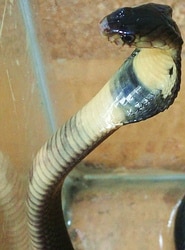
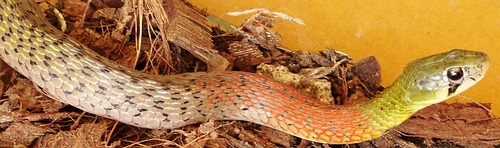
Key takeaways #
- Context matters more than rules of thumb. Thailand’s snake fauna varies meaningfully by region, by season, and by habitat. Advice that holds in southern wet forest does not always hold in northern hill country or in the central agricultural plains.
- Prevention is high-leverage. Most serious snake-related incidents in Thailand are downstream of three preventable behaviours — reaching where you cannot see, walking forest paths at night without a torch, and attempting to handle or kill snakes rather than call professional removal.
- Hospital access is the real safety net. Thai provincial hospitals stock the standard polyvalent antivenoms. The single biggest predictor of bad outcome from a serious bite is delay in reaching one of those hospitals.
- Citizen-science records help. Even casual photographs with location data, posted to platforms like iNaturalist, contribute to the regional knowledge base. Most Thai snake species have surprisingly thin distribution data; one well-documented sighting can fill a real gap.
Common questions #
How likely am I to see a snake on a casual visit to Thailand?
Lower than you probably expect. A casual three-hour daytime forest hike in southern Thailand has roughly a 5–10% chance of producing any snake encounter at all, and roughly a 0.5–1% chance of producing a venomous-species sighting. Visitors who deliberately go looking — at night, in good habitat — see far more, but the casual exposure is genuinely low.
What time of year has the most snake activity?
The wet season (May through October) produces by far the most snake encounters across most of Thailand. Within that, two peaks: the start of the rains (April–June) when males are moving for breeding, and late wet season (September–November) when juvenile cohorts disperse from nest sites. The dry season (December–March) is genuinely quieter for snake-watching, particularly in the north and northeast.
Are Thai snakebite outcomes really that good?
For patients who reach a hospital within an hour or two of a venomous bite, yes — Thai outcomes are excellent by international standards. Mortality with appropriate antivenom and supportive care runs under 1% for most species. The deaths that do happen are concentrated in cases of significant pre-hospital delay, mis-identification of species, or in patients with serious co-morbidities. The Thai system is robust; the failure modes are mostly upstream of the hospital.
What is the single best preventive measure?
A torch at night. The single biggest reducer of Thai snakebite risk is consistent, eyes-down torch use on every walking path after dark. Most preventable bites in southern Thailand are foot-on-snake events on the ground at night, and a torch beam on the trail at metre-down angle prevents the great majority of them. Closed footwear is the second-biggest improvement; long trousers in dense vegetation is third.
- Bright leaf-green snake on a low branch in a Bangkok garden, white upper lip, rusty tail, vertical pupil. Triangular head distinct from neck.
- Small olive snake, very slender, bright red neck patch with yellow shoulder. In a rice paddy.
- Large brown-and-black blotched python, very heavy body, found in Lumphini Park canal.
- Bright green slender snake with bold black crossbars and red flowery markings, draped along a hibiscus.
- Slender bronze-brown snake, electric blue interstitial skin showing when defensive, fast through the canopy.
- Very large patterned reptile, swimming in a Bangkok klong, body 1.8 m, distinct yellow spots on dark grey-brown.
- Black snake with bold yellow bands of nearly equal width, rounded body, found at night, slow movement.
- Stout grey snake with bold dark crossbands, paddle-shaped tail, half-submerged in a fish net at sea.
- Glossy black snake with two thin pale dorsal stripes, bright red belly, small head, in damp leaf litter.
- Snake with broad triangular head, mottled brown-grey body, found motionless on a forest floor in Krabi karst.
- Cobra with a single rounded pale spot on the back of the hood, found near a rice paddy.
- Tiny dark grey-blue water snake with cream belly, in a flooded ditch, no markings.
Answers #
- White-Lipped Pit Viper (Trimeresurus albolabris) — venomous, common, hospital-worthy bite.
- Red-Necked Keelback (Rhabdophis subminiatus) — looks harmless, can kill 24-48 hours later via coagulopathy.
- Burmese Python (Python bivittatus) — non-venomous but the bite is mechanical and severe.
- Golden Tree Snake (Chrysopelea ornata) — harmless and beneficial. Most common Bangkok garden snake.
- Wall’s (Blue) Bronzeback (Dendrelaphis cyanochloris) — harmless. The blue display is bluff.
- Not a snake — that is a Water Monitor (Varanus salvator). Trick question. See Water Monitor notes.
- Banded Krait (Bungarus fasciatus) — deadly. Slow but dangerous bite.
- Shaw’s Sea Snake (Hydrophis curtus) — venomous, common in trawl bycatch.
- Small-Spotted Coral Snake (Calliophis maculiceps) — small but potently neurotoxic.
- Kanburi Pit Viper (Trimeresurus kanburiensis) — venomous Kanchanaburi endemic.
- Monocled Cobra (Naja kaouthia) — deadly. Note: spitting cobra has different hood pattern.
- Plumbeous Water Snake (Hypsiscopus plumbea) — harmless to humans, abundant.
How did you do? #
- 11-12 right: You know your Thai snakes. Probably already a long-time resident or a serious herper.
- 8-10 right: Solid. The misses are usually the lookalikes (sea snake vs sea krait, similar pit vipers, krait subtleties).
- 5-7 right: Reasonable starting baseline. Read through the species pages linked above; the patterns become familiar with practice.
- 0-4 right: No problem — the quiz is set deliberately challenging. Start with the snake identification decision tree and the common venomous overview.
The point of the quiz is not to test trivia — it is to make sure you would recognise the half-dozen Thai snakes that genuinely matter for personal safety. The deadly species (Monocled Cobra, kraits, Russell’s Viper, Malayan Pit Viper, Red-Necked Keelback) are worth committing to long-term memory. The harmless ones we should learn to leave alone.
External references: the Reptile Database for taxonomy, and iNaturalist for citizen-science distribution and photo references.
Key takeaways #
- Context matters more than rules of thumb. Thailand’s snake fauna varies meaningfully by region, by season, and by habitat. Advice that holds in southern wet forest does not always hold in northern hill country or in the central agricultural plains.
- Prevention is high-leverage. Most serious snake-related incidents in Thailand are downstream of three preventable behaviours — reaching where you cannot see, walking forest paths at night without a torch, and attempting to handle or kill snakes rather than call professional removal.
- Hospital access is the real safety net. Thai provincial hospitals stock the standard polyvalent antivenoms. The single biggest predictor of bad outcome from a serious bite is delay in reaching one of those hospitals.
- Citizen-science records help. Even casual photographs with location data, posted to platforms like iNaturalist, contribute to the regional knowledge base. Most Thai snake species have surprisingly thin distribution data; one well-documented sighting can fill a real gap.
Common questions #
How likely am I to see a snake on a casual visit to Thailand?
Lower than you probably expect. A casual three-hour daytime forest hike in southern Thailand has roughly a 5–10% chance of producing any snake encounter at all, and roughly a 0.5–1% chance of producing a venomous-species sighting. Visitors who deliberately go looking — at night, in good habitat — see far more, but the casual exposure is genuinely low.
What time of year has the most snake activity?
The wet season (May through October) produces by far the most snake encounters across most of Thailand. Within that, two peaks: the start of the rains (April–June) when males are moving for breeding, and late wet season (September–November) when juvenile cohorts disperse from nest sites. The dry season (December–March) is genuinely quieter for snake-watching, particularly in the north and northeast.
Are Thai snakebite outcomes really that good?
For patients who reach a hospital within an hour or two of a venomous bite, yes — Thai outcomes are excellent by international standards. Mortality with appropriate antivenom and supportive care runs under 1% for most species. The deaths that do happen are concentrated in cases of significant pre-hospital delay, mis-identification of species, or in patients with serious co-morbidities. The Thai system is robust; the failure modes are mostly upstream of the hospital.
What is the single best preventive measure?
A torch at night. The single biggest reducer of Thai snakebite risk is consistent, eyes-down torch use on every walking path after dark. Most preventable bites in southern Thailand are foot-on-snake events on the ground at night, and a torch beam on the trail at metre-down angle prevents the great majority of them. Closed footwear is the second-biggest improvement; long trousers in dense vegetation is third.
- White-Lipped Pit Viper (Trimeresurus albolabris) — venomous, common, hospital-worthy bite.
- Red-Necked Keelback (Rhabdophis subminiatus) — looks harmless, can kill 24-48 hours later via coagulopathy.
- Burmese Python (Python bivittatus) — non-venomous but the bite is mechanical and severe.
- Golden Tree Snake (Chrysopelea ornata) — harmless and beneficial. Most common Bangkok garden snake.
- Wall’s (Blue) Bronzeback (Dendrelaphis cyanochloris) — harmless. The blue display is bluff.
- Not a snake — that is a Water Monitor (Varanus salvator). Trick question. See Water Monitor notes.
- Banded Krait (Bungarus fasciatus) — deadly. Slow but dangerous bite.
- Shaw’s Sea Snake (Hydrophis curtus) — venomous, common in trawl bycatch.
- Small-Spotted Coral Snake (Calliophis maculiceps) — small but potently neurotoxic.
- Kanburi Pit Viper (Trimeresurus kanburiensis) — venomous Kanchanaburi endemic.
- Monocled Cobra (Naja kaouthia) — deadly. Note: spitting cobra has different hood pattern.
- Plumbeous Water Snake (Hypsiscopus plumbea) — harmless to humans, abundant.
How did you do? #
- 11-12 right: You know your Thai snakes. Probably already a long-time resident or a serious herper.
- 8-10 right: Solid. The misses are usually the lookalikes (sea snake vs sea krait, similar pit vipers, krait subtleties).
- 5-7 right: Reasonable starting baseline. Read through the species pages linked above; the patterns become familiar with practice.
- 0-4 right: No problem — the quiz is set deliberately challenging. Start with the snake identification decision tree and the common venomous overview.
The point of the quiz is not to test trivia — it is to make sure you would recognise the half-dozen Thai snakes that genuinely matter for personal safety. The deadly species (Monocled Cobra, kraits, Russell’s Viper, Malayan Pit Viper, Red-Necked Keelback) are worth committing to long-term memory. The harmless ones we should learn to leave alone.
External references: the Reptile Database for taxonomy, and iNaturalist for citizen-science distribution and photo references.
- Bright leaf-green snake on a low branch in a Bangkok garden, white upper lip, rusty tail, vertical pupil. Triangular head distinct from neck.
- Small olive snake, very slender, bright red neck patch with yellow shoulder. In a rice paddy.
- Large brown-and-black blotched python, very heavy body, found in Lumphini Park canal.
- Bright green slender snake with bold black crossbars and red flowery markings, draped along a hibiscus.
- Slender bronze-brown snake, electric blue interstitial skin showing when defensive, fast through the canopy.
- Very large patterned reptile, swimming in a Bangkok klong, body 1.8 m, distinct yellow spots on dark grey-brown.
- Black snake with bold yellow bands of nearly equal width, rounded body, found at night, slow movement.
- Stout grey snake with bold dark crossbands, paddle-shaped tail, half-submerged in a fish net at sea.
- Glossy black snake with two thin pale dorsal stripes, bright red belly, small head, in damp leaf litter.
- Snake with broad triangular head, mottled brown-grey body, found motionless on a forest floor in Krabi karst.
- Cobra with a single rounded pale spot on the back of the hood, found near a rice paddy.
- Tiny dark grey-blue water snake with cream belly, in a flooded ditch, no markings.
Answers #
- White-Lipped Pit Viper (Trimeresurus albolabris) — venomous, common, hospital-worthy bite.
- Red-Necked Keelback (Rhabdophis subminiatus) — looks harmless, can kill 24-48 hours later via coagulopathy.
- Burmese Python (Python bivittatus) — non-venomous but the bite is mechanical and severe.
- Golden Tree Snake (Chrysopelea ornata) — harmless and beneficial. Most common Bangkok garden snake.
- Wall’s (Blue) Bronzeback (Dendrelaphis cyanochloris) — harmless. The blue display is bluff.
- Not a snake — that is a Water Monitor (Varanus salvator). Trick question. See Water Monitor notes.
- Banded Krait (Bungarus fasciatus) — deadly. Slow but dangerous bite.
- Shaw’s Sea Snake (Hydrophis curtus) — venomous, common in trawl bycatch.
- Small-Spotted Coral Snake (Calliophis maculiceps) — small but potently neurotoxic.
- Kanburi Pit Viper (Trimeresurus kanburiensis) — venomous Kanchanaburi endemic.
- Monocled Cobra (Naja kaouthia) — deadly. Note: spitting cobra has different hood pattern.
- Plumbeous Water Snake (Hypsiscopus plumbea) — harmless to humans, abundant.
How did you do? #
- 11-12 right: You know your Thai snakes. Probably already a long-time resident or a serious herper.
- 8-10 right: Solid. The misses are usually the lookalikes (sea snake vs sea krait, similar pit vipers, krait subtleties).
- 5-7 right: Reasonable starting baseline. Read through the species pages linked above; the patterns become familiar with practice.
- 0-4 right: No problem — the quiz is set deliberately challenging. Start with the snake identification decision tree and the common venomous overview.
The point of the quiz is not to test trivia — it is to make sure you would recognise the half-dozen Thai snakes that genuinely matter for personal safety. The deadly species (Monocled Cobra, kraits, Russell’s Viper, Malayan Pit Viper, Red-Necked Keelback) are worth committing to long-term memory. The harmless ones we should learn to leave alone.
External references: the Reptile Database for taxonomy, and iNaturalist for citizen-science distribution and photo references.
Key takeaways #
- Context matters more than rules of thumb. Thailand’s snake fauna varies meaningfully by region, by season, and by habitat. Advice that holds in southern wet forest does not always hold in northern hill country or in the central agricultural plains.
- Prevention is high-leverage. Most serious snake-related incidents in Thailand are downstream of three preventable behaviours — reaching where you cannot see, walking forest paths at night without a torch, and attempting to handle or kill snakes rather than call professional removal.
- Hospital access is the real safety net. Thai provincial hospitals stock the standard polyvalent antivenoms. The single biggest predictor of bad outcome from a serious bite is delay in reaching one of those hospitals.
- Citizen-science records help. Even casual photographs with location data, posted to platforms like iNaturalist, contribute to the regional knowledge base. Most Thai snake species have surprisingly thin distribution data; one well-documented sighting can fill a real gap.
Common questions #
How likely am I to see a snake on a casual visit to Thailand?
Lower than you probably expect. A casual three-hour daytime forest hike in southern Thailand has roughly a 5–10% chance of producing any snake encounter at all, and roughly a 0.5–1% chance of producing a venomous-species sighting. Visitors who deliberately go looking — at night, in good habitat — see far more, but the casual exposure is genuinely low.
What time of year has the most snake activity?
The wet season (May through October) produces by far the most snake encounters across most of Thailand. Within that, two peaks: the start of the rains (April–June) when males are moving for breeding, and late wet season (September–November) when juvenile cohorts disperse from nest sites. The dry season (December–March) is genuinely quieter for snake-watching, particularly in the north and northeast.
Are Thai snakebite outcomes really that good?
For patients who reach a hospital within an hour or two of a venomous bite, yes — Thai outcomes are excellent by international standards. Mortality with appropriate antivenom and supportive care runs under 1% for most species. The deaths that do happen are concentrated in cases of significant pre-hospital delay, mis-identification of species, or in patients with serious co-morbidities. The Thai system is robust; the failure modes are mostly upstream of the hospital.
What is the single best preventive measure?
A torch at night. The single biggest reducer of Thai snakebite risk is consistent, eyes-down torch use on every walking path after dark. Most preventable bites in southern Thailand are foot-on-snake events on the ground at night, and a torch beam on the trail at metre-down angle prevents the great majority of them. Closed footwear is the second-biggest improvement; long trousers in dense vegetation is third.
- White-Lipped Pit Viper (Trimeresurus albolabris) — venomous, common, hospital-worthy bite.
- Red-Necked Keelback (Rhabdophis subminiatus) — looks harmless, can kill 24-48 hours later via coagulopathy.
- Burmese Python (Python bivittatus) — non-venomous but the bite is mechanical and severe.
- Golden Tree Snake (Chrysopelea ornata) — harmless and beneficial. Most common Bangkok garden snake.
- Wall’s (Blue) Bronzeback (Dendrelaphis cyanochloris) — harmless. The blue display is bluff.
- Not a snake — that is a Water Monitor (Varanus salvator). Trick question. See Water Monitor notes.
- Banded Krait (Bungarus fasciatus) — deadly. Slow but dangerous bite.
- Shaw’s Sea Snake (Hydrophis curtus) — venomous, common in trawl bycatch.
- Small-Spotted Coral Snake (Calliophis maculiceps) — small but potently neurotoxic.
- Kanburi Pit Viper (Trimeresurus kanburiensis) — venomous Kanchanaburi endemic.
- Monocled Cobra (Naja kaouthia) — deadly. Note: spitting cobra has different hood pattern.
- Plumbeous Water Snake (Hypsiscopus plumbea) — harmless to humans, abundant.
How did you do? #
- 11-12 right: You know your Thai snakes. Probably already a long-time resident or a serious herper.
- 8-10 right: Solid. The misses are usually the lookalikes (sea snake vs sea krait, similar pit vipers, krait subtleties).
- 5-7 right: Reasonable starting baseline. Read through the species pages linked above; the patterns become familiar with practice.
- 0-4 right: No problem — the quiz is set deliberately challenging. Start with the snake identification decision tree and the common venomous overview.
The point of the quiz is not to test trivia — it is to make sure you would recognise the half-dozen Thai snakes that genuinely matter for personal safety. The deadly species (Monocled Cobra, kraits, Russell’s Viper, Malayan Pit Viper, Red-Necked Keelback) are worth committing to long-term memory. The harmless ones we should learn to leave alone.
External references: the Reptile Database for taxonomy, and iNaturalist for citizen-science distribution and photo references.
- Bright leaf-green snake on a low branch in a Bangkok garden, white upper lip, rusty tail, vertical pupil. Triangular head distinct from neck.
- Small olive snake, very slender, bright red neck patch with yellow shoulder. In a rice paddy.
- Large brown-and-black blotched python, very heavy body, found in Lumphini Park canal.
- Bright green slender snake with bold black crossbars and red flowery markings, draped along a hibiscus.
- Slender bronze-brown snake, electric blue interstitial skin showing when defensive, fast through the canopy.
- Very large patterned reptile, swimming in a Bangkok klong, body 1.8 m, distinct yellow spots on dark grey-brown.
- Black snake with bold yellow bands of nearly equal width, rounded body, found at night, slow movement.
- Stout grey snake with bold dark crossbands, paddle-shaped tail, half-submerged in a fish net at sea.
- Glossy black snake with two thin pale dorsal stripes, bright red belly, small head, in damp leaf litter.
- Snake with broad triangular head, mottled brown-grey body, found motionless on a forest floor in Krabi karst.
- Cobra with a single rounded pale spot on the back of the hood, found near a rice paddy.
- Tiny dark grey-blue water snake with cream belly, in a flooded ditch, no markings.
Answers #
- White-Lipped Pit Viper (Trimeresurus albolabris) — venomous, common, hospital-worthy bite.
- Red-Necked Keelback (Rhabdophis subminiatus) — looks harmless, can kill 24-48 hours later via coagulopathy.
- Burmese Python (Python bivittatus) — non-venomous but the bite is mechanical and severe.
- Golden Tree Snake (Chrysopelea ornata) — harmless and beneficial. Most common Bangkok garden snake.
- Wall’s (Blue) Bronzeback (Dendrelaphis cyanochloris) — harmless. The blue display is bluff.
- Not a snake — that is a Water Monitor (Varanus salvator). Trick question. See Water Monitor notes.
- Banded Krait (Bungarus fasciatus) — deadly. Slow but dangerous bite.
- Shaw’s Sea Snake (Hydrophis curtus) — venomous, common in trawl bycatch.
- Small-Spotted Coral Snake (Calliophis maculiceps) — small but potently neurotoxic.
- Kanburi Pit Viper (Trimeresurus kanburiensis) — venomous Kanchanaburi endemic.
- Monocled Cobra (Naja kaouthia) — deadly. Note: spitting cobra has different hood pattern.
- Plumbeous Water Snake (Hypsiscopus plumbea) — harmless to humans, abundant.
How did you do? #
- 11-12 right: You know your Thai snakes. Probably already a long-time resident or a serious herper.
- 8-10 right: Solid. The misses are usually the lookalikes (sea snake vs sea krait, similar pit vipers, krait subtleties).
- 5-7 right: Reasonable starting baseline. Read through the species pages linked above; the patterns become familiar with practice.
- 0-4 right: No problem — the quiz is set deliberately challenging. Start with the snake identification decision tree and the common venomous overview.
The point of the quiz is not to test trivia — it is to make sure you would recognise the half-dozen Thai snakes that genuinely matter for personal safety. The deadly species (Monocled Cobra, kraits, Russell’s Viper, Malayan Pit Viper, Red-Necked Keelback) are worth committing to long-term memory. The harmless ones we should learn to leave alone.
External references: the Reptile Database for taxonomy, and iNaturalist for citizen-science distribution and photo references.
Key takeaways #
- Context matters more than rules of thumb. Thailand’s snake fauna varies meaningfully by region, by season, and by habitat. Advice that holds in southern wet forest does not always hold in northern hill country or in the central agricultural plains.
- Prevention is high-leverage. Most serious snake-related incidents in Thailand are downstream of three preventable behaviours — reaching where you cannot see, walking forest paths at night without a torch, and attempting to handle or kill snakes rather than call professional removal.
- Hospital access is the real safety net. Thai provincial hospitals stock the standard polyvalent antivenoms. The single biggest predictor of bad outcome from a serious bite is delay in reaching one of those hospitals.
- Citizen-science records help. Even casual photographs with location data, posted to platforms like iNaturalist, contribute to the regional knowledge base. Most Thai snake species have surprisingly thin distribution data; one well-documented sighting can fill a real gap.
Common questions #
How likely am I to see a snake on a casual visit to Thailand?
Lower than you probably expect. A casual three-hour daytime forest hike in southern Thailand has roughly a 5–10% chance of producing any snake encounter at all, and roughly a 0.5–1% chance of producing a venomous-species sighting. Visitors who deliberately go looking — at night, in good habitat — see far more, but the casual exposure is genuinely low.
What time of year has the most snake activity?
The wet season (May through October) produces by far the most snake encounters across most of Thailand. Within that, two peaks: the start of the rains (April–June) when males are moving for breeding, and late wet season (September–November) when juvenile cohorts disperse from nest sites. The dry season (December–March) is genuinely quieter for snake-watching, particularly in the north and northeast.
Are Thai snakebite outcomes really that good?
For patients who reach a hospital within an hour or two of a venomous bite, yes — Thai outcomes are excellent by international standards. Mortality with appropriate antivenom and supportive care runs under 1% for most species. The deaths that do happen are concentrated in cases of significant pre-hospital delay, mis-identification of species, or in patients with serious co-morbidities. The Thai system is robust; the failure modes are mostly upstream of the hospital.
What is the single best preventive measure?
A torch at night. The single biggest reducer of Thai snakebite risk is consistent, eyes-down torch use on every walking path after dark. Most preventable bites in southern Thailand are foot-on-snake events on the ground at night, and a torch beam on the trail at metre-down angle prevents the great majority of them. Closed footwear is the second-biggest improvement; long trousers in dense vegetation is third.
- Bright leaf-green snake on a low branch in a Bangkok garden, white upper lip, rusty tail, vertical pupil. Triangular head distinct from neck.
- Small olive snake, very slender, bright red neck patch with yellow shoulder. In a rice paddy.
- Large brown-and-black blotched python, very heavy body, found in Lumphini Park canal.
- Bright green slender snake with bold black crossbars and red flowery markings, draped along a hibiscus.
- Slender bronze-brown snake, electric blue interstitial skin showing when defensive, fast through the canopy.
- Very large patterned reptile, swimming in a Bangkok klong, body 1.8 m, distinct yellow spots on dark grey-brown.
- Black snake with bold yellow bands of nearly equal width, rounded body, found at night, slow movement.
- Stout grey snake with bold dark crossbands, paddle-shaped tail, half-submerged in a fish net at sea.
- Glossy black snake with two thin pale dorsal stripes, bright red belly, small head, in damp leaf litter.
- Snake with broad triangular head, mottled brown-grey body, found motionless on a forest floor in Krabi karst.
- Cobra with a single rounded pale spot on the back of the hood, found near a rice paddy.
- Tiny dark grey-blue water snake with cream belly, in a flooded ditch, no markings.
Answers #
- White-Lipped Pit Viper (Trimeresurus albolabris) — venomous, common, hospital-worthy bite.
- Red-Necked Keelback (Rhabdophis subminiatus) — looks harmless, can kill 24-48 hours later via coagulopathy.
- Burmese Python (Python bivittatus) — non-venomous but the bite is mechanical and severe.
- Golden Tree Snake (Chrysopelea ornata) — harmless and beneficial. Most common Bangkok garden snake.
- Wall’s (Blue) Bronzeback (Dendrelaphis cyanochloris) — harmless. The blue display is bluff.
- Not a snake — that is a Water Monitor (Varanus salvator). Trick question. See Water Monitor notes.
- Banded Krait (Bungarus fasciatus) — deadly. Slow but dangerous bite.
- Shaw’s Sea Snake (Hydrophis curtus) — venomous, common in trawl bycatch.
- Small-Spotted Coral Snake (Calliophis maculiceps) — small but potently neurotoxic.
- Kanburi Pit Viper (Trimeresurus kanburiensis) — venomous Kanchanaburi endemic.
- Monocled Cobra (Naja kaouthia) — deadly. Note: spitting cobra has different hood pattern.
- Plumbeous Water Snake (Hypsiscopus plumbea) — harmless to humans, abundant.
How did you do? #
- 11-12 right: You know your Thai snakes. Probably already a long-time resident or a serious herper.
- 8-10 right: Solid. The misses are usually the lookalikes (sea snake vs sea krait, similar pit vipers, krait subtleties).
- 5-7 right: Reasonable starting baseline. Read through the species pages linked above; the patterns become familiar with practice.
- 0-4 right: No problem — the quiz is set deliberately challenging. Start with the snake identification decision tree and the common venomous overview.
The point of the quiz is not to test trivia — it is to make sure you would recognise the half-dozen Thai snakes that genuinely matter for personal safety. The deadly species (Monocled Cobra, kraits, Russell’s Viper, Malayan Pit Viper, Red-Necked Keelback) are worth committing to long-term memory. The harmless ones we should learn to leave alone.
External references: the Reptile Database for taxonomy, and iNaturalist for citizen-science distribution and photo references.
Key takeaways #
- Context matters more than rules of thumb. Thailand’s snake fauna varies meaningfully by region, by season, and by habitat. Advice that holds in southern wet forest does not always hold in northern hill country or in the central agricultural plains.
- Prevention is high-leverage. Most serious snake-related incidents in Thailand are downstream of three preventable behaviours — reaching where you cannot see, walking forest paths at night without a torch, and attempting to handle or kill snakes rather than call professional removal.
- Hospital access is the real safety net. Thai provincial hospitals stock the standard polyvalent antivenoms. The single biggest predictor of bad outcome from a serious bite is delay in reaching one of those hospitals.
- Citizen-science records help. Even casual photographs with location data, posted to platforms like iNaturalist, contribute to the regional knowledge base. Most Thai snake species have surprisingly thin distribution data; one well-documented sighting can fill a real gap.
Common questions #
How likely am I to see a snake on a casual visit to Thailand?
Lower than you probably expect. A casual three-hour daytime forest hike in southern Thailand has roughly a 5–10% chance of producing any snake encounter at all, and roughly a 0.5–1% chance of producing a venomous-species sighting. Visitors who deliberately go looking — at night, in good habitat — see far more, but the casual exposure is genuinely low.
What time of year has the most snake activity?
The wet season (May through October) produces by far the most snake encounters across most of Thailand. Within that, two peaks: the start of the rains (April–June) when males are moving for breeding, and late wet season (September–November) when juvenile cohorts disperse from nest sites. The dry season (December–March) is genuinely quieter for snake-watching, particularly in the north and northeast.
Are Thai snakebite outcomes really that good?
For patients who reach a hospital within an hour or two of a venomous bite, yes — Thai outcomes are excellent by international standards. Mortality with appropriate antivenom and supportive care runs under 1% for most species. The deaths that do happen are concentrated in cases of significant pre-hospital delay, mis-identification of species, or in patients with serious co-morbidities. The Thai system is robust; the failure modes are mostly upstream of the hospital.
What is the single best preventive measure?
A torch at night. The single biggest reducer of Thai snakebite risk is consistent, eyes-down torch use on every walking path after dark. Most preventable bites in southern Thailand are foot-on-snake events on the ground at night, and a torch beam on the trail at metre-down angle prevents the great majority of them. Closed footwear is the second-biggest improvement; long trousers in dense vegetation is third.
- White-Lipped Pit Viper (Trimeresurus albolabris) — venomous, common, hospital-worthy bite.
- Red-Necked Keelback (Rhabdophis subminiatus) — looks harmless, can kill 24-48 hours later via coagulopathy.
- Burmese Python (Python bivittatus) — non-venomous but the bite is mechanical and severe.
- Golden Tree Snake (Chrysopelea ornata) — harmless and beneficial. Most common Bangkok garden snake.
- Wall’s (Blue) Bronzeback (Dendrelaphis cyanochloris) — harmless. The blue display is bluff.
- Not a snake — that is a Water Monitor (Varanus salvator). Trick question. See Water Monitor notes.
- Banded Krait (Bungarus fasciatus) — deadly. Slow but dangerous bite.
- Shaw’s Sea Snake (Hydrophis curtus) — venomous, common in trawl bycatch.
- Small-Spotted Coral Snake (Calliophis maculiceps) — small but potently neurotoxic.
- Kanburi Pit Viper (Trimeresurus kanburiensis) — venomous Kanchanaburi endemic.
- Monocled Cobra (Naja kaouthia) — deadly. Note: spitting cobra has different hood pattern.
- Plumbeous Water Snake (Hypsiscopus plumbea) — harmless to humans, abundant.
How did you do? #
- 11-12 right: You know your Thai snakes. Probably already a long-time resident or a serious herper.
- 8-10 right: Solid. The misses are usually the lookalikes (sea snake vs sea krait, similar pit vipers, krait subtleties).
- 5-7 right: Reasonable starting baseline. Read through the species pages linked above; the patterns become familiar with practice.
- 0-4 right: No problem — the quiz is set deliberately challenging. Start with the snake identification decision tree and the common venomous overview.
The point of the quiz is not to test trivia — it is to make sure you would recognise the half-dozen Thai snakes that genuinely matter for personal safety. The deadly species (Monocled Cobra, kraits, Russell’s Viper, Malayan Pit Viper, Red-Necked Keelback) are worth committing to long-term memory. The harmless ones we should learn to leave alone.
External references: the Reptile Database for taxonomy, and iNaturalist for citizen-science distribution and photo references.
- Bright leaf-green snake on a low branch in a Bangkok garden, white upper lip, rusty tail, vertical pupil. Triangular head distinct from neck.
- Small olive snake, very slender, bright red neck patch with yellow shoulder. In a rice paddy.
- Large brown-and-black blotched python, very heavy body, found in Lumphini Park canal.
- Bright green slender snake with bold black crossbars and red flowery markings, draped along a hibiscus.
- Slender bronze-brown snake, electric blue interstitial skin showing when defensive, fast through the canopy.
- Very large patterned reptile, swimming in a Bangkok klong, body 1.8 m, distinct yellow spots on dark grey-brown.
- Black snake with bold yellow bands of nearly equal width, rounded body, found at night, slow movement.
- Stout grey snake with bold dark crossbands, paddle-shaped tail, half-submerged in a fish net at sea.
- Glossy black snake with two thin pale dorsal stripes, bright red belly, small head, in damp leaf litter.
- Snake with broad triangular head, mottled brown-grey body, found motionless on a forest floor in Krabi karst.
- Cobra with a single rounded pale spot on the back of the hood, found near a rice paddy.
- Tiny dark grey-blue water snake with cream belly, in a flooded ditch, no markings.
Answers #
- White-Lipped Pit Viper (Trimeresurus albolabris) — venomous, common, hospital-worthy bite.
- Red-Necked Keelback (Rhabdophis subminiatus) — looks harmless, can kill 24-48 hours later via coagulopathy.
- Burmese Python (Python bivittatus) — non-venomous but the bite is mechanical and severe.
- Golden Tree Snake (Chrysopelea ornata) — harmless and beneficial. Most common Bangkok garden snake.
- Wall’s (Blue) Bronzeback (Dendrelaphis cyanochloris) — harmless. The blue display is bluff.
- Not a snake — that is a Water Monitor (Varanus salvator). Trick question. See Water Monitor notes.
- Banded Krait (Bungarus fasciatus) — deadly. Slow but dangerous bite.
- Shaw’s Sea Snake (Hydrophis curtus) — venomous, common in trawl bycatch.
- Small-Spotted Coral Snake (Calliophis maculiceps) — small but potently neurotoxic.
- Kanburi Pit Viper (Trimeresurus kanburiensis) — venomous Kanchanaburi endemic.
- Monocled Cobra (Naja kaouthia) — deadly. Note: spitting cobra has different hood pattern.
- Plumbeous Water Snake (Hypsiscopus plumbea) — harmless to humans, abundant.
How did you do? #
- 11-12 right: You know your Thai snakes. Probably already a long-time resident or a serious herper.
- 8-10 right: Solid. The misses are usually the lookalikes (sea snake vs sea krait, similar pit vipers, krait subtleties).
- 5-7 right: Reasonable starting baseline. Read through the species pages linked above; the patterns become familiar with practice.
- 0-4 right: No problem — the quiz is set deliberately challenging. Start with the snake identification decision tree and the common venomous overview.
The point of the quiz is not to test trivia — it is to make sure you would recognise the half-dozen Thai snakes that genuinely matter for personal safety. The deadly species (Monocled Cobra, kraits, Russell’s Viper, Malayan Pit Viper, Red-Necked Keelback) are worth committing to long-term memory. The harmless ones we should learn to leave alone.
External references: the Reptile Database for taxonomy, and iNaturalist for citizen-science distribution and photo references.
Key takeaways #
- Context matters more than rules of thumb. Thailand’s snake fauna varies meaningfully by region, by season, and by habitat. Advice that holds in southern wet forest does not always hold in northern hill country or in the central agricultural plains.
- Prevention is high-leverage. Most serious snake-related incidents in Thailand are downstream of three preventable behaviours — reaching where you cannot see, walking forest paths at night without a torch, and attempting to handle or kill snakes rather than call professional removal.
- Hospital access is the real safety net. Thai provincial hospitals stock the standard polyvalent antivenoms. The single biggest predictor of bad outcome from a serious bite is delay in reaching one of those hospitals.
- Citizen-science records help. Even casual photographs with location data, posted to platforms like iNaturalist, contribute to the regional knowledge base. Most Thai snake species have surprisingly thin distribution data; one well-documented sighting can fill a real gap.
Common questions #
How likely am I to see a snake on a casual visit to Thailand?
Lower than you probably expect. A casual three-hour daytime forest hike in southern Thailand has roughly a 5–10% chance of producing any snake encounter at all, and roughly a 0.5–1% chance of producing a venomous-species sighting. Visitors who deliberately go looking — at night, in good habitat — see far more, but the casual exposure is genuinely low.
What time of year has the most snake activity?
The wet season (May through October) produces by far the most snake encounters across most of Thailand. Within that, two peaks: the start of the rains (April–June) when males are moving for breeding, and late wet season (September–November) when juvenile cohorts disperse from nest sites. The dry season (December–March) is genuinely quieter for snake-watching, particularly in the north and northeast.
Are Thai snakebite outcomes really that good?
For patients who reach a hospital within an hour or two of a venomous bite, yes — Thai outcomes are excellent by international standards. Mortality with appropriate antivenom and supportive care runs under 1% for most species. The deaths that do happen are concentrated in cases of significant pre-hospital delay, mis-identification of species, or in patients with serious co-morbidities. The Thai system is robust; the failure modes are mostly upstream of the hospital.
What is the single best preventive measure?
A torch at night. The single biggest reducer of Thai snakebite risk is consistent, eyes-down torch use on every walking path after dark. Most preventable bites in southern Thailand are foot-on-snake events on the ground at night, and a torch beam on the trail at metre-down angle prevents the great majority of them. Closed footwear is the second-biggest improvement; long trousers in dense vegetation is third.
- Bright leaf-green snake on a low branch in a Bangkok garden, white upper lip, rusty tail, vertical pupil. Triangular head distinct from neck.
- Small olive snake, very slender, bright red neck patch with yellow shoulder. In a rice paddy.
- Large brown-and-black blotched python, very heavy body, found in Lumphini Park canal.
- Bright green slender snake with bold black crossbars and red flowery markings, draped along a hibiscus.
- Slender bronze-brown snake, electric blue interstitial skin showing when defensive, fast through the canopy.
- Very large patterned reptile, swimming in a Bangkok klong, body 1.8 m, distinct yellow spots on dark grey-brown.
- Black snake with bold yellow bands of nearly equal width, rounded body, found at night, slow movement.
- Stout grey snake with bold dark crossbands, paddle-shaped tail, half-submerged in a fish net at sea.
- Glossy black snake with two thin pale dorsal stripes, bright red belly, small head, in damp leaf litter.
- Snake with broad triangular head, mottled brown-grey body, found motionless on a forest floor in Krabi karst.
- Cobra with a single rounded pale spot on the back of the hood, found near a rice paddy.
- Tiny dark grey-blue water snake with cream belly, in a flooded ditch, no markings.
Answers #
- White-Lipped Pit Viper (Trimeresurus albolabris) — venomous, common, hospital-worthy bite.
- Red-Necked Keelback (Rhabdophis subminiatus) — looks harmless, can kill 24-48 hours later via coagulopathy.
- Burmese Python (Python bivittatus) — non-venomous but the bite is mechanical and severe.
- Golden Tree Snake (Chrysopelea ornata) — harmless and beneficial. Most common Bangkok garden snake.
- Wall’s (Blue) Bronzeback (Dendrelaphis cyanochloris) — harmless. The blue display is bluff.
- Not a snake — that is a Water Monitor (Varanus salvator). Trick question. See Water Monitor notes.
- Banded Krait (Bungarus fasciatus) — deadly. Slow but dangerous bite.
- Shaw’s Sea Snake (Hydrophis curtus) — venomous, common in trawl bycatch.
- Small-Spotted Coral Snake (Calliophis maculiceps) — small but potently neurotoxic.
- Kanburi Pit Viper (Trimeresurus kanburiensis) — venomous Kanchanaburi endemic.
- Monocled Cobra (Naja kaouthia) — deadly. Note: spitting cobra has different hood pattern.
- Plumbeous Water Snake (Hypsiscopus plumbea) — harmless to humans, abundant.
How did you do? #
- 11-12 right: You know your Thai snakes. Probably already a long-time resident or a serious herper.
- 8-10 right: Solid. The misses are usually the lookalikes (sea snake vs sea krait, similar pit vipers, krait subtleties).
- 5-7 right: Reasonable starting baseline. Read through the species pages linked above; the patterns become familiar with practice.
- 0-4 right: No problem — the quiz is set deliberately challenging. Start with the snake identification decision tree and the common venomous overview.
The point of the quiz is not to test trivia — it is to make sure you would recognise the half-dozen Thai snakes that genuinely matter for personal safety. The deadly species (Monocled Cobra, kraits, Russell’s Viper, Malayan Pit Viper, Red-Necked Keelback) are worth committing to long-term memory. The harmless ones we should learn to leave alone.
External references: the Reptile Database for taxonomy, and iNaturalist for citizen-science distribution and photo references.
Key takeaways #
- Context matters more than rules of thumb. Thailand’s snake fauna varies meaningfully by region, by season, and by habitat. Advice that holds in southern wet forest does not always hold in northern hill country or in the central agricultural plains.
- Prevention is high-leverage. Most serious snake-related incidents in Thailand are downstream of three preventable behaviours — reaching where you cannot see, walking forest paths at night without a torch, and attempting to handle or kill snakes rather than call professional removal.
- Hospital access is the real safety net. Thai provincial hospitals stock the standard polyvalent antivenoms. The single biggest predictor of bad outcome from a serious bite is delay in reaching one of those hospitals.
- Citizen-science records help. Even casual photographs with location data, posted to platforms like iNaturalist, contribute to the regional knowledge base. Most Thai snake species have surprisingly thin distribution data; one well-documented sighting can fill a real gap.
Common questions #
How likely am I to see a snake on a casual visit to Thailand?
Lower than you probably expect. A casual three-hour daytime forest hike in southern Thailand has roughly a 5–10% chance of producing any snake encounter at all, and roughly a 0.5–1% chance of producing a venomous-species sighting. Visitors who deliberately go looking — at night, in good habitat — see far more, but the casual exposure is genuinely low.
What time of year has the most snake activity?
The wet season (May through October) produces by far the most snake encounters across most of Thailand. Within that, two peaks: the start of the rains (April–June) when males are moving for breeding, and late wet season (September–November) when juvenile cohorts disperse from nest sites. The dry season (December–March) is genuinely quieter for snake-watching, particularly in the north and northeast.
Are Thai snakebite outcomes really that good?
For patients who reach a hospital within an hour or two of a venomous bite, yes — Thai outcomes are excellent by international standards. Mortality with appropriate antivenom and supportive care runs under 1% for most species. The deaths that do happen are concentrated in cases of significant pre-hospital delay, mis-identification of species, or in patients with serious co-morbidities. The Thai system is robust; the failure modes are mostly upstream of the hospital.
What is the single best preventive measure?
A torch at night. The single biggest reducer of Thai snakebite risk is consistent, eyes-down torch use on every walking path after dark. Most preventable bites in southern Thailand are foot-on-snake events on the ground at night, and a torch beam on the trail at metre-down angle prevents the great majority of them. Closed footwear is the second-biggest improvement; long trousers in dense vegetation is third.
- White-Lipped Pit Viper (Trimeresurus albolabris) — venomous, common, hospital-worthy bite.
- Red-Necked Keelback (Rhabdophis subminiatus) — looks harmless, can kill 24-48 hours later via coagulopathy.
- Burmese Python (Python bivittatus) — non-venomous but the bite is mechanical and severe.
- Golden Tree Snake (Chrysopelea ornata) — harmless and beneficial. Most common Bangkok garden snake.
- Wall’s (Blue) Bronzeback (Dendrelaphis cyanochloris) — harmless. The blue display is bluff.
- Not a snake — that is a Water Monitor (Varanus salvator). Trick question. See Water Monitor notes.
- Banded Krait (Bungarus fasciatus) — deadly. Slow but dangerous bite.
- Shaw’s Sea Snake (Hydrophis curtus) — venomous, common in trawl bycatch.
- Small-Spotted Coral Snake (Calliophis maculiceps) — small but potently neurotoxic.
- Kanburi Pit Viper (Trimeresurus kanburiensis) — venomous Kanchanaburi endemic.
- Monocled Cobra (Naja kaouthia) — deadly. Note: spitting cobra has different hood pattern.
- Plumbeous Water Snake (Hypsiscopus plumbea) — harmless to humans, abundant.
How did you do? #
- 11-12 right: You know your Thai snakes. Probably already a long-time resident or a serious herper.
- 8-10 right: Solid. The misses are usually the lookalikes (sea snake vs sea krait, similar pit vipers, krait subtleties).
- 5-7 right: Reasonable starting baseline. Read through the species pages linked above; the patterns become familiar with practice.
- 0-4 right: No problem — the quiz is set deliberately challenging. Start with the snake identification decision tree and the common venomous overview.
The point of the quiz is not to test trivia — it is to make sure you would recognise the half-dozen Thai snakes that genuinely matter for personal safety. The deadly species (Monocled Cobra, kraits, Russell’s Viper, Malayan Pit Viper, Red-Necked Keelback) are worth committing to long-term memory. The harmless ones we should learn to leave alone.
External references: the Reptile Database for taxonomy, and iNaturalist for citizen-science distribution and photo references.
- Bright leaf-green snake on a low branch in a Bangkok garden, white upper lip, rusty tail, vertical pupil. Triangular head distinct from neck.
- Small olive snake, very slender, bright red neck patch with yellow shoulder. In a rice paddy.
- Large brown-and-black blotched python, very heavy body, found in Lumphini Park canal.
- Bright green slender snake with bold black crossbars and red flowery markings, draped along a hibiscus.
- Slender bronze-brown snake, electric blue interstitial skin showing when defensive, fast through the canopy.
- Very large patterned reptile, swimming in a Bangkok klong, body 1.8 m, distinct yellow spots on dark grey-brown.
- Black snake with bold yellow bands of nearly equal width, rounded body, found at night, slow movement.
- Stout grey snake with bold dark crossbands, paddle-shaped tail, half-submerged in a fish net at sea.
- Glossy black snake with two thin pale dorsal stripes, bright red belly, small head, in damp leaf litter.
- Snake with broad triangular head, mottled brown-grey body, found motionless on a forest floor in Krabi karst.
- Cobra with a single rounded pale spot on the back of the hood, found near a rice paddy.
- Tiny dark grey-blue water snake with cream belly, in a flooded ditch, no markings.
Answers #
- White-Lipped Pit Viper (Trimeresurus albolabris) — venomous, common, hospital-worthy bite.
- Red-Necked Keelback (Rhabdophis subminiatus) — looks harmless, can kill 24-48 hours later via coagulopathy.
- Burmese Python (Python bivittatus) — non-venomous but the bite is mechanical and severe.
- Golden Tree Snake (Chrysopelea ornata) — harmless and beneficial. Most common Bangkok garden snake.
- Wall’s (Blue) Bronzeback (Dendrelaphis cyanochloris) — harmless. The blue display is bluff.
- Not a snake — that is a Water Monitor (Varanus salvator). Trick question. See Water Monitor notes.
- Banded Krait (Bungarus fasciatus) — deadly. Slow but dangerous bite.
- Shaw’s Sea Snake (Hydrophis curtus) — venomous, common in trawl bycatch.
- Small-Spotted Coral Snake (Calliophis maculiceps) — small but potently neurotoxic.
- Kanburi Pit Viper (Trimeresurus kanburiensis) — venomous Kanchanaburi endemic.
- Monocled Cobra (Naja kaouthia) — deadly. Note: spitting cobra has different hood pattern.
- Plumbeous Water Snake (Hypsiscopus plumbea) — harmless to humans, abundant.
How did you do? #
- 11-12 right: You know your Thai snakes. Probably already a long-time resident or a serious herper.
- 8-10 right: Solid. The misses are usually the lookalikes (sea snake vs sea krait, similar pit vipers, krait subtleties).
- 5-7 right: Reasonable starting baseline. Read through the species pages linked above; the patterns become familiar with practice.
- 0-4 right: No problem — the quiz is set deliberately challenging. Start with the snake identification decision tree and the common venomous overview.
The point of the quiz is not to test trivia — it is to make sure you would recognise the half-dozen Thai snakes that genuinely matter for personal safety. The deadly species (Monocled Cobra, kraits, Russell’s Viper, Malayan Pit Viper, Red-Necked Keelback) are worth committing to long-term memory. The harmless ones we should learn to leave alone.
External references: the Reptile Database for taxonomy, and iNaturalist for citizen-science distribution and photo references.
Key takeaways #
- Context matters more than rules of thumb. Thailand’s snake fauna varies meaningfully by region, by season, and by habitat. Advice that holds in southern wet forest does not always hold in northern hill country or in the central agricultural plains.
- Prevention is high-leverage. Most serious snake-related incidents in Thailand are downstream of three preventable behaviours — reaching where you cannot see, walking forest paths at night without a torch, and attempting to handle or kill snakes rather than call professional removal.
- Hospital access is the real safety net. Thai provincial hospitals stock the standard polyvalent antivenoms. The single biggest predictor of bad outcome from a serious bite is delay in reaching one of those hospitals.
- Citizen-science records help. Even casual photographs with location data, posted to platforms like iNaturalist, contribute to the regional knowledge base. Most Thai snake species have surprisingly thin distribution data; one well-documented sighting can fill a real gap.
Common questions #
How likely am I to see a snake on a casual visit to Thailand?
Lower than you probably expect. A casual three-hour daytime forest hike in southern Thailand has roughly a 5–10% chance of producing any snake encounter at all, and roughly a 0.5–1% chance of producing a venomous-species sighting. Visitors who deliberately go looking — at night, in good habitat — see far more, but the casual exposure is genuinely low.
What time of year has the most snake activity?
The wet season (May through October) produces by far the most snake encounters across most of Thailand. Within that, two peaks: the start of the rains (April–June) when males are moving for breeding, and late wet season (September–November) when juvenile cohorts disperse from nest sites. The dry season (December–March) is genuinely quieter for snake-watching, particularly in the north and northeast.
Are Thai snakebite outcomes really that good?
For patients who reach a hospital within an hour or two of a venomous bite, yes — Thai outcomes are excellent by international standards. Mortality with appropriate antivenom and supportive care runs under 1% for most species. The deaths that do happen are concentrated in cases of significant pre-hospital delay, mis-identification of species, or in patients with serious co-morbidities. The Thai system is robust; the failure modes are mostly upstream of the hospital.
What is the single best preventive measure?
A torch at night. The single biggest reducer of Thai snakebite risk is consistent, eyes-down torch use on every walking path after dark. Most preventable bites in southern Thailand are foot-on-snake events on the ground at night, and a torch beam on the trail at metre-down angle prevents the great majority of them. Closed footwear is the second-biggest improvement; long trousers in dense vegetation is third.
- White-Lipped Pit Viper (Trimeresurus albolabris) — venomous, common, hospital-worthy bite.
- Red-Necked Keelback (Rhabdophis subminiatus) — looks harmless, can kill 24-48 hours later via coagulopathy.
- Burmese Python (Python bivittatus) — non-venomous but the bite is mechanical and severe.
- Golden Tree Snake (Chrysopelea ornata) — harmless and beneficial. Most common Bangkok garden snake.
- Wall’s (Blue) Bronzeback (Dendrelaphis cyanochloris) — harmless. The blue display is bluff.
- Not a snake — that is a Water Monitor (Varanus salvator). Trick question. See Water Monitor notes.
- Banded Krait (Bungarus fasciatus) — deadly. Slow but dangerous bite.
- Shaw’s Sea Snake (Hydrophis curtus) — venomous, common in trawl bycatch.
- Small-Spotted Coral Snake (Calliophis maculiceps) — small but potently neurotoxic.
- Kanburi Pit Viper (Trimeresurus kanburiensis) — venomous Kanchanaburi endemic.
- Monocled Cobra (Naja kaouthia) — deadly. Note: spitting cobra has different hood pattern.
- Plumbeous Water Snake (Hypsiscopus plumbea) — harmless to humans, abundant.
How did you do? #
- 11-12 right: You know your Thai snakes. Probably already a long-time resident or a serious herper.
- 8-10 right: Solid. The misses are usually the lookalikes (sea snake vs sea krait, similar pit vipers, krait subtleties).
- 5-7 right: Reasonable starting baseline. Read through the species pages linked above; the patterns become familiar with practice.
- 0-4 right: No problem — the quiz is set deliberately challenging. Start with the snake identification decision tree and the common venomous overview.
The point of the quiz is not to test trivia — it is to make sure you would recognise the half-dozen Thai snakes that genuinely matter for personal safety. The deadly species (Monocled Cobra, kraits, Russell’s Viper, Malayan Pit Viper, Red-Necked Keelback) are worth committing to long-term memory. The harmless ones we should learn to leave alone.
External references: the Reptile Database for taxonomy, and iNaturalist for citizen-science distribution and photo references.
- Bright leaf-green snake on a low branch in a Bangkok garden, white upper lip, rusty tail, vertical pupil. Triangular head distinct from neck.
- Small olive snake, very slender, bright red neck patch with yellow shoulder. In a rice paddy.
- Large brown-and-black blotched python, very heavy body, found in Lumphini Park canal.
- Bright green slender snake with bold black crossbars and red flowery markings, draped along a hibiscus.
- Slender bronze-brown snake, electric blue interstitial skin showing when defensive, fast through the canopy.
- Very large patterned reptile, swimming in a Bangkok klong, body 1.8 m, distinct yellow spots on dark grey-brown.
- Black snake with bold yellow bands of nearly equal width, rounded body, found at night, slow movement.
- Stout grey snake with bold dark crossbands, paddle-shaped tail, half-submerged in a fish net at sea.
- Glossy black snake with two thin pale dorsal stripes, bright red belly, small head, in damp leaf litter.
- Snake with broad triangular head, mottled brown-grey body, found motionless on a forest floor in Krabi karst.
- Cobra with a single rounded pale spot on the back of the hood, found near a rice paddy.
- Tiny dark grey-blue water snake with cream belly, in a flooded ditch, no markings.
Answers #
- White-Lipped Pit Viper (Trimeresurus albolabris) — venomous, common, hospital-worthy bite.
- Red-Necked Keelback (Rhabdophis subminiatus) — looks harmless, can kill 24-48 hours later via coagulopathy.
- Burmese Python (Python bivittatus) — non-venomous but the bite is mechanical and severe.
- Golden Tree Snake (Chrysopelea ornata) — harmless and beneficial. Most common Bangkok garden snake.
- Wall’s (Blue) Bronzeback (Dendrelaphis cyanochloris) — harmless. The blue display is bluff.
- Not a snake — that is a Water Monitor (Varanus salvator). Trick question. See Water Monitor notes.
- Banded Krait (Bungarus fasciatus) — deadly. Slow but dangerous bite.
- Shaw’s Sea Snake (Hydrophis curtus) — venomous, common in trawl bycatch.
- Small-Spotted Coral Snake (Calliophis maculiceps) — small but potently neurotoxic.
- Kanburi Pit Viper (Trimeresurus kanburiensis) — venomous Kanchanaburi endemic.
- Monocled Cobra (Naja kaouthia) — deadly. Note: spitting cobra has different hood pattern.
- Plumbeous Water Snake (Hypsiscopus plumbea) — harmless to humans, abundant.
How did you do? #
- 11-12 right: You know your Thai snakes. Probably already a long-time resident or a serious herper.
- 8-10 right: Solid. The misses are usually the lookalikes (sea snake vs sea krait, similar pit vipers, krait subtleties).
- 5-7 right: Reasonable starting baseline. Read through the species pages linked above; the patterns become familiar with practice.
- 0-4 right: No problem — the quiz is set deliberately challenging. Start with the snake identification decision tree and the common venomous overview.
The point of the quiz is not to test trivia — it is to make sure you would recognise the half-dozen Thai snakes that genuinely matter for personal safety. The deadly species (Monocled Cobra, kraits, Russell’s Viper, Malayan Pit Viper, Red-Necked Keelback) are worth committing to long-term memory. The harmless ones we should learn to leave alone.
External references: the Reptile Database for taxonomy, and iNaturalist for citizen-science distribution and photo references.
Key takeaways #
- Context matters more than rules of thumb. Thailand’s snake fauna varies meaningfully by region, by season, and by habitat. Advice that holds in southern wet forest does not always hold in northern hill country or in the central agricultural plains.
- Prevention is high-leverage. Most serious snake-related incidents in Thailand are downstream of three preventable behaviours — reaching where you cannot see, walking forest paths at night without a torch, and attempting to handle or kill snakes rather than call professional removal.
- Hospital access is the real safety net. Thai provincial hospitals stock the standard polyvalent antivenoms. The single biggest predictor of bad outcome from a serious bite is delay in reaching one of those hospitals.
- Citizen-science records help. Even casual photographs with location data, posted to platforms like iNaturalist, contribute to the regional knowledge base. Most Thai snake species have surprisingly thin distribution data; one well-documented sighting can fill a real gap.
Common questions #
How likely am I to see a snake on a casual visit to Thailand?
Lower than you probably expect. A casual three-hour daytime forest hike in southern Thailand has roughly a 5–10% chance of producing any snake encounter at all, and roughly a 0.5–1% chance of producing a venomous-species sighting. Visitors who deliberately go looking — at night, in good habitat — see far more, but the casual exposure is genuinely low.
What time of year has the most snake activity?
The wet season (May through October) produces by far the most snake encounters across most of Thailand. Within that, two peaks: the start of the rains (April–June) when males are moving for breeding, and late wet season (September–November) when juvenile cohorts disperse from nest sites. The dry season (December–March) is genuinely quieter for snake-watching, particularly in the north and northeast.
Are Thai snakebite outcomes really that good?
For patients who reach a hospital within an hour or two of a venomous bite, yes — Thai outcomes are excellent by international standards. Mortality with appropriate antivenom and supportive care runs under 1% for most species. The deaths that do happen are concentrated in cases of significant pre-hospital delay, mis-identification of species, or in patients with serious co-morbidities. The Thai system is robust; the failure modes are mostly upstream of the hospital.
What is the single best preventive measure?
A torch at night. The single biggest reducer of Thai snakebite risk is consistent, eyes-down torch use on every walking path after dark. Most preventable bites in southern Thailand are foot-on-snake events on the ground at night, and a torch beam on the trail at metre-down angle prevents the great majority of them. Closed footwear is the second-biggest improvement; long trousers in dense vegetation is third.
- Bright leaf-green snake on a low branch in a Bangkok garden, white upper lip, rusty tail, vertical pupil. Triangular head distinct from neck.
- Small olive snake, very slender, bright red neck patch with yellow shoulder. In a rice paddy.
- Large brown-and-black blotched python, very heavy body, found in Lumphini Park canal.
- Bright green slender snake with bold black crossbars and red flowery markings, draped along a hibiscus.
- Slender bronze-brown snake, electric blue interstitial skin showing when defensive, fast through the canopy.
- Very large patterned reptile, swimming in a Bangkok klong, body 1.8 m, distinct yellow spots on dark grey-brown.
- Black snake with bold yellow bands of nearly equal width, rounded body, found at night, slow movement.
- Stout grey snake with bold dark crossbands, paddle-shaped tail, half-submerged in a fish net at sea.
- Glossy black snake with two thin pale dorsal stripes, bright red belly, small head, in damp leaf litter.
- Snake with broad triangular head, mottled brown-grey body, found motionless on a forest floor in Krabi karst.
- Cobra with a single rounded pale spot on the back of the hood, found near a rice paddy.
- Tiny dark grey-blue water snake with cream belly, in a flooded ditch, no markings.
Answers #
- White-Lipped Pit Viper (Trimeresurus albolabris) — venomous, common, hospital-worthy bite.
- Red-Necked Keelback (Rhabdophis subminiatus) — looks harmless, can kill 24-48 hours later via coagulopathy.
- Burmese Python (Python bivittatus) — non-venomous but the bite is mechanical and severe.
- Golden Tree Snake (Chrysopelea ornata) — harmless and beneficial. Most common Bangkok garden snake.
- Wall’s (Blue) Bronzeback (Dendrelaphis cyanochloris) — harmless. The blue display is bluff.
- Not a snake — that is a Water Monitor (Varanus salvator). Trick question. See Water Monitor notes.
- Banded Krait (Bungarus fasciatus) — deadly. Slow but dangerous bite.
- Shaw’s Sea Snake (Hydrophis curtus) — venomous, common in trawl bycatch.
- Small-Spotted Coral Snake (Calliophis maculiceps) — small but potently neurotoxic.
- Kanburi Pit Viper (Trimeresurus kanburiensis) — venomous Kanchanaburi endemic.
- Monocled Cobra (Naja kaouthia) — deadly. Note: spitting cobra has different hood pattern.
- Plumbeous Water Snake (Hypsiscopus plumbea) — harmless to humans, abundant.
How did you do? #
- 11-12 right: You know your Thai snakes. Probably already a long-time resident or a serious herper.
- 8-10 right: Solid. The misses are usually the lookalikes (sea snake vs sea krait, similar pit vipers, krait subtleties).
- 5-7 right: Reasonable starting baseline. Read through the species pages linked above; the patterns become familiar with practice.
- 0-4 right: No problem — the quiz is set deliberately challenging. Start with the snake identification decision tree and the common venomous overview.
The point of the quiz is not to test trivia — it is to make sure you would recognise the half-dozen Thai snakes that genuinely matter for personal safety. The deadly species (Monocled Cobra, kraits, Russell’s Viper, Malayan Pit Viper, Red-Necked Keelback) are worth committing to long-term memory. The harmless ones we should learn to leave alone.
External references: the Reptile Database for taxonomy, and iNaturalist for citizen-science distribution and photo references.
Key takeaways #
- Context matters more than rules of thumb. Thailand’s snake fauna varies meaningfully by region, by season, and by habitat. Advice that holds in southern wet forest does not always hold in northern hill country or in the central agricultural plains.
- Prevention is high-leverage. Most serious snake-related incidents in Thailand are downstream of three preventable behaviours — reaching where you cannot see, walking forest paths at night without a torch, and attempting to handle or kill snakes rather than call professional removal.
- Hospital access is the real safety net. Thai provincial hospitals stock the standard polyvalent antivenoms. The single biggest predictor of bad outcome from a serious bite is delay in reaching one of those hospitals.
- Citizen-science records help. Even casual photographs with location data, posted to platforms like iNaturalist, contribute to the regional knowledge base. Most Thai snake species have surprisingly thin distribution data; one well-documented sighting can fill a real gap.
Common questions #
How likely am I to see a snake on a casual visit to Thailand?
Lower than you probably expect. A casual three-hour daytime forest hike in southern Thailand has roughly a 5–10% chance of producing any snake encounter at all, and roughly a 0.5–1% chance of producing a venomous-species sighting. Visitors who deliberately go looking — at night, in good habitat — see far more, but the casual exposure is genuinely low.
What time of year has the most snake activity?
The wet season (May through October) produces by far the most snake encounters across most of Thailand. Within that, two peaks: the start of the rains (April–June) when males are moving for breeding, and late wet season (September–November) when juvenile cohorts disperse from nest sites. The dry season (December–March) is genuinely quieter for snake-watching, particularly in the north and northeast.
Are Thai snakebite outcomes really that good?
For patients who reach a hospital within an hour or two of a venomous bite, yes — Thai outcomes are excellent by international standards. Mortality with appropriate antivenom and supportive care runs under 1% for most species. The deaths that do happen are concentrated in cases of significant pre-hospital delay, mis-identification of species, or in patients with serious co-morbidities. The Thai system is robust; the failure modes are mostly upstream of the hospital.
What is the single best preventive measure?
A torch at night. The single biggest reducer of Thai snakebite risk is consistent, eyes-down torch use on every walking path after dark. Most preventable bites in southern Thailand are foot-on-snake events on the ground at night, and a torch beam on the trail at metre-down angle prevents the great majority of them. Closed footwear is the second-biggest improvement; long trousers in dense vegetation is third.
- White-Lipped Pit Viper (Trimeresurus albolabris) — venomous, common, hospital-worthy bite.
- Red-Necked Keelback (Rhabdophis subminiatus) — looks harmless, can kill 24-48 hours later via coagulopathy.
- Burmese Python (Python bivittatus) — non-venomous but the bite is mechanical and severe.
- Golden Tree Snake (Chrysopelea ornata) — harmless and beneficial. Most common Bangkok garden snake.
- Wall’s (Blue) Bronzeback (Dendrelaphis cyanochloris) — harmless. The blue display is bluff.
- Not a snake — that is a Water Monitor (Varanus salvator). Trick question. See Water Monitor notes.
- Banded Krait (Bungarus fasciatus) — deadly. Slow but dangerous bite.
- Shaw’s Sea Snake (Hydrophis curtus) — venomous, common in trawl bycatch.
- Small-Spotted Coral Snake (Calliophis maculiceps) — small but potently neurotoxic.
- Kanburi Pit Viper (Trimeresurus kanburiensis) — venomous Kanchanaburi endemic.
- Monocled Cobra (Naja kaouthia) — deadly. Note: spitting cobra has different hood pattern.
- Plumbeous Water Snake (Hypsiscopus plumbea) — harmless to humans, abundant.
How did you do? #
- 11-12 right: You know your Thai snakes. Probably already a long-time resident or a serious herper.
- 8-10 right: Solid. The misses are usually the lookalikes (sea snake vs sea krait, similar pit vipers, krait subtleties).
- 5-7 right: Reasonable starting baseline. Read through the species pages linked above; the patterns become familiar with practice.
- 0-4 right: No problem — the quiz is set deliberately challenging. Start with the snake identification decision tree and the common venomous overview.
The point of the quiz is not to test trivia — it is to make sure you would recognise the half-dozen Thai snakes that genuinely matter for personal safety. The deadly species (Monocled Cobra, kraits, Russell’s Viper, Malayan Pit Viper, Red-Necked Keelback) are worth committing to long-term memory. The harmless ones we should learn to leave alone.
External references: the Reptile Database for taxonomy, and iNaturalist for citizen-science distribution and photo references.
- Bright leaf-green snake on a low branch in a Bangkok garden, white upper lip, rusty tail, vertical pupil. Triangular head distinct from neck.
- Small olive snake, very slender, bright red neck patch with yellow shoulder. In a rice paddy.
- Large brown-and-black blotched python, very heavy body, found in Lumphini Park canal.
- Bright green slender snake with bold black crossbars and red flowery markings, draped along a hibiscus.
- Slender bronze-brown snake, electric blue interstitial skin showing when defensive, fast through the canopy.
- Very large patterned reptile, swimming in a Bangkok klong, body 1.8 m, distinct yellow spots on dark grey-brown.
- Black snake with bold yellow bands of nearly equal width, rounded body, found at night, slow movement.
- Stout grey snake with bold dark crossbands, paddle-shaped tail, half-submerged in a fish net at sea.
- Glossy black snake with two thin pale dorsal stripes, bright red belly, small head, in damp leaf litter.
- Snake with broad triangular head, mottled brown-grey body, found motionless on a forest floor in Krabi karst.
- Cobra with a single rounded pale spot on the back of the hood, found near a rice paddy.
- Tiny dark grey-blue water snake with cream belly, in a flooded ditch, no markings.
Answers #
- White-Lipped Pit Viper (Trimeresurus albolabris) — venomous, common, hospital-worthy bite.
- Red-Necked Keelback (Rhabdophis subminiatus) — looks harmless, can kill 24-48 hours later via coagulopathy.
- Burmese Python (Python bivittatus) — non-venomous but the bite is mechanical and severe.
- Golden Tree Snake (Chrysopelea ornata) — harmless and beneficial. Most common Bangkok garden snake.
- Wall’s (Blue) Bronzeback (Dendrelaphis cyanochloris) — harmless. The blue display is bluff.
- Not a snake — that is a Water Monitor (Varanus salvator). Trick question. See Water Monitor notes.
- Banded Krait (Bungarus fasciatus) — deadly. Slow but dangerous bite.
- Shaw’s Sea Snake (Hydrophis curtus) — venomous, common in trawl bycatch.
- Small-Spotted Coral Snake (Calliophis maculiceps) — small but potently neurotoxic.
- Kanburi Pit Viper (Trimeresurus kanburiensis) — venomous Kanchanaburi endemic.
- Monocled Cobra (Naja kaouthia) — deadly. Note: spitting cobra has different hood pattern.
- Plumbeous Water Snake (Hypsiscopus plumbea) — harmless to humans, abundant.
How did you do? #
- 11-12 right: You know your Thai snakes. Probably already a long-time resident or a serious herper.
- 8-10 right: Solid. The misses are usually the lookalikes (sea snake vs sea krait, similar pit vipers, krait subtleties).
- 5-7 right: Reasonable starting baseline. Read through the species pages linked above; the patterns become familiar with practice.
- 0-4 right: No problem — the quiz is set deliberately challenging. Start with the snake identification decision tree and the common venomous overview.
The point of the quiz is not to test trivia — it is to make sure you would recognise the half-dozen Thai snakes that genuinely matter for personal safety. The deadly species (Monocled Cobra, kraits, Russell’s Viper, Malayan Pit Viper, Red-Necked Keelback) are worth committing to long-term memory. The harmless ones we should learn to leave alone.
External references: the Reptile Database for taxonomy, and iNaturalist for citizen-science distribution and photo references.
Key takeaways #
- Context matters more than rules of thumb. Thailand’s snake fauna varies meaningfully by region, by season, and by habitat. Advice that holds in southern wet forest does not always hold in northern hill country or in the central agricultural plains.
- Prevention is high-leverage. Most serious snake-related incidents in Thailand are downstream of three preventable behaviours — reaching where you cannot see, walking forest paths at night without a torch, and attempting to handle or kill snakes rather than call professional removal.
- Hospital access is the real safety net. Thai provincial hospitals stock the standard polyvalent antivenoms. The single biggest predictor of bad outcome from a serious bite is delay in reaching one of those hospitals.
- Citizen-science records help. Even casual photographs with location data, posted to platforms like iNaturalist, contribute to the regional knowledge base. Most Thai snake species have surprisingly thin distribution data; one well-documented sighting can fill a real gap.
Common questions #
How likely am I to see a snake on a casual visit to Thailand?
Lower than you probably expect. A casual three-hour daytime forest hike in southern Thailand has roughly a 5–10% chance of producing any snake encounter at all, and roughly a 0.5–1% chance of producing a venomous-species sighting. Visitors who deliberately go looking — at night, in good habitat — see far more, but the casual exposure is genuinely low.
What time of year has the most snake activity?
The wet season (May through October) produces by far the most snake encounters across most of Thailand. Within that, two peaks: the start of the rains (April–June) when males are moving for breeding, and late wet season (September–November) when juvenile cohorts disperse from nest sites. The dry season (December–March) is genuinely quieter for snake-watching, particularly in the north and northeast.
Are Thai snakebite outcomes really that good?
For patients who reach a hospital within an hour or two of a venomous bite, yes — Thai outcomes are excellent by international standards. Mortality with appropriate antivenom and supportive care runs under 1% for most species. The deaths that do happen are concentrated in cases of significant pre-hospital delay, mis-identification of species, or in patients with serious co-morbidities. The Thai system is robust; the failure modes are mostly upstream of the hospital.
What is the single best preventive measure?
A torch at night. The single biggest reducer of Thai snakebite risk is consistent, eyes-down torch use on every walking path after dark. Most preventable bites in southern Thailand are foot-on-snake events on the ground at night, and a torch beam on the trail at metre-down angle prevents the great majority of them. Closed footwear is the second-biggest improvement; long trousers in dense vegetation is third.