Almost Skunked — A December Herping Trip in Southern Thailand
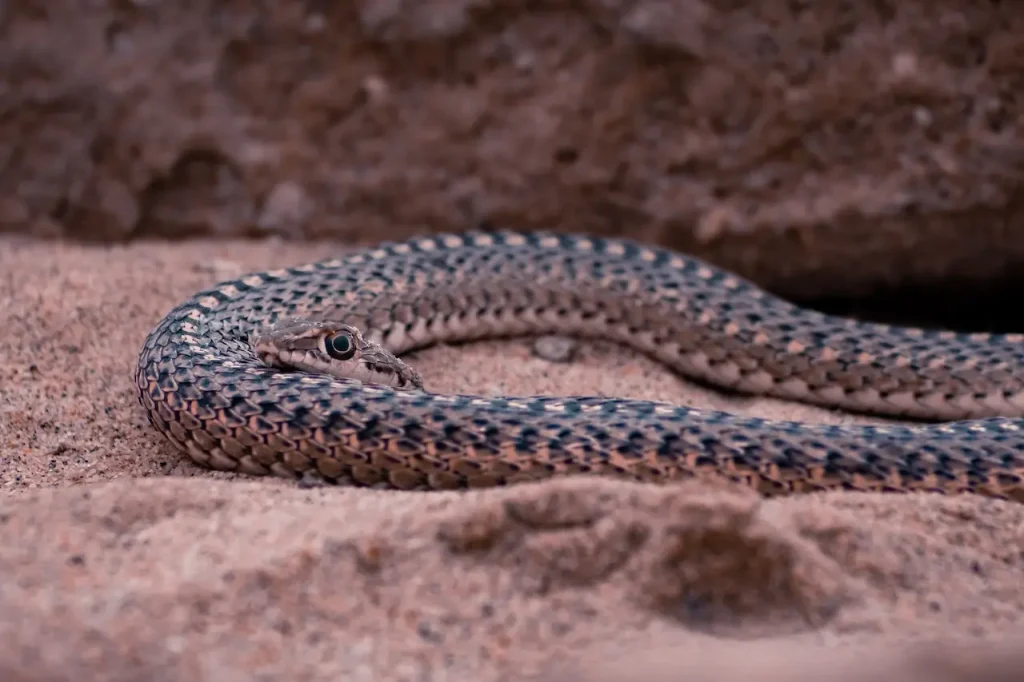
December herping in Thailand is frustrating in the best of years. The dry season is starting to bite, night temperatures dip, and many species drop into low activity. We had a December trip in southern Thailand that came close to skunking us completely — three solid hours of nothing — until the last twenty minutes turned the night around. This is the field write-up.

Why December is tough #
Thai snake activity is largely temperature- and humidity-driven. December nights drop into the low 20s in southern Thailand and into the high teens in the north — too cool for most species to hunt actively. Pit vipers and tree snakes that were everywhere in October become nearly invisible. The kraits and pythons keep moving but are slower and less frequently encountered. The species that do well in cool dry conditions are rat snakes, racers, and a handful of cool-tolerant colubrids.
The dry-season landscape is also less productive: water bodies shrink, and the marginal-vegetation habitat where many species hunt at night becomes thinner. Standing rice paddies are gone. Even the active species are spread thinner across less suitable habitat.
The trip #
We started at 19:00 on a clear December evening. Temperature 22 °C, dropping to 19 °C by 22:00. Light fog forming over the reservoir. Three hours of walking through what should be productive secondary forest produced one Tokay gecko (vocal), several geckos in the genus Hemidactylus, two large toads, and a single barking deer at the periphery. No snakes.
At 22:30 we were almost ready to call it a night. Then, on the last 200 m of the loop back to the truck, we picked up a movement on a low branch — a small green snake holding still at eye level. White-Lipped Pit Viper, juvenile, maybe 35 cm. Probably the only animal of its species moving in the entire forest patch that night, but on the only branch we walked past.
What that one find taught us #
Even on cool dry nights, some species and some individuals are still active. The juvenile pit viper had hatched in October-November (peak juvenile dispersal season — see our Thai snake mating season reference) and was still establishing a territory. Cool weather slowed but did not stop the dispersal. We have similar records from December for Banded Kraits and the occasional Indo-Chinese Rat Snake.
The lesson: do not give up on a December herping trip until you have walked the full loop. The lower expectations make the finds you do get more memorable. We have several “single-snake nights” in our records that are among our most-recalled trips, mostly because the find was both unexpected and a clear behavioural data point — what species is moving on what kind of night.
Field-notes #
- Date: Mid-December, southern Thailand.
- Conditions: Clear, 22 → 19 °C, no rain in 9 days, light fog forming late.
- Time: 19:00–22:50.
- Habitat: Secondary forest with reservoir margin and orchard edge.
- Snakes: 1 — juvenile Trimeresurus albolabris, 35 cm, on low branch.
- Other: Tokay gecko (vocal), Hemidactylus geckos, large toads, barking deer.
Where to look in December #
If you are committed to herping the cool months in Thailand, three habitats produce more reliable results: warm-rock substrate at the foot of limestone karst (warmer than air at night, especially after a sunny day); the lower reaches of permanent streams where humidity stays high; and the periphery of human habitation where small heat sinks (asphalt roads, concrete walls) keep the local microclimate above ambient. Our notes on where Thai snakes live region-by-region covers the broader picture.
Best advice for December trips: lower your expectations, walk slower, and treat each find as a behavioural data point rather than a checklist item. The wet-season abundance returns in May; the December landscape teaches you which species are tougher than the rest.
External references: the iNaturalist citizen-science platform shows seasonal patterns clearly, and the Thai Meteorological Department daily weather data is what we use to plan around cool fronts.
Key takeaways #
- Context matters more than rules of thumb. Thailand’s snake fauna varies meaningfully by region, by season, and by habitat. Advice that holds in southern wet forest does not always hold in northern hill country or in the central agricultural plains.
- Prevention is high-leverage. Most serious snake-related incidents in Thailand are downstream of three preventable behaviours — reaching where you cannot see, walking forest paths at night without a torch, and attempting to handle or kill snakes rather than call professional removal.
- Hospital access is the real safety net. Thai provincial hospitals stock the standard polyvalent antivenoms. The single biggest predictor of bad outcome from a serious bite is delay in reaching one of those hospitals.
- Citizen-science records help. Even casual photographs with location data, posted to platforms like iNaturalist, contribute to the regional knowledge base. Most Thai snake species have surprisingly thin distribution data; one well-documented sighting can fill a real gap.
Common questions #
How likely am I to see a snake on a casual visit to Thailand?
Lower than you probably expect. A casual three-hour daytime forest hike in southern Thailand has roughly a 5–10% chance of producing any snake encounter at all, and roughly a 0.5–1% chance of producing a venomous-species sighting. Visitors who deliberately go looking — at night, in good habitat — see far more, but the casual exposure is genuinely low.
What time of year has the most snake activity?
The wet season (May through October) produces by far the most snake encounters across most of Thailand. Within that, two peaks: the start of the rains (April–June) when males are moving for breeding, and late wet season (September–November) when juvenile cohorts disperse from nest sites. The dry season (December–March) is genuinely quieter for snake-watching, particularly in the north and northeast.
Are Thai snakebite outcomes really that good?
For patients who reach a hospital within an hour or two of a venomous bite, yes — Thai outcomes are excellent by international standards. Mortality with appropriate antivenom and supportive care runs under 1% for most species. The deaths that do happen are concentrated in cases of significant pre-hospital delay, mis-identification of species, or in patients with serious co-morbidities. The Thai system is robust; the failure modes are mostly upstream of the hospital.
What is the single best preventive measure?
A torch at night. The single biggest reducer of Thai snakebite risk is consistent, eyes-down torch use on every walking path after dark. Most preventable bites in southern Thailand are foot-on-snake events on the ground at night, and a torch beam on the trail at metre-down angle prevents the great majority of them. Closed footwear is the second-biggest improvement; long trousers in dense vegetation is third.
Related on Thailand Snakes: Thailand snake books and shirts, common Thailand venomous snakes overview, common non-venomous Thailand snakes reference.