
Thailand Snake Database — Our Research Tracking and Records Project
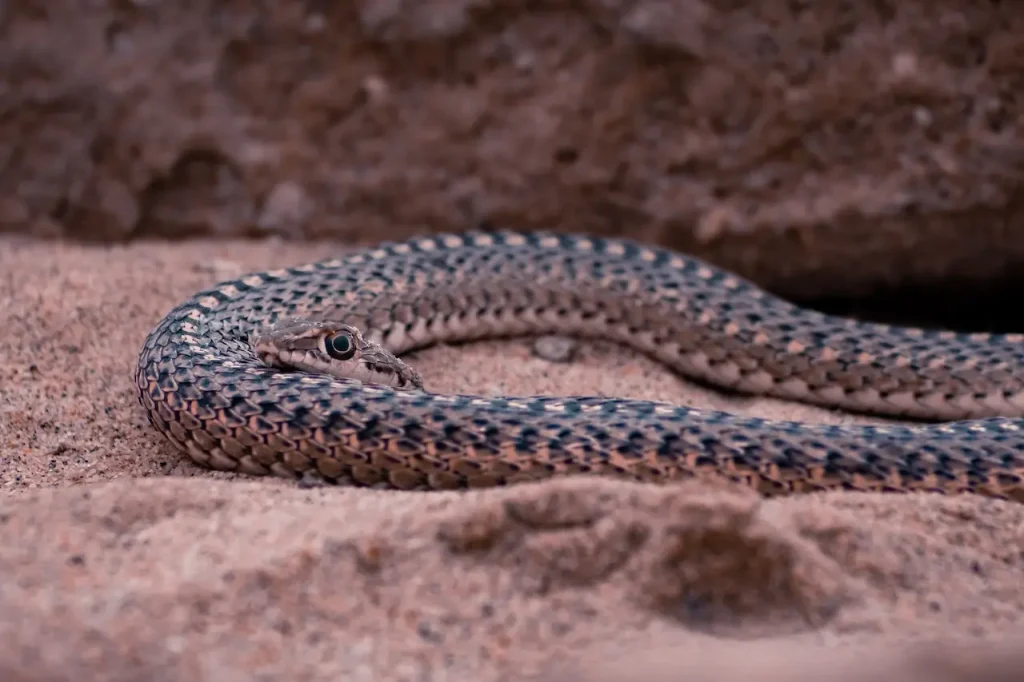
Citizen-science records are one of the most underrated tools in Thai herpetology. Most Thai snake species have surprisingly thin distribution data — even common species — and every careful photograph posted to a citizen-science platform adds to the picture. We run an internal database of southern and central Thai records and contribute to several public platforms. This piece is about what we track, why it matters, and how readers can contribute.

What we record #
Our internal records cover species, GPS coordinates, date, time, weather conditions, habitat type, body length (measured or estimated), behaviour at encounter, and a short narrative note on circumstances. Each record gets at least three reference photographs (head, side body, dorsal pattern). The records have been used to inform several published Thai herpetology papers and feed into our regional reference materials on this site.
The high-leverage data items are species, coordinates, and date. Even a record reduced to those three is useful. Habitat type and behaviour add depth. Photographs are essential for verification — without a photo, the species ID is hard to verify and the record’s value drops considerably.
Why Thai snake distribution data is thin #
Several reasons. First, Thailand is a big country with many habitat types, and historical surveying has been concentrated in a few well-studied areas (Khao Yai, Bang Phra, the south-central peninsula). Second, many species are nocturnal or fossorial and rarely seen by people who are not specifically looking. Third, herpetology in Thailand is a small discipline by international standards — the number of professional herpetologists working on Thai snakes is in the dozens, not hundreds. Citizen science fills a real gap.
The result is that even common species have distribution maps with obvious holes. We have personally found Banded Wolf Snakes in central Thai provinces with no published Thai records of the species; the species is widespread but undocumented in those provinces. Submitting that record to iNaturalist closes the gap.
How to contribute #
Three paths:
- iNaturalist. The public citizen-science platform. Free account, easy upload, automatic GPS extraction from phone photos, IDs crowd-sourced from a global community. Our preferred recommendation for non-specialist contributors.
- Submit to us directly. Photograph, note location, email. We will reply with an ID and add the record to our internal database. Your contribution helps build the species references on this site.
- GBIF. The Global Biodiversity Information Facility aggregates records from many sources. Less direct than iNaturalist but valuable for global research.
What makes a good record #
Five things. Clear photographs (head, body, full length if possible). Accurate GPS or province + district. Date and time. Habitat description in one sentence. Behaviour observed in one sentence. Five things the size of a tweet. Records of this quality are the bread and butter of Thai herpetology and any researcher working on Thai snakes welcomes them.
For our internal records and references see our snake research category and the related snake identification decision tree. For our reader-submission archive see snake ID reader submissions.
External references: iNaturalist, GBIF and the Reptile Database for taxonomy.
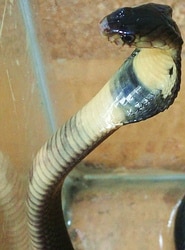
 keelback-snake1.jpg" alt="Red-necked Keelback in defensive pose" class="wp-image-5" srcset="https://thailandsnakes.com/wp-content/uploads/2010/02/red-necked-keelback-snake1.jpg 500w, https://thailandsnakes.com/wp-content/uploads/2010/02/red-necked-keelback-snake1-300x88.jpg 300w, https://thailandsnakes.com/wp-content/uploads/2010/02/red-necked-keelback-snake1-150x44.jpg 150w" sizes="(max-width: 500px) 100vw, 500px" />
Key takeaways #
- Context matters more than rules of thumb. Thailand’s snake fauna varies meaningfully by region, by season, and by habitat. Advice that holds in southern wet forest does not always hold in northern hill country or in the central agricultural plains.
- Prevention is high-leverage. Most serious snake-related incidents in Thailand are downstream of three preventable behaviours — reaching where you cannot see, walking forest paths at night without a torch, and attempting to handle or kill snakes rather than call professional removal.
- Hospital access is the real safety net. Thai provincial hospitals stock the standard polyvalent antivenoms. The single biggest predictor of bad outcome from a serious bite is delay in reaching one of those hospitals.
- Citizen-science records help. Even casual photographs with location data, posted to platforms like iNaturalist, contribute to the regional knowledge base. Most Thai snake species have surprisingly thin distribution data; one well-documented sighting can fill a real gap.
Common questions #
How likely am I to see a snake on a casual visit to Thailand?
Lower than you probably expect. A casual three-hour daytime forest hike in southern Thailand has roughly a 5–10% chance of producing any snake encounter at all, and roughly a 0.5–1% chance of producing a venomous-species sighting. Visitors who deliberately go looking — at night, in good habitat — see far more, but the casual exposure is genuinely low.
What time of year has the most snake activity?
The wet season (May through October) produces by far the most snake encounters across most of Thailand. Within that, two peaks: the start of the rains (April–June) when males are moving for breeding, and late wet season (September–November) when juvenile cohorts disperse from nest sites. The dry season (December–March) is genuinely quieter for snake-watching, particularly in the north and northeast.
Are Thai snakebite outcomes really that good?
For patients who reach a hospital within an hour or two of a venomous bite, yes — Thai outcomes are excellent by international standards. Mortality with appropriate antivenom and supportive care runs under 1% for most species. The deaths that do happen are concentrated in cases of significant pre-hospital delay, mis-identification of species, or in patients with serious co-morbidities. The Thai system is robust; the failure modes are mostly upstream of the hospital.
What is the single best preventive measure?
A torch at night. The single biggest reducer of Thai snakebite risk is consistent, eyes-down torch use on every walking path after dark. Most preventable bites in southern Thailand are foot-on-snake events on the ground at night, and a torch beam on the trail at metre-down angle prevents the great majority of them. Closed footwear is the second-biggest improvement; long trousers in dense vegetation is third.
Further reading and related references #
If you found this article useful, our wider catalogue covers most of the related topics in similar depth. We keep regional reference pages for each major Thai habitat, species pages for the country’s medically important snakes, and field-notes write-ups from each of our regular sites. The site is built as a connected network of references — most articles link out to two or three closely-related pieces, and you can navigate by following the in-text links to species or topics that catch your attention.
For the broader catalogue see our best-of-articles index, the common venomous Thailand snakes reference, and the matching non-venomous overview. For first-aid see our snakebite first-aid page. For the regional snake distribution see where the snakes are in Thailand and the related Thailand snake mating season piece.
Reader contributions are how the site grows. If you have a Thai snake encounter worth sharing — a clear photograph, a well-documented sighting, a question we have not covered — please email or submit through our reader-submission queue at snake ID reader submissions. The accumulated reader records have substantially improved our regional knowledge over the years, and citizen-science records remain one of the most under-utilised tools in Thai herpetology.
For the global research context that supports this work, three external resources are worth bookmarking: the Reptile Database for canonical species taxonomy, the IUCN Red List for conservation status assessments, and iNaturalist for the citizen-science observation platform that aggregates Thai records alongside global ones. The WHO snakebite envenoming hub is the international reference for clinical management.
I need job in snek rescue teem I am sneke cechar in pratapgarh Rajasthan
Hi Marcus,
I already have a project like you described in your post. You can find it here: www. snakedatabase.org. The project tries to describe all snake species and to classify their toxicity.
I would be happy about feedback,
Sascha