
If Bitten by a Snake in Thailand — Do This, Skip That
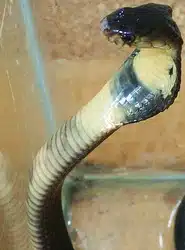
If you are bitten by a snake in Thailand the single most important thing to know is what not to do. The folk and pop-culture first-aid for snakebite is mostly wrong, and some of it actively kills people. The right first-aid is short, calm, and counter-intuitive: stay still, immobilise the limb, and get to a hospital. This guide is the practical version we hand out to friends visiting and to staff working in Thai field stations.
Seven things to do #
- Get away from the snake. Move 5 m back. Most second bites happen when someone tries to handle or photograph the snake too closely.
- Stay calm and still. Heart-rate elevation pumps venom faster. Sit down. Slow your breathing. This sounds trivial. It saves lives.
- Remove rings, watches, tight clothing. The bitten limb will swell within 30–60 minutes for viper bites. A ring left on a swelling finger can become a tourniquet that needs cutting off in hospital.
- Immobilise the bitten limb. Splint it with whatever you have — a stick, a phone, a rolled magazine. Keep it at heart level. Movement pumps venom through lymph.
- Photograph the snake from a safe distance — only if it does not delay you. A photo helps the hospital match antivenom. But a delay to chase the snake is worse than a missing photo.
- Phone for help and start moving toward a hospital. Provincial hospitals across Thailand stock the standard polyvalent antivenoms. The Queen Saovabha Memorial Institute in Bangkok is the central reference.
- Note the time of the bite. Doctors will ask. Onset of symptoms relative to bite-time is critical for diagnosis.
Seven things to skip #
- Do not apply a tourniquet. A full-arterial tourniquet does more damage than the venom for most Thai snakes. Pressure-immobilisation bandage (firm, not arterial) is acceptable for elapid bites; tight tourniquets are not.
- Do not cut the wound. The “cut and suck” method is folk medicine that has killed more people than it saved. Cuts increase bleeding (especially with viper bites that have a coagulopathic venom) and add infection.
- Do not suck the wound. You cannot remove venom this way. You can introduce mouth bacteria into a wound that is already a problem.
- Do not apply ice. Cold tissue does not “freeze” venom. It does increase tissue damage at the bite site.
- Do not drink alcohol. Vasodilation, dehydration, slowed reaction time, impaired judgement — all bad.
- Do not take aspirin or ibuprofen. Anticoagulant on top of a procoagulant viper bite is dangerous. Paracetamol if you must take pain relief.
- Do not chase the snake to kill it. Second bite, wasted minutes. A photo from 2 m back is enough for ID.
What hospitals will do #
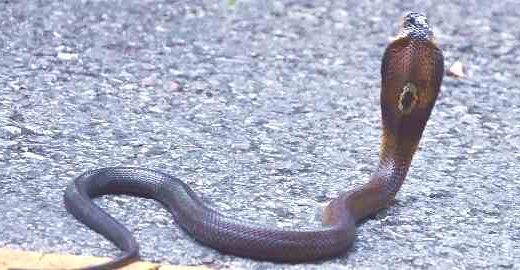
The Thai hospital workflow is well established. They will:
- Take a brief history (when, where, what symptoms).
- Examine the bite site and check for fang marks (often two clear puncture wounds for viper or cobra; sometimes harder to see for kraits).
- Run a 20-minute whole blood clotting test (20WBCT) — the cheap and effective bedside test for coagulopathy from viper bites.
- Assess for neurological signs (drooping eyelids, slurred speech, swallowing difficulty) typical of cobra and krait envenomation.
- Administer antivenom if indicated. Thai polyvalent antivenoms cover the major species.
- Manage symptoms — IV fluids, analgesia, respiratory support if needed.
The Queen Saovabha Memorial Institute is the central source for Thai antivenoms; provincial hospitals are stocked with the products that match local snake species. Even small district hospitals usually have the polyvalent products. If a hospital is not equipped, they will arrange transfer.
Which Thai snakes account for the bites #
The medically important Thai snakes break down roughly as follows:
- Malayan Pit Viper (Calloselasma rhodostoma): the most common viper bite in Thailand. Severe local damage, occasionally amputation. See our Malayan Pit Viper profile.
- Green Pit Vipers (Trimeresurus complex): very common bites with similar effects to the Malayan but often less local damage. See White-Lipped Pit Viper.
- Monocled Cobra (Naja kaouthia): serious neurotoxic and cytotoxic bites. See Monocled Cobra profile.
- Russell’s Viper (Daboia siamensis): most dangerous in central plains, severe coagulopathy.
- Malayan Krait (Bungarus candidus): high mortality, slow-onset bites. People often bitten while sleeping.
Prevention is everything #
The best snakebite first-aid is not getting bitten in the first place. See our piece on avoiding snakebites in Thailand for the practical day-to-day prevention. The single highest-impact change is: torch on, eyes down on any walking path after dark in Thailand. Almost every preventable bite is a foot-on-snake event in the dark.
External references: the WHO snakebite envenoming hub for international treatment guidelines, and the Wikipedia article on pressure-immobilisation covers the technique used for elapid bites.

Key takeaways #
- Context matters more than rules of thumb. Thailand’s snake fauna varies meaningfully by region, by season, and by habitat. Advice that holds in southern wet forest does not always hold in northern hill country or in the central agricultural plains.
- Prevention is high-leverage. Most serious snake-related incidents in Thailand are downstream of three preventable behaviours — reaching where you cannot see, walking forest paths at night without a torch, and attempting to handle or kill snakes rather than call professional removal.
- Hospital access is the real safety net. Thai provincial hospitals stock the standard polyvalent antivenoms. The single biggest predictor of bad outcome from a serious bite is delay in reaching one of those hospitals.
- Citizen-science records help. Even casual photographs with location data, posted to platforms like iNaturalist, contribute to the regional knowledge base. Most Thai snake species have surprisingly thin distribution data; one well-documented sighting can fill a real gap.
Common questions #
How likely am I to see a snake on a casual visit to Thailand?
Lower than you probably expect. A casual three-hour daytime forest hike in southern Thailand has roughly a 5–10% chance of producing any snake encounter at all, and roughly a 0.5–1% chance of producing a venomous-species sighting. Visitors who deliberately go looking — at night, in good habitat — see far more, but the casual exposure is genuinely low.
What time of year has the most snake activity?
The wet season (May through October) produces by far the most snake encounters across most of Thailand. Within that, two peaks: the start of the rains (April–June) when males are moving for breeding, and late wet season (September–November) when juvenile cohorts disperse from nest sites. The dry season (December–March) is genuinely quieter for snake-watching, particularly in the north and northeast.
Are Thai snakebite outcomes really that good?
For patients who reach a hospital within an hour or two of a venomous bite, yes — Thai outcomes are excellent by international standards. Mortality with appropriate antivenom and supportive care runs under 1% for most species. The deaths that do happen are concentrated in cases of significant pre-hospital delay, mis-identification of species, or in patients with serious co-morbidities. The Thai system is robust; the failure modes are mostly upstream of the hospital.
What is the single best preventive measure?
A torch at night. The single biggest reducer of Thai snakebite risk is consistent, eyes-down torch use on every walking path after dark. Most preventable bites in southern Thailand are foot-on-snake events on the ground at night, and a torch beam on the trail at metre-down angle prevents the great majority of them. Closed footwear is the second-biggest improvement; long trousers in dense vegetation is third.
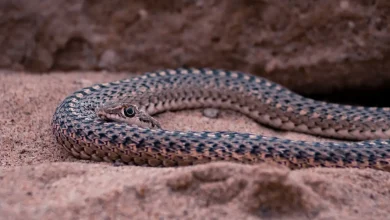
Hi Marcus! I am living in Satun with my wife and her family, until our house is built. The home of her parents is exposed to the outside, where the rafters meet the exterior walls. Is there danger of any venomous snakes,that can climb walls and enter the home? In 6 weeks we’ve moved here, I’ve seen 4 scorpions in the house, 1 snake inside (that they said was not dangerous and a loatian wolf snake 2 days ago, while putting my shoes on outside. Welcome to Thailand he he :)
Hi Jeff, yeah, it sounds like you’re living in a wildlife preserve. Satun is basically that! I hope to get down there to herp the Taliban National Park on one of my next visa runs.
Venomous snakes like King cobra, Monocled cobras, kraits, vipers, can all climb. They don’t typically climb to get in houses though. As far as venomous snakes go, your best be would be to make sure the doors and windows are all securely shut at night time. Even screens, in good shape, will stop snakes from coming in. Make sure you don’t walk at night without a flashlight – the Malayan pit vipers are the snake to worry about out in the yard… Cheers!