Dreaming About Snakes — A Herper’s Reflection
Anyone who works with snakes for years dreams about them. The dreams are not always pleasant; they are not always bad either. After enough field nights, the brain seems to need to process the strange combination of slow alertness, sudden movement, careful handling, and occasional fear that working with venomous animals brings. This is a personal piece — a herper’s reflection on the snake dreams that keep happening, what we make of them, and what science says about why people who work with reptiles dream of them more than the average person.

What the dreams look like #
The dreams break into a few recurring categories. The first is the “good find” dream — you are walking a familiar trail and suddenly there are snakes everywhere, every species you have wanted to see, all at the same time. These are pleasant. The second is the “wrong handle” dream — you have a krait or cobra in your hand and you realise mid-way that you are not gripping properly. These are intensely uncomfortable. The third is the “snake on the bedroom floor” dream — common among Thai-resident herpers and a real-life concern in many rural houses, since kraits actually do enter rooms at night.
Most of our colleagues report the same general categories. The frequency rises after particularly intense field trips — five-day southern surveys with multiple venomous handles tend to produce snake-rich dreams for two or three nights afterward.
What the science says #
There is a small but real research literature on the topic. Snakes are one of a handful of universal dream-image categories — they appear in dream content from every culture studied, and snake-themed dreams are reported by people who have never encountered a real snake. Evolutionary psychology accounts attribute this to a deep ancestral response to predator imagery; the brain is unusually attentive to certain visual patterns (movement, sinuous shape, vertical pupil) and processes them in dream content even without daytime exposure.
For people who work with snakes regularly, the frequency of snake dreams rises dramatically. This matches the general pattern of dream content reflecting daytime preoccupation — the brain spends more dream time on tasks it has been doing recently. Surgeons dream of surgery, climbers dream of climbing, snake people dream of snakes.
Why we keep doing it anyway #
The unsettling dreams are not a sign that the work is too much; they are a sign that the brain is processing real risk. A junior herper who has had no snake dreams after a year of fieldwork is probably not engaging carefully enough with the actual hazards. A veteran who never has them is probably reading too few field nights into long daytime memory.
The good-find dreams are the offset. Anyone who has spent years walking forest trails at night will tell you that finding a beautiful, healthy adult of a difficult species is one of the small unalloyed joys of the work. The dreams remind us why we do it — and remind us, in the bad ones, why care matters.
Practical takeaway #
If you are starting to herp seriously and the dreams are frequent or distressing, the right response is not to stop herping but to refine the actual field practice — better gear, better protocols, better partners, better preparation. Dreams reflect daytime worry; reduce daytime worry by improving the daytime work. For the practical safety side of Thai herping, see our notes on avoiding snakebites in Thailand and the related are Thailand snakes aggressive?.
If the dreams are frequent and consistently negative — nightmares about specific bite scenarios, recurring failure dreams — that is a different signal. Worth taking seriously. Worth reflecting on. Possibly worth talking to a counsellor about. The work is real and the risk is real; the brain is allowed to react.
External references: the Wikipedia article on snake symbolism covers the cross-cultural dream imagery, and the Psychology Today archive has accessible writing on dream content and occupational exposure.
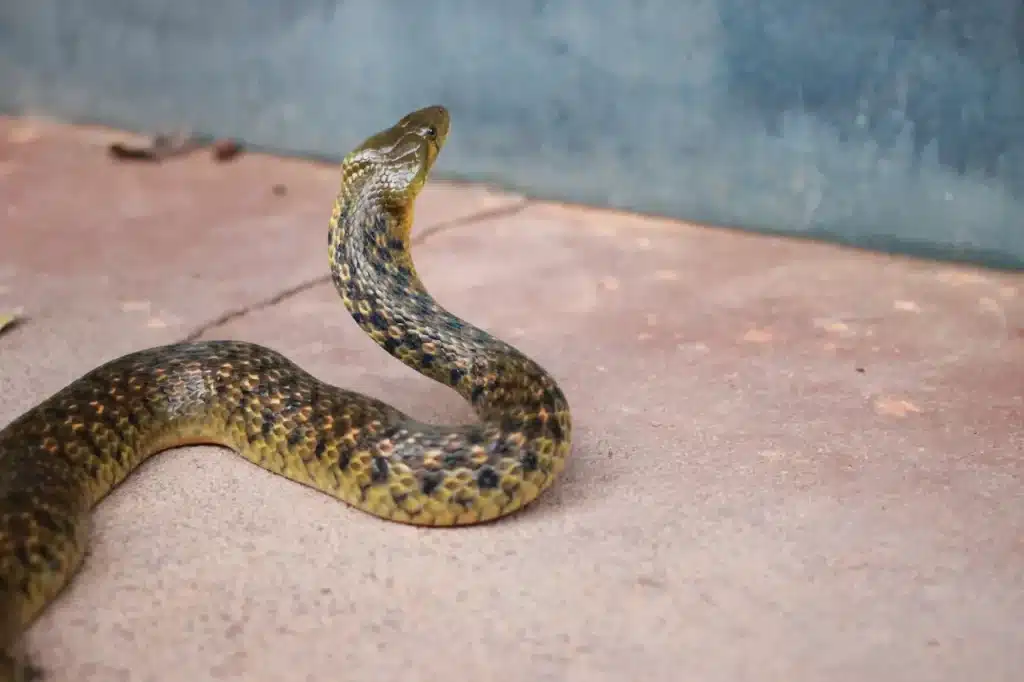 Banded Krait — black and yellow banded body" class="wp-image-69" />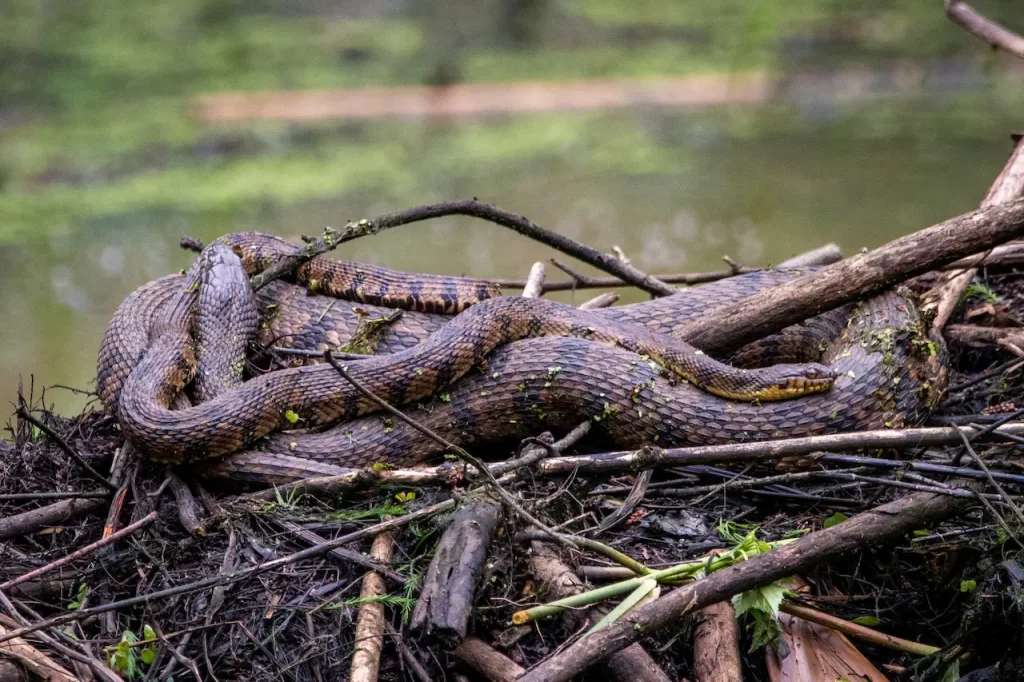
Key takeaways #
- Context matters more than rules of thumb. Thailand’s snake fauna varies meaningfully by region, by season, and by habitat. Advice that holds in southern wet forest does not always hold in northern hill country or in the central agricultural plains.
- Prevention is high-leverage. Most serious snake-related incidents in Thailand are downstream of three preventable behaviours — reaching where you cannot see, walking forest paths at night without a torch, and attempting to handle or kill snakes rather than call professional removal.
- Hospital access is the real safety net. Thai provincial hospitals stock the standard polyvalent antivenoms. The single biggest predictor of bad outcome from a serious bite is delay in reaching one of those hospitals.
- Citizen-science records help. Even casual photographs with location data, posted to platforms like iNaturalist, contribute to the regional knowledge base. Most Thai snake species have surprisingly thin distribution data; one well-documented sighting can fill a real gap.
Common questions #
How likely am I to see a snake on a casual visit to Thailand?
Lower than you probably expect. A casual three-hour daytime forest hike in southern Thailand has roughly a 5–10% chance of producing any snake encounter at all, and roughly a 0.5–1% chance of producing a venomous-species sighting. Visitors who deliberately go looking — at night, in good habitat — see far more, but the casual exposure is genuinely low.
What time of year has the most snake activity?
The wet season (May through October) produces by far the most snake encounters across most of Thailand. Within that, two peaks: the start of the rains (April–June) when males are moving for breeding, and late wet season (September–November) when juvenile cohorts disperse from nest sites. The dry season (December–March) is genuinely quieter for snake-watching, particularly in the north and northeast.
Are Thai snakebite outcomes really that good?
For patients who reach a hospital within an hour or two of a venomous bite, yes — Thai outcomes are excellent by international standards. Mortality with appropriate antivenom and supportive care runs under 1% for most species. The deaths that do happen are concentrated in cases of significant pre-hospital delay, mis-identification of species, or in patients with serious co-morbidities. The Thai system is robust; the failure modes are mostly upstream of the hospital.
What is the single best preventive measure?
A torch at night. The single biggest reducer of Thai snakebite risk is consistent, eyes-down torch use on every walking path after dark. Most preventable bites in southern Thailand are foot-on-snake events on the ground at night, and a torch beam on the trail at metre-down angle prevents the great majority of them. Closed footwear is the second-biggest improvement; long trousers in dense vegetation is third.
Related on Thailand Snakes: Thailand snakebite first-aid guide, where the snakes are in Thailand, Thailand snake mating season.