New Snake Species in Thailand? — How New Records Get Confirmed
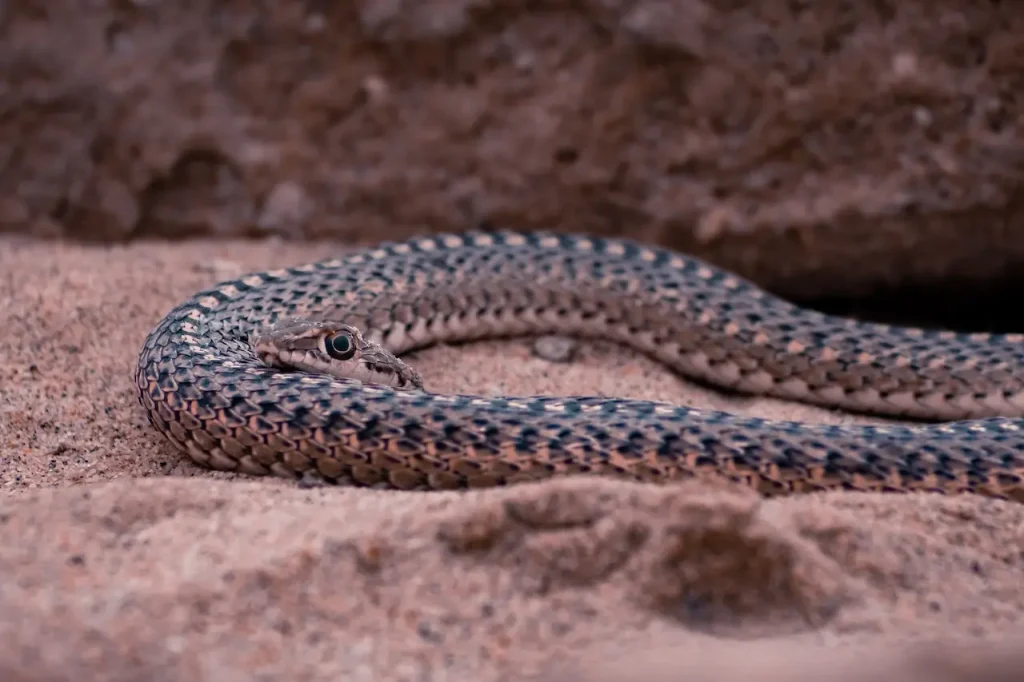
“New snake species found in Thailand” is a headline that appears every few years, and most of the time the headline is misleading. New “species” in country records can mean two very different things: a snake that is genuinely new to science (rare), or a snake that is well-known elsewhere but newly recorded in Thailand (more common). This piece is the longer version of how the difference is established and why it matters for Thai herpetology.

Two kinds of “new” #
New country record: a species already described in the scientific literature elsewhere is found in Thailand for the first time. This happens regularly. Recent examples include several snakes previously known only from Cambodia or Myanmar that have been documented in Thai border provinces in the last decade. The taxonomy is established; the news is the geography.
New to science: a species that has not previously been described anywhere. Genuinely new species are rare but not impossible — even now, in 2026, Thailand averages perhaps one or two new snake species described per year, mostly small leaf-litter dwellers from poorly-explored mountain forest. The 2014 description of Trimeresurus phuketensis from Phuket is a recent example.
How a new species gets confirmed #
The process for genuinely new-to-science species is well established. A specimen is collected, preserved, and examined morphologically — scale counts, body proportions, head plate arrangements. Tissue samples are taken for DNA analysis, increasingly the decisive step. The morphological and genetic data are compared with known species. A new-species description is written up in a peer-reviewed journal with a formal scientific name (binomial). Once published, the name is the official scientific identifier for the species.
The whole process from initial find to published description usually takes 1-3 years. Several active research groups in Thailand and the broader region work on this — the Sirindhorn Wildlife Research and Education Centre, several university programs, and a number of independent researchers.
What we have personally seen #
Across two decades of Thai herping, we have found three or four animals we initially thought might be new — small odd-looking snakes from leaf litter or under rocks. None turned out to be genuinely new to science. All were either small individuals of known species (with juvenile pattern that did not match adult guides) or species that are difficult to identify in the field but well-known in the literature. Our best near-miss was a small Pareas from northern Thailand that had unusual head pattern; it turned out to be a regional colour form of a known species.
The lesson: most “new species” finds are not. The right response to an unfamiliar snake is to photograph carefully, note the location, and consult — either by submitting to iNaturalist or contacting one of the Thai herpetology research groups directly. Genuine new species do exist and get described, but the rate is low.
What to do if you think you have one #
Detailed photographs (head from above, side, full body, scale arrangement around vent), location with GPS coordinates, habitat notes, and behavioural observations. Do not collect the specimen — Thai wildlife law requires permits for collection of even common species, and the right path is to contact a permitted researcher rather than DIY. If the find genuinely is unusual, a coordinated return visit with proper sampling can be arranged.
For the wider Thai snake research context see our snake research category. For taxonomy in general see our snake identification decision tree.
External references: the Reptile Database tracks every described snake species globally and is the canonical taxonomy reference, and iNaturalist hosts the citizen-science observations that often flag potential range extensions before they are formally published.
Key takeaways #
- Context matters more than rules of thumb. Thailand’s snake fauna varies meaningfully by region, by season, and by habitat. Advice that holds in southern wet forest does not always hold in northern hill country or in the central agricultural plains.
- Prevention is high-leverage. Most serious snake-related incidents in Thailand are downstream of three preventable behaviours — reaching where you cannot see, walking forest paths at night without a torch, and attempting to handle or kill snakes rather than call professional removal.
- Hospital access is the real safety net. Thai provincial hospitals stock the standard polyvalent antivenoms. The single biggest predictor of bad outcome from a serious bite is delay in reaching one of those hospitals.
- Citizen-science records help. Even casual photographs with location data, posted to platforms like iNaturalist, contribute to the regional knowledge base. Most Thai snake species have surprisingly thin distribution data; one well-documented sighting can fill a real gap.
Common questions #
How likely am I to see a snake on a casual visit to Thailand?
Lower than you probably expect. A casual three-hour daytime forest hike in southern Thailand has roughly a 5–10% chance of producing any snake encounter at all, and roughly a 0.5–1% chance of producing a venomous-species sighting. Visitors who deliberately go looking — at night, in good habitat — see far more, but the casual exposure is genuinely low.
What time of year has the most snake activity?
The wet season (May through October) produces by far the most snake encounters across most of Thailand. Within that, two peaks: the start of the rains (April–June) when males are moving for breeding, and late wet season (September–November) when juvenile cohorts disperse from nest sites. The dry season (December–March) is genuinely quieter for snake-watching, particularly in the north and northeast.
Are Thai snakebite outcomes really that good?
For patients who reach a hospital within an hour or two of a venomous bite, yes — Thai outcomes are excellent by international standards. Mortality with appropriate antivenom and supportive care runs under 1% for most species. The deaths that do happen are concentrated in cases of significant pre-hospital delay, mis-identification of species, or in patients with serious co-morbidities. The Thai system is robust; the failure modes are mostly upstream of the hospital.
What is the single best preventive measure?
A torch at night. The single biggest reducer of Thai snakebite risk is consistent, eyes-down torch use on every walking path after dark. Most preventable bites in southern Thailand are foot-on-snake events on the ground at night, and a torch beam on the trail at metre-down angle prevents the great majority of them. Closed footwear is the second-biggest improvement; long trousers in dense vegetation is third.
Related on Thailand Snakes: how to identify snakes in Thailand, avoiding snakebites in Thailand, Thailand snakebite first-aid guide.