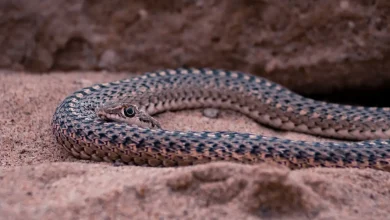
Deadly Snakes on Thai Rainforest Trails — What We Actually Encounter
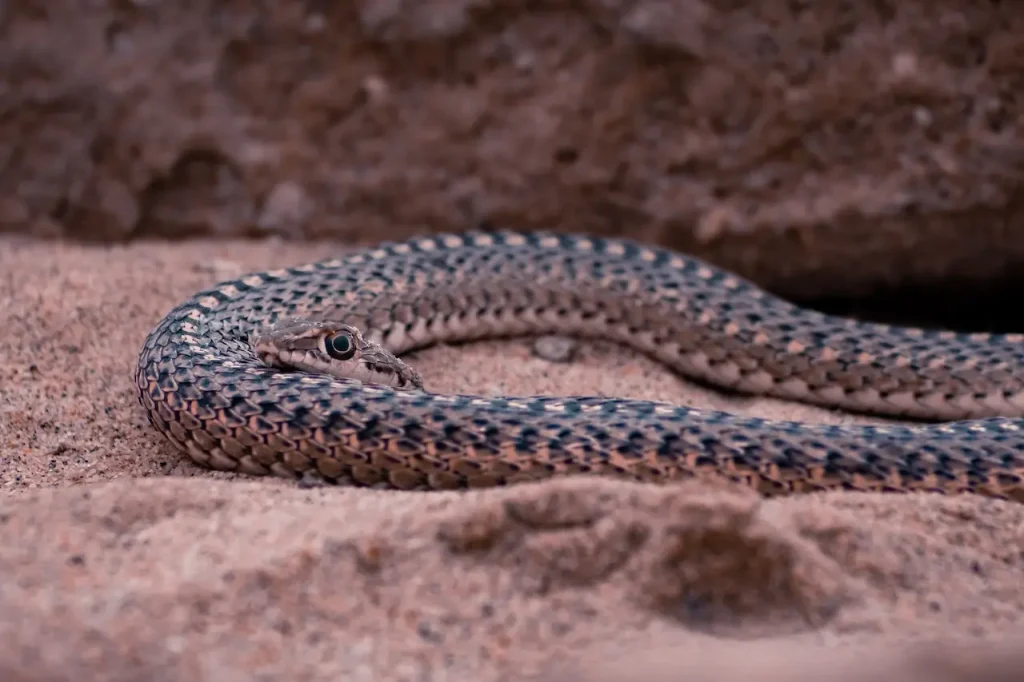
- Daytime walking on a trail: 1 snake encounter per 10-20 km on average, with strong seasonal variation. Wet-season encounters are 3-5x more common.
- Night herping deliberately looking for snakes: 3-8 snake encounters per 5 km in good conditions. This is what we are trained to do.
- Encounters with venomous species specifically: Roughly 1 in 4 of total snake encounters in southern forest. The other 3 in 4 are harmless species.
- Encounters with deadly venomous species (cobras, kraits, Russell’s, Malayan Pit Viper): Maybe 1 in 10 of total. So one deadly-snake encounter per 50-100 km of casual daytime hiking.
For perspective: a casual visitor doing a 3-hour 6 km daytime forest hike has roughly a 5-10% chance of seeing any snake at all, and roughly a 0.5-1% chance of seeing a deadly venomous species. The risk of being bitten is much, much lower again — most snake encounters do not produce bite events because the snake leaves, the walker passes, no contact happens.
Which species are realistic #
On a Thai forest trail, the realistic deadly-species encounters are:
- Malayan Pit Viper — the species most likely to be encountered (and stepped on) at night in southern Thai forest. Heavy-bodied, leaf-coloured, ambush-positions on the forest floor. The big risk is night walking off-trail. See our Malayan Pit Viper profile.
- Green pit vipers (Trimeresurus complex) — the small green snakes that hold position on low branches. Bites happen mostly when someone reaches into vegetation. See White-Lipped Pit Viper.
- King Cobra — uncommon but possible in mature southern forest. Will retreat from people. Bites are extremely rare. See King Cobra stories.
- Banded Krait — slow, deliberate, mostly active at night. Will not chase. Encounters are usually non-events. See Banded Krait.
Practical precautions #
- Walk on the trail. Most bites are stepping on a snake in dense undergrowth. The trail itself is safer.
- Use a torch at night. Single highest-impact change. Most viper bites are foot-on-snake events in the dark.
- Boots, not sandals. Closed-toe footwear protects against the most common bite sites (lower legs, ankle).
- Long trousers in dense vegetation. Pit vipers strike from low branches; light fabric helps.
- Know your route and have a phone. A bite means an evacuation; plan it before the trip.
- Don’t step over logs without looking. Snakes use the back of fallen logs as ambush points.
For the broader prevention picture see our avoiding snakebites in Thailand reference. For first-aid see snakebite first-aid.
External references: the Thai National Parks website covers safety in major reserves, and the WHO snakebite envenoming hub for treatment guidelines.
Key takeaways #
- Context matters more than rules of thumb. Thailand’s snake fauna varies meaningfully by region, by season, and by habitat. Advice that holds in southern wet forest does not always hold in northern hill country or in the central agricultural plains.
- Prevention is high-leverage. Most serious snake-related incidents in Thailand are downstream of three preventable behaviours — reaching where you cannot see, walking forest paths at night without a torch, and attempting to handle or kill snakes rather than call professional removal.
- Hospital access is the real safety net. Thai provincial hospitals stock the standard polyvalent antivenoms. The single biggest predictor of bad outcome from a serious bite is delay in reaching one of those hospitals.
- Citizen-science records help. Even casual photographs with location data, posted to platforms like iNaturalist, contribute to the regional knowledge base. Most Thai snake species have surprisingly thin distribution data; one well-documented sighting can fill a real gap.
Common questions #
How likely am I to see a snake on a casual visit to Thailand?
Lower than you probably expect. A casual three-hour daytime forest hike in southern Thailand has roughly a 5–10% chance of producing any snake encounter at all, and roughly a 0.5–1% chance of producing a venomous-species sighting. Visitors who deliberately go looking — at night, in good habitat — see far more, but the casual exposure is genuinely low.
What time of year has the most snake activity?
The wet season (May through October) produces by far the most snake encounters across most of Thailand. Within that, two peaks: the start of the rains (April–June) when males are moving for breeding, and late wet season (September–November) when juvenile cohorts disperse from nest sites. The dry season (December–March) is genuinely quieter for snake-watching, particularly in the north and northeast.
Are Thai snakebite outcomes really that good?
For patients who reach a hospital within an hour or two of a venomous bite, yes — Thai outcomes are excellent by international standards. Mortality with appropriate antivenom and supportive care runs under 1% for most species. The deaths that do happen are concentrated in cases of significant pre-hospital delay, mis-identification of species, or in patients with serious co-morbidities. The Thai system is robust; the failure modes are mostly upstream of the hospital.
What is the single best preventive measure?
A torch at night. The single biggest reducer of Thai snakebite risk is consistent, eyes-down torch use on every walking path after dark. Most preventable bites in southern Thailand are foot-on-snake events on the ground at night, and a torch beam on the trail at metre-down angle prevents the great majority of them. Closed footwear is the second-biggest improvement; long trousers in dense vegetation is third.
- Malayan Pit Viper — the species most likely to be encountered (and stepped on) at night in southern Thai forest. Heavy-bodied, leaf-coloured, ambush-positions on the forest floor. The big risk is night walking off-trail. See our Malayan Pit Viper profile.
- Green pit vipers (Trimeresurus complex) — the small green snakes that hold position on low branches. Bites happen mostly when someone reaches into vegetation. See White-Lipped Pit Viper.
- King Cobra — uncommon but possible in mature southern forest. Will retreat from people. Bites are extremely rare. See King Cobra stories.
- Banded Krait — slow, deliberate, mostly active at night. Will not chase. Encounters are usually non-events. See Banded Krait.
Practical precautions #
- Walk on the trail. Most bites are stepping on a snake in dense undergrowth. The trail itself is safer.
- Use a torch at night. Single highest-impact change. Most viper bites are foot-on-snake events in the dark.
- Boots, not sandals. Closed-toe footwear protects against the most common bite sites (lower legs, ankle).
- Long trousers in dense vegetation. Pit vipers strike from low branches; light fabric helps.
- Know your route and have a phone. A bite means an evacuation; plan it before the trip.
- Don’t step over logs without looking. Snakes use the back of fallen logs as ambush points.
For the broader prevention picture see our avoiding snakebites in Thailand reference. For first-aid see snakebite first-aid.
External references: the Thai National Parks website covers safety in major reserves, and the WHO snakebite envenoming hub for treatment guidelines.
- Daytime walking on a trail: 1 snake encounter per 10-20 km on average, with strong seasonal variation. Wet-season encounters are 3-5x more common.
- Night herping deliberately looking for snakes: 3-8 snake encounters per 5 km in good conditions. This is what we are trained to do.
- Encounters with venomous species specifically: Roughly 1 in 4 of total snake encounters in southern forest. The other 3 in 4 are harmless species.
- Encounters with deadly venomous species (cobras, kraits, Russell’s, Malayan Pit Viper): Maybe 1 in 10 of total. So one deadly-snake encounter per 50-100 km of casual daytime hiking.
For perspective: a casual visitor doing a 3-hour 6 km daytime forest hike has roughly a 5-10% chance of seeing any snake at all, and roughly a 0.5-1% chance of seeing a deadly venomous species. The risk of being bitten is much, much lower again — most snake encounters do not produce bite events because the snake leaves, the walker passes, no contact happens.
Which species are realistic #
On a Thai forest trail, the realistic deadly-species encounters are:
- Malayan Pit Viper — the species most likely to be encountered (and stepped on) at night in southern Thai forest. Heavy-bodied, leaf-coloured, ambush-positions on the forest floor. The big risk is night walking off-trail. See our Malayan Pit Viper profile.
- Green pit vipers (Trimeresurus complex) — the small green snakes that hold position on low branches. Bites happen mostly when someone reaches into vegetation. See White-Lipped Pit Viper.
- King Cobra — uncommon but possible in mature southern forest. Will retreat from people. Bites are extremely rare. See King Cobra stories.
- Banded Krait — slow, deliberate, mostly active at night. Will not chase. Encounters are usually non-events. See Banded Krait.
Practical precautions #
- Walk on the trail. Most bites are stepping on a snake in dense undergrowth. The trail itself is safer.
- Use a torch at night. Single highest-impact change. Most viper bites are foot-on-snake events in the dark.
- Boots, not sandals. Closed-toe footwear protects against the most common bite sites (lower legs, ankle).
- Long trousers in dense vegetation. Pit vipers strike from low branches; light fabric helps.
- Know your route and have a phone. A bite means an evacuation; plan it before the trip.
- Don’t step over logs without looking. Snakes use the back of fallen logs as ambush points.
For the broader prevention picture see our avoiding snakebites in Thailand reference. For first-aid see snakebite first-aid.
External references: the Thai National Parks website covers safety in major reserves, and the WHO snakebite envenoming hub for treatment guidelines.
Key takeaways #
- Context matters more than rules of thumb. Thailand’s snake fauna varies meaningfully by region, by season, and by habitat. Advice that holds in southern wet forest does not always hold in northern hill country or in the central agricultural plains.
- Prevention is high-leverage. Most serious snake-related incidents in Thailand are downstream of three preventable behaviours — reaching where you cannot see, walking forest paths at night without a torch, and attempting to handle or kill snakes rather than call professional removal.
- Hospital access is the real safety net. Thai provincial hospitals stock the standard polyvalent antivenoms. The single biggest predictor of bad outcome from a serious bite is delay in reaching one of those hospitals.
- Citizen-science records help. Even casual photographs with location data, posted to platforms like iNaturalist, contribute to the regional knowledge base. Most Thai snake species have surprisingly thin distribution data; one well-documented sighting can fill a real gap.
Common questions #
How likely am I to see a snake on a casual visit to Thailand?
Lower than you probably expect. A casual three-hour daytime forest hike in southern Thailand has roughly a 5–10% chance of producing any snake encounter at all, and roughly a 0.5–1% chance of producing a venomous-species sighting. Visitors who deliberately go looking — at night, in good habitat — see far more, but the casual exposure is genuinely low.
What time of year has the most snake activity?
The wet season (May through October) produces by far the most snake encounters across most of Thailand. Within that, two peaks: the start of the rains (April–June) when males are moving for breeding, and late wet season (September–November) when juvenile cohorts disperse from nest sites. The dry season (December–March) is genuinely quieter for snake-watching, particularly in the north and northeast.
Are Thai snakebite outcomes really that good?
For patients who reach a hospital within an hour or two of a venomous bite, yes — Thai outcomes are excellent by international standards. Mortality with appropriate antivenom and supportive care runs under 1% for most species. The deaths that do happen are concentrated in cases of significant pre-hospital delay, mis-identification of species, or in patients with serious co-morbidities. The Thai system is robust; the failure modes are mostly upstream of the hospital.
What is the single best preventive measure?
A torch at night. The single biggest reducer of Thai snakebite risk is consistent, eyes-down torch use on every walking path after dark. Most preventable bites in southern Thailand are foot-on-snake events on the ground at night, and a torch beam on the trail at metre-down angle prevents the great majority of them. Closed footwear is the second-biggest improvement; long trousers in dense vegetation is third.
- Malayan Pit Viper — the species most likely to be encountered (and stepped on) at night in southern Thai forest. Heavy-bodied, leaf-coloured, ambush-positions on the forest floor. The big risk is night walking off-trail. See our Malayan Pit Viper profile.
- Green pit vipers (Trimeresurus complex) — the small green snakes that hold position on low branches. Bites happen mostly when someone reaches into vegetation. See White-Lipped Pit Viper.
- King Cobra — uncommon but possible in mature southern forest. Will retreat from people. Bites are extremely rare. See King Cobra stories.
- Banded Krait — slow, deliberate, mostly active at night. Will not chase. Encounters are usually non-events. See Banded Krait.
Practical precautions #
- Walk on the trail. Most bites are stepping on a snake in dense undergrowth. The trail itself is safer.
- Use a torch at night. Single highest-impact change. Most viper bites are foot-on-snake events in the dark.
- Boots, not sandals. Closed-toe footwear protects against the most common bite sites (lower legs, ankle).
- Long trousers in dense vegetation. Pit vipers strike from low branches; light fabric helps.
- Know your route and have a phone. A bite means an evacuation; plan it before the trip.
- Don’t step over logs without looking. Snakes use the back of fallen logs as ambush points.
For the broader prevention picture see our avoiding snakebites in Thailand reference. For first-aid see snakebite first-aid.
External references: the Thai National Parks website covers safety in major reserves, and the WHO snakebite envenoming hub for treatment guidelines.
- Daytime walking on a trail: 1 snake encounter per 10-20 km on average, with strong seasonal variation. Wet-season encounters are 3-5x more common.
- Night herping deliberately looking for snakes: 3-8 snake encounters per 5 km in good conditions. This is what we are trained to do.
- Encounters with venomous species specifically: Roughly 1 in 4 of total snake encounters in southern forest. The other 3 in 4 are harmless species.
- Encounters with deadly venomous species (cobras, kraits, Russell’s, Malayan Pit Viper): Maybe 1 in 10 of total. So one deadly-snake encounter per 50-100 km of casual daytime hiking.
For perspective: a casual visitor doing a 3-hour 6 km daytime forest hike has roughly a 5-10% chance of seeing any snake at all, and roughly a 0.5-1% chance of seeing a deadly venomous species. The risk of being bitten is much, much lower again — most snake encounters do not produce bite events because the snake leaves, the walker passes, no contact happens.
Which species are realistic #
On a Thai forest trail, the realistic deadly-species encounters are:
- Malayan Pit Viper — the species most likely to be encountered (and stepped on) at night in southern Thai forest. Heavy-bodied, leaf-coloured, ambush-positions on the forest floor. The big risk is night walking off-trail. See our Malayan Pit Viper profile.
- Green pit vipers (Trimeresurus complex) — the small green snakes that hold position on low branches. Bites happen mostly when someone reaches into vegetation. See White-Lipped Pit Viper.
- King Cobra — uncommon but possible in mature southern forest. Will retreat from people. Bites are extremely rare. See King Cobra stories.
- Banded Krait — slow, deliberate, mostly active at night. Will not chase. Encounters are usually non-events. See Banded Krait.
Practical precautions #
- Walk on the trail. Most bites are stepping on a snake in dense undergrowth. The trail itself is safer.
- Use a torch at night. Single highest-impact change. Most viper bites are foot-on-snake events in the dark.
- Boots, not sandals. Closed-toe footwear protects against the most common bite sites (lower legs, ankle).
- Long trousers in dense vegetation. Pit vipers strike from low branches; light fabric helps.
- Know your route and have a phone. A bite means an evacuation; plan it before the trip.
- Don’t step over logs without looking. Snakes use the back of fallen logs as ambush points.
For the broader prevention picture see our avoiding snakebites in Thailand reference. For first-aid see snakebite first-aid.
External references: the Thai National Parks website covers safety in major reserves, and the WHO snakebite envenoming hub for treatment guidelines.
Key takeaways #
- Context matters more than rules of thumb. Thailand’s snake fauna varies meaningfully by region, by season, and by habitat. Advice that holds in southern wet forest does not always hold in northern hill country or in the central agricultural plains.
- Prevention is high-leverage. Most serious snake-related incidents in Thailand are downstream of three preventable behaviours — reaching where you cannot see, walking forest paths at night without a torch, and attempting to handle or kill snakes rather than call professional removal.
- Hospital access is the real safety net. Thai provincial hospitals stock the standard polyvalent antivenoms. The single biggest predictor of bad outcome from a serious bite is delay in reaching one of those hospitals.
- Citizen-science records help. Even casual photographs with location data, posted to platforms like iNaturalist, contribute to the regional knowledge base. Most Thai snake species have surprisingly thin distribution data; one well-documented sighting can fill a real gap.
Common questions #
How likely am I to see a snake on a casual visit to Thailand?
Lower than you probably expect. A casual three-hour daytime forest hike in southern Thailand has roughly a 5–10% chance of producing any snake encounter at all, and roughly a 0.5–1% chance of producing a venomous-species sighting. Visitors who deliberately go looking — at night, in good habitat — see far more, but the casual exposure is genuinely low.
What time of year has the most snake activity?
The wet season (May through October) produces by far the most snake encounters across most of Thailand. Within that, two peaks: the start of the rains (April–June) when males are moving for breeding, and late wet season (September–November) when juvenile cohorts disperse from nest sites. The dry season (December–March) is genuinely quieter for snake-watching, particularly in the north and northeast.
Are Thai snakebite outcomes really that good?
For patients who reach a hospital within an hour or two of a venomous bite, yes — Thai outcomes are excellent by international standards. Mortality with appropriate antivenom and supportive care runs under 1% for most species. The deaths that do happen are concentrated in cases of significant pre-hospital delay, mis-identification of species, or in patients with serious co-morbidities. The Thai system is robust; the failure modes are mostly upstream of the hospital.
What is the single best preventive measure?
A torch at night. The single biggest reducer of Thai snakebite risk is consistent, eyes-down torch use on every walking path after dark. Most preventable bites in southern Thailand are foot-on-snake events on the ground at night, and a torch beam on the trail at metre-down angle prevents the great majority of them. Closed footwear is the second-biggest improvement; long trousers in dense vegetation is third.
- Daytime walking on a trail: 1 snake encounter per 10-20 km on average, with strong seasonal variation. Wet-season encounters are 3-5x more common.
- Night herping deliberately looking for snakes: 3-8 snake encounters per 5 km in good conditions. This is what we are trained to do.
- Encounters with venomous species specifically: Roughly 1 in 4 of total snake encounters in southern forest. The other 3 in 4 are harmless species.
- Encounters with deadly venomous species (cobras, kraits, Russell’s, Malayan Pit Viper): Maybe 1 in 10 of total. So one deadly-snake encounter per 50-100 km of casual daytime hiking.
For perspective: a casual visitor doing a 3-hour 6 km daytime forest hike has roughly a 5-10% chance of seeing any snake at all, and roughly a 0.5-1% chance of seeing a deadly venomous species. The risk of being bitten is much, much lower again — most snake encounters do not produce bite events because the snake leaves, the walker passes, no contact happens.
Which species are realistic #
On a Thai forest trail, the realistic deadly-species encounters are:
- Malayan Pit Viper — the species most likely to be encountered (and stepped on) at night in southern Thai forest. Heavy-bodied, leaf-coloured, ambush-positions on the forest floor. The big risk is night walking off-trail. See our Malayan Pit Viper profile.
- Green pit vipers (Trimeresurus complex) — the small green snakes that hold position on low branches. Bites happen mostly when someone reaches into vegetation. See White-Lipped Pit Viper.
- King Cobra — uncommon but possible in mature southern forest. Will retreat from people. Bites are extremely rare. See King Cobra stories.
- Banded Krait — slow, deliberate, mostly active at night. Will not chase. Encounters are usually non-events. See Banded Krait.
Practical precautions #
- Walk on the trail. Most bites are stepping on a snake in dense undergrowth. The trail itself is safer.
- Use a torch at night. Single highest-impact change. Most viper bites are foot-on-snake events in the dark.
- Boots, not sandals. Closed-toe footwear protects against the most common bite sites (lower legs, ankle).
- Long trousers in dense vegetation. Pit vipers strike from low branches; light fabric helps.
- Know your route and have a phone. A bite means an evacuation; plan it before the trip.
- Don’t step over logs without looking. Snakes use the back of fallen logs as ambush points.
For the broader prevention picture see our avoiding snakebites in Thailand reference. For first-aid see snakebite first-aid.
External references: the Thai National Parks website covers safety in major reserves, and the WHO snakebite envenoming hub for treatment guidelines.
Key takeaways #
- Context matters more than rules of thumb. Thailand’s snake fauna varies meaningfully by region, by season, and by habitat. Advice that holds in southern wet forest does not always hold in northern hill country or in the central agricultural plains.
- Prevention is high-leverage. Most serious snake-related incidents in Thailand are downstream of three preventable behaviours — reaching where you cannot see, walking forest paths at night without a torch, and attempting to handle or kill snakes rather than call professional removal.
- Hospital access is the real safety net. Thai provincial hospitals stock the standard polyvalent antivenoms. The single biggest predictor of bad outcome from a serious bite is delay in reaching one of those hospitals.
- Citizen-science records help. Even casual photographs with location data, posted to platforms like iNaturalist, contribute to the regional knowledge base. Most Thai snake species have surprisingly thin distribution data; one well-documented sighting can fill a real gap.
Common questions #
How likely am I to see a snake on a casual visit to Thailand?
Lower than you probably expect. A casual three-hour daytime forest hike in southern Thailand has roughly a 5–10% chance of producing any snake encounter at all, and roughly a 0.5–1% chance of producing a venomous-species sighting. Visitors who deliberately go looking — at night, in good habitat — see far more, but the casual exposure is genuinely low.
What time of year has the most snake activity?
The wet season (May through October) produces by far the most snake encounters across most of Thailand. Within that, two peaks: the start of the rains (April–June) when males are moving for breeding, and late wet season (September–November) when juvenile cohorts disperse from nest sites. The dry season (December–March) is genuinely quieter for snake-watching, particularly in the north and northeast.
Are Thai snakebite outcomes really that good?
For patients who reach a hospital within an hour or two of a venomous bite, yes — Thai outcomes are excellent by international standards. Mortality with appropriate antivenom and supportive care runs under 1% for most species. The deaths that do happen are concentrated in cases of significant pre-hospital delay, mis-identification of species, or in patients with serious co-morbidities. The Thai system is robust; the failure modes are mostly upstream of the hospital.
What is the single best preventive measure?
A torch at night. The single biggest reducer of Thai snakebite risk is consistent, eyes-down torch use on every walking path after dark. Most preventable bites in southern Thailand are foot-on-snake events on the ground at night, and a torch beam on the trail at metre-down angle prevents the great majority of them. Closed footwear is the second-biggest improvement; long trousers in dense vegetation is third.
- Malayan Pit Viper — the species most likely to be encountered (and stepped on) at night in southern Thai forest. Heavy-bodied, leaf-coloured, ambush-positions on the forest floor. The big risk is night walking off-trail. See our Malayan Pit Viper profile.
- Green pit vipers (Trimeresurus complex) — the small green snakes that hold position on low branches. Bites happen mostly when someone reaches into vegetation. See White-Lipped Pit Viper.
- King Cobra — uncommon but possible in mature southern forest. Will retreat from people. Bites are extremely rare. See King Cobra stories.
- Banded Krait — slow, deliberate, mostly active at night. Will not chase. Encounters are usually non-events. See Banded Krait.
Practical precautions #
- Walk on the trail. Most bites are stepping on a snake in dense undergrowth. The trail itself is safer.
- Use a torch at night. Single highest-impact change. Most viper bites are foot-on-snake events in the dark.
- Boots, not sandals. Closed-toe footwear protects against the most common bite sites (lower legs, ankle).
- Long trousers in dense vegetation. Pit vipers strike from low branches; light fabric helps.
- Know your route and have a phone. A bite means an evacuation; plan it before the trip.
- Don’t step over logs without looking. Snakes use the back of fallen logs as ambush points.
For the broader prevention picture see our avoiding snakebites in Thailand reference. For first-aid see snakebite first-aid.
External references: the Thai National Parks website covers safety in major reserves, and the WHO snakebite envenoming hub for treatment guidelines.
- Daytime walking on a trail: 1 snake encounter per 10-20 km on average, with strong seasonal variation. Wet-season encounters are 3-5x more common.
- Night herping deliberately looking for snakes: 3-8 snake encounters per 5 km in good conditions. This is what we are trained to do.
- Encounters with venomous species specifically: Roughly 1 in 4 of total snake encounters in southern forest. The other 3 in 4 are harmless species.
- Encounters with deadly venomous species (cobras, kraits, Russell’s, Malayan Pit Viper): Maybe 1 in 10 of total. So one deadly-snake encounter per 50-100 km of casual daytime hiking.
For perspective: a casual visitor doing a 3-hour 6 km daytime forest hike has roughly a 5-10% chance of seeing any snake at all, and roughly a 0.5-1% chance of seeing a deadly venomous species. The risk of being bitten is much, much lower again — most snake encounters do not produce bite events because the snake leaves, the walker passes, no contact happens.
Which species are realistic #
On a Thai forest trail, the realistic deadly-species encounters are:
- Malayan Pit Viper — the species most likely to be encountered (and stepped on) at night in southern Thai forest. Heavy-bodied, leaf-coloured, ambush-positions on the forest floor. The big risk is night walking off-trail. See our Malayan Pit Viper profile.
- Green pit vipers (Trimeresurus complex) — the small green snakes that hold position on low branches. Bites happen mostly when someone reaches into vegetation. See White-Lipped Pit Viper.
- King Cobra — uncommon but possible in mature southern forest. Will retreat from people. Bites are extremely rare. See King Cobra stories.
- Banded Krait — slow, deliberate, mostly active at night. Will not chase. Encounters are usually non-events. See Banded Krait.
Practical precautions #
- Walk on the trail. Most bites are stepping on a snake in dense undergrowth. The trail itself is safer.
- Use a torch at night. Single highest-impact change. Most viper bites are foot-on-snake events in the dark.
- Boots, not sandals. Closed-toe footwear protects against the most common bite sites (lower legs, ankle).
- Long trousers in dense vegetation. Pit vipers strike from low branches; light fabric helps.
- Know your route and have a phone. A bite means an evacuation; plan it before the trip.
- Don’t step over logs without looking. Snakes use the back of fallen logs as ambush points.
For the broader prevention picture see our avoiding snakebites in Thailand reference. For first-aid see snakebite first-aid.
External references: the Thai National Parks website covers safety in major reserves, and the WHO snakebite envenoming hub for treatment guidelines.
Key takeaways #
- Context matters more than rules of thumb. Thailand’s snake fauna varies meaningfully by region, by season, and by habitat. Advice that holds in southern wet forest does not always hold in northern hill country or in the central agricultural plains.
- Prevention is high-leverage. Most serious snake-related incidents in Thailand are downstream of three preventable behaviours — reaching where you cannot see, walking forest paths at night without a torch, and attempting to handle or kill snakes rather than call professional removal.
- Hospital access is the real safety net. Thai provincial hospitals stock the standard polyvalent antivenoms. The single biggest predictor of bad outcome from a serious bite is delay in reaching one of those hospitals.
- Citizen-science records help. Even casual photographs with location data, posted to platforms like iNaturalist, contribute to the regional knowledge base. Most Thai snake species have surprisingly thin distribution data; one well-documented sighting can fill a real gap.
Common questions #
How likely am I to see a snake on a casual visit to Thailand?
Lower than you probably expect. A casual three-hour daytime forest hike in southern Thailand has roughly a 5–10% chance of producing any snake encounter at all, and roughly a 0.5–1% chance of producing a venomous-species sighting. Visitors who deliberately go looking — at night, in good habitat — see far more, but the casual exposure is genuinely low.
What time of year has the most snake activity?
The wet season (May through October) produces by far the most snake encounters across most of Thailand. Within that, two peaks: the start of the rains (April–June) when males are moving for breeding, and late wet season (September–November) when juvenile cohorts disperse from nest sites. The dry season (December–March) is genuinely quieter for snake-watching, particularly in the north and northeast.
Are Thai snakebite outcomes really that good?
For patients who reach a hospital within an hour or two of a venomous bite, yes — Thai outcomes are excellent by international standards. Mortality with appropriate antivenom and supportive care runs under 1% for most species. The deaths that do happen are concentrated in cases of significant pre-hospital delay, mis-identification of species, or in patients with serious co-morbidities. The Thai system is robust; the failure modes are mostly upstream of the hospital.
What is the single best preventive measure?
A torch at night. The single biggest reducer of Thai snakebite risk is consistent, eyes-down torch use on every walking path after dark. Most preventable bites in southern Thailand are foot-on-snake events on the ground at night, and a torch beam on the trail at metre-down angle prevents the great majority of them. Closed footwear is the second-biggest improvement; long trousers in dense vegetation is third.
- Malayan Pit Viper — the species most likely to be encountered (and stepped on) at night in southern Thai forest. Heavy-bodied, leaf-coloured, ambush-positions on the forest floor. The big risk is night walking off-trail. See our Malayan Pit Viper profile.
- Green pit vipers (Trimeresurus complex) — the small green snakes that hold position on low branches. Bites happen mostly when someone reaches into vegetation. See White-Lipped Pit Viper.
- King Cobra — uncommon but possible in mature southern forest. Will retreat from people. Bites are extremely rare. See King Cobra stories.
- Banded Krait — slow, deliberate, mostly active at night. Will not chase. Encounters are usually non-events. See Banded Krait.
Practical precautions #
- Walk on the trail. Most bites are stepping on a snake in dense undergrowth. The trail itself is safer.
- Use a torch at night. Single highest-impact change. Most viper bites are foot-on-snake events in the dark.
- Boots, not sandals. Closed-toe footwear protects against the most common bite sites (lower legs, ankle).
- Long trousers in dense vegetation. Pit vipers strike from low branches; light fabric helps.
- Know your route and have a phone. A bite means an evacuation; plan it before the trip.
- Don’t step over logs without looking. Snakes use the back of fallen logs as ambush points.
For the broader prevention picture see our avoiding snakebites in Thailand reference. For first-aid see snakebite first-aid.
External references: the Thai National Parks website covers safety in major reserves, and the WHO snakebite envenoming hub for treatment guidelines.
- Daytime walking on a trail: 1 snake encounter per 10-20 km on average, with strong seasonal variation. Wet-season encounters are 3-5x more common.
- Night herping deliberately looking for snakes: 3-8 snake encounters per 5 km in good conditions. This is what we are trained to do.
- Encounters with venomous species specifically: Roughly 1 in 4 of total snake encounters in southern forest. The other 3 in 4 are harmless species.
- Encounters with deadly venomous species (cobras, kraits, Russell’s, Malayan Pit Viper): Maybe 1 in 10 of total. So one deadly-snake encounter per 50-100 km of casual daytime hiking.
For perspective: a casual visitor doing a 3-hour 6 km daytime forest hike has roughly a 5-10% chance of seeing any snake at all, and roughly a 0.5-1% chance of seeing a deadly venomous species. The risk of being bitten is much, much lower again — most snake encounters do not produce bite events because the snake leaves, the walker passes, no contact happens.
Which species are realistic #
On a Thai forest trail, the realistic deadly-species encounters are:
- Malayan Pit Viper — the species most likely to be encountered (and stepped on) at night in southern Thai forest. Heavy-bodied, leaf-coloured, ambush-positions on the forest floor. The big risk is night walking off-trail. See our Malayan Pit Viper profile.
- Green pit vipers (Trimeresurus complex) — the small green snakes that hold position on low branches. Bites happen mostly when someone reaches into vegetation. See White-Lipped Pit Viper.
- King Cobra — uncommon but possible in mature southern forest. Will retreat from people. Bites are extremely rare. See King Cobra stories.
- Banded Krait — slow, deliberate, mostly active at night. Will not chase. Encounters are usually non-events. See Banded Krait.
Practical precautions #
- Walk on the trail. Most bites are stepping on a snake in dense undergrowth. The trail itself is safer.
- Use a torch at night. Single highest-impact change. Most viper bites are foot-on-snake events in the dark.
- Boots, not sandals. Closed-toe footwear protects against the most common bite sites (lower legs, ankle).
- Long trousers in dense vegetation. Pit vipers strike from low branches; light fabric helps.
- Know your route and have a phone. A bite means an evacuation; plan it before the trip.
- Don’t step over logs without looking. Snakes use the back of fallen logs as ambush points.
For the broader prevention picture see our avoiding snakebites in Thailand reference. For first-aid see snakebite first-aid.
External references: the Thai National Parks website covers safety in major reserves, and the WHO snakebite envenoming hub for treatment guidelines.
Key takeaways #
- Context matters more than rules of thumb. Thailand’s snake fauna varies meaningfully by region, by season, and by habitat. Advice that holds in southern wet forest does not always hold in northern hill country or in the central agricultural plains.
- Prevention is high-leverage. Most serious snake-related incidents in Thailand are downstream of three preventable behaviours — reaching where you cannot see, walking forest paths at night without a torch, and attempting to handle or kill snakes rather than call professional removal.
- Hospital access is the real safety net. Thai provincial hospitals stock the standard polyvalent antivenoms. The single biggest predictor of bad outcome from a serious bite is delay in reaching one of those hospitals.
- Citizen-science records help. Even casual photographs with location data, posted to platforms like iNaturalist, contribute to the regional knowledge base. Most Thai snake species have surprisingly thin distribution data; one well-documented sighting can fill a real gap.
Common questions #
How likely am I to see a snake on a casual visit to Thailand?
Lower than you probably expect. A casual three-hour daytime forest hike in southern Thailand has roughly a 5–10% chance of producing any snake encounter at all, and roughly a 0.5–1% chance of producing a venomous-species sighting. Visitors who deliberately go looking — at night, in good habitat — see far more, but the casual exposure is genuinely low.
What time of year has the most snake activity?
The wet season (May through October) produces by far the most snake encounters across most of Thailand. Within that, two peaks: the start of the rains (April–June) when males are moving for breeding, and late wet season (September–November) when juvenile cohorts disperse from nest sites. The dry season (December–March) is genuinely quieter for snake-watching, particularly in the north and northeast.
Are Thai snakebite outcomes really that good?
For patients who reach a hospital within an hour or two of a venomous bite, yes — Thai outcomes are excellent by international standards. Mortality with appropriate antivenom and supportive care runs under 1% for most species. The deaths that do happen are concentrated in cases of significant pre-hospital delay, mis-identification of species, or in patients with serious co-morbidities. The Thai system is robust; the failure modes are mostly upstream of the hospital.
What is the single best preventive measure?
A torch at night. The single biggest reducer of Thai snakebite risk is consistent, eyes-down torch use on every walking path after dark. Most preventable bites in southern Thailand are foot-on-snake events on the ground at night, and a torch beam on the trail at metre-down angle prevents the great majority of them. Closed footwear is the second-biggest improvement; long trousers in dense vegetation is third.
- Daytime walking on a trail: 1 snake encounter per 10-20 km on average, with strong seasonal variation. Wet-season encounters are 3-5x more common.
- Night herping deliberately looking for snakes: 3-8 snake encounters per 5 km in good conditions. This is what we are trained to do.
- Encounters with venomous species specifically: Roughly 1 in 4 of total snake encounters in southern forest. The other 3 in 4 are harmless species.
- Encounters with deadly venomous species (cobras, kraits, Russell’s, Malayan Pit Viper): Maybe 1 in 10 of total. So one deadly-snake encounter per 50-100 km of casual daytime hiking.
For perspective: a casual visitor doing a 3-hour 6 km daytime forest hike has roughly a 5-10% chance of seeing any snake at all, and roughly a 0.5-1% chance of seeing a deadly venomous species. The risk of being bitten is much, much lower again — most snake encounters do not produce bite events because the snake leaves, the walker passes, no contact happens.
Which species are realistic #
On a Thai forest trail, the realistic deadly-species encounters are:
- Malayan Pit Viper — the species most likely to be encountered (and stepped on) at night in southern Thai forest. Heavy-bodied, leaf-coloured, ambush-positions on the forest floor. The big risk is night walking off-trail. See our Malayan Pit Viper profile.
- Green pit vipers (Trimeresurus complex) — the small green snakes that hold position on low branches. Bites happen mostly when someone reaches into vegetation. See White-Lipped Pit Viper.
- King Cobra — uncommon but possible in mature southern forest. Will retreat from people. Bites are extremely rare. See King Cobra stories.
- Banded Krait — slow, deliberate, mostly active at night. Will not chase. Encounters are usually non-events. See Banded Krait.
Practical precautions #
- Walk on the trail. Most bites are stepping on a snake in dense undergrowth. The trail itself is safer.
- Use a torch at night. Single highest-impact change. Most viper bites are foot-on-snake events in the dark.
- Boots, not sandals. Closed-toe footwear protects against the most common bite sites (lower legs, ankle).
- Long trousers in dense vegetation. Pit vipers strike from low branches; light fabric helps.
- Know your route and have a phone. A bite means an evacuation; plan it before the trip.
- Don’t step over logs without looking. Snakes use the back of fallen logs as ambush points.
For the broader prevention picture see our avoiding snakebites in Thailand reference. For first-aid see snakebite first-aid.
External references: the Thai National Parks website covers safety in major reserves, and the WHO snakebite envenoming hub for treatment guidelines.
Key takeaways #
- Context matters more than rules of thumb. Thailand’s snake fauna varies meaningfully by region, by season, and by habitat. Advice that holds in southern wet forest does not always hold in northern hill country or in the central agricultural plains.
- Prevention is high-leverage. Most serious snake-related incidents in Thailand are downstream of three preventable behaviours — reaching where you cannot see, walking forest paths at night without a torch, and attempting to handle or kill snakes rather than call professional removal.
- Hospital access is the real safety net. Thai provincial hospitals stock the standard polyvalent antivenoms. The single biggest predictor of bad outcome from a serious bite is delay in reaching one of those hospitals.
- Citizen-science records help. Even casual photographs with location data, posted to platforms like iNaturalist, contribute to the regional knowledge base. Most Thai snake species have surprisingly thin distribution data; one well-documented sighting can fill a real gap.
Common questions #
How likely am I to see a snake on a casual visit to Thailand?
Lower than you probably expect. A casual three-hour daytime forest hike in southern Thailand has roughly a 5–10% chance of producing any snake encounter at all, and roughly a 0.5–1% chance of producing a venomous-species sighting. Visitors who deliberately go looking — at night, in good habitat — see far more, but the casual exposure is genuinely low.
What time of year has the most snake activity?
The wet season (May through October) produces by far the most snake encounters across most of Thailand. Within that, two peaks: the start of the rains (April–June) when males are moving for breeding, and late wet season (September–November) when juvenile cohorts disperse from nest sites. The dry season (December–March) is genuinely quieter for snake-watching, particularly in the north and northeast.
Are Thai snakebite outcomes really that good?
For patients who reach a hospital within an hour or two of a venomous bite, yes — Thai outcomes are excellent by international standards. Mortality with appropriate antivenom and supportive care runs under 1% for most species. The deaths that do happen are concentrated in cases of significant pre-hospital delay, mis-identification of species, or in patients with serious co-morbidities. The Thai system is robust; the failure modes are mostly upstream of the hospital.
What is the single best preventive measure?
A torch at night. The single biggest reducer of Thai snakebite risk is consistent, eyes-down torch use on every walking path after dark. Most preventable bites in southern Thailand are foot-on-snake events on the ground at night, and a torch beam on the trail at metre-down angle prevents the great majority of them. Closed footwear is the second-biggest improvement; long trousers in dense vegetation is third.
- Malayan Pit Viper — the species most likely to be encountered (and stepped on) at night in southern Thai forest. Heavy-bodied, leaf-coloured, ambush-positions on the forest floor. The big risk is night walking off-trail. See our Malayan Pit Viper profile.
- Green pit vipers (Trimeresurus complex) — the small green snakes that hold position on low branches. Bites happen mostly when someone reaches into vegetation. See White-Lipped Pit Viper.
- King Cobra — uncommon but possible in mature southern forest. Will retreat from people. Bites are extremely rare. See King Cobra stories.
- Banded Krait — slow, deliberate, mostly active at night. Will not chase. Encounters are usually non-events. See Banded Krait.
Practical precautions #
- Walk on the trail. Most bites are stepping on a snake in dense undergrowth. The trail itself is safer.
- Use a torch at night. Single highest-impact change. Most viper bites are foot-on-snake events in the dark.
- Boots, not sandals. Closed-toe footwear protects against the most common bite sites (lower legs, ankle).
- Long trousers in dense vegetation. Pit vipers strike from low branches; light fabric helps.
- Know your route and have a phone. A bite means an evacuation; plan it before the trip.
- Don’t step over logs without looking. Snakes use the back of fallen logs as ambush points.
For the broader prevention picture see our avoiding snakebites in Thailand reference. For first-aid see snakebite first-aid.
External references: the Thai National Parks website covers safety in major reserves, and the WHO snakebite envenoming hub for treatment guidelines.
- Daytime walking on a trail: 1 snake encounter per 10-20 km on average, with strong seasonal variation. Wet-season encounters are 3-5x more common.
- Night herping deliberately looking for snakes: 3-8 snake encounters per 5 km in good conditions. This is what we are trained to do.
- Encounters with venomous species specifically: Roughly 1 in 4 of total snake encounters in southern forest. The other 3 in 4 are harmless species.
- Encounters with deadly venomous species (cobras, kraits, Russell’s, Malayan Pit Viper): Maybe 1 in 10 of total. So one deadly-snake encounter per 50-100 km of casual daytime hiking.
For perspective: a casual visitor doing a 3-hour 6 km daytime forest hike has roughly a 5-10% chance of seeing any snake at all, and roughly a 0.5-1% chance of seeing a deadly venomous species. The risk of being bitten is much, much lower again — most snake encounters do not produce bite events because the snake leaves, the walker passes, no contact happens.
Which species are realistic #
On a Thai forest trail, the realistic deadly-species encounters are:
- Malayan Pit Viper — the species most likely to be encountered (and stepped on) at night in southern Thai forest. Heavy-bodied, leaf-coloured, ambush-positions on the forest floor. The big risk is night walking off-trail. See our Malayan Pit Viper profile.
- Green pit vipers (Trimeresurus complex) — the small green snakes that hold position on low branches. Bites happen mostly when someone reaches into vegetation. See White-Lipped Pit Viper.
- King Cobra — uncommon but possible in mature southern forest. Will retreat from people. Bites are extremely rare. See King Cobra stories.
- Banded Krait — slow, deliberate, mostly active at night. Will not chase. Encounters are usually non-events. See Banded Krait.
Practical precautions #
- Walk on the trail. Most bites are stepping on a snake in dense undergrowth. The trail itself is safer.
- Use a torch at night. Single highest-impact change. Most viper bites are foot-on-snake events in the dark.
- Boots, not sandals. Closed-toe footwear protects against the most common bite sites (lower legs, ankle).
- Long trousers in dense vegetation. Pit vipers strike from low branches; light fabric helps.
- Know your route and have a phone. A bite means an evacuation; plan it before the trip.
- Don’t step over logs without looking. Snakes use the back of fallen logs as ambush points.
For the broader prevention picture see our avoiding snakebites in Thailand reference. For first-aid see snakebite first-aid.
External references: the Thai National Parks website covers safety in major reserves, and the WHO snakebite envenoming hub for treatment guidelines.
Key takeaways #
- Context matters more than rules of thumb. Thailand’s snake fauna varies meaningfully by region, by season, and by habitat. Advice that holds in southern wet forest does not always hold in northern hill country or in the central agricultural plains.
- Prevention is high-leverage. Most serious snake-related incidents in Thailand are downstream of three preventable behaviours — reaching where you cannot see, walking forest paths at night without a torch, and attempting to handle or kill snakes rather than call professional removal.
- Hospital access is the real safety net. Thai provincial hospitals stock the standard polyvalent antivenoms. The single biggest predictor of bad outcome from a serious bite is delay in reaching one of those hospitals.
- Citizen-science records help. Even casual photographs with location data, posted to platforms like iNaturalist, contribute to the regional knowledge base. Most Thai snake species have surprisingly thin distribution data; one well-documented sighting can fill a real gap.
Common questions #
How likely am I to see a snake on a casual visit to Thailand?
Lower than you probably expect. A casual three-hour daytime forest hike in southern Thailand has roughly a 5–10% chance of producing any snake encounter at all, and roughly a 0.5–1% chance of producing a venomous-species sighting. Visitors who deliberately go looking — at night, in good habitat — see far more, but the casual exposure is genuinely low.
What time of year has the most snake activity?
The wet season (May through October) produces by far the most snake encounters across most of Thailand. Within that, two peaks: the start of the rains (April–June) when males are moving for breeding, and late wet season (September–November) when juvenile cohorts disperse from nest sites. The dry season (December–March) is genuinely quieter for snake-watching, particularly in the north and northeast.
Are Thai snakebite outcomes really that good?
For patients who reach a hospital within an hour or two of a venomous bite, yes — Thai outcomes are excellent by international standards. Mortality with appropriate antivenom and supportive care runs under 1% for most species. The deaths that do happen are concentrated in cases of significant pre-hospital delay, mis-identification of species, or in patients with serious co-morbidities. The Thai system is robust; the failure modes are mostly upstream of the hospital.
What is the single best preventive measure?
A torch at night. The single biggest reducer of Thai snakebite risk is consistent, eyes-down torch use on every walking path after dark. Most preventable bites in southern Thailand are foot-on-snake events on the ground at night, and a torch beam on the trail at metre-down angle prevents the great majority of them. Closed footwear is the second-biggest improvement; long trousers in dense vegetation is third.
- Daytime walking on a trail: 1 snake encounter per 10-20 km on average, with strong seasonal variation. Wet-season encounters are 3-5x more common.
- Night herping deliberately looking for snakes: 3-8 snake encounters per 5 km in good conditions. This is what we are trained to do.
- Encounters with venomous species specifically: Roughly 1 in 4 of total snake encounters in southern forest. The other 3 in 4 are harmless species.
- Encounters with deadly venomous species (cobras, kraits, Russell’s, Malayan Pit Viper): Maybe 1 in 10 of total. So one deadly-snake encounter per 50-100 km of casual daytime hiking.
For perspective: a casual visitor doing a 3-hour 6 km daytime forest hike has roughly a 5-10% chance of seeing any snake at all, and roughly a 0.5-1% chance of seeing a deadly venomous species. The risk of being bitten is much, much lower again — most snake encounters do not produce bite events because the snake leaves, the walker passes, no contact happens.
Which species are realistic #
On a Thai forest trail, the realistic deadly-species encounters are:
- Malayan Pit Viper — the species most likely to be encountered (and stepped on) at night in southern Thai forest. Heavy-bodied, leaf-coloured, ambush-positions on the forest floor. The big risk is night walking off-trail. See our Malayan Pit Viper profile.
- Green pit vipers (Trimeresurus complex) — the small green snakes that hold position on low branches. Bites happen mostly when someone reaches into vegetation. See White-Lipped Pit Viper.
- King Cobra — uncommon but possible in mature southern forest. Will retreat from people. Bites are extremely rare. See King Cobra stories.
- Banded Krait — slow, deliberate, mostly active at night. Will not chase. Encounters are usually non-events. See Banded Krait.
Practical precautions #
- Walk on the trail. Most bites are stepping on a snake in dense undergrowth. The trail itself is safer.
- Use a torch at night. Single highest-impact change. Most viper bites are foot-on-snake events in the dark.
- Boots, not sandals. Closed-toe footwear protects against the most common bite sites (lower legs, ankle).
- Long trousers in dense vegetation. Pit vipers strike from low branches; light fabric helps.
- Know your route and have a phone. A bite means an evacuation; plan it before the trip.
- Don’t step over logs without looking. Snakes use the back of fallen logs as ambush points.
For the broader prevention picture see our avoiding snakebites in Thailand reference. For first-aid see snakebite first-aid.
External references: the Thai National Parks website covers safety in major reserves, and the WHO snakebite envenoming hub for treatment guidelines.
Key takeaways #
- Context matters more than rules of thumb. Thailand’s snake fauna varies meaningfully by region, by season, and by habitat. Advice that holds in southern wet forest does not always hold in northern hill country or in the central agricultural plains.
- Prevention is high-leverage. Most serious snake-related incidents in Thailand are downstream of three preventable behaviours — reaching where you cannot see, walking forest paths at night without a torch, and attempting to handle or kill snakes rather than call professional removal.
- Hospital access is the real safety net. Thai provincial hospitals stock the standard polyvalent antivenoms. The single biggest predictor of bad outcome from a serious bite is delay in reaching one of those hospitals.
- Citizen-science records help. Even casual photographs with location data, posted to platforms like iNaturalist, contribute to the regional knowledge base. Most Thai snake species have surprisingly thin distribution data; one well-documented sighting can fill a real gap.
Common questions #
How likely am I to see a snake on a casual visit to Thailand?
Lower than you probably expect. A casual three-hour daytime forest hike in southern Thailand has roughly a 5–10% chance of producing any snake encounter at all, and roughly a 0.5–1% chance of producing a venomous-species sighting. Visitors who deliberately go looking — at night, in good habitat — see far more, but the casual exposure is genuinely low.
What time of year has the most snake activity?
The wet season (May through October) produces by far the most snake encounters across most of Thailand. Within that, two peaks: the start of the rains (April–June) when males are moving for breeding, and late wet season (September–November) when juvenile cohorts disperse from nest sites. The dry season (December–March) is genuinely quieter for snake-watching, particularly in the north and northeast.
Are Thai snakebite outcomes really that good?
For patients who reach a hospital within an hour or two of a venomous bite, yes — Thai outcomes are excellent by international standards. Mortality with appropriate antivenom and supportive care runs under 1% for most species. The deaths that do happen are concentrated in cases of significant pre-hospital delay, mis-identification of species, or in patients with serious co-morbidities. The Thai system is robust; the failure modes are mostly upstream of the hospital.
What is the single best preventive measure?
A torch at night. The single biggest reducer of Thai snakebite risk is consistent, eyes-down torch use on every walking path after dark. Most preventable bites in southern Thailand are foot-on-snake events on the ground at night, and a torch beam on the trail at metre-down angle prevents the great majority of them. Closed footwear is the second-biggest improvement; long trousers in dense vegetation is third.
- Malayan Pit Viper — the species most likely to be encountered (and stepped on) at night in southern Thai forest. Heavy-bodied, leaf-coloured, ambush-positions on the forest floor. The big risk is night walking off-trail. See our Malayan Pit Viper profile.
- Green pit vipers (Trimeresurus complex) — the small green snakes that hold position on low branches. Bites happen mostly when someone reaches into vegetation. See White-Lipped Pit Viper.
- King Cobra — uncommon but possible in mature southern forest. Will retreat from people. Bites are extremely rare. See King Cobra stories.
- Banded Krait — slow, deliberate, mostly active at night. Will not chase. Encounters are usually non-events. See Banded Krait.
Practical precautions #
- Walk on the trail. Most bites are stepping on a snake in dense undergrowth. The trail itself is safer.
- Use a torch at night. Single highest-impact change. Most viper bites are foot-on-snake events in the dark.
- Boots, not sandals. Closed-toe footwear protects against the most common bite sites (lower legs, ankle).
- Long trousers in dense vegetation. Pit vipers strike from low branches; light fabric helps.
- Know your route and have a phone. A bite means an evacuation; plan it before the trip.
- Don’t step over logs without looking. Snakes use the back of fallen logs as ambush points.
For the broader prevention picture see our avoiding snakebites in Thailand reference. For first-aid see snakebite first-aid.
External references: the Thai National Parks website covers safety in major reserves, and the WHO snakebite envenoming hub for treatment guidelines.
- Daytime walking on a trail: 1 snake encounter per 10-20 km on average, with strong seasonal variation. Wet-season encounters are 3-5x more common.
- Night herping deliberately looking for snakes: 3-8 snake encounters per 5 km in good conditions. This is what we are trained to do.
- Encounters with venomous species specifically: Roughly 1 in 4 of total snake encounters in southern forest. The other 3 in 4 are harmless species.
- Encounters with deadly venomous species (cobras, kraits, Russell’s, Malayan Pit Viper): Maybe 1 in 10 of total. So one deadly-snake encounter per 50-100 km of casual daytime hiking.
For perspective: a casual visitor doing a 3-hour 6 km daytime forest hike has roughly a 5-10% chance of seeing any snake at all, and roughly a 0.5-1% chance of seeing a deadly venomous species. The risk of being bitten is much, much lower again — most snake encounters do not produce bite events because the snake leaves, the walker passes, no contact happens.
Which species are realistic #
On a Thai forest trail, the realistic deadly-species encounters are:
- Malayan Pit Viper — the species most likely to be encountered (and stepped on) at night in southern Thai forest. Heavy-bodied, leaf-coloured, ambush-positions on the forest floor. The big risk is night walking off-trail. See our Malayan Pit Viper profile.
- Green pit vipers (Trimeresurus complex) — the small green snakes that hold position on low branches. Bites happen mostly when someone reaches into vegetation. See White-Lipped Pit Viper.
- King Cobra — uncommon but possible in mature southern forest. Will retreat from people. Bites are extremely rare. See King Cobra stories.
- Banded Krait — slow, deliberate, mostly active at night. Will not chase. Encounters are usually non-events. See Banded Krait.
Practical precautions #
- Walk on the trail. Most bites are stepping on a snake in dense undergrowth. The trail itself is safer.
- Use a torch at night. Single highest-impact change. Most viper bites are foot-on-snake events in the dark.
- Boots, not sandals. Closed-toe footwear protects against the most common bite sites (lower legs, ankle).
- Long trousers in dense vegetation. Pit vipers strike from low branches; light fabric helps.
- Know your route and have a phone. A bite means an evacuation; plan it before the trip.
- Don’t step over logs without looking. Snakes use the back of fallen logs as ambush points.
For the broader prevention picture see our avoiding snakebites in Thailand reference. For first-aid see snakebite first-aid.
External references: the Thai National Parks website covers safety in major reserves, and the WHO snakebite envenoming hub for treatment guidelines.
Key takeaways #
- Context matters more than rules of thumb. Thailand’s snake fauna varies meaningfully by region, by season, and by habitat. Advice that holds in southern wet forest does not always hold in northern hill country or in the central agricultural plains.
- Prevention is high-leverage. Most serious snake-related incidents in Thailand are downstream of three preventable behaviours — reaching where you cannot see, walking forest paths at night without a torch, and attempting to handle or kill snakes rather than call professional removal.
- Hospital access is the real safety net. Thai provincial hospitals stock the standard polyvalent antivenoms. The single biggest predictor of bad outcome from a serious bite is delay in reaching one of those hospitals.
- Citizen-science records help. Even casual photographs with location data, posted to platforms like iNaturalist, contribute to the regional knowledge base. Most Thai snake species have surprisingly thin distribution data; one well-documented sighting can fill a real gap.
Common questions #
How likely am I to see a snake on a casual visit to Thailand?
Lower than you probably expect. A casual three-hour daytime forest hike in southern Thailand has roughly a 5–10% chance of producing any snake encounter at all, and roughly a 0.5–1% chance of producing a venomous-species sighting. Visitors who deliberately go looking — at night, in good habitat — see far more, but the casual exposure is genuinely low.
What time of year has the most snake activity?
The wet season (May through October) produces by far the most snake encounters across most of Thailand. Within that, two peaks: the start of the rains (April–June) when males are moving for breeding, and late wet season (September–November) when juvenile cohorts disperse from nest sites. The dry season (December–March) is genuinely quieter for snake-watching, particularly in the north and northeast.
Are Thai snakebite outcomes really that good?
For patients who reach a hospital within an hour or two of a venomous bite, yes — Thai outcomes are excellent by international standards. Mortality with appropriate antivenom and supportive care runs under 1% for most species. The deaths that do happen are concentrated in cases of significant pre-hospital delay, mis-identification of species, or in patients with serious co-morbidities. The Thai system is robust; the failure modes are mostly upstream of the hospital.
What is the single best preventive measure?
A torch at night. The single biggest reducer of Thai snakebite risk is consistent, eyes-down torch use on every walking path after dark. Most preventable bites in southern Thailand are foot-on-snake events on the ground at night, and a torch beam on the trail at metre-down angle prevents the great majority of them. Closed footwear is the second-biggest improvement; long trousers in dense vegetation is third.
- Malayan Pit Viper — the species most likely to be encountered (and stepped on) at night in southern Thai forest. Heavy-bodied, leaf-coloured, ambush-positions on the forest floor. The big risk is night walking off-trail. See our Malayan Pit Viper profile.
- Green pit vipers (Trimeresurus complex) — the small green snakes that hold position on low branches. Bites happen mostly when someone reaches into vegetation. See White-Lipped Pit Viper.
- King Cobra — uncommon but possible in mature southern forest. Will retreat from people. Bites are extremely rare. See King Cobra stories.
- Banded Krait — slow, deliberate, mostly active at night. Will not chase. Encounters are usually non-events. See Banded Krait.
Practical precautions #
- Walk on the trail. Most bites are stepping on a snake in dense undergrowth. The trail itself is safer.
- Use a torch at night. Single highest-impact change. Most viper bites are foot-on-snake events in the dark.
- Boots, not sandals. Closed-toe footwear protects against the most common bite sites (lower legs, ankle).
- Long trousers in dense vegetation. Pit vipers strike from low branches; light fabric helps.
- Know your route and have a phone. A bite means an evacuation; plan it before the trip.
- Don’t step over logs without looking. Snakes use the back of fallen logs as ambush points.
For the broader prevention picture see our avoiding snakebites in Thailand reference. For first-aid see snakebite first-aid.
External references: the Thai National Parks website covers safety in major reserves, and the WHO snakebite envenoming hub for treatment guidelines.
- Daytime walking on a trail: 1 snake encounter per 10-20 km on average, with strong seasonal variation. Wet-season encounters are 3-5x more common.
- Night herping deliberately looking for snakes: 3-8 snake encounters per 5 km in good conditions. This is what we are trained to do.
- Encounters with venomous species specifically: Roughly 1 in 4 of total snake encounters in southern forest. The other 3 in 4 are harmless species.
- Encounters with deadly venomous species (cobras, kraits, Russell’s, Malayan Pit Viper): Maybe 1 in 10 of total. So one deadly-snake encounter per 50-100 km of casual daytime hiking.
For perspective: a casual visitor doing a 3-hour 6 km daytime forest hike has roughly a 5-10% chance of seeing any snake at all, and roughly a 0.5-1% chance of seeing a deadly venomous species. The risk of being bitten is much, much lower again — most snake encounters do not produce bite events because the snake leaves, the walker passes, no contact happens.
Which species are realistic #
On a Thai forest trail, the realistic deadly-species encounters are:
- Malayan Pit Viper — the species most likely to be encountered (and stepped on) at night in southern Thai forest. Heavy-bodied, leaf-coloured, ambush-positions on the forest floor. The big risk is night walking off-trail. See our Malayan Pit Viper profile.
- Green pit vipers (Trimeresurus complex) — the small green snakes that hold position on low branches. Bites happen mostly when someone reaches into vegetation. See White-Lipped Pit Viper.
- King Cobra — uncommon but possible in mature southern forest. Will retreat from people. Bites are extremely rare. See King Cobra stories.
- Banded Krait — slow, deliberate, mostly active at night. Will not chase. Encounters are usually non-events. See Banded Krait.
Practical precautions #
- Walk on the trail. Most bites are stepping on a snake in dense undergrowth. The trail itself is safer.
- Use a torch at night. Single highest-impact change. Most viper bites are foot-on-snake events in the dark.
- Boots, not sandals. Closed-toe footwear protects against the most common bite sites (lower legs, ankle).
- Long trousers in dense vegetation. Pit vipers strike from low branches; light fabric helps.
- Know your route and have a phone. A bite means an evacuation; plan it before the trip.
- Don’t step over logs without looking. Snakes use the back of fallen logs as ambush points.
For the broader prevention picture see our avoiding snakebites in Thailand reference. For first-aid see snakebite first-aid.
External references: the Thai National Parks website covers safety in major reserves, and the WHO snakebite envenoming hub for treatment guidelines.
Key takeaways #
- Context matters more than rules of thumb. Thailand’s snake fauna varies meaningfully by region, by season, and by habitat. Advice that holds in southern wet forest does not always hold in northern hill country or in the central agricultural plains.
- Prevention is high-leverage. Most serious snake-related incidents in Thailand are downstream of three preventable behaviours — reaching where you cannot see, walking forest paths at night without a torch, and attempting to handle or kill snakes rather than call professional removal.
- Hospital access is the real safety net. Thai provincial hospitals stock the standard polyvalent antivenoms. The single biggest predictor of bad outcome from a serious bite is delay in reaching one of those hospitals.
- Citizen-science records help. Even casual photographs with location data, posted to platforms like iNaturalist, contribute to the regional knowledge base. Most Thai snake species have surprisingly thin distribution data; one well-documented sighting can fill a real gap.
Common questions #
How likely am I to see a snake on a casual visit to Thailand?
Lower than you probably expect. A casual three-hour daytime forest hike in southern Thailand has roughly a 5–10% chance of producing any snake encounter at all, and roughly a 0.5–1% chance of producing a venomous-species sighting. Visitors who deliberately go looking — at night, in good habitat — see far more, but the casual exposure is genuinely low.
What time of year has the most snake activity?
The wet season (May through October) produces by far the most snake encounters across most of Thailand. Within that, two peaks: the start of the rains (April–June) when males are moving for breeding, and late wet season (September–November) when juvenile cohorts disperse from nest sites. The dry season (December–March) is genuinely quieter for snake-watching, particularly in the north and northeast.
Are Thai snakebite outcomes really that good?
For patients who reach a hospital within an hour or two of a venomous bite, yes — Thai outcomes are excellent by international standards. Mortality with appropriate antivenom and supportive care runs under 1% for most species. The deaths that do happen are concentrated in cases of significant pre-hospital delay, mis-identification of species, or in patients with serious co-morbidities. The Thai system is robust; the failure modes are mostly upstream of the hospital.
What is the single best preventive measure?
A torch at night. The single biggest reducer of Thai snakebite risk is consistent, eyes-down torch use on every walking path after dark. Most preventable bites in southern Thailand are foot-on-snake events on the ground at night, and a torch beam on the trail at metre-down angle prevents the great majority of them. Closed footwear is the second-biggest improvement; long trousers in dense vegetation is third.
- Daytime walking on a trail: 1 snake encounter per 10-20 km on average, with strong seasonal variation. Wet-season encounters are 3-5x more common.
- Night herping deliberately looking for snakes: 3-8 snake encounters per 5 km in good conditions. This is what we are trained to do.
- Encounters with venomous species specifically: Roughly 1 in 4 of total snake encounters in southern forest. The other 3 in 4 are harmless species.
- Encounters with deadly venomous species (cobras, kraits, Russell’s, Malayan Pit Viper): Maybe 1 in 10 of total. So one deadly-snake encounter per 50-100 km of casual daytime hiking.
For perspective: a casual visitor doing a 3-hour 6 km daytime forest hike has roughly a 5-10% chance of seeing any snake at all, and roughly a 0.5-1% chance of seeing a deadly venomous species. The risk of being bitten is much, much lower again — most snake encounters do not produce bite events because the snake leaves, the walker passes, no contact happens.
Which species are realistic #
On a Thai forest trail, the realistic deadly-species encounters are:
- Malayan Pit Viper — the species most likely to be encountered (and stepped on) at night in southern Thai forest. Heavy-bodied, leaf-coloured, ambush-positions on the forest floor. The big risk is night walking off-trail. See our Malayan Pit Viper profile.
- Green pit vipers (Trimeresurus complex) — the small green snakes that hold position on low branches. Bites happen mostly when someone reaches into vegetation. See White-Lipped Pit Viper.
- King Cobra — uncommon but possible in mature southern forest. Will retreat from people. Bites are extremely rare. See King Cobra stories.
- Banded Krait — slow, deliberate, mostly active at night. Will not chase. Encounters are usually non-events. See Banded Krait.
Practical precautions #
- Walk on the trail. Most bites are stepping on a snake in dense undergrowth. The trail itself is safer.
- Use a torch at night. Single highest-impact change. Most viper bites are foot-on-snake events in the dark.
- Boots, not sandals. Closed-toe footwear protects against the most common bite sites (lower legs, ankle).
- Long trousers in dense vegetation. Pit vipers strike from low branches; light fabric helps.
- Know your route and have a phone. A bite means an evacuation; plan it before the trip.
- Don’t step over logs without looking. Snakes use the back of fallen logs as ambush points.
For the broader prevention picture see our avoiding snakebites in Thailand reference. For first-aid see snakebite first-aid.
External references: the Thai National Parks website covers safety in major reserves, and the WHO snakebite envenoming hub for treatment guidelines.
Key takeaways #
- Context matters more than rules of thumb. Thailand’s snake fauna varies meaningfully by region, by season, and by habitat. Advice that holds in southern wet forest does not always hold in northern hill country or in the central agricultural plains.
- Prevention is high-leverage. Most serious snake-related incidents in Thailand are downstream of three preventable behaviours — reaching where you cannot see, walking forest paths at night without a torch, and attempting to handle or kill snakes rather than call professional removal.
- Hospital access is the real safety net. Thai provincial hospitals stock the standard polyvalent antivenoms. The single biggest predictor of bad outcome from a serious bite is delay in reaching one of those hospitals.
- Citizen-science records help. Even casual photographs with location data, posted to platforms like iNaturalist, contribute to the regional knowledge base. Most Thai snake species have surprisingly thin distribution data; one well-documented sighting can fill a real gap.
Common questions #
How likely am I to see a snake on a casual visit to Thailand?
Lower than you probably expect. A casual three-hour daytime forest hike in southern Thailand has roughly a 5–10% chance of producing any snake encounter at all, and roughly a 0.5–1% chance of producing a venomous-species sighting. Visitors who deliberately go looking — at night, in good habitat — see far more, but the casual exposure is genuinely low.
What time of year has the most snake activity?
The wet season (May through October) produces by far the most snake encounters across most of Thailand. Within that, two peaks: the start of the rains (April–June) when males are moving for breeding, and late wet season (September–November) when juvenile cohorts disperse from nest sites. The dry season (December–March) is genuinely quieter for snake-watching, particularly in the north and northeast.
Are Thai snakebite outcomes really that good?
For patients who reach a hospital within an hour or two of a venomous bite, yes — Thai outcomes are excellent by international standards. Mortality with appropriate antivenom and supportive care runs under 1% for most species. The deaths that do happen are concentrated in cases of significant pre-hospital delay, mis-identification of species, or in patients with serious co-morbidities. The Thai system is robust; the failure modes are mostly upstream of the hospital.
What is the single best preventive measure?
A torch at night. The single biggest reducer of Thai snakebite risk is consistent, eyes-down torch use on every walking path after dark. Most preventable bites in southern Thailand are foot-on-snake events on the ground at night, and a torch beam on the trail at metre-down angle prevents the great majority of them. Closed footwear is the second-biggest improvement; long trousers in dense vegetation is third.
- Malayan Pit Viper — the species most likely to be encountered (and stepped on) at night in southern Thai forest. Heavy-bodied, leaf-coloured, ambush-positions on the forest floor. The big risk is night walking off-trail. See our Malayan Pit Viper profile.
- Green pit vipers (Trimeresurus complex) — the small green snakes that hold position on low branches. Bites happen mostly when someone reaches into vegetation. See White-Lipped Pit Viper.
- King Cobra — uncommon but possible in mature southern forest. Will retreat from people. Bites are extremely rare. See King Cobra stories.
- Banded Krait — slow, deliberate, mostly active at night. Will not chase. Encounters are usually non-events. See Banded Krait.
Practical precautions #
- Walk on the trail. Most bites are stepping on a snake in dense undergrowth. The trail itself is safer.
- Use a torch at night. Single highest-impact change. Most viper bites are foot-on-snake events in the dark.
- Boots, not sandals. Closed-toe footwear protects against the most common bite sites (lower legs, ankle).
- Long trousers in dense vegetation. Pit vipers strike from low branches; light fabric helps.
- Know your route and have a phone. A bite means an evacuation; plan it before the trip.
- Don’t step over logs without looking. Snakes use the back of fallen logs as ambush points.
For the broader prevention picture see our avoiding snakebites in Thailand reference. For first-aid see snakebite first-aid.
External references: the Thai National Parks website covers safety in major reserves, and the WHO snakebite envenoming hub for treatment guidelines.
- Daytime walking on a trail: 1 snake encounter per 10-20 km on average, with strong seasonal variation. Wet-season encounters are 3-5x more common.
- Night herping deliberately looking for snakes: 3-8 snake encounters per 5 km in good conditions. This is what we are trained to do.
- Encounters with venomous species specifically: Roughly 1 in 4 of total snake encounters in southern forest. The other 3 in 4 are harmless species.
- Encounters with deadly venomous species (cobras, kraits, Russell’s, Malayan Pit Viper): Maybe 1 in 10 of total. So one deadly-snake encounter per 50-100 km of casual daytime hiking.
For perspective: a casual visitor doing a 3-hour 6 km daytime forest hike has roughly a 5-10% chance of seeing any snake at all, and roughly a 0.5-1% chance of seeing a deadly venomous species. The risk of being bitten is much, much lower again — most snake encounters do not produce bite events because the snake leaves, the walker passes, no contact happens.
Which species are realistic #
On a Thai forest trail, the realistic deadly-species encounters are:
- Malayan Pit Viper — the species most likely to be encountered (and stepped on) at night in southern Thai forest. Heavy-bodied, leaf-coloured, ambush-positions on the forest floor. The big risk is night walking off-trail. See our Malayan Pit Viper profile.
- Green pit vipers (Trimeresurus complex) — the small green snakes that hold position on low branches. Bites happen mostly when someone reaches into vegetation. See White-Lipped Pit Viper.
- King Cobra — uncommon but possible in mature southern forest. Will retreat from people. Bites are extremely rare. See King Cobra stories.
- Banded Krait — slow, deliberate, mostly active at night. Will not chase. Encounters are usually non-events. See Banded Krait.
Practical precautions #
- Walk on the trail. Most bites are stepping on a snake in dense undergrowth. The trail itself is safer.
- Use a torch at night. Single highest-impact change. Most viper bites are foot-on-snake events in the dark.
- Boots, not sandals. Closed-toe footwear protects against the most common bite sites (lower legs, ankle).
- Long trousers in dense vegetation. Pit vipers strike from low branches; light fabric helps.
- Know your route and have a phone. A bite means an evacuation; plan it before the trip.
- Don’t step over logs without looking. Snakes use the back of fallen logs as ambush points.
For the broader prevention picture see our avoiding snakebites in Thailand reference. For first-aid see snakebite first-aid.
External references: the Thai National Parks website covers safety in major reserves, and the WHO snakebite envenoming hub for treatment guidelines.
Key takeaways #
- Context matters more than rules of thumb. Thailand’s snake fauna varies meaningfully by region, by season, and by habitat. Advice that holds in southern wet forest does not always hold in northern hill country or in the central agricultural plains.
- Prevention is high-leverage. Most serious snake-related incidents in Thailand are downstream of three preventable behaviours — reaching where you cannot see, walking forest paths at night without a torch, and attempting to handle or kill snakes rather than call professional removal.
- Hospital access is the real safety net. Thai provincial hospitals stock the standard polyvalent antivenoms. The single biggest predictor of bad outcome from a serious bite is delay in reaching one of those hospitals.
- Citizen-science records help. Even casual photographs with location data, posted to platforms like iNaturalist, contribute to the regional knowledge base. Most Thai snake species have surprisingly thin distribution data; one well-documented sighting can fill a real gap.
Common questions #
How likely am I to see a snake on a casual visit to Thailand?
Lower than you probably expect. A casual three-hour daytime forest hike in southern Thailand has roughly a 5–10% chance of producing any snake encounter at all, and roughly a 0.5–1% chance of producing a venomous-species sighting. Visitors who deliberately go looking — at night, in good habitat — see far more, but the casual exposure is genuinely low.
What time of year has the most snake activity?
The wet season (May through October) produces by far the most snake encounters across most of Thailand. Within that, two peaks: the start of the rains (April–June) when males are moving for breeding, and late wet season (September–November) when juvenile cohorts disperse from nest sites. The dry season (December–March) is genuinely quieter for snake-watching, particularly in the north and northeast.
Are Thai snakebite outcomes really that good?
For patients who reach a hospital within an hour or two of a venomous bite, yes — Thai outcomes are excellent by international standards. Mortality with appropriate antivenom and supportive care runs under 1% for most species. The deaths that do happen are concentrated in cases of significant pre-hospital delay, mis-identification of species, or in patients with serious co-morbidities. The Thai system is robust; the failure modes are mostly upstream of the hospital.
What is the single best preventive measure?
A torch at night. The single biggest reducer of Thai snakebite risk is consistent, eyes-down torch use on every walking path after dark. Most preventable bites in southern Thailand are foot-on-snake events on the ground at night, and a torch beam on the trail at metre-down angle prevents the great majority of them. Closed footwear is the second-biggest improvement; long trousers in dense vegetation is third.
“How likely am I to step on a deadly snake walking a Thai rainforest trail?” is one of the most common questions visitors ask before they head into a Thai national park. The honest answer is “much less than you think”. This piece is the practical version: what you actually encounter on Thai forest trails, the realistic risk, and the simple precautions that take the risk down to negligible.

Realistic encounter rates #
From our internal records across 15+ years of southern Thai forest hiking, including night herping, the rough numbers:
- Walk on the trail. Most bites are stepping on a snake in dense undergrowth. The trail itself is safer.
- Use a torch at night. Single highest-impact change. Most viper bites are foot-on-snake events in the dark.
- Boots, not sandals. Closed-toe footwear protects against the most common bite sites (lower legs, ankle).
- Long trousers in dense vegetation. Pit vipers strike from low branches; light fabric helps.
- Know your route and have a phone. A bite means an evacuation; plan it before the trip.
- Don’t step over logs without looking. Snakes use the back of fallen logs as ambush points.
For the broader prevention picture see our avoiding snakebites in Thailand reference. For first-aid see snakebite first-aid.
External references: the Thai National Parks website covers safety in major reserves, and the WHO snakebite envenoming hub for treatment guidelines.
- Malayan Pit Viper — the species most likely to be encountered (and stepped on) at night in southern Thai forest. Heavy-bodied, leaf-coloured, ambush-positions on the forest floor. The big risk is night walking off-trail. See our Malayan Pit Viper profile.
- Green pit vipers (Trimeresurus complex) — the small green snakes that hold position on low branches. Bites happen mostly when someone reaches into vegetation. See White-Lipped Pit Viper.
- King Cobra — uncommon but possible in mature southern forest. Will retreat from people. Bites are extremely rare. See King Cobra stories.
- Banded Krait — slow, deliberate, mostly active at night. Will not chase. Encounters are usually non-events. See Banded Krait.
Practical precautions #
- Walk on the trail. Most bites are stepping on a snake in dense undergrowth. The trail itself is safer.
- Use a torch at night. Single highest-impact change. Most viper bites are foot-on-snake events in the dark.
- Boots, not sandals. Closed-toe footwear protects against the most common bite sites (lower legs, ankle).
- Long trousers in dense vegetation. Pit vipers strike from low branches; light fabric helps.
- Know your route and have a phone. A bite means an evacuation; plan it before the trip.
- Don’t step over logs without looking. Snakes use the back of fallen logs as ambush points.
For the broader prevention picture see our avoiding snakebites in Thailand reference. For first-aid see snakebite first-aid.
External references: the Thai National Parks website covers safety in major reserves, and the WHO snakebite envenoming hub for treatment guidelines.
Key takeaways #
- Context matters more than rules of thumb. Thailand’s snake fauna varies meaningfully by region, by season, and by habitat. Advice that holds in southern wet forest does not always hold in northern hill country or in the central agricultural plains.
- Prevention is high-leverage. Most serious snake-related incidents in Thailand are downstream of three preventable behaviours — reaching where you cannot see, walking forest paths at night without a torch, and attempting to handle or kill snakes rather than call professional removal.
- Hospital access is the real safety net. Thai provincial hospitals stock the standard polyvalent antivenoms. The single biggest predictor of bad outcome from a serious bite is delay in reaching one of those hospitals.
- Citizen-science records help. Even casual photographs with location data, posted to platforms like iNaturalist, contribute to the regional knowledge base. Most Thai snake species have surprisingly thin distribution data; one well-documented sighting can fill a real gap.
Common questions #
How likely am I to see a snake on a casual visit to Thailand?
Lower than you probably expect. A casual three-hour daytime forest hike in southern Thailand has roughly a 5–10% chance of producing any snake encounter at all, and roughly a 0.5–1% chance of producing a venomous-species sighting. Visitors who deliberately go looking — at night, in good habitat — see far more, but the casual exposure is genuinely low.
What time of year has the most snake activity?
The wet season (May through October) produces by far the most snake encounters across most of Thailand. Within that, two peaks: the start of the rains (April–June) when males are moving for breeding, and late wet season (September–November) when juvenile cohorts disperse from nest sites. The dry season (December–March) is genuinely quieter for snake-watching, particularly in the north and northeast.
Are Thai snakebite outcomes really that good?
For patients who reach a hospital within an hour or two of a venomous bite, yes — Thai outcomes are excellent by international standards. Mortality with appropriate antivenom and supportive care runs under 1% for most species. The deaths that do happen are concentrated in cases of significant pre-hospital delay, mis-identification of species, or in patients with serious co-morbidities. The Thai system is robust; the failure modes are mostly upstream of the hospital.
What is the single best preventive measure?
A torch at night. The single biggest reducer of Thai snakebite risk is consistent, eyes-down torch use on every walking path after dark. Most preventable bites in southern Thailand are foot-on-snake events on the ground at night, and a torch beam on the trail at metre-down angle prevents the great majority of them. Closed footwear is the second-biggest improvement; long trousers in dense vegetation is third.
- Daytime walking on a trail: 1 snake encounter per 10-20 km on average, with strong seasonal variation. Wet-season encounters are 3-5x more common.
- Night herping deliberately looking for snakes: 3-8 snake encounters per 5 km in good conditions. This is what we are trained to do.
- Encounters with venomous species specifically: Roughly 1 in 4 of total snake encounters in southern forest. The other 3 in 4 are harmless species.
- Encounters with deadly venomous species (cobras, kraits, Russell’s, Malayan Pit Viper): Maybe 1 in 10 of total. So one deadly-snake encounter per 50-100 km of casual daytime hiking.
For perspective: a casual visitor doing a 3-hour 6 km daytime forest hike has roughly a 5-10% chance of seeing any snake at all, and roughly a 0.5-1% chance of seeing a deadly venomous species. The risk of being bitten is much, much lower again — most snake encounters do not produce bite events because the snake leaves, the walker passes, no contact happens.
Which species are realistic #
On a Thai forest trail, the realistic deadly-species encounters are:
- Malayan Pit Viper — the species most likely to be encountered (and stepped on) at night in southern Thai forest. Heavy-bodied, leaf-coloured, ambush-positions on the forest floor. The big risk is night walking off-trail. See our Malayan Pit Viper profile.
- Green pit vipers (Trimeresurus complex) — the small green snakes that hold position on low branches. Bites happen mostly when someone reaches into vegetation. See White-Lipped Pit Viper.
- King Cobra — uncommon but possible in mature southern forest. Will retreat from people. Bites are extremely rare. See King Cobra stories.
- Banded Krait — slow, deliberate, mostly active at night. Will not chase. Encounters are usually non-events. See Banded Krait.
Practical precautions #
- Walk on the trail. Most bites are stepping on a snake in dense undergrowth. The trail itself is safer.
- Use a torch at night. Single highest-impact change. Most viper bites are foot-on-snake events in the dark.
- Boots, not sandals. Closed-toe footwear protects against the most common bite sites (lower legs, ankle).
- Long trousers in dense vegetation. Pit vipers strike from low branches; light fabric helps.
- Know your route and have a phone. A bite means an evacuation; plan it before the trip.
- Don’t step over logs without looking. Snakes use the back of fallen logs as ambush points.
For the broader prevention picture see our avoiding snakebites in Thailand reference. For first-aid see snakebite first-aid.
External references: the Thai National Parks website covers safety in major reserves, and the WHO snakebite envenoming hub for treatment guidelines.
Key takeaways #
- Context matters more than rules of thumb. Thailand’s snake fauna varies meaningfully by region, by season, and by habitat. Advice that holds in southern wet forest does not always hold in northern hill country or in the central agricultural plains.
- Prevention is high-leverage. Most serious snake-related incidents in Thailand are downstream of three preventable behaviours — reaching where you cannot see, walking forest paths at night without a torch, and attempting to handle or kill snakes rather than call professional removal.
- Hospital access is the real safety net. Thai provincial hospitals stock the standard polyvalent antivenoms. The single biggest predictor of bad outcome from a serious bite is delay in reaching one of those hospitals.
- Citizen-science records help. Even casual photographs with location data, posted to platforms like iNaturalist, contribute to the regional knowledge base. Most Thai snake species have surprisingly thin distribution data; one well-documented sighting can fill a real gap.
Common questions #
How likely am I to see a snake on a casual visit to Thailand?
Lower than you probably expect. A casual three-hour daytime forest hike in southern Thailand has roughly a 5–10% chance of producing any snake encounter at all, and roughly a 0.5–1% chance of producing a venomous-species sighting. Visitors who deliberately go looking — at night, in good habitat — see far more, but the casual exposure is genuinely low.
What time of year has the most snake activity?
The wet season (May through October) produces by far the most snake encounters across most of Thailand. Within that, two peaks: the start of the rains (April–June) when males are moving for breeding, and late wet season (September–November) when juvenile cohorts disperse from nest sites. The dry season (December–March) is genuinely quieter for snake-watching, particularly in the north and northeast.
Are Thai snakebite outcomes really that good?
For patients who reach a hospital within an hour or two of a venomous bite, yes — Thai outcomes are excellent by international standards. Mortality with appropriate antivenom and supportive care runs under 1% for most species. The deaths that do happen are concentrated in cases of significant pre-hospital delay, mis-identification of species, or in patients with serious co-morbidities. The Thai system is robust; the failure modes are mostly upstream of the hospital.
What is the single best preventive measure?
A torch at night. The single biggest reducer of Thai snakebite risk is consistent, eyes-down torch use on every walking path after dark. Most preventable bites in southern Thailand are foot-on-snake events on the ground at night, and a torch beam on the trail at metre-down angle prevents the great majority of them. Closed footwear is the second-biggest improvement; long trousers in dense vegetation is third.
- Malayan Pit Viper — the species most likely to be encountered (and stepped on) at night in southern Thai forest. Heavy-bodied, leaf-coloured, ambush-positions on the forest floor. The big risk is night walking off-trail. See our Malayan Pit Viper profile.
- Green pit vipers (Trimeresurus complex) — the small green snakes that hold position on low branches. Bites happen mostly when someone reaches into vegetation. See White-Lipped Pit Viper.
- King Cobra — uncommon but possible in mature southern forest. Will retreat from people. Bites are extremely rare. See King Cobra stories.
- Banded Krait — slow, deliberate, mostly active at night. Will not chase. Encounters are usually non-events. See Banded Krait.
Practical precautions #
- Walk on the trail. Most bites are stepping on a snake in dense undergrowth. The trail itself is safer.
- Use a torch at night. Single highest-impact change. Most viper bites are foot-on-snake events in the dark.
- Boots, not sandals. Closed-toe footwear protects against the most common bite sites (lower legs, ankle).
- Long trousers in dense vegetation. Pit vipers strike from low branches; light fabric helps.
- Know your route and have a phone. A bite means an evacuation; plan it before the trip.
- Don’t step over logs without looking. Snakes use the back of fallen logs as ambush points.
For the broader prevention picture see our avoiding snakebites in Thailand reference. For first-aid see snakebite first-aid.
External references: the Thai National Parks website covers safety in major reserves, and the WHO snakebite envenoming hub for treatment guidelines.
- Daytime walking on a trail: 1 snake encounter per 10-20 km on average, with strong seasonal variation. Wet-season encounters are 3-5x more common.
- Night herping deliberately looking for snakes: 3-8 snake encounters per 5 km in good conditions. This is what we are trained to do.
- Encounters with venomous species specifically: Roughly 1 in 4 of total snake encounters in southern forest. The other 3 in 4 are harmless species.
- Encounters with deadly venomous species (cobras, kraits, Russell’s, Malayan Pit Viper): Maybe 1 in 10 of total. So one deadly-snake encounter per 50-100 km of casual daytime hiking.
For perspective: a casual visitor doing a 3-hour 6 km daytime forest hike has roughly a 5-10% chance of seeing any snake at all, and roughly a 0.5-1% chance of seeing a deadly venomous species. The risk of being bitten is much, much lower again — most snake encounters do not produce bite events because the snake leaves, the walker passes, no contact happens.
Which species are realistic #
On a Thai forest trail, the realistic deadly-species encounters are:
- Malayan Pit Viper — the species most likely to be encountered (and stepped on) at night in southern Thai forest. Heavy-bodied, leaf-coloured, ambush-positions on the forest floor. The big risk is night walking off-trail. See our Malayan Pit Viper profile.
- Green pit vipers (Trimeresurus complex) — the small green snakes that hold position on low branches. Bites happen mostly when someone reaches into vegetation. See White-Lipped Pit Viper.
- King Cobra — uncommon but possible in mature southern forest. Will retreat from people. Bites are extremely rare. See King Cobra stories.
- Banded Krait — slow, deliberate, mostly active at night. Will not chase. Encounters are usually non-events. See Banded Krait.
Practical precautions #
- Walk on the trail. Most bites are stepping on a snake in dense undergrowth. The trail itself is safer.
- Use a torch at night. Single highest-impact change. Most viper bites are foot-on-snake events in the dark.
- Boots, not sandals. Closed-toe footwear protects against the most common bite sites (lower legs, ankle).
- Long trousers in dense vegetation. Pit vipers strike from low branches; light fabric helps.
- Know your route and have a phone. A bite means an evacuation; plan it before the trip.
- Don’t step over logs without looking. Snakes use the back of fallen logs as ambush points.
For the broader prevention picture see our avoiding snakebites in Thailand reference. For first-aid see snakebite first-aid.
External references: the Thai National Parks website covers safety in major reserves, and the WHO snakebite envenoming hub for treatment guidelines.
Key takeaways #
- Context matters more than rules of thumb. Thailand’s snake fauna varies meaningfully by region, by season, and by habitat. Advice that holds in southern wet forest does not always hold in northern hill country or in the central agricultural plains.
- Prevention is high-leverage. Most serious snake-related incidents in Thailand are downstream of three preventable behaviours — reaching where you cannot see, walking forest paths at night without a torch, and attempting to handle or kill snakes rather than call professional removal.
- Hospital access is the real safety net. Thai provincial hospitals stock the standard polyvalent antivenoms. The single biggest predictor of bad outcome from a serious bite is delay in reaching one of those hospitals.
- Citizen-science records help. Even casual photographs with location data, posted to platforms like iNaturalist, contribute to the regional knowledge base. Most Thai snake species have surprisingly thin distribution data; one well-documented sighting can fill a real gap.
Common questions #
How likely am I to see a snake on a casual visit to Thailand?
Lower than you probably expect. A casual three-hour daytime forest hike in southern Thailand has roughly a 5–10% chance of producing any snake encounter at all, and roughly a 0.5–1% chance of producing a venomous-species sighting. Visitors who deliberately go looking — at night, in good habitat — see far more, but the casual exposure is genuinely low.
What time of year has the most snake activity?
The wet season (May through October) produces by far the most snake encounters across most of Thailand. Within that, two peaks: the start of the rains (April–June) when males are moving for breeding, and late wet season (September–November) when juvenile cohorts disperse from nest sites. The dry season (December–March) is genuinely quieter for snake-watching, particularly in the north and northeast.
Are Thai snakebite outcomes really that good?
For patients who reach a hospital within an hour or two of a venomous bite, yes — Thai outcomes are excellent by international standards. Mortality with appropriate antivenom and supportive care runs under 1% for most species. The deaths that do happen are concentrated in cases of significant pre-hospital delay, mis-identification of species, or in patients with serious co-morbidities. The Thai system is robust; the failure modes are mostly upstream of the hospital.
What is the single best preventive measure?
A torch at night. The single biggest reducer of Thai snakebite risk is consistent, eyes-down torch use on every walking path after dark. Most preventable bites in southern Thailand are foot-on-snake events on the ground at night, and a torch beam on the trail at metre-down angle prevents the great majority of them. Closed footwear is the second-biggest improvement; long trousers in dense vegetation is third.
- Daytime walking on a trail: 1 snake encounter per 10-20 km on average, with strong seasonal variation. Wet-season encounters are 3-5x more common.
- Night herping deliberately looking for snakes: 3-8 snake encounters per 5 km in good conditions. This is what we are trained to do.
- Encounters with venomous species specifically: Roughly 1 in 4 of total snake encounters in southern forest. The other 3 in 4 are harmless species.
- Encounters with deadly venomous species (cobras, kraits, Russell’s, Malayan Pit Viper): Maybe 1 in 10 of total. So one deadly-snake encounter per 50-100 km of casual daytime hiking.
For perspective: a casual visitor doing a 3-hour 6 km daytime forest hike has roughly a 5-10% chance of seeing any snake at all, and roughly a 0.5-1% chance of seeing a deadly venomous species. The risk of being bitten is much, much lower again — most snake encounters do not produce bite events because the snake leaves, the walker passes, no contact happens.
Which species are realistic #
On a Thai forest trail, the realistic deadly-species encounters are:
- Malayan Pit Viper — the species most likely to be encountered (and stepped on) at night in southern Thai forest. Heavy-bodied, leaf-coloured, ambush-positions on the forest floor. The big risk is night walking off-trail. See our Malayan Pit Viper profile.
- Green pit vipers (Trimeresurus complex) — the small green snakes that hold position on low branches. Bites happen mostly when someone reaches into vegetation. See White-Lipped Pit Viper.
- King Cobra — uncommon but possible in mature southern forest. Will retreat from people. Bites are extremely rare. See King Cobra stories.
- Banded Krait — slow, deliberate, mostly active at night. Will not chase. Encounters are usually non-events. See Banded Krait.
Practical precautions #
- Walk on the trail. Most bites are stepping on a snake in dense undergrowth. The trail itself is safer.
- Use a torch at night. Single highest-impact change. Most viper bites are foot-on-snake events in the dark.
- Boots, not sandals. Closed-toe footwear protects against the most common bite sites (lower legs, ankle).
- Long trousers in dense vegetation. Pit vipers strike from low branches; light fabric helps.
- Know your route and have a phone. A bite means an evacuation; plan it before the trip.
- Don’t step over logs without looking. Snakes use the back of fallen logs as ambush points.
For the broader prevention picture see our avoiding snakebites in Thailand reference. For first-aid see snakebite first-aid.
External references: the Thai National Parks website covers safety in major reserves, and the WHO snakebite envenoming hub for treatment guidelines.
Key takeaways #
- Context matters more than rules of thumb. Thailand’s snake fauna varies meaningfully by region, by season, and by habitat. Advice that holds in southern wet forest does not always hold in northern hill country or in the central agricultural plains.
- Prevention is high-leverage. Most serious snake-related incidents in Thailand are downstream of three preventable behaviours — reaching where you cannot see, walking forest paths at night without a torch, and attempting to handle or kill snakes rather than call professional removal.
- Hospital access is the real safety net. Thai provincial hospitals stock the standard polyvalent antivenoms. The single biggest predictor of bad outcome from a serious bite is delay in reaching one of those hospitals.
- Citizen-science records help. Even casual photographs with location data, posted to platforms like iNaturalist, contribute to the regional knowledge base. Most Thai snake species have surprisingly thin distribution data; one well-documented sighting can fill a real gap.
Common questions #
How likely am I to see a snake on a casual visit to Thailand?
Lower than you probably expect. A casual three-hour daytime forest hike in southern Thailand has roughly a 5–10% chance of producing any snake encounter at all, and roughly a 0.5–1% chance of producing a venomous-species sighting. Visitors who deliberately go looking — at night, in good habitat — see far more, but the casual exposure is genuinely low.
What time of year has the most snake activity?
The wet season (May through October) produces by far the most snake encounters across most of Thailand. Within that, two peaks: the start of the rains (April–June) when males are moving for breeding, and late wet season (September–November) when juvenile cohorts disperse from nest sites. The dry season (December–March) is genuinely quieter for snake-watching, particularly in the north and northeast.
Are Thai snakebite outcomes really that good?
For patients who reach a hospital within an hour or two of a venomous bite, yes — Thai outcomes are excellent by international standards. Mortality with appropriate antivenom and supportive care runs under 1% for most species. The deaths that do happen are concentrated in cases of significant pre-hospital delay, mis-identification of species, or in patients with serious co-morbidities. The Thai system is robust; the failure modes are mostly upstream of the hospital.
What is the single best preventive measure?
A torch at night. The single biggest reducer of Thai snakebite risk is consistent, eyes-down torch use on every walking path after dark. Most preventable bites in southern Thailand are foot-on-snake events on the ground at night, and a torch beam on the trail at metre-down angle prevents the great majority of them. Closed footwear is the second-biggest improvement; long trousers in dense vegetation is third.
- Malayan Pit Viper — the species most likely to be encountered (and stepped on) at night in southern Thai forest. Heavy-bodied, leaf-coloured, ambush-positions on the forest floor. The big risk is night walking off-trail. See our Malayan Pit Viper profile.
- Green pit vipers (Trimeresurus complex) — the small green snakes that hold position on low branches. Bites happen mostly when someone reaches into vegetation. See White-Lipped Pit Viper.
- King Cobra — uncommon but possible in mature southern forest. Will retreat from people. Bites are extremely rare. See King Cobra stories.
- Banded Krait — slow, deliberate, mostly active at night. Will not chase. Encounters are usually non-events. See Banded Krait.
Practical precautions #
- Walk on the trail. Most bites are stepping on a snake in dense undergrowth. The trail itself is safer.
- Use a torch at night. Single highest-impact change. Most viper bites are foot-on-snake events in the dark.
- Boots, not sandals. Closed-toe footwear protects against the most common bite sites (lower legs, ankle).
- Long trousers in dense vegetation. Pit vipers strike from low branches; light fabric helps.
- Know your route and have a phone. A bite means an evacuation; plan it before the trip.
- Don’t step over logs without looking. Snakes use the back of fallen logs as ambush points.
For the broader prevention picture see our avoiding snakebites in Thailand reference. For first-aid see snakebite first-aid.
External references: the Thai National Parks website covers safety in major reserves, and the WHO snakebite envenoming hub for treatment guidelines.
- Daytime walking on a trail: 1 snake encounter per 10-20 km on average, with strong seasonal variation. Wet-season encounters are 3-5x more common.
- Night herping deliberately looking for snakes: 3-8 snake encounters per 5 km in good conditions. This is what we are trained to do.
- Encounters with venomous species specifically: Roughly 1 in 4 of total snake encounters in southern forest. The other 3 in 4 are harmless species.
- Encounters with deadly venomous species (cobras, kraits, Russell’s, Malayan Pit Viper): Maybe 1 in 10 of total. So one deadly-snake encounter per 50-100 km of casual daytime hiking.
For perspective: a casual visitor doing a 3-hour 6 km daytime forest hike has roughly a 5-10% chance of seeing any snake at all, and roughly a 0.5-1% chance of seeing a deadly venomous species. The risk of being bitten is much, much lower again — most snake encounters do not produce bite events because the snake leaves, the walker passes, no contact happens.
Which species are realistic #
On a Thai forest trail, the realistic deadly-species encounters are:
- Malayan Pit Viper — the species most likely to be encountered (and stepped on) at night in southern Thai forest. Heavy-bodied, leaf-coloured, ambush-positions on the forest floor. The big risk is night walking off-trail. See our Malayan Pit Viper profile.
- Green pit vipers (Trimeresurus complex) — the small green snakes that hold position on low branches. Bites happen mostly when someone reaches into vegetation. See White-Lipped Pit Viper.
- King Cobra — uncommon but possible in mature southern forest. Will retreat from people. Bites are extremely rare. See King Cobra stories.
- Banded Krait — slow, deliberate, mostly active at night. Will not chase. Encounters are usually non-events. See Banded Krait.
Practical precautions #
- Walk on the trail. Most bites are stepping on a snake in dense undergrowth. The trail itself is safer.
- Use a torch at night. Single highest-impact change. Most viper bites are foot-on-snake events in the dark.
- Boots, not sandals. Closed-toe footwear protects against the most common bite sites (lower legs, ankle).
- Long trousers in dense vegetation. Pit vipers strike from low branches; light fabric helps.
- Know your route and have a phone. A bite means an evacuation; plan it before the trip.
- Don’t step over logs without looking. Snakes use the back of fallen logs as ambush points.
For the broader prevention picture see our avoiding snakebites in Thailand reference. For first-aid see snakebite first-aid.
External references: the Thai National Parks website covers safety in major reserves, and the WHO snakebite envenoming hub for treatment guidelines.
Key takeaways #
- Context matters more than rules of thumb. Thailand’s snake fauna varies meaningfully by region, by season, and by habitat. Advice that holds in southern wet forest does not always hold in northern hill country or in the central agricultural plains.
- Prevention is high-leverage. Most serious snake-related incidents in Thailand are downstream of three preventable behaviours — reaching where you cannot see, walking forest paths at night without a torch, and attempting to handle or kill snakes rather than call professional removal.
- Hospital access is the real safety net. Thai provincial hospitals stock the standard polyvalent antivenoms. The single biggest predictor of bad outcome from a serious bite is delay in reaching one of those hospitals.
- Citizen-science records help. Even casual photographs with location data, posted to platforms like iNaturalist, contribute to the regional knowledge base. Most Thai snake species have surprisingly thin distribution data; one well-documented sighting can fill a real gap.
Common questions #
How likely am I to see a snake on a casual visit to Thailand?
Lower than you probably expect. A casual three-hour daytime forest hike in southern Thailand has roughly a 5–10% chance of producing any snake encounter at all, and roughly a 0.5–1% chance of producing a venomous-species sighting. Visitors who deliberately go looking — at night, in good habitat — see far more, but the casual exposure is genuinely low.
What time of year has the most snake activity?
The wet season (May through October) produces by far the most snake encounters across most of Thailand. Within that, two peaks: the start of the rains (April–June) when males are moving for breeding, and late wet season (September–November) when juvenile cohorts disperse from nest sites. The dry season (December–March) is genuinely quieter for snake-watching, particularly in the north and northeast.
Are Thai snakebite outcomes really that good?
For patients who reach a hospital within an hour or two of a venomous bite, yes — Thai outcomes are excellent by international standards. Mortality with appropriate antivenom and supportive care runs under 1% for most species. The deaths that do happen are concentrated in cases of significant pre-hospital delay, mis-identification of species, or in patients with serious co-morbidities. The Thai system is robust; the failure modes are mostly upstream of the hospital.
What is the single best preventive measure?
A torch at night. The single biggest reducer of Thai snakebite risk is consistent, eyes-down torch use on every walking path after dark. Most preventable bites in southern Thailand are foot-on-snake events on the ground at night, and a torch beam on the trail at metre-down angle prevents the great majority of them. Closed footwear is the second-biggest improvement; long trousers in dense vegetation is third.
- Malayan Pit Viper — the species most likely to be encountered (and stepped on) at night in southern Thai forest. Heavy-bodied, leaf-coloured, ambush-positions on the forest floor. The big risk is night walking off-trail. See our Malayan Pit Viper profile.
- Green pit vipers (Trimeresurus complex) — the small green snakes that hold position on low branches. Bites happen mostly when someone reaches into vegetation. See White-Lipped Pit Viper.
- King Cobra — uncommon but possible in mature southern forest. Will retreat from people. Bites are extremely rare. See King Cobra stories.
- Banded Krait — slow, deliberate, mostly active at night. Will not chase. Encounters are usually non-events. See Banded Krait.
Practical precautions #
- Walk on the trail. Most bites are stepping on a snake in dense undergrowth. The trail itself is safer.
- Use a torch at night. Single highest-impact change. Most viper bites are foot-on-snake events in the dark.
- Boots, not sandals. Closed-toe footwear protects against the most common bite sites (lower legs, ankle).
- Long trousers in dense vegetation. Pit vipers strike from low branches; light fabric helps.
- Know your route and have a phone. A bite means an evacuation; plan it before the trip.
- Don’t step over logs without looking. Snakes use the back of fallen logs as ambush points.
For the broader prevention picture see our avoiding snakebites in Thailand reference. For first-aid see snakebite first-aid.
External references: the Thai National Parks website covers safety in major reserves, and the WHO snakebite envenoming hub for treatment guidelines.
- Daytime walking on a trail: 1 snake encounter per 10-20 km on average, with strong seasonal variation. Wet-season encounters are 3-5x more common.
- Night herping deliberately looking for snakes: 3-8 snake encounters per 5 km in good conditions. This is what we are trained to do.
- Encounters with venomous species specifically: Roughly 1 in 4 of total snake encounters in southern forest. The other 3 in 4 are harmless species.
- Encounters with deadly venomous species (cobras, kraits, Russell’s, Malayan Pit Viper): Maybe 1 in 10 of total. So one deadly-snake encounter per 50-100 km of casual daytime hiking.
For perspective: a casual visitor doing a 3-hour 6 km daytime forest hike has roughly a 5-10% chance of seeing any snake at all, and roughly a 0.5-1% chance of seeing a deadly venomous species. The risk of being bitten is much, much lower again — most snake encounters do not produce bite events because the snake leaves, the walker passes, no contact happens.
Which species are realistic #
On a Thai forest trail, the realistic deadly-species encounters are:
- Malayan Pit Viper — the species most likely to be encountered (and stepped on) at night in southern Thai forest. Heavy-bodied, leaf-coloured, ambush-positions on the forest floor. The big risk is night walking off-trail. See our Malayan Pit Viper profile.
- Green pit vipers (Trimeresurus complex) — the small green snakes that hold position on low branches. Bites happen mostly when someone reaches into vegetation. See White-Lipped Pit Viper.
- King Cobra — uncommon but possible in mature southern forest. Will retreat from people. Bites are extremely rare. See King Cobra stories.
- Banded Krait — slow, deliberate, mostly active at night. Will not chase. Encounters are usually non-events. See Banded Krait.
Practical precautions #
- Walk on the trail. Most bites are stepping on a snake in dense undergrowth. The trail itself is safer.
- Use a torch at night. Single highest-impact change. Most viper bites are foot-on-snake events in the dark.
- Boots, not sandals. Closed-toe footwear protects against the most common bite sites (lower legs, ankle).
- Long trousers in dense vegetation. Pit vipers strike from low branches; light fabric helps.
- Know your route and have a phone. A bite means an evacuation; plan it before the trip.
- Don’t step over logs without looking. Snakes use the back of fallen logs as ambush points.
For the broader prevention picture see our avoiding snakebites in Thailand reference. For first-aid see snakebite first-aid.
External references: the Thai National Parks website covers safety in major reserves, and the WHO snakebite envenoming hub for treatment guidelines.
Key takeaways #
- Context matters more than rules of thumb. Thailand’s snake fauna varies meaningfully by region, by season, and by habitat. Advice that holds in southern wet forest does not always hold in northern hill country or in the central agricultural plains.
- Prevention is high-leverage. Most serious snake-related incidents in Thailand are downstream of three preventable behaviours — reaching where you cannot see, walking forest paths at night without a torch, and attempting to handle or kill snakes rather than call professional removal.
- Hospital access is the real safety net. Thai provincial hospitals stock the standard polyvalent antivenoms. The single biggest predictor of bad outcome from a serious bite is delay in reaching one of those hospitals.
- Citizen-science records help. Even casual photographs with location data, posted to platforms like iNaturalist, contribute to the regional knowledge base. Most Thai snake species have surprisingly thin distribution data; one well-documented sighting can fill a real gap.
Common questions #
How likely am I to see a snake on a casual visit to Thailand?
Lower than you probably expect. A casual three-hour daytime forest hike in southern Thailand has roughly a 5–10% chance of producing any snake encounter at all, and roughly a 0.5–1% chance of producing a venomous-species sighting. Visitors who deliberately go looking — at night, in good habitat — see far more, but the casual exposure is genuinely low.
What time of year has the most snake activity?
The wet season (May through October) produces by far the most snake encounters across most of Thailand. Within that, two peaks: the start of the rains (April–June) when males are moving for breeding, and late wet season (September–November) when juvenile cohorts disperse from nest sites. The dry season (December–March) is genuinely quieter for snake-watching, particularly in the north and northeast.
Are Thai snakebite outcomes really that good?
For patients who reach a hospital within an hour or two of a venomous bite, yes — Thai outcomes are excellent by international standards. Mortality with appropriate antivenom and supportive care runs under 1% for most species. The deaths that do happen are concentrated in cases of significant pre-hospital delay, mis-identification of species, or in patients with serious co-morbidities. The Thai system is robust; the failure modes are mostly upstream of the hospital.
What is the single best preventive measure?
A torch at night. The single biggest reducer of Thai snakebite risk is consistent, eyes-down torch use on every walking path after dark. Most preventable bites in southern Thailand are foot-on-snake events on the ground at night, and a torch beam on the trail at metre-down angle prevents the great majority of them. Closed footwear is the second-biggest improvement; long trousers in dense vegetation is third.
- Daytime walking on a trail: 1 snake encounter per 10-20 km on average, with strong seasonal variation. Wet-season encounters are 3-5x more common.
- Night herping deliberately looking for snakes: 3-8 snake encounters per 5 km in good conditions. This is what we are trained to do.
- Encounters with venomous species specifically: Roughly 1 in 4 of total snake encounters in southern forest. The other 3 in 4 are harmless species.
- Encounters with deadly venomous species (cobras, kraits, Russell’s, Malayan Pit Viper): Maybe 1 in 10 of total. So one deadly-snake encounter per 50-100 km of casual daytime hiking.
For perspective: a casual visitor doing a 3-hour 6 km daytime forest hike has roughly a 5-10% chance of seeing any snake at all, and roughly a 0.5-1% chance of seeing a deadly venomous species. The risk of being bitten is much, much lower again — most snake encounters do not produce bite events because the snake leaves, the walker passes, no contact happens.
Which species are realistic #
On a Thai forest trail, the realistic deadly-species encounters are:
- Malayan Pit Viper — the species most likely to be encountered (and stepped on) at night in southern Thai forest. Heavy-bodied, leaf-coloured, ambush-positions on the forest floor. The big risk is night walking off-trail. See our Malayan Pit Viper profile.
- Green pit vipers (Trimeresurus complex) — the small green snakes that hold position on low branches. Bites happen mostly when someone reaches into vegetation. See White-Lipped Pit Viper.
- King Cobra — uncommon but possible in mature southern forest. Will retreat from people. Bites are extremely rare. See King Cobra stories.
- Banded Krait — slow, deliberate, mostly active at night. Will not chase. Encounters are usually non-events. See Banded Krait.
Practical precautions #
- Walk on the trail. Most bites are stepping on a snake in dense undergrowth. The trail itself is safer.
- Use a torch at night. Single highest-impact change. Most viper bites are foot-on-snake events in the dark.
- Boots, not sandals. Closed-toe footwear protects against the most common bite sites (lower legs, ankle).
- Long trousers in dense vegetation. Pit vipers strike from low branches; light fabric helps.
- Know your route and have a phone. A bite means an evacuation; plan it before the trip.
- Don’t step over logs without looking. Snakes use the back of fallen logs as ambush points.
For the broader prevention picture see our avoiding snakebites in Thailand reference. For first-aid see snakebite first-aid.
External references: the Thai National Parks website covers safety in major reserves, and the WHO snakebite envenoming hub for treatment guidelines.
Key takeaways #
- Context matters more than rules of thumb. Thailand’s snake fauna varies meaningfully by region, by season, and by habitat. Advice that holds in southern wet forest does not always hold in northern hill country or in the central agricultural plains.
- Prevention is high-leverage. Most serious snake-related incidents in Thailand are downstream of three preventable behaviours — reaching where you cannot see, walking forest paths at night without a torch, and attempting to handle or kill snakes rather than call professional removal.
- Hospital access is the real safety net. Thai provincial hospitals stock the standard polyvalent antivenoms. The single biggest predictor of bad outcome from a serious bite is delay in reaching one of those hospitals.
- Citizen-science records help. Even casual photographs with location data, posted to platforms like iNaturalist, contribute to the regional knowledge base. Most Thai snake species have surprisingly thin distribution data; one well-documented sighting can fill a real gap.
Common questions #
How likely am I to see a snake on a casual visit to Thailand?
Lower than you probably expect. A casual three-hour daytime forest hike in southern Thailand has roughly a 5–10% chance of producing any snake encounter at all, and roughly a 0.5–1% chance of producing a venomous-species sighting. Visitors who deliberately go looking — at night, in good habitat — see far more, but the casual exposure is genuinely low.
What time of year has the most snake activity?
The wet season (May through October) produces by far the most snake encounters across most of Thailand. Within that, two peaks: the start of the rains (April–June) when males are moving for breeding, and late wet season (September–November) when juvenile cohorts disperse from nest sites. The dry season (December–March) is genuinely quieter for snake-watching, particularly in the north and northeast.
Are Thai snakebite outcomes really that good?
For patients who reach a hospital within an hour or two of a venomous bite, yes — Thai outcomes are excellent by international standards. Mortality with appropriate antivenom and supportive care runs under 1% for most species. The deaths that do happen are concentrated in cases of significant pre-hospital delay, mis-identification of species, or in patients with serious co-morbidities. The Thai system is robust; the failure modes are mostly upstream of the hospital.
What is the single best preventive measure?
A torch at night. The single biggest reducer of Thai snakebite risk is consistent, eyes-down torch use on every walking path after dark. Most preventable bites in southern Thailand are foot-on-snake events on the ground at night, and a torch beam on the trail at metre-down angle prevents the great majority of them. Closed footwear is the second-biggest improvement; long trousers in dense vegetation is third.
- Malayan Pit Viper — the species most likely to be encountered (and stepped on) at night in southern Thai forest. Heavy-bodied, leaf-coloured, ambush-positions on the forest floor. The big risk is night walking off-trail. See our Malayan Pit Viper profile.
- Green pit vipers (Trimeresurus complex) — the small green snakes that hold position on low branches. Bites happen mostly when someone reaches into vegetation. See White-Lipped Pit Viper.
- King Cobra — uncommon but possible in mature southern forest. Will retreat from people. Bites are extremely rare. See King Cobra stories.
- Banded Krait — slow, deliberate, mostly active at night. Will not chase. Encounters are usually non-events. See Banded Krait.
Practical precautions #
- Walk on the trail. Most bites are stepping on a snake in dense undergrowth. The trail itself is safer.
- Use a torch at night. Single highest-impact change. Most viper bites are foot-on-snake events in the dark.
- Boots, not sandals. Closed-toe footwear protects against the most common bite sites (lower legs, ankle).
- Long trousers in dense vegetation. Pit vipers strike from low branches; light fabric helps.
- Know your route and have a phone. A bite means an evacuation; plan it before the trip.
- Don’t step over logs without looking. Snakes use the back of fallen logs as ambush points.
For the broader prevention picture see our avoiding snakebites in Thailand reference. For first-aid see snakebite first-aid.
External references: the Thai National Parks website covers safety in major reserves, and the WHO snakebite envenoming hub for treatment guidelines.
- Daytime walking on a trail: 1 snake encounter per 10-20 km on average, with strong seasonal variation. Wet-season encounters are 3-5x more common.
- Night herping deliberately looking for snakes: 3-8 snake encounters per 5 km in good conditions. This is what we are trained to do.
- Encounters with venomous species specifically: Roughly 1 in 4 of total snake encounters in southern forest. The other 3 in 4 are harmless species.
- Encounters with deadly venomous species (cobras, kraits, Russell’s, Malayan Pit Viper): Maybe 1 in 10 of total. So one deadly-snake encounter per 50-100 km of casual daytime hiking.
For perspective: a casual visitor doing a 3-hour 6 km daytime forest hike has roughly a 5-10% chance of seeing any snake at all, and roughly a 0.5-1% chance of seeing a deadly venomous species. The risk of being bitten is much, much lower again — most snake encounters do not produce bite events because the snake leaves, the walker passes, no contact happens.
Which species are realistic #
On a Thai forest trail, the realistic deadly-species encounters are:
- Malayan Pit Viper — the species most likely to be encountered (and stepped on) at night in southern Thai forest. Heavy-bodied, leaf-coloured, ambush-positions on the forest floor. The big risk is night walking off-trail. See our Malayan Pit Viper profile.
- Green pit vipers (Trimeresurus complex) — the small green snakes that hold position on low branches. Bites happen mostly when someone reaches into vegetation. See White-Lipped Pit Viper.
- King Cobra — uncommon but possible in mature southern forest. Will retreat from people. Bites are extremely rare. See King Cobra stories.
- Banded Krait — slow, deliberate, mostly active at night. Will not chase. Encounters are usually non-events. See Banded Krait.
Practical precautions #
- Walk on the trail. Most bites are stepping on a snake in dense undergrowth. The trail itself is safer.
- Use a torch at night. Single highest-impact change. Most viper bites are foot-on-snake events in the dark.
- Boots, not sandals. Closed-toe footwear protects against the most common bite sites (lower legs, ankle).
- Long trousers in dense vegetation. Pit vipers strike from low branches; light fabric helps.
- Know your route and have a phone. A bite means an evacuation; plan it before the trip.
- Don’t step over logs without looking. Snakes use the back of fallen logs as ambush points.
For the broader prevention picture see our avoiding snakebites in Thailand reference. For first-aid see snakebite first-aid.
External references: the Thai National Parks website covers safety in major reserves, and the WHO snakebite envenoming hub for treatment guidelines.
Key takeaways #
- Context matters more than rules of thumb. Thailand’s snake fauna varies meaningfully by region, by season, and by habitat. Advice that holds in southern wet forest does not always hold in northern hill country or in the central agricultural plains.
- Prevention is high-leverage. Most serious snake-related incidents in Thailand are downstream of three preventable behaviours — reaching where you cannot see, walking forest paths at night without a torch, and attempting to handle or kill snakes rather than call professional removal.
- Hospital access is the real safety net. Thai provincial hospitals stock the standard polyvalent antivenoms. The single biggest predictor of bad outcome from a serious bite is delay in reaching one of those hospitals.
- Citizen-science records help. Even casual photographs with location data, posted to platforms like iNaturalist, contribute to the regional knowledge base. Most Thai snake species have surprisingly thin distribution data; one well-documented sighting can fill a real gap.
Common questions #
How likely am I to see a snake on a casual visit to Thailand?
Lower than you probably expect. A casual three-hour daytime forest hike in southern Thailand has roughly a 5–10% chance of producing any snake encounter at all, and roughly a 0.5–1% chance of producing a venomous-species sighting. Visitors who deliberately go looking — at night, in good habitat — see far more, but the casual exposure is genuinely low.
What time of year has the most snake activity?
The wet season (May through October) produces by far the most snake encounters across most of Thailand. Within that, two peaks: the start of the rains (April–June) when males are moving for breeding, and late wet season (September–November) when juvenile cohorts disperse from nest sites. The dry season (December–March) is genuinely quieter for snake-watching, particularly in the north and northeast.
Are Thai snakebite outcomes really that good?
For patients who reach a hospital within an hour or two of a venomous bite, yes — Thai outcomes are excellent by international standards. Mortality with appropriate antivenom and supportive care runs under 1% for most species. The deaths that do happen are concentrated in cases of significant pre-hospital delay, mis-identification of species, or in patients with serious co-morbidities. The Thai system is robust; the failure modes are mostly upstream of the hospital.
What is the single best preventive measure?
A torch at night. The single biggest reducer of Thai snakebite risk is consistent, eyes-down torch use on every walking path after dark. Most preventable bites in southern Thailand are foot-on-snake events on the ground at night, and a torch beam on the trail at metre-down angle prevents the great majority of them. Closed footwear is the second-biggest improvement; long trousers in dense vegetation is third.
- Daytime walking on a trail: 1 snake encounter per 10-20 km on average, with strong seasonal variation. Wet-season encounters are 3-5x more common.
- Night herping deliberately looking for snakes: 3-8 snake encounters per 5 km in good conditions. This is what we are trained to do.
- Encounters with venomous species specifically: Roughly 1 in 4 of total snake encounters in southern forest. The other 3 in 4 are harmless species.
- Encounters with deadly venomous species (cobras, kraits, Russell’s, Malayan Pit Viper): Maybe 1 in 10 of total. So one deadly-snake encounter per 50-100 km of casual daytime hiking.
For perspective: a casual visitor doing a 3-hour 6 km daytime forest hike has roughly a 5-10% chance of seeing any snake at all, and roughly a 0.5-1% chance of seeing a deadly venomous species. The risk of being bitten is much, much lower again — most snake encounters do not produce bite events because the snake leaves, the walker passes, no contact happens.
Which species are realistic #
On a Thai forest trail, the realistic deadly-species encounters are:
- Malayan Pit Viper — the species most likely to be encountered (and stepped on) at night in southern Thai forest. Heavy-bodied, leaf-coloured, ambush-positions on the forest floor. The big risk is night walking off-trail. See our Malayan Pit Viper profile.
- Green pit vipers (Trimeresurus complex) — the small green snakes that hold position on low branches. Bites happen mostly when someone reaches into vegetation. See White-Lipped Pit Viper.
- King Cobra — uncommon but possible in mature southern forest. Will retreat from people. Bites are extremely rare. See King Cobra stories.
- Banded Krait — slow, deliberate, mostly active at night. Will not chase. Encounters are usually non-events. See Banded Krait.
Practical precautions #
- Walk on the trail. Most bites are stepping on a snake in dense undergrowth. The trail itself is safer.
- Use a torch at night. Single highest-impact change. Most viper bites are foot-on-snake events in the dark.
- Boots, not sandals. Closed-toe footwear protects against the most common bite sites (lower legs, ankle).
- Long trousers in dense vegetation. Pit vipers strike from low branches; light fabric helps.
- Know your route and have a phone. A bite means an evacuation; plan it before the trip.
- Don’t step over logs without looking. Snakes use the back of fallen logs as ambush points.
For the broader prevention picture see our avoiding snakebites in Thailand reference. For first-aid see snakebite first-aid.
External references: the Thai National Parks website covers safety in major reserves, and the WHO snakebite envenoming hub for treatment guidelines.
Key takeaways #
- Context matters more than rules of thumb. Thailand’s snake fauna varies meaningfully by region, by season, and by habitat. Advice that holds in southern wet forest does not always hold in northern hill country or in the central agricultural plains.
- Prevention is high-leverage. Most serious snake-related incidents in Thailand are downstream of three preventable behaviours — reaching where you cannot see, walking forest paths at night without a torch, and attempting to handle or kill snakes rather than call professional removal.
- Hospital access is the real safety net. Thai provincial hospitals stock the standard polyvalent antivenoms. The single biggest predictor of bad outcome from a serious bite is delay in reaching one of those hospitals.
- Citizen-science records help. Even casual photographs with location data, posted to platforms like iNaturalist, contribute to the regional knowledge base. Most Thai snake species have surprisingly thin distribution data; one well-documented sighting can fill a real gap.
Common questions #
How likely am I to see a snake on a casual visit to Thailand?
Lower than you probably expect. A casual three-hour daytime forest hike in southern Thailand has roughly a 5–10% chance of producing any snake encounter at all, and roughly a 0.5–1% chance of producing a venomous-species sighting. Visitors who deliberately go looking — at night, in good habitat — see far more, but the casual exposure is genuinely low.
What time of year has the most snake activity?
The wet season (May through October) produces by far the most snake encounters across most of Thailand. Within that, two peaks: the start of the rains (April–June) when males are moving for breeding, and late wet season (September–November) when juvenile cohorts disperse from nest sites. The dry season (December–March) is genuinely quieter for snake-watching, particularly in the north and northeast.
Are Thai snakebite outcomes really that good?
For patients who reach a hospital within an hour or two of a venomous bite, yes — Thai outcomes are excellent by international standards. Mortality with appropriate antivenom and supportive care runs under 1% for most species. The deaths that do happen are concentrated in cases of significant pre-hospital delay, mis-identification of species, or in patients with serious co-morbidities. The Thai system is robust; the failure modes are mostly upstream of the hospital.
What is the single best preventive measure?
A torch at night. The single biggest reducer of Thai snakebite risk is consistent, eyes-down torch use on every walking path after dark. Most preventable bites in southern Thailand are foot-on-snake events on the ground at night, and a torch beam on the trail at metre-down angle prevents the great majority of them. Closed footwear is the second-biggest improvement; long trousers in dense vegetation is third.
- Malayan Pit Viper — the species most likely to be encountered (and stepped on) at night in southern Thai forest. Heavy-bodied, leaf-coloured, ambush-positions on the forest floor. The big risk is night walking off-trail. See our Malayan Pit Viper profile.
- Green pit vipers (Trimeresurus complex) — the small green snakes that hold position on low branches. Bites happen mostly when someone reaches into vegetation. See White-Lipped Pit Viper.
- King Cobra — uncommon but possible in mature southern forest. Will retreat from people. Bites are extremely rare. See King Cobra stories.
- Banded Krait — slow, deliberate, mostly active at night. Will not chase. Encounters are usually non-events. See Banded Krait.
Practical precautions #
- Walk on the trail. Most bites are stepping on a snake in dense undergrowth. The trail itself is safer.
- Use a torch at night. Single highest-impact change. Most viper bites are foot-on-snake events in the dark.
- Boots, not sandals. Closed-toe footwear protects against the most common bite sites (lower legs, ankle).
- Long trousers in dense vegetation. Pit vipers strike from low branches; light fabric helps.
- Know your route and have a phone. A bite means an evacuation; plan it before the trip.
- Don’t step over logs without looking. Snakes use the back of fallen logs as ambush points.
For the broader prevention picture see our avoiding snakebites in Thailand reference. For first-aid see snakebite first-aid.
External references: the Thai National Parks website covers safety in major reserves, and the WHO snakebite envenoming hub for treatment guidelines.
- Daytime walking on a trail: 1 snake encounter per 10-20 km on average, with strong seasonal variation. Wet-season encounters are 3-5x more common.
- Night herping deliberately looking for snakes: 3-8 snake encounters per 5 km in good conditions. This is what we are trained to do.
- Encounters with venomous species specifically: Roughly 1 in 4 of total snake encounters in southern forest. The other 3 in 4 are harmless species.
- Encounters with deadly venomous species (cobras, kraits, Russell’s, Malayan Pit Viper): Maybe 1 in 10 of total. So one deadly-snake encounter per 50-100 km of casual daytime hiking.
For perspective: a casual visitor doing a 3-hour 6 km daytime forest hike has roughly a 5-10% chance of seeing any snake at all, and roughly a 0.5-1% chance of seeing a deadly venomous species. The risk of being bitten is much, much lower again — most snake encounters do not produce bite events because the snake leaves, the walker passes, no contact happens.
Which species are realistic #
On a Thai forest trail, the realistic deadly-species encounters are:
- Malayan Pit Viper — the species most likely to be encountered (and stepped on) at night in southern Thai forest. Heavy-bodied, leaf-coloured, ambush-positions on the forest floor. The big risk is night walking off-trail. See our Malayan Pit Viper profile.
- Green pit vipers (Trimeresurus complex) — the small green snakes that hold position on low branches. Bites happen mostly when someone reaches into vegetation. See White-Lipped Pit Viper.
- King Cobra — uncommon but possible in mature southern forest. Will retreat from people. Bites are extremely rare. See King Cobra stories.
- Banded Krait — slow, deliberate, mostly active at night. Will not chase. Encounters are usually non-events. See Banded Krait.
Practical precautions #
- Walk on the trail. Most bites are stepping on a snake in dense undergrowth. The trail itself is safer.
- Use a torch at night. Single highest-impact change. Most viper bites are foot-on-snake events in the dark.
- Boots, not sandals. Closed-toe footwear protects against the most common bite sites (lower legs, ankle).
- Long trousers in dense vegetation. Pit vipers strike from low branches; light fabric helps.
- Know your route and have a phone. A bite means an evacuation; plan it before the trip.
- Don’t step over logs without looking. Snakes use the back of fallen logs as ambush points.
For the broader prevention picture see our avoiding snakebites in Thailand reference. For first-aid see snakebite first-aid.
External references: the Thai National Parks website covers safety in major reserves, and the WHO snakebite envenoming hub for treatment guidelines.
Key takeaways #
- Context matters more than rules of thumb. Thailand’s snake fauna varies meaningfully by region, by season, and by habitat. Advice that holds in southern wet forest does not always hold in northern hill country or in the central agricultural plains.
- Prevention is high-leverage. Most serious snake-related incidents in Thailand are downstream of three preventable behaviours — reaching where you cannot see, walking forest paths at night without a torch, and attempting to handle or kill snakes rather than call professional removal.
- Hospital access is the real safety net. Thai provincial hospitals stock the standard polyvalent antivenoms. The single biggest predictor of bad outcome from a serious bite is delay in reaching one of those hospitals.
- Citizen-science records help. Even casual photographs with location data, posted to platforms like iNaturalist, contribute to the regional knowledge base. Most Thai snake species have surprisingly thin distribution data; one well-documented sighting can fill a real gap.
Common questions #
How likely am I to see a snake on a casual visit to Thailand?
Lower than you probably expect. A casual three-hour daytime forest hike in southern Thailand has roughly a 5–10% chance of producing any snake encounter at all, and roughly a 0.5–1% chance of producing a venomous-species sighting. Visitors who deliberately go looking — at night, in good habitat — see far more, but the casual exposure is genuinely low.
What time of year has the most snake activity?
The wet season (May through October) produces by far the most snake encounters across most of Thailand. Within that, two peaks: the start of the rains (April–June) when males are moving for breeding, and late wet season (September–November) when juvenile cohorts disperse from nest sites. The dry season (December–March) is genuinely quieter for snake-watching, particularly in the north and northeast.
Are Thai snakebite outcomes really that good?
For patients who reach a hospital within an hour or two of a venomous bite, yes — Thai outcomes are excellent by international standards. Mortality with appropriate antivenom and supportive care runs under 1% for most species. The deaths that do happen are concentrated in cases of significant pre-hospital delay, mis-identification of species, or in patients with serious co-morbidities. The Thai system is robust; the failure modes are mostly upstream of the hospital.
What is the single best preventive measure?
A torch at night. The single biggest reducer of Thai snakebite risk is consistent, eyes-down torch use on every walking path after dark. Most preventable bites in southern Thailand are foot-on-snake events on the ground at night, and a torch beam on the trail at metre-down angle prevents the great majority of them. Closed footwear is the second-biggest improvement; long trousers in dense vegetation is third.
- Malayan Pit Viper — the species most likely to be encountered (and stepped on) at night in southern Thai forest. Heavy-bodied, leaf-coloured, ambush-positions on the forest floor. The big risk is night walking off-trail. See our Malayan Pit Viper profile.
- Green pit vipers (Trimeresurus complex) — the small green snakes that hold position on low branches. Bites happen mostly when someone reaches into vegetation. See White-Lipped Pit Viper.
- King Cobra — uncommon but possible in mature southern forest. Will retreat from people. Bites are extremely rare. See King Cobra stories.
- Banded Krait — slow, deliberate, mostly active at night. Will not chase. Encounters are usually non-events. See Banded Krait.
Practical precautions #
- Walk on the trail. Most bites are stepping on a snake in dense undergrowth. The trail itself is safer.
- Use a torch at night. Single highest-impact change. Most viper bites are foot-on-snake events in the dark.
- Boots, not sandals. Closed-toe footwear protects against the most common bite sites (lower legs, ankle).
- Long trousers in dense vegetation. Pit vipers strike from low branches; light fabric helps.
- Know your route and have a phone. A bite means an evacuation; plan it before the trip.
- Don’t step over logs without looking. Snakes use the back of fallen logs as ambush points.
For the broader prevention picture see our avoiding snakebites in Thailand reference. For first-aid see snakebite first-aid.
External references: the Thai National Parks website covers safety in major reserves, and the WHO snakebite envenoming hub for treatment guidelines.
- Daytime walking on a trail: 1 snake encounter per 10-20 km on average, with strong seasonal variation. Wet-season encounters are 3-5x more common.
- Night herping deliberately looking for snakes: 3-8 snake encounters per 5 km in good conditions. This is what we are trained to do.
- Encounters with venomous species specifically: Roughly 1 in 4 of total snake encounters in southern forest. The other 3 in 4 are harmless species.
- Encounters with deadly venomous species (cobras, kraits, Russell’s, Malayan Pit Viper): Maybe 1 in 10 of total. So one deadly-snake encounter per 50-100 km of casual daytime hiking.
For perspective: a casual visitor doing a 3-hour 6 km daytime forest hike has roughly a 5-10% chance of seeing any snake at all, and roughly a 0.5-1% chance of seeing a deadly venomous species. The risk of being bitten is much, much lower again — most snake encounters do not produce bite events because the snake leaves, the walker passes, no contact happens.
Which species are realistic #
On a Thai forest trail, the realistic deadly-species encounters are:
- Malayan Pit Viper — the species most likely to be encountered (and stepped on) at night in southern Thai forest. Heavy-bodied, leaf-coloured, ambush-positions on the forest floor. The big risk is night walking off-trail. See our Malayan Pit Viper profile.
- Green pit vipers (Trimeresurus complex) — the small green snakes that hold position on low branches. Bites happen mostly when someone reaches into vegetation. See White-Lipped Pit Viper.
- King Cobra — uncommon but possible in mature southern forest. Will retreat from people. Bites are extremely rare. See King Cobra stories.
- Banded Krait — slow, deliberate, mostly active at night. Will not chase. Encounters are usually non-events. See Banded Krait.
Practical precautions #
- Walk on the trail. Most bites are stepping on a snake in dense undergrowth. The trail itself is safer.
- Use a torch at night. Single highest-impact change. Most viper bites are foot-on-snake events in the dark.
- Boots, not sandals. Closed-toe footwear protects against the most common bite sites (lower legs, ankle).
- Long trousers in dense vegetation. Pit vipers strike from low branches; light fabric helps.
- Know your route and have a phone. A bite means an evacuation; plan it before the trip.
- Don’t step over logs without looking. Snakes use the back of fallen logs as ambush points.
For the broader prevention picture see our avoiding snakebites in Thailand reference. For first-aid see snakebite first-aid.
External references: the Thai National Parks website covers safety in major reserves, and the WHO snakebite envenoming hub for treatment guidelines.
Key takeaways #
- Context matters more than rules of thumb. Thailand’s snake fauna varies meaningfully by region, by season, and by habitat. Advice that holds in southern wet forest does not always hold in northern hill country or in the central agricultural plains.
- Prevention is high-leverage. Most serious snake-related incidents in Thailand are downstream of three preventable behaviours — reaching where you cannot see, walking forest paths at night without a torch, and attempting to handle or kill snakes rather than call professional removal.
- Hospital access is the real safety net. Thai provincial hospitals stock the standard polyvalent antivenoms. The single biggest predictor of bad outcome from a serious bite is delay in reaching one of those hospitals.
- Citizen-science records help. Even casual photographs with location data, posted to platforms like iNaturalist, contribute to the regional knowledge base. Most Thai snake species have surprisingly thin distribution data; one well-documented sighting can fill a real gap.
Common questions #
How likely am I to see a snake on a casual visit to Thailand?
Lower than you probably expect. A casual three-hour daytime forest hike in southern Thailand has roughly a 5–10% chance of producing any snake encounter at all, and roughly a 0.5–1% chance of producing a venomous-species sighting. Visitors who deliberately go looking — at night, in good habitat — see far more, but the casual exposure is genuinely low.
What time of year has the most snake activity?
The wet season (May through October) produces by far the most snake encounters across most of Thailand. Within that, two peaks: the start of the rains (April–June) when males are moving for breeding, and late wet season (September–November) when juvenile cohorts disperse from nest sites. The dry season (December–March) is genuinely quieter for snake-watching, particularly in the north and northeast.
Are Thai snakebite outcomes really that good?
For patients who reach a hospital within an hour or two of a venomous bite, yes — Thai outcomes are excellent by international standards. Mortality with appropriate antivenom and supportive care runs under 1% for most species. The deaths that do happen are concentrated in cases of significant pre-hospital delay, mis-identification of species, or in patients with serious co-morbidities. The Thai system is robust; the failure modes are mostly upstream of the hospital.
What is the single best preventive measure?
A torch at night. The single biggest reducer of Thai snakebite risk is consistent, eyes-down torch use on every walking path after dark. Most preventable bites in southern Thailand are foot-on-snake events on the ground at night, and a torch beam on the trail at metre-down angle prevents the great majority of them. Closed footwear is the second-biggest improvement; long trousers in dense vegetation is third.
- Daytime walking on a trail: 1 snake encounter per 10-20 km on average, with strong seasonal variation. Wet-season encounters are 3-5x more common.
- Night herping deliberately looking for snakes: 3-8 snake encounters per 5 km in good conditions. This is what we are trained to do.
- Encounters with venomous species specifically: Roughly 1 in 4 of total snake encounters in southern forest. The other 3 in 4 are harmless species.
- Encounters with deadly venomous species (cobras, kraits, Russell’s, Malayan Pit Viper): Maybe 1 in 10 of total. So one deadly-snake encounter per 50-100 km of casual daytime hiking.
For perspective: a casual visitor doing a 3-hour 6 km daytime forest hike has roughly a 5-10% chance of seeing any snake at all, and roughly a 0.5-1% chance of seeing a deadly venomous species. The risk of being bitten is much, much lower again — most snake encounters do not produce bite events because the snake leaves, the walker passes, no contact happens.
Which species are realistic #
On a Thai forest trail, the realistic deadly-species encounters are:
- Malayan Pit Viper — the species most likely to be encountered (and stepped on) at night in southern Thai forest. Heavy-bodied, leaf-coloured, ambush-positions on the forest floor. The big risk is night walking off-trail. See our Malayan Pit Viper profile.
- Green pit vipers (Trimeresurus complex) — the small green snakes that hold position on low branches. Bites happen mostly when someone reaches into vegetation. See White-Lipped Pit Viper.
- King Cobra — uncommon but possible in mature southern forest. Will retreat from people. Bites are extremely rare. See King Cobra stories.
- Banded Krait — slow, deliberate, mostly active at night. Will not chase. Encounters are usually non-events. See Banded Krait.
Practical precautions #
- Walk on the trail. Most bites are stepping on a snake in dense undergrowth. The trail itself is safer.
- Use a torch at night. Single highest-impact change. Most viper bites are foot-on-snake events in the dark.
- Boots, not sandals. Closed-toe footwear protects against the most common bite sites (lower legs, ankle).
- Long trousers in dense vegetation. Pit vipers strike from low branches; light fabric helps.
- Know your route and have a phone. A bite means an evacuation; plan it before the trip.
- Don’t step over logs without looking. Snakes use the back of fallen logs as ambush points.
For the broader prevention picture see our avoiding snakebites in Thailand reference. For first-aid see snakebite first-aid.
External references: the Thai National Parks website covers safety in major reserves, and the WHO snakebite envenoming hub for treatment guidelines.
Key takeaways #
- Context matters more than rules of thumb. Thailand’s snake fauna varies meaningfully by region, by season, and by habitat. Advice that holds in southern wet forest does not always hold in northern hill country or in the central agricultural plains.
- Prevention is high-leverage. Most serious snake-related incidents in Thailand are downstream of three preventable behaviours — reaching where you cannot see, walking forest paths at night without a torch, and attempting to handle or kill snakes rather than call professional removal.
- Hospital access is the real safety net. Thai provincial hospitals stock the standard polyvalent antivenoms. The single biggest predictor of bad outcome from a serious bite is delay in reaching one of those hospitals.
- Citizen-science records help. Even casual photographs with location data, posted to platforms like iNaturalist, contribute to the regional knowledge base. Most Thai snake species have surprisingly thin distribution data; one well-documented sighting can fill a real gap.
Common questions #
How likely am I to see a snake on a casual visit to Thailand?
Lower than you probably expect. A casual three-hour daytime forest hike in southern Thailand has roughly a 5–10% chance of producing any snake encounter at all, and roughly a 0.5–1% chance of producing a venomous-species sighting. Visitors who deliberately go looking — at night, in good habitat — see far more, but the casual exposure is genuinely low.
What time of year has the most snake activity?
The wet season (May through October) produces by far the most snake encounters across most of Thailand. Within that, two peaks: the start of the rains (April–June) when males are moving for breeding, and late wet season (September–November) when juvenile cohorts disperse from nest sites. The dry season (December–March) is genuinely quieter for snake-watching, particularly in the north and northeast.
Are Thai snakebite outcomes really that good?
For patients who reach a hospital within an hour or two of a venomous bite, yes — Thai outcomes are excellent by international standards. Mortality with appropriate antivenom and supportive care runs under 1% for most species. The deaths that do happen are concentrated in cases of significant pre-hospital delay, mis-identification of species, or in patients with serious co-morbidities. The Thai system is robust; the failure modes are mostly upstream of the hospital.
What is the single best preventive measure?
A torch at night. The single biggest reducer of Thai snakebite risk is consistent, eyes-down torch use on every walking path after dark. Most preventable bites in southern Thailand are foot-on-snake events on the ground at night, and a torch beam on the trail at metre-down angle prevents the great majority of them. Closed footwear is the second-biggest improvement; long trousers in dense vegetation is third.
- Malayan Pit Viper — the species most likely to be encountered (and stepped on) at night in southern Thai forest. Heavy-bodied, leaf-coloured, ambush-positions on the forest floor. The big risk is night walking off-trail. See our Malayan Pit Viper profile.
- Green pit vipers (Trimeresurus complex) — the small green snakes that hold position on low branches. Bites happen mostly when someone reaches into vegetation. See White-Lipped Pit Viper.
- King Cobra — uncommon but possible in mature southern forest. Will retreat from people. Bites are extremely rare. See King Cobra stories.
- Banded Krait — slow, deliberate, mostly active at night. Will not chase. Encounters are usually non-events. See Banded Krait.
Practical precautions #
- Walk on the trail. Most bites are stepping on a snake in dense undergrowth. The trail itself is safer.
- Use a torch at night. Single highest-impact change. Most viper bites are foot-on-snake events in the dark.
- Boots, not sandals. Closed-toe footwear protects against the most common bite sites (lower legs, ankle).
- Long trousers in dense vegetation. Pit vipers strike from low branches; light fabric helps.
- Know your route and have a phone. A bite means an evacuation; plan it before the trip.
- Don’t step over logs without looking. Snakes use the back of fallen logs as ambush points.
For the broader prevention picture see our avoiding snakebites in Thailand reference. For first-aid see snakebite first-aid.
External references: the Thai National Parks website covers safety in major reserves, and the WHO snakebite envenoming hub for treatment guidelines.
- Daytime walking on a trail: 1 snake encounter per 10-20 km on average, with strong seasonal variation. Wet-season encounters are 3-5x more common.
- Night herping deliberately looking for snakes: 3-8 snake encounters per 5 km in good conditions. This is what we are trained to do.
- Encounters with venomous species specifically: Roughly 1 in 4 of total snake encounters in southern forest. The other 3 in 4 are harmless species.
- Encounters with deadly venomous species (cobras, kraits, Russell’s, Malayan Pit Viper): Maybe 1 in 10 of total. So one deadly-snake encounter per 50-100 km of casual daytime hiking.
For perspective: a casual visitor doing a 3-hour 6 km daytime forest hike has roughly a 5-10% chance of seeing any snake at all, and roughly a 0.5-1% chance of seeing a deadly venomous species. The risk of being bitten is much, much lower again — most snake encounters do not produce bite events because the snake leaves, the walker passes, no contact happens.
Which species are realistic #
On a Thai forest trail, the realistic deadly-species encounters are:
- Malayan Pit Viper — the species most likely to be encountered (and stepped on) at night in southern Thai forest. Heavy-bodied, leaf-coloured, ambush-positions on the forest floor. The big risk is night walking off-trail. See our Malayan Pit Viper profile.
- Green pit vipers (Trimeresurus complex) — the small green snakes that hold position on low branches. Bites happen mostly when someone reaches into vegetation. See White-Lipped Pit Viper.
- King Cobra — uncommon but possible in mature southern forest. Will retreat from people. Bites are extremely rare. See King Cobra stories.
- Banded Krait — slow, deliberate, mostly active at night. Will not chase. Encounters are usually non-events. See Banded Krait.
Practical precautions #
- Walk on the trail. Most bites are stepping on a snake in dense undergrowth. The trail itself is safer.
- Use a torch at night. Single highest-impact change. Most viper bites are foot-on-snake events in the dark.
- Boots, not sandals. Closed-toe footwear protects against the most common bite sites (lower legs, ankle).
- Long trousers in dense vegetation. Pit vipers strike from low branches; light fabric helps.
- Know your route and have a phone. A bite means an evacuation; plan it before the trip.
- Don’t step over logs without looking. Snakes use the back of fallen logs as ambush points.
For the broader prevention picture see our avoiding snakebites in Thailand reference. For first-aid see snakebite first-aid.
External references: the Thai National Parks website covers safety in major reserves, and the WHO snakebite envenoming hub for treatment guidelines.
Key takeaways #
- Context matters more than rules of thumb. Thailand’s snake fauna varies meaningfully by region, by season, and by habitat. Advice that holds in southern wet forest does not always hold in northern hill country or in the central agricultural plains.
- Prevention is high-leverage. Most serious snake-related incidents in Thailand are downstream of three preventable behaviours — reaching where you cannot see, walking forest paths at night without a torch, and attempting to handle or kill snakes rather than call professional removal.
- Hospital access is the real safety net. Thai provincial hospitals stock the standard polyvalent antivenoms. The single biggest predictor of bad outcome from a serious bite is delay in reaching one of those hospitals.
- Citizen-science records help. Even casual photographs with location data, posted to platforms like iNaturalist, contribute to the regional knowledge base. Most Thai snake species have surprisingly thin distribution data; one well-documented sighting can fill a real gap.
Common questions #
How likely am I to see a snake on a casual visit to Thailand?
Lower than you probably expect. A casual three-hour daytime forest hike in southern Thailand has roughly a 5–10% chance of producing any snake encounter at all, and roughly a 0.5–1% chance of producing a venomous-species sighting. Visitors who deliberately go looking — at night, in good habitat — see far more, but the casual exposure is genuinely low.
What time of year has the most snake activity?
The wet season (May through October) produces by far the most snake encounters across most of Thailand. Within that, two peaks: the start of the rains (April–June) when males are moving for breeding, and late wet season (September–November) when juvenile cohorts disperse from nest sites. The dry season (December–March) is genuinely quieter for snake-watching, particularly in the north and northeast.
Are Thai snakebite outcomes really that good?
For patients who reach a hospital within an hour or two of a venomous bite, yes — Thai outcomes are excellent by international standards. Mortality with appropriate antivenom and supportive care runs under 1% for most species. The deaths that do happen are concentrated in cases of significant pre-hospital delay, mis-identification of species, or in patients with serious co-morbidities. The Thai system is robust; the failure modes are mostly upstream of the hospital.
What is the single best preventive measure?
A torch at night. The single biggest reducer of Thai snakebite risk is consistent, eyes-down torch use on every walking path after dark. Most preventable bites in southern Thailand are foot-on-snake events on the ground at night, and a torch beam on the trail at metre-down angle prevents the great majority of them. Closed footwear is the second-biggest improvement; long trousers in dense vegetation is third.